February 2007

Outlook 2007 sinking Office?

by george on February 27, 2007

I (briefly) installed a trial of Office 2007 on my work box, to get a glimpse of the future (since it appears that my business unit is in upgrade Siberia, it’ll be years before we see IT put it on our machines). While the wisdom of completely changing Office’s UI to the new “ribbon” device is debatable, I actually had no show stopping issues with Word, PowerPoint, or Excel.

Outlook, on the other hand, was a totally different issue.

I thought it might just be the poky Pentium M in my ThinkPad, but Outlook 2007 was significantly slower than its predecessor. So much so, I cracked about 30 days into the 90 day trial and uninstalled whole suite. It would appear I’m not alone in this experience:

The problem — which is absolutely inexcusable — is that Office 2007 (Outlook, specifically) crawls, even on this superfast machine. The hard-drive is also constantly in motion, slowing things down even more. I’m not alone in these observations. You can read other Office 2007 horror stories here and here. Despite a small .PST file — I reduced mine from close to a gig to less than 150 MB — my Intel Centrino Duo-driven notebook chugs along like a 386 trying to run an application originally written for a mainframe system. Even such tasks as composing a simple email are delayed by a few seconds before my typed words ultimately appear on the screen (and send / receives and related activities take an eternity).

The curious thing is that nothing very significant seems to have changed with Outlook 2007. Certainly nothing of the magnitude of the UI overhaul that the rest of the Office suite got, or the changes that Outlook 2003 delivered (such as the vertical right-hand reading pane). This makes the crummy performance particularly unacceptable.

I open Word, PowerPoint, and Excel to do specific things, but Outlook’s always open. Next to the browser and IM clients, it’s one of the indispensible tools of my workday. If Outlook 2007 really performs this badly for everyone else, Microsoft is going to have a big mess on their hands once customers start rolling this thing out in a big way.

Source: SpendMatters: Vista, Office and Outlook 2007 are a Nightmare

{ 0 comments }

“Achewood” comic for February 23, 2007
Click to see the comic on its original page.

{ 0 comments }

RAR Trumps ZIP

by Joey deVilla on February 23, 2007

RAR file iconA number of my (ahem) file sharing enthisiast friends tend to favour the RAR compression format over ZIP, since the “word on the street” is that it makes for smaller files. This is particularly handy for all sorts of uses, from creating archives of version-control repositories of your code to say, passing around copies of the leaked Arcade Fire album, Neon Bible.

Jeff Atwood, author of the “you must read this if you code” blog Coding Horror, has gone beyond accepting the prevailing wisdom and done the legwork. He took the data from a page benchmarking a large number of file compression tools, fed the data into Excel and produced some charts which make it easier to interpret. The practical upshot of all this is that your best bang-for-the-buck compression tools in terms of output size (smaller is better) and speed (faster is better) are WinRAR and SBC (which neither he nor I had heard of before). He writes:

RAR offers a nearly perfect blend of compression efficiency and speed across all modern compression formats. And WinRAR is an exemplary GUI implementation of RAR. It’s almost a no-brainer. Except in cases where backwards compatibility trumps all other concerns, we should abandon the archaic ZIP format– and switch to the power and flexibility of WinRAR.

(Before you start complaining that recipients won’t be able to uncompress RAR files: you can create self-extracting RAR file for Windows with a sub-100K overhead, StuffIt Expander does just fine uncompressing them on the Mac, and if you’re on Linux, you should have the chops to locate the RAR unarchiver for your particular distro.)

{ 0 comments }

Steve Jobs and Bill Gates: Fill in the Blanks

by Joey deVilla on February 23, 2007

Don’t you think that the photo below screams “Caption contest!”?

Steve Jobs and Bill Gates at dinner.

More photos here.

{ 0 comments }

Screencasting: Where Windows Clearly Spanks Mac OS X

by Joey deVilla on February 23, 2007

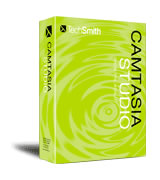
Camtasia Studio box.

(I was strongly tempted to reference the Pussycat Dolls song and give this post the title Don’t You Wish Your Mac Did Screencasts Like the PC?. That damned song seems to have crept into every movie or trailer I’ve seen in the past week.)

You’d think that with its serious “creative cred” that someone would’ve developed a killer screencasting application for the Mac, but I agree with the folks over at 37 Signals: there just isn’t one. The 37 Signals folk are pretty hard-core Mac fans — it’s reflected in both their design aesthetic as well as the preferred platform of Ruby on Rails developers (RoR was developed by 37 Signals’ David Heinemeier Hansson) — so it’s pretty safe to assume that they’ve hunted high and low for a reasonable scrrencasting app that runs on their platform of choice.

The closest candidate is Snapz Pro, written by Ambrosia Software, creator of some really great Mac games and utilities. I use Snapz, which is probably the best screen-grabbing utility I’ve ever used as well as WireTap Pro, which is equally excellent as an audio capture tool.

The pro version of Snapz does a decent job of capturing screen movies, but therein lies the problem: there’s a difference between “capturing movies of the screen” and “producing a screencast”. When it comes to producing a screencast, the editing process tends to take up far more time than the recording prcoess, and that’s where Snapz Pro falls short. To do editing, you’ve got to go to iMovie, and to produce title cards, you’ve got to fire up your favorite image-editing software, and so on. There’s a lot of “legwork” involved. As the 37 Signals people put it:

Here’s what I’d like to see. Basic screen video capture with a few simple compression options, audio recording, caption/graphic overlay support, simple video editing (cut, duplicate, slow down, just the basics), and export to Quicktime or Flash. All wrapped up in a nice UI too, of course. The biggest downfall of the current options is editing — there’s no way to preview the screencast you just created, overlay some captions, intro and outro text, and cut out some of the dead video).

Can I get an amen? Better yet, can I get a product?

I’ll agree that using separate tools is probably the better way to go if you’re producing a film, but if you’re trying to quickly produce a screencast (or several screencasts) demonstrating a UI for your customers with voice-over narration that also lets me do a little editing, make titles and throw in some transitions, I want a tool that’s a little more monolithic, a tool that — dare I say it? — takes a more “Microsoft Office-y” approach like the 37 Signals people suggest. That tool is Camtasia Studio.

Camtasia Studio supports all sorts of output formats, from QuickTime and Windows Media to what seems to be the preferred format these days — Flash video with an integrated player, a la YouTube. Adding titles, transisitons and text captioning is easy, and there’s a pretty decent edit suite in there too. For the videos you output in Flash, there’s the option of adding interactive “call-outs” (highlighted areas of the movie) and “hot spots” which when clicked take the user to a predetermined point in the movie or a web page. I’ve already used it to create a couple of screencasts for use by Tucows’ sales team, and they love the results. I’ve already committed to creating some screencast tutorials for end users for some of our Tucows services. And yes, they’ve got a version that runs under Vista — I run it on “The Taint”, the Acer laptop sent to me as part of a Vista promo. Call me a happy (and completely unsolicited) user of Camtasia Studio.

So c’mon, Mac developers — where’s the Mac equivalent of Camtasia?

{ 4 comments }

Kiss Your Open WiFi Goodbye if the RIAA Gets Their Way

by Joey deVilla on February 23, 2007

“When you pirate MP3s, you’re downloading communism” posterBack in July 2003, someone who read the Wired article titled Giving Sharers Ears Without Faces wrote to our pal (and former boss) Cory Doctorow over at Boing Boing:

One issue that I have not seen addressed in the RIAA vs. P2P front relates to the potential for an unsupecting home PC user who just happens to have an open WiFi router being used by a neighbor to share files to get sued by the RIAA when their IP address shows up on the RIAA’s list. From the surveys I’ve done, there are a lot of open WiFi routers a file swapper could easily use to both serve and download files. So, is the RIAA going to have to shut down open WiFi to get its way?

A year later, Boing Boing ran an article titled Open WiFi for plausible deniability, which cover’s Micah Joel’s running of “an open WiFi network in order to give himself plausible deniability for bad acts that can be traced to his IP address”:

I’ve already composed my reply in case I receive one of these letters someday. “Dear Comcast, I am so sorry. I had no idea that copyrighted works were being downloaded via my IP address; I have a wireless router at home and it’s possible that someone may have been using my connection at the time. I will do my best to secure this notoriously vulnerable technology, but I can make no guarantee that hackers will not exploit my network in the future.” If it ever comes down to a lawsuit, who can be certain that I was the offender? And can the victim of hacking be held responsible for the hacker’s crimes? If that were the case, we’d all be liable for the Blaster worm’s denial of service attacks against Microsoft last year.

Well, we’re now a few years and two generations of 802.11 down the road, and the RIAA has finally done it. Cory writes:

The RIAA is asking a judge to rule that anyone who provides bandwidth should be responsible for all the activities of his users. This would doom open WiFi — and all other public networking efforts. But who needs anonymous speech, anyway? After all anonymity fuels irresponsible behavior, like founding the United States.

The RIAA just wants to stand up for freedom. First they convinced Russia to force licensing and 24-hour inspection of presses, now they want to eliminate anonymous speech here at home.

Record companies are quick to cite the First Amendment when someone suggests banning music with “suggestive” lyrics, but they’re not so big on free presses and anonymous speech. It’s like they love free speech, but not enough to share it with the rest of us.

It’s all part of their “rabbit hunting with Howitzers” legal strategy. It stems from the case of Debbie Foster, who was being sued by Capitol Records, a part of the RIAA cartel, for allegedly sharing copyrighted material on a P2P network. It turned out that she wasn’t the culprit; it was someone else using her account. The case was dismissed last year with a filing that gets pretty damned close to calling out the RIAA as extortionists — or at least as close as you can get outside of a TV or movie courtroom drama. Foster didn’t stop there; she filed a motion asking the court to make the RIAA compensate her for her legal fees and got that compensation in the form of a $50,000 award earlier this month.

This award creates a legal headache for the RIAA. As Listening Post puts it: “If the ruling stands, the RIAA will have to be much more careful about who it sues going forward, adjusting its scatter-shot approach to filing such lawsuits in order to avoid suing the wrong people”.

Hence the RIAA’s latest move: filing a motion for reconsideration that forces them to pay Foster’s legal fees, a key point of which is that they’d like a ruling that the owner of an ISP account is responsible for all activity on that account.

James “Smalltalk Tidbits, Industry Rants” Robertson makes a couple of interesting observations:

  • He points to an Ars Technica story that says that the RIAA, in their motion, “lay out their disagreement with the judge’s reasoning while taking time to point out that the fees awarded far exceed any damages they could have recovered should their suit have been successful”, to which he quips “What, you mean there are risks in this strategy?”
  • He points out that it’s not just the individual running an open node at home or the small cafe running an open node to get customers who are in trouble:

    …any entity that offered a net connection – Starbucks, a hotel, a municipality (etc) – would have a huge potential liability on their hands. They might well decide to just discontinue in order to not expose themselves. Yeah, there’s a world I want to live in.

Links:

{ 0 comments }

Can Microsoft build a "web platform?"

by george on February 22, 2007

In additon to fending off challenges to Office from Google, a lot of people (myself included) think that Microsoft’s facing a challenge to their platform dominance from the internet. If you buy the World of Ends-style idea that “the internet is a platform that nobody owns,” that’s a pretty big, amorphous blob for the guys in Redmond to wrestle.

A lot of startups today are creating software that doesn’t target a specific operating system. They’re developing software to run on the internet; on stacks of free and open software (ie, LAMP), and using browsers’ HTML and JavaScript rendering capabilities to be the client side of their applications. In another era, they might have been developing Windows software, writing to the Windows API, and delivering their apps as Windows binaries. So what’s Microsoft to do to keep developers focused on platforms they control? Robert ScobleizerScoble thinks he’s seeing the patterns in Microsoft’s tea leaves:

Adam Sohn (he was the PR guy in our group when I started at Microsoft) is quoted on Redmond Developer saying that Microsoft is preparing a Live Development Platform. Ahh, an API that’ll do it all? Hmmm. I’m worried about the boil-the-ocean approach.

Scoble’s concern is that web developers like (or are at least used to) their pieces loosely joined; trying to create an all-singing, all-dancing API runs counter to that. Microsoft, on the other hand, has built their fortune around making developers productive, so it would be a mistake to underestimate their ability to understand the needs of mainstream programmers.

One thing’s for sure, it’ll be interesting to hear what Microsoft has to say at Mix this year.

Source: Microsoft trial balloons Web strategy? « Scobleizer – Tech Geek Blogger

Technorati tags: , , ,

{ 0 comments }

Frances Allen Wins the Turing Award

by Joey deVilla on February 22, 2007

Frances Allen, winner of the 2007 Turing Award

For me, one of the lines that really stood out in Neal Stephenson’s Snow Crash was the narrator’s remark on sexism in computer science. In the novel, the hackers of the exclusive online hangout, The Black Sun, had dismissed a female programmer’s work as relatively unimportant, an act which was summarized this way:

It was, of course, nothing more than sexism, the especially virulent type espoused by male techies who sincerely believe that they are too smart to be sexists.

If the techie attitude towards women in the early 21st century setting of Snow Crash — a world extrapolated from the technology and social mores of the late 1980s and early 1990s, where it wasn’t unthinkable for a teenage girl to get a high-speed skateboard courier job — was bad, it must have been far worse when this year’s A.M. Turing Award winner, Frances E. Allen, joined IBM back in 1957. Back then, IBM was being rather cutting-edge by encouraging women technologists to join the company with a brochure titled My Fair Ladies (pictured below).IBM’s “My Fair Ladies” 1957 recruitment brochure for women.

Allen was given the award to honor her for her work at IBM on compiler optimization techniques. The work for which she is noted in described in this IBM article:

Widely recognized for her fundamental work on the theory of program optimization and of leading PTRAN (Parallel Translations) project, she is regarded as a pioneer in the field of optimizing compilers, which she explains as “translating the language a program is written in into language appropriate for the hardware…to best exploit the performance potential of that hardware.” Allen’s personal contribution has been developing underlying algorithms that are effective across many types of hardware and in diverse situations.

In addition to her work on compilers, Allen is also noted as being a mentor to many during her 45-year career at IBM, considering it part of her day-to-day work. Her work in mentoring is so notable that IBM established the Frances E. Allen Women in Technology Mentoring Award, of which she was first recipient in 2000.

This isn’t Allen’s “first woman to win this honor” moment, either; in 1989, she was the first woman to become an IBM Fellow. Other awards she has earned include Grace Hopper’s Celebration of Women in Computing Award (as one of the most successful women in the computing field) and Ada Lovelace award for her “outstanding scientific and technical achievements and extraordinary service to the computing community through her accomplishments and contributions on behalf of women in computing.”

We at Global Nerdy salute you, Ms. Frances Allen, with a filet mignon on a flaming sword!

Links

{ 0 comments }

GAYD gone; Google Apps takes on Microsoft Office

by george on February 22, 2007

The Google Apps for Your Domain (GAYD) brand may be no more, but its successor, Google Apps, has taken on a much higher profile today: Google’s announced the for-pay Google Apps Premium targeted at large organizations.

The premium package bundles:

  • Gmail (10GB storage, ad-free, with BlackBerry support)
  • Google Calendar
  • Google Talk
  • Google Start Page
  • Google Pages Creator
  • Google Docs & Spreadsheets

For $50 per user/year.

Premium users get access to a set of APIs (such as single sign on through parter services from Sxip), which should allow enterprise customers to integrate their Google Apps suite with other applications.

The New York Times is just one of the many pubs covering this announcement to note that this is Google’s most direct threat to Microsoft yet:

By comparison, businesses pay on average about $225 a person annually for Office and Exchange, the Microsoft server software typically used for corporate e-mail systems, in addition to the costs of in-house management, customer support and hardware, according to the market research firm Gartner.

Google said initial customers of Google Apps would include a unit of Procter & Gamble and SalesForce.com, a pioneer in the business of delivering software as an Internet service.

“We are in the process of phasing out Microsoft Office and Exchange from our company,” said Marc Benioff, the chief executive of SalesForce.com and a frequent Microsoft critic.

GE, incidentally, is another enterprise charter customer for Google Apps.

Despite the coverage, this is by no means a battle of equals. Yet. Microsoft’s Office suite is more complete (it includes a local database and presentation program, and is tightly integrated with Microsoft’s business graphics and project management tools), more powerful, works offline, and is more entrenched (a scary amount of people’s work involves Visual Basic for Applications scripts). Those strengths, however, are also Google’s opening.

Microsoft claims nearly a half-billion Office users out there, about 7.5% of the world’s population (that number seems crazy, but I bet that official estimate doesn’t even account for people using pirated copies!). You can be sure that a huge chunk of that user base barely scratches the surface of what Office can do. They use Excel to make lists and perform simple arithmetic. They use Word as a glorified text processor. They never touch the journaling features in Outlook. If big companies can serve those users’ needs with Google Apps tomorrow as well as they do with Office today, I’m sure they’ll at least take the time to crunch some numbers and ask some questions.

Their business cases will, no doubt, be created in Word and Excel, and presented in PowerPoint.

Source: Google Press Center: Press Release

{ 0 comments }

Linksys and Apple iPhones

Well, that’s one lawsuit down: Cisco and Apple have not only agreed to share the “iPhone” trademark, but it also seems as if there’s even going to be a little cooperation between the two companies. Apple’s press statement is so terse that I can actually quote it in its entirety below:

SAN JOSE and CUPERTINO, California—February 21, 2007—Cisco and Apple® today announced that they have resolved their dispute involving the “iPhone” trademark. Under the agreement, both companies are free to use the “iPhone” trademark on their products throughout the world. Both companies acknowledge the trademark ownership rights that have been granted, and each side will dismiss any pending actions regarding the trademark. In addition, Cisco and Apple will explore opportunities for interoperability in the areas of security, and consumer and enterprise communications. Other terms of the agreement are confidential.

I’m just a coder who likes to schmooze (or a schmoozer who likes to code, take your pick), so I’m going to leave it to suitier minds than mind to think about any of the business implications of the deal. I suppose that there’s a business analogue to wrestling fans who would’ve loved to have seen an epic WWE-style corporate smackdown; these people will be sorely disappointed.

PC World’s Techlog had the same thought I did: What were Apple’s “Plan B” names for the phone in case Cisco was able to prevent them from using the iPhone name? My money would’ve been on “Apple Phone”, which as others have said, has a certain symmetry with another product name of theirs, Apple TV.

There still remains a possible trademark dispute in Canada, where Comwave, a telecom company, have been using the iPhone brand for its VOIP services. I’d like to see them come to an agreement with Apple like the one with Cisco, even if only so that I could use an iPhone to call someone on their iPhone connected to iPhone.

{ 0 comments }

James Gosling to be Given the Order of Canada

by Joey deVilla on February 21, 2007

James Gosling.

We here at Global Nerdy would like to congratulate Canada’s own Global Nerd, Java creator James Gosling, on his being named to the Order of Canada, the country’s highest civilian honor. Here’s a CBC News article covering Gosling’s award, and for you non-Canadians out there, here’s a quick explanation of the Order of Canada.

{ 0 comments }

When Fedora Defections Meet Online Jerks

by Joey deVilla on February 21, 2007

It’s a rare thing to have two completely unrelated blog articles that appear on the same day suddenly intersect on the same day, but that’s just what happened.

The first blog article is Eric S. Raymond Ditches Red Hat for Ubuntu, Might Keep Red Shirt, which covers ESR’s dumping Red Hat/Fedora as his Linux distro of choice for Ubuntu.

The other blog article is the one immediately after it: The GIFT Theory Explains Why People Are Such Jerks Online. In that article, I pointed to a TechDirt article on online jerks and a Penny Arcade comic on the same topic.

The hairs on the back of your neck must already be rising — you’re probably beginning to form an idea of how these two stories intersect. I’ll show you, by way of this response by Alan Cox on the Fedora developers’ mailing list to Eric S. Raymond’s open letter:

On Wed, Feb 21, 2007 at 03:03:50AM -0500, Eric S. Raymond wrote:
> * Failure to address the problem of proprietary multimedia formats
> with any attitude other than blank denial.

That would be because we believe in Free Software and doing
the right thing (a practice you appear to have given up on).
Maybe it is time the term “open source” also did the
decent thing and died out with you.

> I’m not expecting Ubuntu to be perfect, but I am now certain it will
> be enough better to compensate me for the fact that I need to learn
> a new set of administration tools.

I’m sure they will be delighted to have you
Alan

This isn’t the behaviour of the Alan Cox I know from a brief meeting at a LinuxWorld or from his typically friendly and helpful mailing list postings; it’s the lashing out of a petulant adolescent showing the kind of behaviour that drove me away from Slashdot and Digg. I hope he rejoins the rest of the grown-ups and posts an apology soon.

Link

{ 0 comments }

The GIFT Theory Explains Why People Are Such Jerks Online

by Joey deVilla on February 21, 2007

One of the Mikes (there are three) at Techdirt spills a lot of ink (or, more accurately, electrons) in a quick piece titled Why People Are Such Jerks Online. There’s a more succinct version of what he wrote in this old Penny Arcade webcomic from March 2004:

Penny Arcade’s “Greater Internet Fuckwad Theory”.

{ 0 comments }

Gentle readers, before I begin, let me show you the scariest photo I’ve seen all month. I found it while doing an image search for Eric S. Raymond for a photo to go along with this article:

Eric S. Raymond kissing a comely young woman in a red shirt.

I’ll give you a moment to wipe the coffee off your screen before continuing.

Better now? Good.

Anyhow: Open Source thought leader (and author of many books and articles, including The Cathedral and the Bazaar and Sex Tips for Geeks) and gun nut firearms enthusiast Eric S. Raymond has publicly given up on the Fedora Linux distribution after thirteen years of being a Red Hat, and later, Fedora supporter. His reasons:

Over the last five years, I’ve watched Red Hat/Fedora throw away what was at one time a near-unassailable lead in technical prowess, market share and community prestige. The blunders have been legion on both technical and political levels. They have included, but were not limited to:

  • Chronic governance problems.
  • Persistent failure to maintain key repositories in a sane, consistent state from which upgrades might actually be possible.
  • A murky, poorly-documented, over-complex submission process.
  • Allowing RPM development to drift and stagnate — then adding another layer of complexity, bugs, and wretched performance with yum.
  • Effectively abandoning the struggle for desktop market share.
  • Failure to address the problem of proprietary multimedia formats with any attitude other than blank denial.

In retrospect, I should probably have cut my losses years ago. But I had so much history with Red-Hat/Fedora, and had invested so much effort in trying to fix the problems, that it was hard to even imagine breaking away.

If I thought the state of Fedora were actually improving, I might hang in there. But it isn’t. I’ve been on the fedora-devel list for years, and the trend is clear. The culture of the project’s core group has become steadily more unhealthy, more inward-looking, more insistent on narrow “free software” ideological purity, and more disconnected from the technical and evangelical challenges that must be met to make Linux a world-changing success that liberates a majority of computer users.

I’ve always preferred Raymond’s “Open Source” pragmatism over the ideological purity of the “Stalliban” (my pet name for the more stringent ideologues at the Free Software Foundation).

I myself was a Red Hat user back around 2000, when the cooler nerds were already beginning to don “Fuck Red Hat” stickers, but moved to Mandrake and then Ubuntu long ago for about the same reasons as Raymond: because I didn’t want to go through all the “yak-shaving” that other distributions like Debian, and now Red Hat require. My current desktop Linux distro, Ubuntu (I’m using the “Dapper Drake”; Raymond’s using the newer “Edgy Eft” version), is considerably easier to install, maintain, update and find help for than any other distro — so much easier that in terms of my own usage, it’s vying for the number 2 spot against Windows (OS X remains the OS I use the most).

I see that Raymond had the same surprisingly pleasant installation experience as I did:

This afternoon, I installed Edgy Eft on my main development machine — from one CD, not five. In less than three hours’ work I was able to recreate the key features of my day-to-day toolkit. The after-installation mass upgrade to current packages, always a frightening prospect under Fedora, went off without a hitch.

Welcome to club Ubuntu, Eric! Hope you like it as much as I do.

Link

{ 4 comments }

“The Joy of Tech” on Ballmer blaming Vista pirates
Click to see the comic at full size on its original page.

{ 0 comments }