February 2012

My old main axe from my Microsoft days, the Dellasaurus (a Dell Precision M6500).
Click the photo to see the original article.

Dell says that they’re getting out of the consumer PC business and focusing on enterprise IT. As far as I’m concerned, they’ve been doing that for years. I’ve gotten to experience a lot of Dell hardware over the past decade, but especially during my two-and-a-half-year stint as a Microsoftie, where Dell Canada was my hardware sponsor. Just look at their catalogs: there’s an “enterprise first” mentality in the way they’re designed. They’re pretty solid machines, but they’re the computers that the IT department makes you use rather than the computers you want to use. When it comes to so-called “consumer” machines, Dell’s been thrashing about cluelessly from netbooks (and you probably know what I think of them) to “ultrabooks” to “slates” to phones.

15 years ago, when Dell was riding high, Michael Dell made his now-infamous comment about 1997-era Apple and Steve Jobs’ return (remember, it was believed he was going to be the CEO to finally kill the company): “What would I do now? I’d shut it down and give the money back to the shareholders.” He’s going to get that quote thrown right at him over the next couple of weeks, and it seems that he already has a response to that. When poked about this at Web 2.0 Summit back in October, he claimed that his answer was misconstrued: what he meant was that he’d never even consider being CEO of another company. Such nakedly transparent backpedalling calls for an Orson Welles slow clap:

orson welles slow clap

Of course, Dell will be fine: the enterprise market’s a big one, judging from how much money people gladly pay to willingly inflict SharePoint on themselves. It’s just not as visible to the consumer market, nor is it as exciting (part of the reason I got out of that racket). With their shift to enterprise and away from consumer and things like their 2009 acquisition of the IT company Perot Systems, it looks as if they’re going to become an IBM – just without the cool research projects. Perhaps it’s more accurate to think of them as an Accenture with a hardware division.

{ 0 comments }

Come Party with Shopify at SxSW!

by Joey deVilla on February 27, 2012

shiner bock

Shiner Bock: The unofficial official beer of SxSW.
Creative Commons Photo by Berenice Garcia. Click the photo to see the original.

Shopify’s going to be at the South by Southwest Interactive festival this year from Friday, March 9th through Tuesday, March 13th, and we’d like to invite you to join us for a drink and chat while we’re down in Austin! Whether you’re a shopowner with a Shopify-powered shop, a developer who builds Shopify apps, a designer who make Shopify themes or just wondering what Shopify’s all about, we’d like to meet up with you.

We’re working out the exact details of where and when – we’re thinking late afternoon/early evening of Saturday, March 10th — but we’ll announce it all over the place: on this blog, Facebook, Twitter and everywhere else we can.

More details soon!

This article also appears in the Shopify Technology Blog.

{ 1 comment }

ConFoo Happens This Week, and Shopify Will Be There!

by Joey deVilla on February 26, 2012

ConFoo is Montreal’s big “web techno conference”, and it’s happening this week! It’s not too late to register and catch all sorts of sessions, including these two by Shopify people:

Mo’ Money, Less Problems with ActiveMerchant

david underwood

My coworker David Underwood, Developer Advocate, will be giving the Mo’ Money, Less Problems with ActiveMerchant presentation on Friday, March 2nd from 8:30 a.m. – 9:30 a.m.. Here’s the abstract:

Your Ruby/Rails application is up and running, you’ve got users, and better still, they’re ready to pay to for the fruits of your genius. Okay, genius: how do they pay? The answer is ActiveMerchant, the de facto standard for handling payments in Ruby. ActiveMerchant gives you a single, simple API that supports many payment gateways and lets you authorize a payment and capture the money, all with only a screenful’s worth of code. In this session, we’ll walk you through a simple payment, work up to a full Rails-based shopping cart with payment authorization and capture and show you what the industry standards are and the security precautions you should take.

Ruby as She is Spoke

joey devillaYours Truly, Joey deVilla, Platform Evangelist, will be giving the Ruby as She is Spoke presentation on Thursday, March 1st from 11:00 a.m. – 12:00 a.m.. Here’s the abstract:

Speak you Ruby surely like native? Have you a grip on using the rectified idioms for coding in the language? But seriously: like human languages, programming languages are also about clear communication, and the best way to speak a language is to understand it idioms. In this session, we’ll look at Ruby turns of phrase and other patterns that the best-written Ruby code uses to communicate clearly and that best take advantage of the Ruby language.

Register for ConFoo now!

This article also appears in the Shopify Technology Blog.

{ 1 comment }

Wilson Miner: "When We Build"

by Joey deVilla on February 23, 2012

At last night’s Sprout Up event (which I wrote about here), Daniel Burka recommended that we watch Wilson Miner’s (former designer at Apple, now a designer at Rdio) presentation titled When We Build, which he gave at the Build conference in Northern Ireland. It’s about the importance of making things, and if you’re looking for inspiration, it’s a great place to start. It’s a beautiful presentation all ‘round, with beautiful words, pictures and even music.

This article also appears in the Shopify Technology Blog.

{ 0 comments }

Rockin’ the Accordion at a Business Development Meeting

by Joey deVilla on February 23, 2012

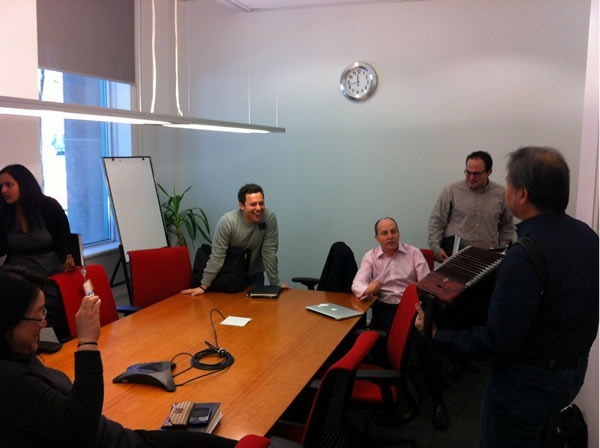
Joey deVilla playing accordion at a business development meeting

Pictured above is why they pay me the big bucks. It’s not the computer science degree, seven years’ work as a developer, ten years as a tech evangelist or my membership in the KISS Army. It’s to break out the accordion at biz dev meetings and lighten things up with a little pop tuneage.

I love my job. It’s very nice work if you can get it.

This article also appears in The Adventures of Accordion Guy in the 21st Century.

{ 1 comment }

Daniel Burka’s Presentation at Sprout Up

by Joey deVilla on February 23, 2012

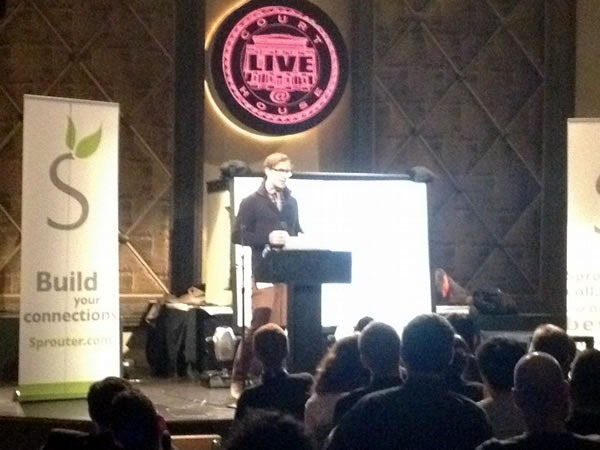
daniel burka 1

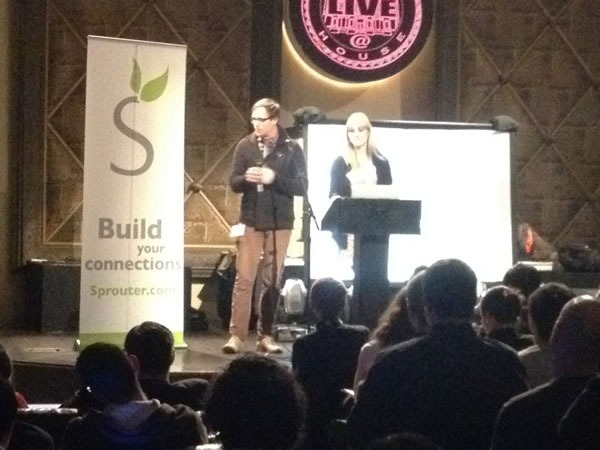
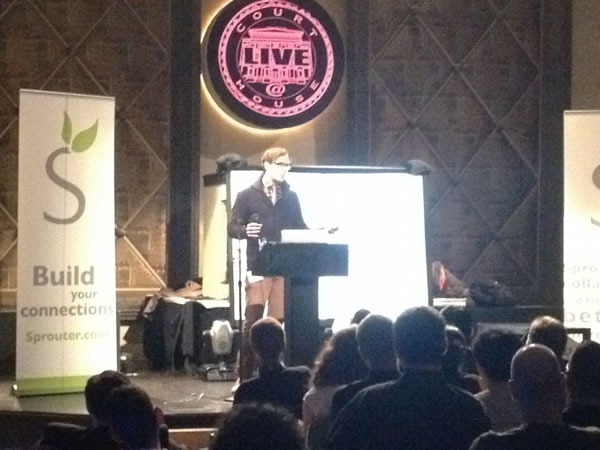
I make it a point to attend a monthly gathering of tech entrepreneurs in Toronto called “Sprout Up”. It’s an event run by Sprouter, a startups-helping-startups forum, and the 350 or so tickets for the event usually sell out a week before. It’s a chance for techies, designers and “suits” to network, and the presentation portion of the evening features local startups showing off their latest work as well as a guest speaker.

Last night’s guest speaker was web designer Daniel Burka, who’s one of the founders of Milk, a company that builds apps. He also cofounded Pownce and was the creative director at Digg. His presentation was both interesting and inspiring, and so I’m sharing my notes and photos here.

Notes from Daniel Burka’s Presentation

  • I don’t really consider myself to be an “entrepreneur” or “founder”.
  • I think of myself as more of product designer; someone whose job is to shepherd creations from ideation to implementation to improvement.

founders den and founderscard

  • In Silicon Valley, they really fetishize the idea of “founders”.
  • In fact, there’s a group of incubators in a place called Founders Den.
  • There’s even a FoundersCard (and I’m ashamed to admit that I have one)!
  • This fixation with founders is really just a celebration of raising money: first the angel round, then Series A and Series B…“It’s kind of B.S.”.
  • All those people have accomplished is manage to convince someone to give them a few million dollars – it’s not that hard.
  • I don’t want to downplay the value of starting up; it’s just that I really value people who build and make worthwhile thing and shepherd them over time.

wilson minerWilson Miner at the Build Conference.

  • If you get the chance, you should watch designer Wilson Miner’s talk from the Build Conference, When We Build.
  • Wilson’s done work for Apple and other places; he’s the designer at Rdio.
  • In his presentation, he talked about what drives us as entrepreneurs, designers and product people: it’s that we all have an idea, something we want to make for no other reason than we want it to exist.
  • The idea alone isn’t enough. It’s really just an inkling. To see if it truly has merit or even possible, you have to build it.
  • There’s a great story in Tony Hsieh’s book about building Zappos, Delivering Happiness.
  • Zappos was obvious only in hindsight.
  • Tony talked talked to shoe vendors like Nike, trying to convince them to sell shoes to him as if he were a regular shoe store, but the vendors refused to sell to him.
  • He built his online shoe store anyway, selling shoes on the internet with no stock. Whenever they sold a pair online, they went to the nearby Foot Locker, bought the shoes there, put them in a Zappos box and shipped them.
  • It’s all about proof: he learned by jumping in and from experience.
  • The same idea is in Facebook’s “Hacker Way” philosophy: Code wins arguments!
  • The same thing happens at Milk: they debate an idea for maybe 25 minutes, but then they try to implement to see if it can or can’t be done.

daniel burka 2

  • In my career, I’ve always been focused on the side of making things. It started with things like baking bread.
  • I’ve never really had a game plan for my career, but just a few guiding principles. I’ll share some of my advice, which may or may not work for you.
  • Every major opportunity that’s come my way has come from taking chances and building something.
  • Whitelands Studio was my first job, from 10th grade, in 1996. All the summer jobs in Prince Edward Island were shitty, but my mom told me that museums were looking for help digitizing their collections.
  • We knew the museums wouldn’t come to a bunch of kids, so we approached them. We asked them: “If we write the proposals and get the funding, will you let us digitize your collections for you?”
  • Everybody then was doing static sites, a long, tedious manual process.
  • We had a programmer who grabbed a stock Microsoft Access database – “a piece of shit” – and wrote a program that read data from the database and spat out static sites. It let us do the job in about a month, faster than everyone else. We actually delayed handing in our work so that we looked busier.
  • For our first three summers, we did one project, and did two in our final summer.

silverorange site

  • In 1999, we merged with MetaMedia and formed Silverorange.
  • Again, our major pivotal point was taking chances and building things.
  • We were a bunch of kids, ages 18 and younger. Nobody would trust us to build anything of significance, and we didn’t want to build sites for the local bed-and-breakfast places.
  • One of the things we built was the Silverorange intranet. It was very similar to what Basecamp is today. We submitted it to a Nielsen Norman Group “usable intranet” conference and it won!
  • Since Nielsen Norman is a big name in the design world, winning landed us a lot of design work as a result.
  • We were trying to find a way to build a more sustainable long-term business.
  • We wanted to get into building large ecommerce systems. There’s lots of money in that. The problem was that we kept getting beating out in bidding by companies from Toronto — because they were from Toronto. “They must be good, because they’re from a big city” was the thinking.
  • Went to Veseys, who sold seeds online, and told them “Your site’s a piece of shit. We’ll rebuild it for no money up front – we’ll just take a commission”. We made them a lot of money. They got mad since they made a lot of money, they had to pay us a lot of money.
  • This sort of work is now the backbone of Silverorange’s business. It’s recession proof and long-term.

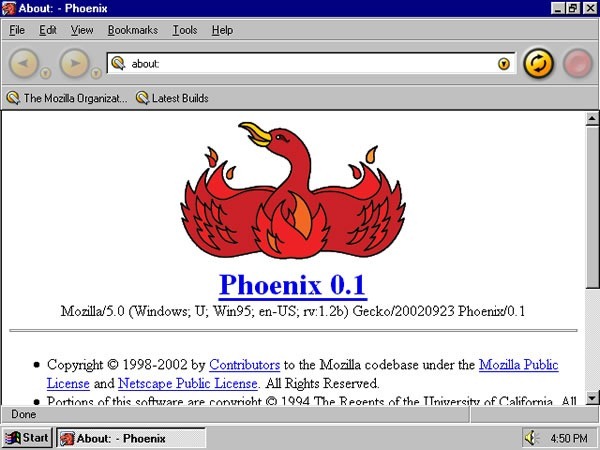
phoenix

  • One of our guys was a Firefox fanboy, back when it was still called “Phoenix”.
  • He wrote an open letter to Mozilla, saying that while it was a great browser, its branding, identity and look and feel were terrible. He was asking them to fix it.
  • They wrote back and said “You’re right: you fix it!”
  • They got together the Mozilla visual identity team and made us part of the process of rebranding Phoenix into Firefox. We did the primary design of Mozilla.org in 2004.
  • This got Silverorange even more attention in San Francisco, and that’s how we landed Digg as a client.

digg

  • Digg got started when Kevin Rose talked to CmdrTaco about building a community-driven news site. CmdrTaco (I can’t say that name with a straight face) told him that there’s no room in the news space for that sort of thing, but he decided to do it anyway.
  • He invested his own money – not much, about $10,000 – to the chagrin of his girlfriend, who suggested he spend the money on something more practical, like a house. He used his being on TechTV as a way to promote Digg.
  • Once again, it was the approach of “build it and see what happens”.
  • The same thing happened with Pownce: it was about seeing an opportunity and then building something. Back then, it was terrible trying to pass files between people (this was before Dropbox).

winklevoss twins

  • A little while back, I was in Toronto attending the Mesh Conference and was interviewing Sook-Yin Lee.
  • During that interview, I said “ideas are cheap”, and I regret saying it. Coming up with a strong original concept is valuable.
  • But: execution is incredibly difficult and it really defines your idea.
  • Many people, when they see something implemented say "I the exact same idea 6 months ago!". That’s not true; it’s not the same idea. Execution forces you to adapt the idea and make changes in response to the real world.
  • It’s the “Winklevoss problem”: they had a good idea – a social network – but it was Mark Zuckerberg and not "those little scumbags" who made Facebook. Facebook would probably have been much lamer if they’d made Mark their lackey and just had him build the app they had in mind.

execute

  • Execution needs to be tested in the real world. The day you launch, you’ll find flaws. Your users will find flaws.
  • You need to watch analytics, look over the stats  and get feedback.
  • Don’t be afraid to change your product! Stagnation will kill you.
  • Gather a team of builders around you. They’re the people who’ll matter most.
  • As a company grows and you get above 14 people, you’ll find that some of them will not be in tune with the product you’re trying to build. People tend to focus on their expertise and forget they’re all in the same ship. You get things like teams pitching things that have nothing to do with the core product.
  • The people you want around you are the kind who see what needs fixing and then go and fix it.
  • If you’re the founder, your job is to encourage that kind of building. It’s not your job to be the chief architect, it’s to facilitate the building.
  • Facebook did this when they brought in Chris Cox, a developer, to do HR for them. They redefined HR as a team that supported engineers in their effort to build products.
  • Think of your each of your people as an architect.

daniel burka 3

  • There’s no excuse not to be a builder these days. The tools to build products are incredibly cheap! For people like me, there’s Balsamiq, Prototypes and other design software. You don’t have to wait for financing. You just have to build.

This article also appears in the Shopify Technology Blog.

{ 3 comments }

What’s Shaping the Future of Mobile Commerce

by Joey deVilla on February 22, 2012

mobile commerce

You might have heard that Shopify took on 20 new people recently – that’s the result of acquiring Select Start Studios, a.k.a. “S3”, an award-winning mobile company. You’ve probably already guessed the reason: to stay ahead of the curve of ecommerce’s evolution.

With the explosion of mobile phones fuelled by the Apple and Android ecosystems couple with the explosion of online shopping fuelled by Shopify and the Esteemed Competition, ecommerce is rapidly morphing into mcommerce. This explosion is outpacing its predecessors: just as the adoption of web technologies outpaced the adoption of desktop tech, mobile adoption is outpacing web adoption. And just as the desktop and then the web changed the way we work and play, mobile is doing the same: only at a greater scale and with greater speed.

Mashable recently posted an article titled 5 Paradoxes Shaping the Future of Mobile Commerce, which makes some observations of the current mobile landscape and attempts to find what they mean for the future of ecommerce. We’re thinking about all these issues as we grow the Shopify platform, and as developers, designers and shopowners, so should you.

The “5 paradoxes” mentioned in the article are:

  1. Customers spend more time on their mobile devices than desktops. Of note are tablet users and especially iPad users, who generally have a higher level of education and income than general internet users.
  2. Mobile shoppers are more focused. This is especially true of search – where 70% of desktop search tasks are done in about a week, 70% of mobile search tasks are done in an hour!
  3. Click-through rates are higher on mobile than on desktop. Smartphones and tablets are showing higher click-through rates for search advertising than desktops.
  4. Mobile shopping peaks at night. Smartphone and tablet use peaks at night, which suggests that the living room couch is often your showroom.
  5. The mobile web is important. In most cases, it’s better by far for an online shop to concentrate on their mobile web presence rather than building an app for their customers to use.

The article goes into each point in greater depth; be sure to read it to get all the details.

Mobile is increasingly important to ecommerce, and it’s probably increasingly important to you. Keep an eye on this blog: we’ll be talking more and more about mobile commerce – what’s happening, what it means to you and how to take advantage of it, from the development, design and merchant angles.

This article also appears in the Shopify Technology Blog.

{ 0 comments }

Maintaining Your Online Reputation

by Joey deVilla on February 22, 2012

smiley balls

SmartBlog on Restaurants is really aimed at the restaurant industry, but the advice it offers in its article Managing your reputation online is a never ending story applies to online shops as well. Online reviews and social media are said to be surpassing search for reviews, and more and more people are consulting their phones when making purchases. Your online reputation is an asset, and the article offers these five tips to maintain it:

  1. The best defense is a good offense. If you’re on the defensive, actively go and find out what the problem is.
  2. Don’t beat around the bush. Seek feedback as soon as possible so you can address any problems quickly.
  3. Pay attention to the grapevine. Listen for when customers talk about you.
  4. Extend your hospitality outside your dining room. Or in the case of ecommerce, outside your shop. You’re already online; use it to communicate with your customers!
  5. “But you don’t have to take my word for it…” Quote your customers, especially when they talk about you online but off your site. Those quotes are more “real”.

There’s more in the full article – go read it!

This article also appears in the Shopify Technology Blog.

{ 0 comments }

shopify and confoo logos

It’s not too late to register for the ConFoo conference, which takes place in Montreal from next Wednesday, February 29th to Friday, March 2nd. ConFoo’s the big “web techno conference” covering a wide array of software development topics:

  • Accessibility
  • Cloud Computing
  • CMS
  • Data Persistence
  • Front End
  • Java
  • JavaScript
  • Mobile
  • .NET
  • PHP
  • Project Management / Agile
  • Python
  • Ruby
  • Scaling / Performance
  • Security
  • Social Networking
  • Startups
  • Systems Administration
  • Testing / QA
  • Web Services

Shopify will be there, as we’re giving two presentations.

Mo’ Money, Less Problems with ActiveMerchant

david underwood

My coworker David Underwood, Developer Advocate, will be giving the Mo’ Money, Less Problems with ActiveMerchant presentation on Friday, March 2nd from 8:30 a.m. – 9:30 a.m.. Here’s the abstract:

Your Ruby/Rails application is up and running, you’ve got users, and better still, they’re ready to pay to for the fruits of your genius. Okay, genius: how do they pay? The answer is ActiveMerchant, the de facto standard for handling payments in Ruby. ActiveMerchant gives you a single, simple API that supports many payment gateways and lets you authorize a payment and capture the money, all with only a screenful’s worth of code. In this session, we’ll walk you through a simple payment, work up to a full Rails-based shopping cart with payment authorization and capture and show you what the industry standards are and the security precautions you should take.

Ruby as She is Spoke

joey devillaYour Truly, Joey deVilla, Platform Evangelist, will be giving the Ruby as She is Spoke presentation on Thursday, March 1st from 11:00 a.m. – 12:00 a.m.. Here’s the abstract:

Speak you Ruby surely like native? Have you a grip on using the rectified idioms for coding in the language? But seriously: like human languages, programming languages are also about clear communication, and the best way to speak a language is to understand it idioms. In this session, we’ll look at Ruby turns of phrase and other patterns that the best-written Ruby code uses to communicate clearly and that best take advantage of the Ruby language.

Montreal!

montreal

ConFoo wraps up on Friday, leaving the weekend free to explore a fun city with great food, shopping and stuff to do until the very wee hours. It’s a great excuse to pick up some new knowledge, make contacts in the industry and have a little weekend trip all in one!

Don’t miss this conference – register for ConFoo today!

This article also appears in the Shopify Technology Blog.

{ 0 comments }

"Ceiling Vic is Watching You": Vic Toews peering at you through a hole in the ceilingBill C-30 is a pending Canadian bill that gives police and other appointed special investigators to get information from “internet companies” (the bill’s a bit vague on the definition) to give them information about you – name, IP address and other identifying information – without a warrant. On its own, its terms don’t give “The Man” free access to who you are and what you do online, but the resulting law will require Canadian ISPs to build in facilities to allow for “eavesdropping” that’s not unlike what they do in China. Once that capability is built in, the genie will be out of the bottle; or more accurately, the governmental genie will be in all our bottles. As Ivor Tossell puts it in the Globe and Mail, “You can’t bring oil barrels full of honey to the forest and then act surprised when bears show up.”

The video above is from the Canadian television show Rick Mercer Report. One of the regular features of the show is “Rick’s Rant”, in which he does a short polemic on something topical as he walks through Toronto’s “Graffiti Alley” just off Queen Street West. This one does a great job of explaining why Canada’s Public Safety Minister Vic Toews, who introduced the bill, is wrong when he said that critics of the bill could “either stand with us or with the child pornographers” (which will someday be used as a classic example of that old high school debating trick, association fallacy).

This article also appears in The Adventures of Accordion Guy in the 21st Century.

{ 1 comment }

Slide: "How to Tell HTML from HTML5" - "Try it out on Internet Explorer. Did it work? No? It's HTML5."Photo courtesy of Elijah Manor.

Considerably less true for Internet Explorer 9 (a.k.a. “IE who-gives-a-crap”), but the damage has been done, especially if W3Counter’s browser usage trend stats are accurate:

w3counter browser usage statsClick to see at full size.

That’s why I wrote way back when I worked there: “Any fool can evangelize Apple or Google. It takes a rock star, ninja and Jedi master all rolled into one to be an evangelist for Microsoft.”

{ 3 comments }

Shopify Makes Fast Company’s “50 Most Innovative Companies” List

Fast Company / The World's 50 Most Innovative Companies - featuring Shopify

We’re in good company: along with Amazon, Square and Patagonia, Shopify made Fast Company’s “World’s 50 Most Innovative Companies” list in the “Retail” category. Here’s what they wrote:

For democratizing and automating ecommerce tools. Shopify offers pre-made templates that allow people to quickly and easily set up an online store without needing to know how to code a website. Shopify creates tools and templates to power online storefronts. (Notable clients include Rovio, Angry Birds’ parent company, and GE.) Shopify has grown to almost 20,000 storefronts in 88 countries, which did a combined $275 million in online sales, up from $120 million in 2010. Up next: Making it as easy to buy sell to mobile customers.

Join Us, It’s Bliss!

Shopify standard issue gear: Apple 27" display, MacBook Pro, Apple Wireless Keyboard, Aeron chair, Apple Magic Mouse, Bag O' Stuff

Even more Shopify standard issue gear: Light grey Shopify t-shirt, dark grey Shopify t-shirt, light grey Shopify hoodie, neat pen, Moleskine notebook, Godiva chocolates, $100 restaurant gift card, $50 Apple Store gift card

If making the Fast Company list doesn’t impress you, maybe my earlier article about why Shopify’s a great place to work will. From the company’s success to interesting projects to the way we get stuff done to the cool gear that’s standard issue for Shopify employees (see the photo above; you get to pick between a MacBook Pro and MacBook Air these days), there are reasons aplenty to hitch your wagon to Shopify’s star.

We’re looking to fill these positions right now:

Software Engineer, Applications
Ottawa, Ontario, Canada

Shopify is looking to hire a Software Engineer for our growing Applications Team. The Applications Team is responsible for building supported Shopify Applications for the Shopify App Store as well as 3rd party applications. If you are interested in working on challenging Ruby on Rails projects with a team of highly motivated and talented individuals then this position is for you.

Software Engineer, Billing
Ottawa, Ontario, Canada

Shopify is looking to hire a Software Engineer to maintain and extend our sophisticated SaaS billing platform servicing over 20,000 merchants. The Shopify billing system is a core piece of infrastructure that handles millions of dollars of financial transactions. If you are interested in working on challenging Ruby projects with a team of highly motivated and talented individuals then this position is for you.

This article also appears in the Shopify Technology Blog.

{ 0 comments }

What People Think Entrepreneurs Do

by Joey deVilla on February 13, 2012

what people think entrepreneurs doClick the picture to see it at full size.

Funny because it’s true.

This article also appears in the Shopify Technology Blog.

{ 1 comment }

Ruby Job Fair in Toronto Tonight!

by Joey deVilla on February 10, 2012

Ruby Job Fair Poster

Don’t forget: the Ruby Job Fair takes place tonight at Unspace headquarters (342 Queen Street West; it’s the door just to the right of Lululemon)! If you’re looking for work that involves Ruby programming or if you’re an employer looking for Ruby developers, you’ll want to be at this event, which is more cocktail social than career fair. Yes, there will be a bar.

The event takes place from 6:00 p.m. until 9:00 p.m.. DO NOT show up early! They’ll either be wrapping up the day’s work (remember, Unspace is a development shop) or prepping for the event. If you plan to show up fashionably late, please note that the employers are doing their three-minute “soapbox” spiels starting at 6:30.

There’s a small registration fee to help cover the costs of holding this event: it’s $5 for people looking for a job; $15 for employers looking for Ruby developers. You’ll get a lot of bang for your buck at this event. Click here to register for the event, and do it before the tickets run out!

Shopify logo

If you’re looking for Ruby work at one of the most successful startups around, you might want to consider Shopify. I’ll be there tonight as Shopify’s representative – find me (I’ll be the guy with the accordion) and we’ll talk.

If you’re looking to find out more about Ruby Job Fair, check out the Ruby Job Fair site as well as my earlier article on the Fair.

This article also appears in the Shopify Technology Blog.

{ 0 comments }

Reg Braithwaite's head on C-3PO's body, standing beside R2-D2 on the Tattooine desert.

In the latest essay on his Posterous, I Have a Bad Feeling About This, Reg “raganwald” Braithwaite, posts his contribution to Uncensored: A Charitable Project to Support the Open Internet. In it, he writes:

My perspective is a little like that of C3PO in Star Wars, a minor character throwing his hands up in dismay at calamity and providing others with an interesting viewpoint on the great events of the last forty years.

Like any space opera, the story of information technology is a very simple one. It is played out in a myriad of different ways by a revolving cast of characters, but it always has its loveable heroes, its predictably nefarious villains, innocent civilians to be saved, and bumbling bureaucrats that aren’t inherently evil, but begin every story aiding the forces of darkness out of a misplaced belief they are preserving law and order in their corner of the galaxy.

In it, he encourages us – the rebels – to resist the collective empire of the MPAA, RIAA, Intellectual Ventures and those who would impose things like SOPA and PIPA and stifle technological progress in the name of preserving outdated business models. It’s a good read – go there now!

This article also appears in the Shopify Technology Blog.

{ 0 comments }