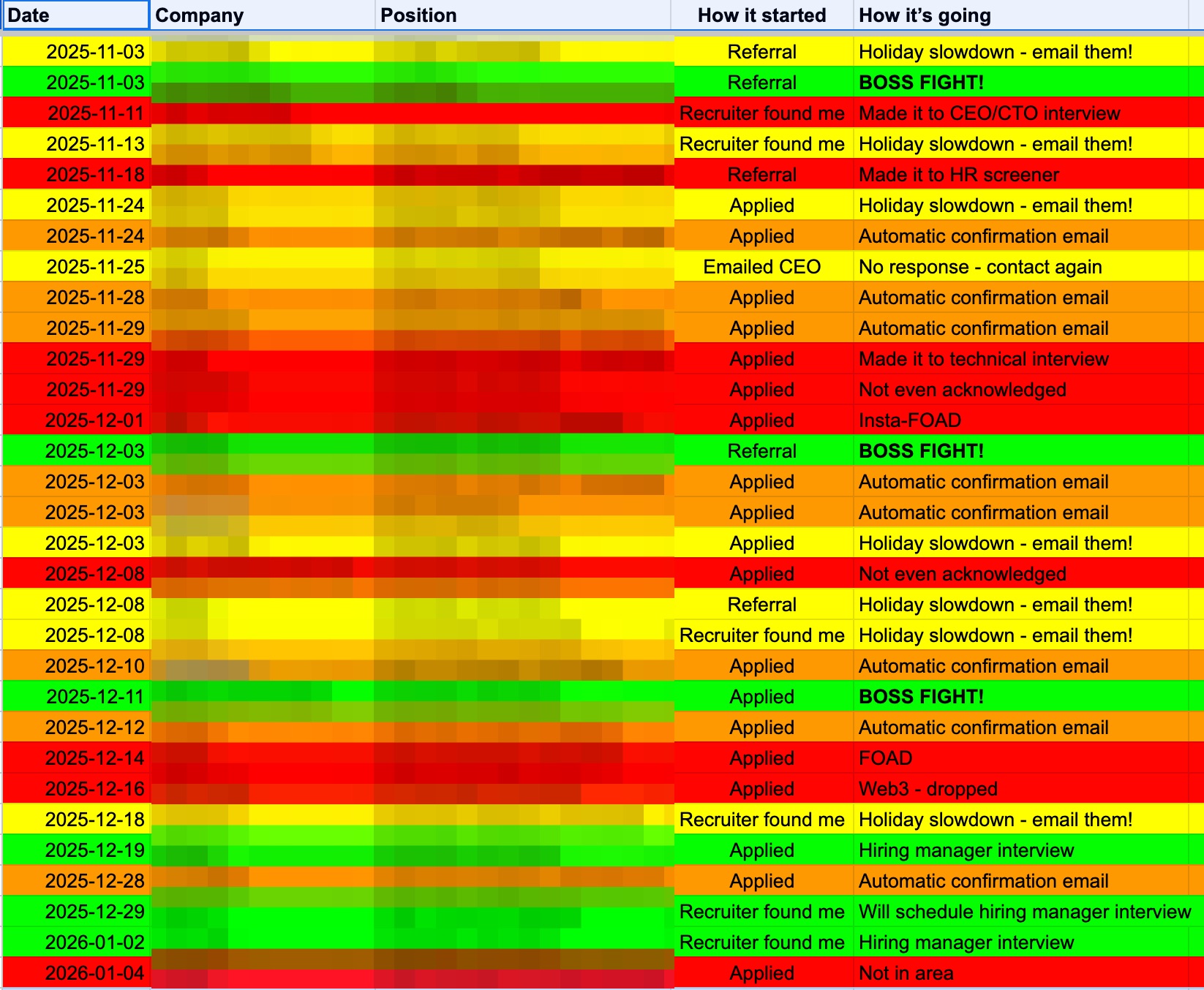
Pictured above is a version of my job search spreadsheet with a couple of columns hidden and some details redacted. But despite the missing info, it still has useful data points for you, namely:
- You have better odds with a referral. You probably know this, but it’s worth repeating. Every referral so far has at least resulted in an initial “HR screener” interview, and two of them have resulted in final interviews (which I’ve denoted in the spreadsheet using the videogame term BOSS FIGHT!).
-

To stand out to recruiters, you need to be a certified yapper on LinkedIn! (This is a sticker on my Windows laptop.) Being noisy on LinkedIn pays off. Did you know there are Recruiter versions of LinkedIn? There’s Recruiter Lite, which can cost up to $2,000 annually, and then there’s Corporate version, which is said to sell for about $10,000 to $12,000 per year per seat.
Recruiters get paid when they match people looking for jobs with employers looking to fill positions, so they’re willing to shell out lots of money for a specialized version of LinkedIn, provided that they get king-sized multiples of that money by finding the right match for their clients. Think of LinkedIn as a search engine for job candidates.
In the spreadsheet pictured above, note than 6 out of 30 opportunities — that’s one in five — is marked in the How it started column as Recruiter found me. They found me on LinkedIn because I post and comment regularly on AI, Python, and technology in general, which in turn generates “signal” on LinkedIn for those topics that clearly points to me. Long story short: You want to get found by recruiters on LinkedIn? You have to post on topics relevant to the job you’re looking for on LinkedIn.
- You can’t see it in the spreadsheet, but I totally broke the “No more than 2 pages” resume rule. The resumes I submitted to all of the prospects in the spreadsheet — including those in which I’m at the BOSS FIGHT! stage — were 5 pages long.
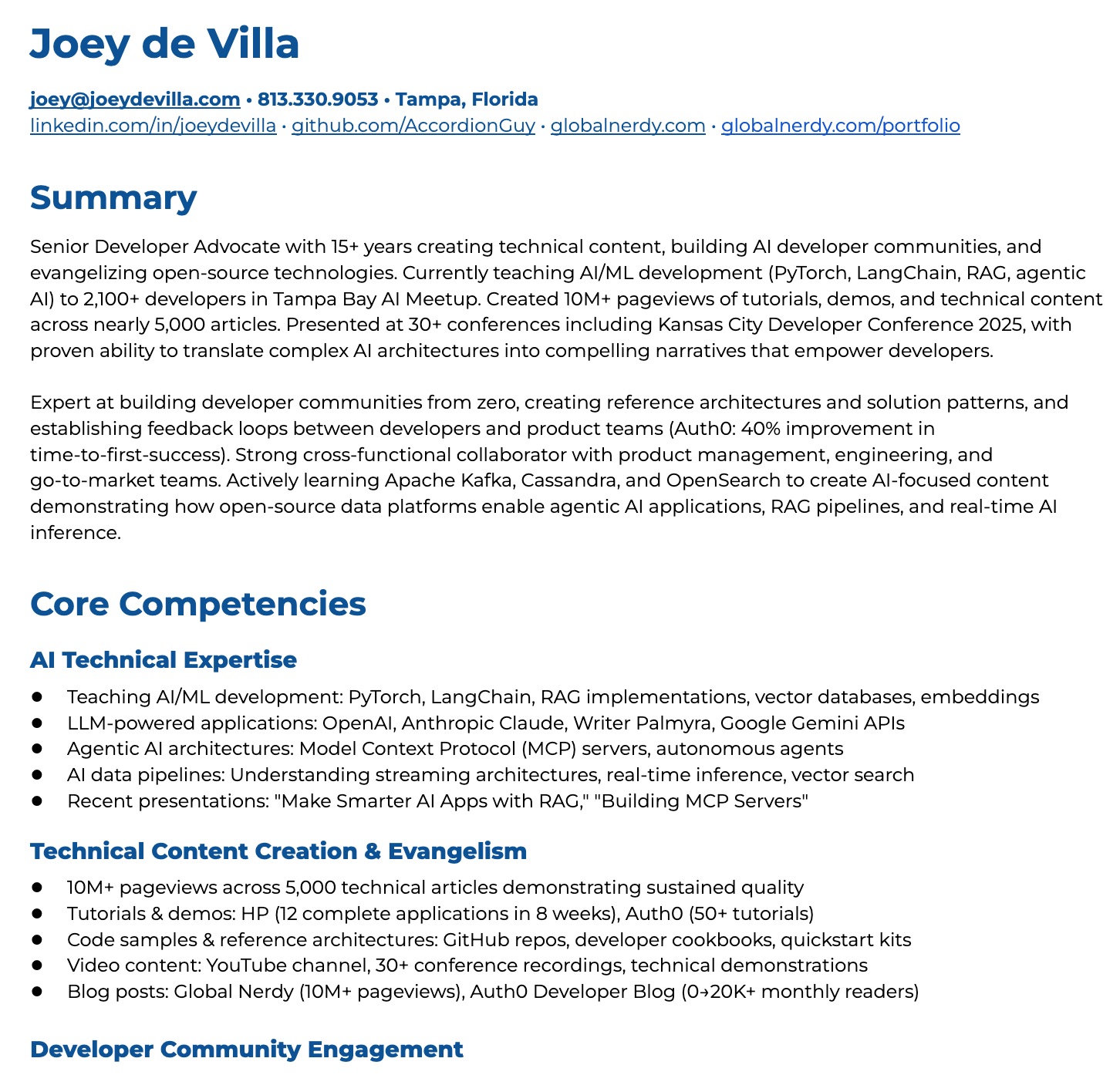 The trick is that my resumes, while long, answer the question “What does this candidate bring to the table?” and that’s really the question recruiters and hiring managers want answered. I customize each resume for each prospect with the assistance of Claude, and it’s worked out quite well for me.I’m betting that you’re reeeeally curious right now, so here’s one of the resumes for one of the BOSS FIGHT! prospects. I hope you find it useful!
Bonus 4th observation

See the row above? That’s an opportunity where I’m going to do a final interview that I applied to, cold, with just a resume (and yes, it was a five-pager) and a cover letter.
I didn’t have a referral, and with this particular one, I applied via LinkedIn and not via the company site because that was the only place to do it. And yet I got that initial interview, which led to all the follow-up interviews. According to the recruiter, it was a combination of the resume, cover letter, and LinkedIn presence.