Games

The First “Grand Theft Auto V” Trailer

by Joey deVilla on November 2, 2011

The first trailer for Grand Theft Auto V was released today at noon. You’re not going to find out much about the game from it, other than:

  • It takes place in what seems to be present-day “Los Santos”, the analogue for Los Angeles in the world of Grand Theft Auto. Los Santos is one of the three cities in the sprawling Grand Theft Auto: San Andreas.
  • The plot seems to involve a guy trying to start a new life in a new city, not unlike Grand Theft Auto IV’s Niko Bellic or Grand Theft Auto: Vice City’s Tommy Vercetti. I think it’s safe to assume that his plans get waylaid and through a series of bizarre circumstances and friends and associates with poor life-planning skills (no shortage of such types in the world of GTA), our hero lands himself in a whole world of trouble. It would also be safe to assume that he gets out of said trouble by causing a lot of mayhem.
  • The voice-over in the trailer sounds a helluva lot like Ray Liotta, who played Tommy in Grand Theft Auto: Vice City.

As with most of Rockstar’s trailers, this one’s all cinematics and mise en scene. There’s no indication of what the gameplay is like, whether you’re playing the story or in multiplayer mode. There’s also no indication of what platforms it’s coming out for (although it’s safe to assume that Playstation 3 and Xbox 360 will be supported, with a PC version to follow later) nor when the game will be released (I assume sometime in 2012).
{ 0 comments }

Super Mario Bros. Does Portal

by Joey deVilla on August 30, 2011

Mari0, a creation of StabYourself.net, the people behind videogame alterations such as Not Tetris 2, combines Super Mario Bros. with Portal for some weird and wonderful 8-bit gameplay. This is a supposedly real working game, and I can hardly wait to get my paws on it!

{ 1 comment }

Deus Ex: Human Revolution Does the Safety Dance

by Joey deVilla on August 30, 2011

YouTube user JoshuaMutter, who makes a lot of Minecraft machinima, created this video that mashes up the gameplay from Deus Ex: Human Revolution (which I still have to get) and Men Without Hats’ 1982 dance-synth-pop classic, Safety Dance. All it needs is the little minstrel from the original music video.

{ 0 comments }

“No Escape”: A Portal Movie

by Joey deVilla on August 23, 2011

No Escape is a short film set in the world of Portal, and it’s seven very well-done minutes.

This article also appears in The Adventures of Accordion Guy in the 21st Century.

{ 0 comments }

A Scene from Today’s Windows Phone 7 Coffee and Code

by Joey deVilla on September 30, 2010

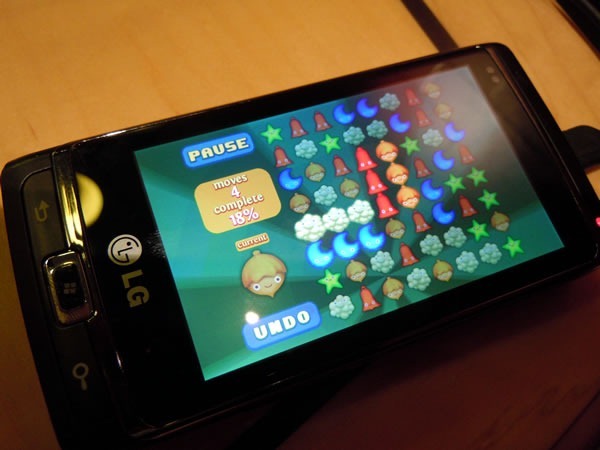
My LG Windows Phone 7, with "Smiles" displayed on the screen.A test version of Smiles running on my WP7 device.
In between chatting with developers who dropped by today’s Coffee and Code in downtown Toronto and getting some work done, I’ve been playing Smiles (pictured above), an incredibly cute and incredibly addictive puzzle game by London, ON-based development shop Sykhronics.

Here’s a video of Smiles’ gameplay in its “Drop” mode:

Mike Kasprzak of Sykhronics was kind enough to send me an early test version of Smiles to show off the Phone’s game capabilities as well as the level of “polish” that Windows Phone 7 developers should be aiming for in their apps. Mike’s got some pretty high standards and is working to make sure that Smiles for WP7 meets them, and it shows! Even in this test version, Smiles looks and feels like a polished arcade classic, and when it’s done, it’s going to be a must-buy.

Keep writing those apps, and aim high! We’ll do what we can on our end to help out, which includes:

  • Articles on Windows Phone 7 development in Silverlight and XNA
  • Articles on good mobile user interface design and marketing your apps
  • Announcements of upcoming Coffee and Codes and WP7 Deployment Clinics across Canada
  • Coverage of “Phone Heroes”: People building apps for Windows Phone 7 – and hey, you could be one of them!
  • Pointers to useful tools, resources and other things to help you build WP7 apps

This article also appears in Canadian Developer Connection.

{ 0 comments }

Talking XNA with Shawn Hargreaves and Charles Cox

by Joey deVilla on September 29, 2010

Get Microsoft Silverlight

Can’t see the video? Download Silverlight or download the video in high-quality WMV, medium-quality WMV, MP4 and MP3 (audio only) formats!

XNA is the game development framework that makes it easier to develop games for Windows, Xbox and Windows Phone, and it lets you do it with managed code – that is, using C# instead of C++. In this video, Microsoft’s Shawn Hargreaves and Charles Cox talk about all things XNA, including:

  • XNA Game Studio
  • XNA Creators Club Online
  • Game Development for Windows Phone 7
  • XNA Game Studio and Silverlight – Games and Apps
  • GPU Acceleration
  • The History of XNA Game Studio
  • .NET Garbage Collection Tips for XNA Game Studio
  • Managed Code Performance Tips
  • DirectX 11 or XNA Game Studio – Making the Choice
  • Introducing Reach and HiDef Graphics Profiles
  • Visual Basic in XNA Game Studio
  • XAML and Event-Driven Programming in XNA Game Studio

This article also appears in Canadian Developer Connection.

{ 0 comments }

Windows Phone 7 App: Rubik’s Cube

by Joey deVilla on August 31, 2010

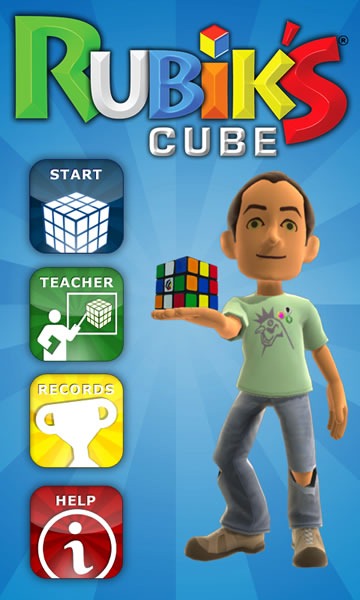
Hoem screen for Magmic's "Rubik's Cube" game

I was a teenager in the 1980s, which meant that along with watching Knight Rider, going to Depeche Mode concerts and playing blocky games on an Atari 2600, I had a Rubik’s cube. These puzzle toys were such a big craze at the time that toy and game stores couldn’t keep them on the shelves. I’m told that even decades later, it’s still considered to be the number one-selling toy of all time.

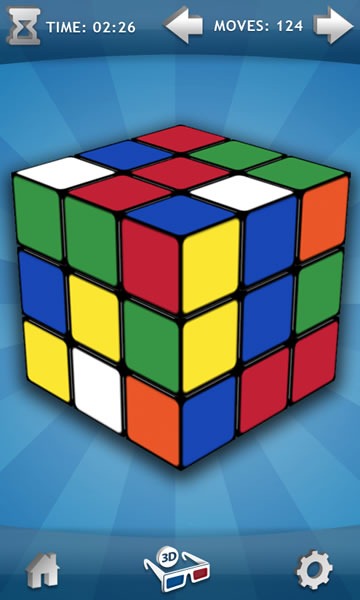
It’s nice to see that Ottawa-based developer Magmic, who specialize in mobile casual gaming, are bringing Rubik’s cube – the real officially-licensed thing – to Windows Phone 7. Naturally, you can try solving the classic 3 * 3 * 3 cube that we all know and love…

Game screen for Magmic's "Rubik's Cube" game

…but the game lets you go beyond the classic with:

  • Four different sizes of cubes
  • “Free play” or the more challenging “Timed mode”
  • A timer to keep track of your best solution times
  • Variations like “CRAZY cube” and “Picture cube”
  • A solution guide to help you learn how to solve the puzzle
  • Anaglyphic 3-D mode (3-D glasses not included)

This article also appears in Canadian Developer Connection.

{ 0 comments }

The Week-Long Discussion

Cover of the book "Head First C#"Andrew Stellman, co-author of O’Reilly’s excellent and easy-to-read C# intro, Head First C#, is holding a week-long “Inner Circle” discussion on C# and .NET 4.0 in the forums for O’Reilly’s “Head First” book series. In this discussion, he plans to cover a wide range of topics, including:

  • Why use C# instead of any other language?
  • C# best practices
  • Becoming a better C# developer
  • Dealing with objects
  • Productivity hints
  • The best of C#

If you want to follow the discussion, simply point your browser at the Head First Labs Forums’ “Head First C#” section and look for topics started by Andrew Stellman. You don’t have to log in to just read, but you’ll have to register for the forum if you want to join in the discussion and comment back.

The Challenge

Charlie Chaplin and the original IBM PC

In his first discussion topic, Andrew issues a challenge: build an old-school, text-mode game in C#! In the 1980s, the computing world was seen through the command line in an 80-character by 24-line grid (40 characters if you were on an Apple ][, Commodore 64 or Atari 400/800, even fewer if you were on a VIC-20), and that’s how we played a lot of games, whether they were commercial or typed in from source code in magazine or books like the ones scanned into the Atari Archives.

If you’ve never written a text-mode game before (or in my case, if it’s been a long, long time), he’s written an article to help out — Understanding C#: Use System.Console to Build Text-Mode Games.

Your efforts in building an old-school text-mode game will not go unrewarded. Submit a text-mode game and you can win a prize! He’ll judge them on the following criteria:

  • Game play
  • Fun
  • Technical coolness
  • General awesomeness
  • “Retro nostalgia” for extra point

The winner will receive five O’Reilly eBooks of his or her choice. He’ll also choose runners-up who will get a free O’Reilly eBook.

If you’re looking for ideas for an old-school text-mode game, check out these books at Atari Archives, with source code written in old-school line-numbered BASIC. Some of these take me back to my high school days:

Video Q&A: Stellman on C#

As a prelude to the discussion, Andrew recorded videos of his answers to questions about the C# programming language and the second edition of Head First C#

Why should developers learn C#?

What kind of applications can you build with C#?

How hard is C# to pick up?

What’s the toughest thing to learn in C#?

What’s new in the second edition of Head First C#?

This article also appears in Canadian Developer Connection.

{ 0 comments }

Get Your Game on with Windows Phone 7

by Joey deVilla on August 17, 2010

It’s On!

When Windows Phone 7 was first shown to the public in March, we got a taste of the Games hub and were told that Microsoft was working with a number of big game developers to bring games to the new phone platform. Late yesterday, we got the announcement of the first games coming to WP7:

It’s one thing to see a slickly-produced ad showing the games, but it’s an entirely different thing to see actual games being played on an actual phone. Here’s Engadget’s video of the game experience on one of the prototype phones – the Samsung “Taylor”, which I have and which you might have seen at the last “Coffee and Code” event in Toronto:

Here’s what Engadget had to say about the experience:

We’ll preface this by saying that both the hardware and software we demoed was still unfinished (the latter being the Samsung Taylor dev phone and the LG QWERTY model we broke news of on the Engadget Show). Regardless, the gameplay for the arcade titles seemed excellent, with frame rates holding fast even during graphically intensive 3D sequences (such as the chaotic, scattered-pixel play of Rocket Riot). The Harvest, while a bit familiar to our eyes, still showed the graphic promise of the platform. Gameplay was definitely well suited to a touchscreen device, though Microsoft’s Kevin Unangst told us that developers could target controls for both touch and QWERTY-equipped phones (provided that a touch version was always present). The screen response seemed accurate and sensitive, reacting quickly to our input. Particularly in the Crackdown title — a tower defense game "set in the Crackdown universe" — pinch zooming, rotation, and finger tracking was excellent.

The New New Xbox Experience

The “New Xbox Experience” or “NXE” – the revamped Xbox user interface that introduced avatars – comes along for the ride on Windows Phone. You can access your Xbox Live account on WP7, check out your gamerscore and achievements, and like Xbox-based games, your avatar can also be used within WP7 games and apps.

In this Engadget video, we see avatars being used to give a little twist to some standard smartphone apps such as “flashlight”, “spirit level” and “coin flip”:

Here’s another video showing more avatar action as well as some of the social networking features of Xbox Live, as done on WP7:

The Games

The games that have been announced for Windows Phone 7 so far:

  • 3D Brick Breaker Revolution (Digital Chocolate)
  • Age of Zombies (Halfbrick)
  • Armor Valley (Protégé Games)
  • Asphalt 5 (Gameloft)
  • Assassins Creed (Gameloft)
  • Bejeweled™ LIVE (PopCap)
  • Bloons TD (Digital Goldfish)
  • Brain Challenge (Gameloft)
  • Bubble Town 2 (i-Play)
  • Butterfly (Press Start Studio)
  • CarneyVale Showtime (MGS)
  • Castlevania (Konami Digital Entertainment)
  • Crackdown 2: Project Sunburst (MGS)
  • De Blob Revolution (THQ)
  • Deal or No Deal 2010 (i-Play)
  • Earthworm Jim (Gameloft)
  • Fast & Furious 7 (i-Play)
  • Fight Game Rivals (Rough Cookie)
  • Finger Physics (Mobliss Inc.)
  • Flight Control (Namco Bandai)
  • Flowerz (Carbonated Games)
  • Frogger (Konami Digital Entertainment)
  • Fruit Ninja (Halfbrick)
  • Game Chest-Board (MGS)
  • Game Chest-Card (MGS)
  • Game Chest-Logic (MGS)
  • Game Chest-Solitaire (MGS)
  • GeoDefense (Critical Thought)
  • Ghostscape (Psionic)
  • Glow Artisan (Powerhead Games)
  • Glyder 2 (Glu Mobile)
  • Guitar Hero 5 (Glu Mobile)
  • Halo Waypoint (MGS)
  • Hexic Rush (Carbonated Games)
  • I Dig It (InMotion)
  • iBlast Moki (Godzilab)
  • ilomilo (MGS)
  • Implode XL (IUGO)
  • Iquarium (Infinite Dreams)
  • Jet Car Stunts (True Axis)
  • Let’s Golf 2 (Gameloft)
  • Little Wheel (One click dog)
  • Loondon (Flip N Tale)
  • Max and the Magic Marker (PressPlay)
  • Mini Squadron (Supermono Limited)
  • More Brain Exercise (Namco Bandai)
  • O.M.G. (Arkedo)
  • Puzzle Quest 2 (Namco Bandai)
  • Real Soccer 2 (Gameloft)
  • The Revenants (Chaotic Moon)
  • Rise of Glory (Revo Solutions)
  • Rocket Riot (Codeglue)
  • Splinter Cell Conviction (Gameloft)
  • Star Wars: Battle for Hoth (THQ)
  • Star Wars: Cantina (THQ)
  • The Harvest (MGS)
  • The Oregon Trail (Gameloft)
  • Tower Bloxx NY (Digital Chocolate)
  • Twin Blades (Press Start Studio)
  • UNO (Gameloft)
  • Women’s Murder Club: Death in Scarlet (i-Play)
  • Zombie Attack! (IUGO)
  • Zombies!!!! (Babaroga)

…with more on the way, as big game dev companies sign up and Microsoft’s Mobile Games Studio kicks into high gear.

How Do You Get in on Some of That Action?

windows phone 7 If you want to just play Windows Phone 7 games, it’s easy – the phone comes out in the fall, in time for the holiday shopping season.

If you want to build Windows Phone 7 games, it takes a little more work, but it’s worth it. You’ll need to:

  1. Get your hands on the development tools. They’re free-as-in-beer and you’ll get:
    • The IDE, Visual Studio for Windows Phone Express (and if you have Visual Studio 2010, the necessary parts to do WP7 development)
    • Windows Phone emulator
    • Silverlight for Windows Phone (app-building framework)
    • XNA 4.0 for Windows Phone (game-building framework)
    • Expression Blend for Windows Phone (UI-building tool)
  2. Learn XNA development. There are a number of good tutorials out there, including:
  3. And finally, keep an eye on this blog. As a Windows Phone 7 Champ, I’ve got a direct line to the WP7 team, I always point you to the good stuff, and I’ve got some surprises in store!

This article also appears in Canadian Developer Connection.

{ 1 comment }

Windows Phone 7 Game: BulletAsylum

by Joey deVilla on August 3, 2010

BulletAsylum by UberGeekGames is a gorgeous game for Windows Phone 7 that’s part Missile Command, part Geometry Wars and all awesome. It’s written using XNA and coming soon to both WP7 and Xbox live and coming out later this year.

Here’s their blurb:

BulletAsylum is a new spin on the classic defend-the-city-from-meteors genre. Simply touch the screen on a WP7 device, or push the thumbstick on the Xbox 360 to create a literal fireworks show out of your enemies with an impenetrable wall of firepower. Instantly purchase new towers and cities without breaking up the action. Split your fire in two directions by touching the screen in two places or using the right thumbstick. Unleash the screen-clearing Overdrive when you’re in a tight spot.

This article also appears in Canadian Developer Connection.

{ 1 comment }

Limbo

by Joey deVilla on July 27, 2010

I’ve been spending summer playing a couple of Xbox 360 games situated in dark nightmare worlds. One is Microsoft Studios’ and Remedy’s Alan Wake, which could be described as an homage to Stephen King (so much so that they name-drop him in the opening credits); the other is Limbo, an Xbox Live Arcade game: 

Calling Limbo a “2-D side-scroller game” does it as much injustice as referring to Red Dead Redemption as “a cowboy third-person shooter”. Limbo is the most gorgeous and haunting side-scroller I’ve ever played.

The world of Limbo is a monochromatic one, shrouded in gloom and fog and nothing but the game itself. The screenshot below shows what the game actually looks like while you’re playing:

Limbo screenshot: the boys runs towards some rolling flaming logs

No heads-up display, score or distractions of any kind: it’s just you and Limbo’s world. The controls are minimal – you just use the left thumbstick to move, the A button to jump and the B button to perform actions on things (typically push or pull objects). Where Limbo goes deep is gameplay – this game really sucks you in.

Limbo screenshot: the boy comes across a body hanging from a noose
You control your character, a young boy who wakes up in a dark forest, with no idea what’s going on. There’s no opening cinematic, no explanatory text, no little pop-up hints, but somehow the game manages to convey a sense of what to do next solely through the way the game reacts to your actions. The developers, Playdead – an indie game dev shop in Copenhagen – did an amazing job in programming Limbo to communicate just through gameplay.

Limbo screenshot: The body travels across a body of water in a boat

With its black-and-white graphics, smooth animation, minimal sound (you only hear things you need to hear) and the many, many ghoulish ways your character will die as you learn to navigate the game’s many deadly puzzles and traps, Limbo feels like the sort of ghastly-but-addictive game that Edward Gorey might have conjured up, had he decided to take up programming rather than becoming an illustrator.

Limbo screenshot: the boy encounters a pit filled with spikes and two children bearing spears

As of this writing, Limbo has a Metacritic score of 90, placing it just below Super Street Fighter IV and Red Dead Redemption, having earned heaps of praise from all sorts of reviewers, including this one.

Limbo may just be the best Xbox Live Arcade game ever released, and I suspect it’ll be in my “Top 5” for 2010. If you’re looking for a stand-out game for your Xbox 360, Limbo is well worth the 1200 Microsoft Points.

This article also appears in Canadian Developer Connection.

{ 0 comments }

Banner from the Hand Eye Society's blog: "The Hand Eye Society: Meshing Toronto's Videogame Communities"

The Hand Eye Society describes itself as a “not-for-profit coalition of people and projects in support of Toronto’s videogame communities”. Their goals are:

  1. To help people make games
  2. To connect game makers with each other and with an audience, offline
  3. To foster diversity in game creation and public perception of games

I shouldn’t be surprised that one of the people behind the Hand Eye Society is Jim Munroe. He’s a former Adbusters editor turned self-publishing author of a number of enjoyable science fiction books such Flyboy Action Hero Comes with Gasmask and Angry Young Spaceman, developer of indie games including the interactive fiction piece Punk Points (the online version requires Java), maker of movies and all-round Toronto DIY-espousing creative type.

Also connected with the Hand Eye Society are other indie videogame notables including:

Poster for Hand Eye Society's "social": "Free presentation and social event from the Hand Eye Society / May 27 2010 @ 19:30 EST / Unit Bar, 1198 Queen West / Featuring: Mr. Brandon Boyer, founder of Offworld, contributing editor of Boing Boing & IGF Chairman"

The Hand Eye Society is throwing a social this Thursday, May 27th in Toronto at Unit Bar (1198 Queen Street West, a shade east of Dufferin/Gladstone, halfway between the Drake and Gladstone hotels). The doors will open at 7:00 and there may be a set of curated videogames for you to check out.

At 8:00 p.m. special guest dignitary Brandon Boyer, Chairman of the Independent Games Festival and contributing editor for Boing Boing and Boing Boing’s games blog Offworld, will, as the Hand Eye Society’s blog puts it, “deliver some form of immensely significant communication to the assembled videogame creators, enthusiasts, organizers & slack-jawed onlookers.”

If I weren’t going to be in Montreal that evening for the Make Web Not War conference, I’d most certainly at this event (I’ll definitely catch the next social). If you’re in Toronto and love videogames (especially ones that break from the mainstream) and especially if you love making them, catch the Hand Eye Society’s social this Thursday!

This article also appears in Canadian Developer Connection.

{ 0 comments }

Kudos for Kodu

by Joey deVilla on April 19, 2010

Three Students at St. Mary Catholic Elementary School programming with Kodu.Photo by Rick Macwilliam, The Edmonton Journal.

The Kodu game building system got some coverage in today’s Edmonton Journal. In a piece titled Kudos for Kodu, the Language of Kids, they cover the story of how St. Mary Catholic Elementary School is using Kodu to teach not just programming, but parts of the science curriculum as well. The kids are building a Kodu world that simulates a wetland ecosystem, filled with creatures that explain their roles. It sounds more fun than my grade school science classes and echoes my own philosophy of “don’t learn to build, but build to learn”.

Want to learn more about Kodu? You can get a quick introduction by watching me and Junior on Developer Junior:

…after which, you can look at Hello, Kodu!, my article that walks you through the process of programming Kodu the robot to respond to the gamepad controls. It also provides links to more Kodu tutorials.

This article also appears in Canadian Developer Connection.

{ 0 comments }

Developer Junior: Creating Your Own Games with Kodu

by Joey deVilla on April 14, 2010

My tech show for kids, Developer Junior, premieres today on Butterscotch.com! In this episode, Junior (the puppet) and I (the human) take a look at the Kodu game builder system and go through a quick tutorial:

Developer Junior is a show on Butterscotch.com aimed at the younger set and is all about helping kids make the most out of the technology in their everyday lives. It’s about writing programs, creating media, playing games, and having fun with technology. (It’s also a dream come true for me – I always thought I’d be a great host for a kid’s show.)

There’s another episode coming up, in which Junior and I walk through the process of making a movie using Live Movie Maker. Watch for it!

This article also appears in Canadian Developer Connection.

{ 1 comment }

Counting Down to Seven: XNA Game Studio 4.0!!!!

by Joey deVilla on March 9, 2010

Welcome to another installment of Counting Down to Seven, a series of articles about mobile app development that I’m writing as we count down the days to MIX10, when we reveal more about the up-and-coming Windows Phone 7 Series.

Xbox 360 Achievement: "Achievement Unlocked: New Version of XNA!"

"Counting Down to Seven" badge

The Game Developers Conference is a good time to make game development announcements, and that we did: version 4.0 of XNA Game Studio, Microsoft’s framework and toolset for easier game development. Here’s what it means in a nutshell:

  • No matter whether you develop with managed or unmanaged code, it’s what you’ll use for game development on Windows Phone 7.
  • You’ll create better mobile games faster, thanks to a powerful and comprehensive set of tools.
  • Xbox LIVE comes to mobile, meaning that you can take advantage of the Xbox’s popular gaming social network.
  • For those of you already building games with XNA, you’ve got a brand new platform, and it’s one that you take everywhere you go.

Games pages on Windows Phone 7

You’re going to see all sorts of details about XNA Game Studio 4.0 over the next couple of weeks, and here are some of the best places to get them…

Follow the “Seven Samurai”

By “Seven Samurai”, I’m referring to the Windows Phone 7 Series development team:

Check Out These Sites

This article also appears in Canadian Developer Connection.

{ 1 comment }