 Salmagundi? That’s the word for a seventeenth-century English dish made of an assortment of wildly varying ingredients. Typically, they include some cut-up hard-boiled egg, but then after that, anything goes: meat, seafood, fruits and veg, nuts and flowers and all manner of dressings and sauces. The term comes from the French “salmigondis”, which translates as “hodgepodge”.
In this case, I’m using “salmagundi” as a term for a mixed bag of new items that you might find interesting as a developer.
The Tangled Web: A Guide to Securing Modern Web Applications
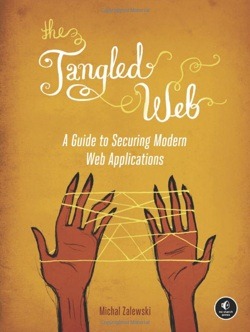
I’m currently in the middle of reading Michal Zalewski’s new book, The Tangled Web: A Guide to Securing Modern Web Applications and it’s been a fascinating, enlightening and enjoyable read. At first glance, you might be tempted to simply sum it up as a “security book”; I think it’s more accurate to describe it as “a great review of how browsers, their protocols, programming languages and security features work, and how to write secure apps given this knowledge”. Given that web security is a rapidly moving target, especially with the browser vendors – even the formerly-pokey Microsoft – cranking out versions at a faster rate, Zalewski’s approach to the topic is the right one: make sure the reader is clear on the basic principles, and then derive the security maxims from them, giving the knowledge contained within the book a much longer “shelf life”.
The Tangled Web is divided into three parts:
- Anatomy of the web. A tour of the web’s building blocks, from URL structure, HTTP and HTML to how it’s all rendered: CSS, client-side scripting languages, non-HTML documents and plug-ins.
- Browser security features. All the mechanisms that keep the malware from 0wnz0ring your system – the same-origin policy, frames and cross-domain content, content recognition mechanisms, dealing with rogue scripts and extrinsic site privileges (that is, privileges that aren’t derived from the web content, but from settings within the browser).
- A glimpse of things to come. A look at some of the proposed security mechanisms and approaches that may or not become standard parts of the web.
Each chapter except the last ends with a “Security Engineering Cheat Sheet”, which functions as both a summary of the material within the chapter and a security checklist. The last chapter is titled Common Web Vulnerabilities and lists vulnerabilities specific to web application, problems to keep in mind when designing web apps and common problems unique to server-side code.
I’m going to be showing The Tangled Web around the office (especially now, since I’m physically in Shopify’s headquarters this week). I’m sure the developers know a lot of this stuff, but they’re a bunch who are always eager to learn, review and “sharpen the saw”, so I think they’ll find it useful. If you develop web apps, whether for fun or to pay the rent, you’ll want to check out this book as well.
CUSEC 2012: Montreal, January 19 – 21

Ah, CUSEC: the Canadian University Software Engineering Conference. This for-students-by-students conference punches well above its weight class. I’ve been to tech conferences put on by so-called full-time “professionals” that can’t hold a candle to what the students behind CUSEC do every year in addition to their course loads.
Better yet is the caliber of speakers they’ve been able to bring in: Kent Back, Joel Spolsky, David Parnas, Greg Wilson, Chad Fowler, Kathy Sierra, Dave Thomas, Venkat Subramanian, Jeff Atwood, Tim Bray, John Udell, Avi Bryant, Dan Ingalls, Giles Bowkett, Leah Culver, Francis Hwang, Doug Crockford, Matt Knox, Jacqui Maher, Thomas Ptacek, Reg Braithwaite, Yehuda Katz, of course Richard M. Stallman, in whose auction I made the winning bid for a plush gnu, which I paid with my Microsoft credit card.
 This year’s CUSEC theme is “Turing Complete” in honor of 2012 being the 100th anniversary of Alan Turing. He established his place in history as the father of computer science by formalizing concepts like “algorithm” and “computation” with the concept of the Turing Machine, proposing the Turing Test in an attempt to answer the question “Can machines think?”, working as a codebreaker at Bletchley Park (I like to say “He beat the Nazis…with math!”) and coming up with one of the first designs for a stored-program computer. He even found his way into pop culture by getting name-checked in Cryptonomicon and The Social Network.
Once again, Shopify will be there as a sponsor and once again, I will be hosting the DemoCamp at CUSEC. If you’re a university student studying computer science or computer engineering, you should come to Montreal from January 19th through 21st and catch one of the best conferences you’ll ever attend. Bring your resume: we’re looking for talented programmers who want to work us!
HTTPcats

Cat pictures meet motivational posters meet HTTP status codes! It’s the Perfect Storm!



 Last week, John Bristowe and I interviewed