US mobile rates vs UK mobile rates
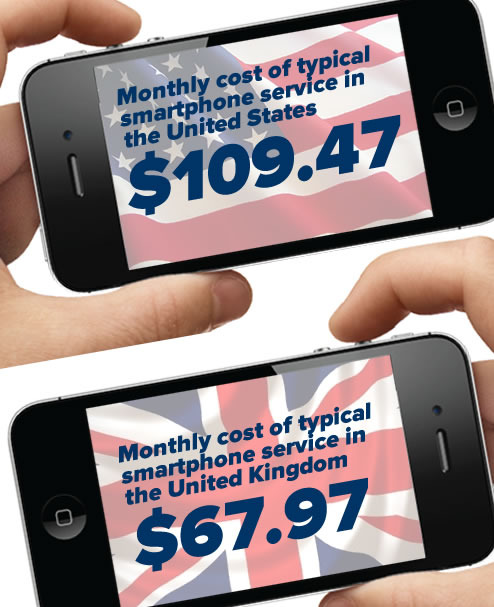
The New York Times has a comparison of the prices for similar mobile plans in the US and the UK. Here’s how they compare:
| Feature | US Carrier | UK Carrier |
|---|---|---|
| Phone provided | iPhone 5S with 16GB storage | iPhone 5S with 16GB storage |
| Voice Minutes | Unlimited | Unlimited |
| Text Messages | Unlimited | Unlimited |
| Data | 2GB / month (with additional gigabyte during introductory period) |
Unlimited |
| Commitment | 2 years | 2 years |
| Cost | $90 / month, not including taxes, plus $99.99 upfront fee. Spread over 24 months and adding an average tax of 17%, this comes to $109.47 / month. |
£41 / month, which includes 20% tax ($67.97 / month based on exchange rate at time of writing) |
Not only is the UK plan cheaper by $41.50 per month (or just shy of $1000 cheaper over the two-year commitment), but it provides unlimited data. The 2GB limit has been described as being enough to stream 15 minutes of music and 10 minutes of video daily (although at least one carrier doesn’t count data from a number of music services).
Many plans feature unlimited voice and text, because that’s not where the money is these days. Regular readers of this blog already know that:
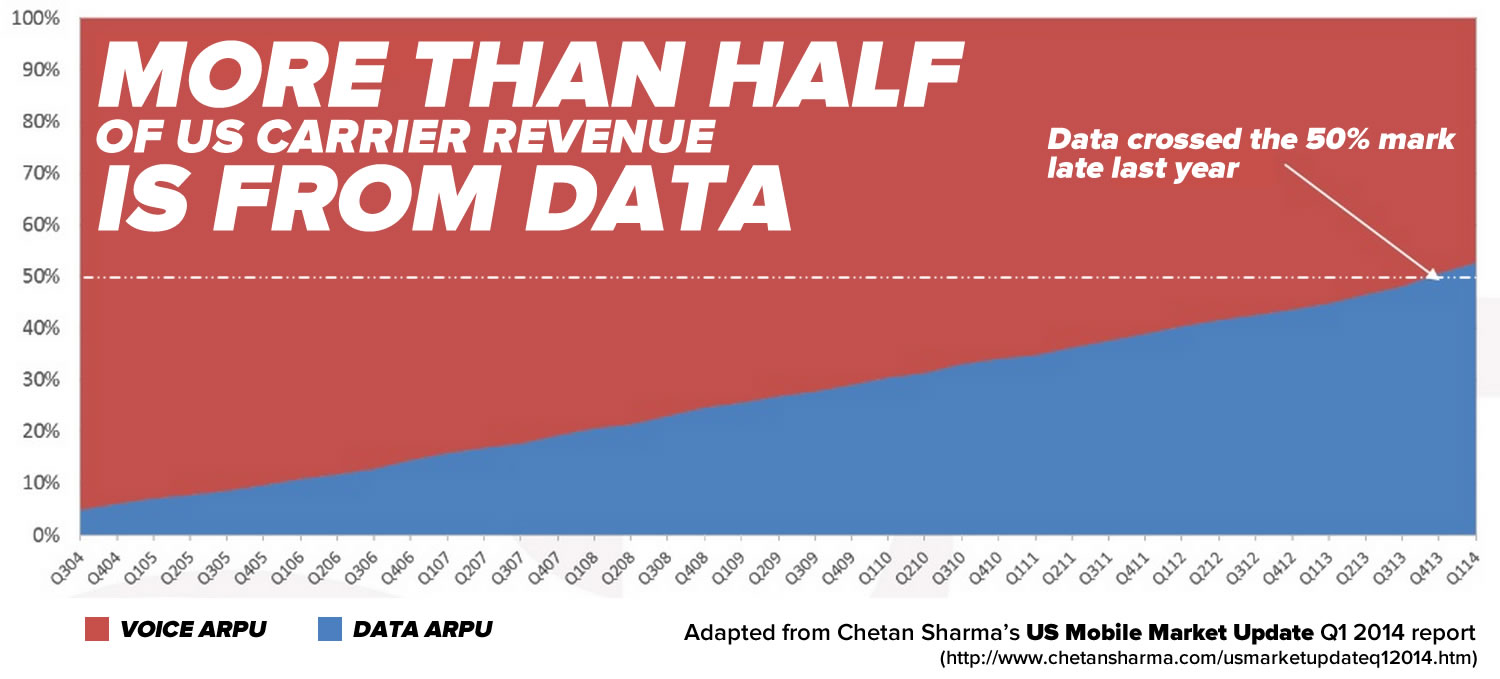
We posted this graph in an earlier article, as well as in this video.
Click the graph to see it at full size.
One of the factors cited in explaining the difference is regulatory policy. In the UK, companies are legally required to lease their networks to the competition at cost; this is not the case here in the US. Without this requirement, US carriers are protected from competitors, but they’re also spared from having to compete on price. The result, according to the Open Technology Institute’s Sascha Meinrath, is that “U.S. consumers may overpay by over a quarter of a trillion dollars for worse levels of service than customers in other countries receive” over the next decade.
US/UK mobile rates vs. Australia, China, Germany, and Japan
A couple of weeks prior to the New York Times article, TechHive posted an article titled No, U.S. smartphone costs aren’t highest in the world.
According to the article, our costs are somewhere in the middle:
| Country | Device Charge | Monthly Fees | Cost of Ownership Over 2 Years |
|---|---|---|---|
| UK | $45.95 | $62.79 | $1553 |
| Germany | $41.06 | $92.13 | $2252 |
| Japan | $522.28 | $73.62 | $2301 |
| China | $0 | $96 | $2304 |
| US (two-year contract) | $200 | $97 | $2520 |
| US (month-to-month) | $27 – $32 / month ($648 – $768 over 2 years) |
$60 – $90 | $2528 |
| Australia | $0 | $116 | $2784 |
The article points out a couple of interesting things to keep in mind when comparing US rates with those in other countries:
- The quoted cost for the UK doesn’t include roaming or international calls.
- In Europe, you’re more likely to call another country, and will have to pay extra to cover those costs.
- Plans in Australia factor the cost of the device into monthly fees, so you pay nothing up front for a new phone, but your monthly bill will be higher. Over 24 months, the costs of ownership in the US and Down Under are close.
- Phones are often cheaper in the US, thanks to carrier subsidizing them.
- “Unlimited” plans like the ones from Japan’s Au Kddi are unlimited only when calling other people on the same carrier, otherwise charges apply. Many other countries’ carriers’ plans have similar hitches.
It also points to some trends which may indicate things to come:
- Expect to see “innovations” in the way mobile devices are financed: bundling into monthly costs, financing for prepaid devices, and options to lease or rent devices from carriers.
- With the rate at which people trade in old phones for new ones, carriers are setting up buyback programs, which give customers some money towards their next purchase, and carriers the chance to use the devices for parts or resale.
- Carriers have been getting creative and flexible with the plans they’ve been offering, from freeing users from contracts, to other incentives to attract new customers away from the competition.








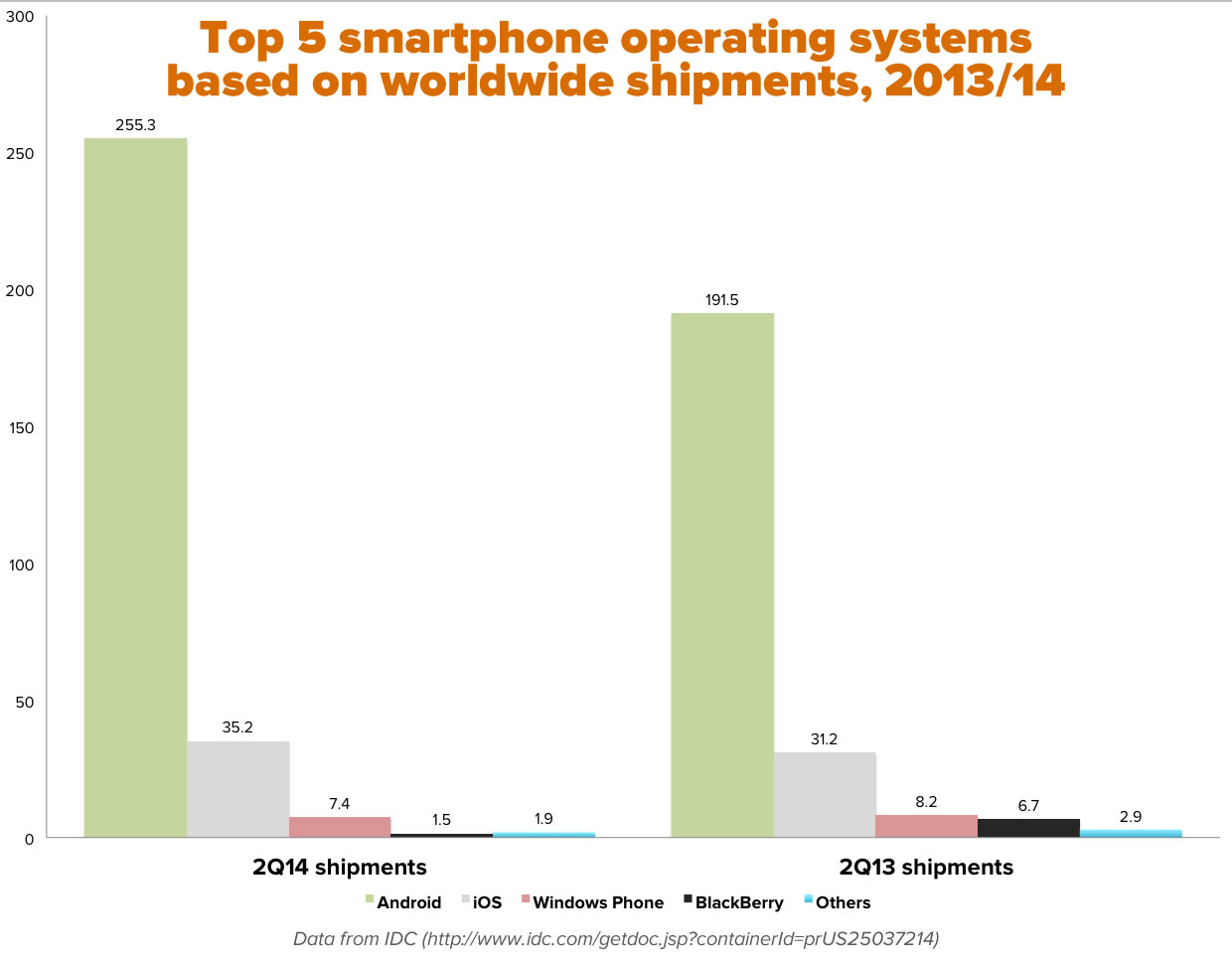
 Based on IDC’s numbers, the combined share of Android and iOS is 96.4% this quarter, leaving the remaining players to fight over the remaining 5.6%. Android and iOS were the only mobile operating systems to see year-over-year growth this quarter, with Android shipments up 33%, and iOS shipments up nearly 13%. Every other OS vendor lost share between this year and last.