June 2007

Bjarne Stroustrup: Coming to Town July 20th

by Joey deVilla on June 30, 2007

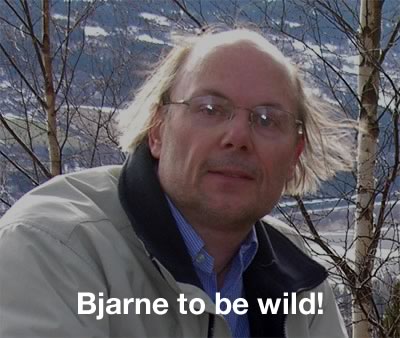
Bjarne Stroustrup: Bjarne to be wild!

Not too long after Richard M. Stallman’s non-technical presentation at the University of Toronto’s Mississauga campus, C++ creator Bjarne Stroustrup will make an extremely technical presentation at University of Toronto’s Downtown campus. He’ll be talking about C++0x Support for Generic Programming.

The presentation will take place on Friday, July 20, 2007 from 6:30pm – 9:30pm at the Bahen Centre for Information Technology, 40 St. George Street, University of Toronto. Admission is free and everyone is welcome (although you probably should have at least a passing familiarity with C++).

After the presentation, we’ll all mosey down to Bar Mercurio restaurant (270 Bloor West) where Bjarne will talk operator overloading and I will discuss alcohol overloading.

{ 0 comments }

Richard M. Stallman: Coming to Town July 5th

by Joey deVilla on June 30, 2007

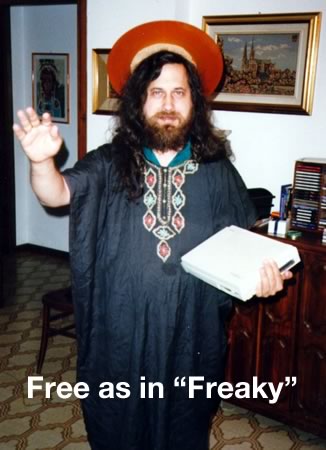
Richard M. Stallman as St. iGNUtius: Free as in “Freaky”

On Thursday, July 5th, Free Software Foundation founder Richard M. Stallman will be speaking at the University of Toronto’s Mississauga Campus. His topic will be Copyright vs. Community in the Age of Computer Networks.

The talk is co-sponsored by U of T’s Department of Mathematical and Computational Sciences and Knowledge Media Design Institute. It will be a non-technical talk, and everyone from hard-nerds to laypeople are encouraged to attend.

Here’s the abstract for the talk, taken from Greg Wilson’s blog

Copyright developed in the age of the printing press, and was designed to fit with the system of centralized copying imposed by the printing press. But the copyright system does not fit well with computer networks, and only draconian punishments can enforce it.

The global corporations that profit from copyright are lobbying for draconian punishments, and to increase their copyright powers, while suppressing public access to technology. But if we seriously hope to serve the only legitimate purpose of copyright—to promote progress, for the benefit of the public—then we must make changes in the other direction.

The presentation will take place on Thursday, July 5th at 5:00 p.m. at Matthews Auditorium, Room 137, Kaneff Center, University of Toronto, 3359 Mississauga Road North, Missisauga. The topic will be free as in speech, and admission will be free as in beer.

{ 0 comments }

The complex lightswitch from the earlier entry

The article The Lightswitch That Might Explain a Lot About Java (which has received way more comments and stimulated more debate that I would’ve ever predicted) reminded me of a story that used to get forwarded back and forth among techie types. I thought I’d post it here…

The Engineer, the Computer Scientist and the Toaster
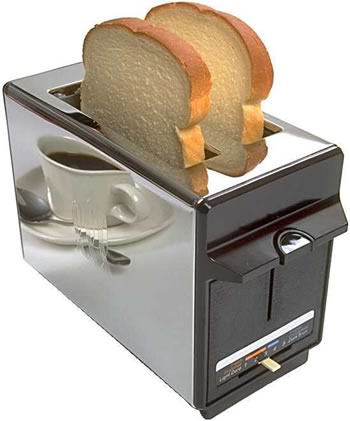
Toaster

Once upon a time, in a kingdom not far from here, a king summoned two of his advisors for a test. He showed them both a shiny metal box with two slots in the top, a control knob, and a lever. “What do you think this is?”

Scotty from “Star Trek”

One advisor, an engineer, answered first. “It is a toaster,” he said.

The king asked, “How would you design an embedded computer for it?”

The engineer replied, “Using a four-bit microcontroller, I would write a simple program that reads the darkness knob and quantizes its position to one of 16 shades of darkness, from snow white to coal black. The program would use that darkness level as the index to a 16-element table of initial timer values. Then it would turn on the heating elements and start the timer with the initial value selected from the table. At the end of the time delay, it would turn off the heat and pop up the toast. Come back next week, and I’ll show you a working prototype.”

Nerd at an old-school IBM PC and dot matrix printer

The second advisor, a computer scientist, immediately recognized the danger of such short-sighted thinking. He said, “Toasters don’t just turn bread into toast, they are also used to warm frozen waffles. What you see before you is really a breakfast food cooker. As the subjects of your kingdom become more sophisticated, they will demand more capabilities. They will need a breakfast food cooker that can also cook sausage, fry bacon, and make scrambled eggs. A toaster that only makes toast will soon be obsolete. If we don’t look to the future, we will have to completely redesign the toaster in just a few years.”
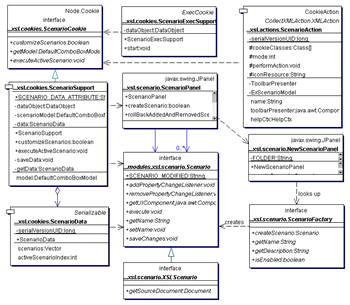
UML diagram

“With this in mind, we can formulate a more intelligent solution to the problem. First, create a class of breakfast foods. Specialize this class into subclasses: grains, pork, and poultry. The specialization process should be repeated with grains divided into toast, muffins, pancakes, and waffles; pork divided into sausage, links, and bacon; and poultry divided into scrambled eggs, hard- boiled eggs, poached eggs, fried eggs, and various omelet classes.”

Country ham and eggs

“The ham and cheese omelet class is worth special attention because it must inherit characteristics from the pork, dairy, and poultry classes. Thus, we see that the problem cannot be properly solved without multiple inheritance. At run time, the program must create the proper object and send a message to the object that says, ‘Cook yourself.’ The semantics of this message depend, of course, on the kind of object, so they have a different meaning to a piece of toast than to scrambled eggs.”

C++ and Erlang

“Reviewing the process so far, we see that the analysis phase has revealed that the primary requirement is to cook any kind of breakfast food. In the design phase, we have discovered some derived requirements. Specifically, we need an object-oriented language with multiple inheritance. Of course, users don’t want the eggs to get cold while the bacon is frying, so concurrent processing is required, too.”

GUI

“We must not forget the user interface. The lever that lowers the food lacks versatility, and the darkness knob is confusing. Users won’t buy the product unless it has a user-friendly, graphical interface. When the breakfast cooker is plugged in, users should see a cowboy boot on the screen. Users click on it, and the message ‘Booting UNIX v.8.3′ appears on the screen. (UNIX 8.3 should be out by the time the product gets to the market.) Users can pull down a menu and click on the foods they want to cook.”

Parts of a Wintel desktop computer

“Having made the wise decision of specifying the software first in the design phase, all that remains is to pick an adequate hardware platform for the implementation phase. An Intel 80386 with 8MB of memory, a 30MB hard disk, and a VGA monitor should be sufficient. If you select a multitasking, object oriented language that supports multiple inheritance and has a built-in GUI, writing the program will be a snap. (Imagine the difficulty we would have had if we had foolishly allowed a hardware-first design strategy to lock us into a four-bit microcontroller!).”
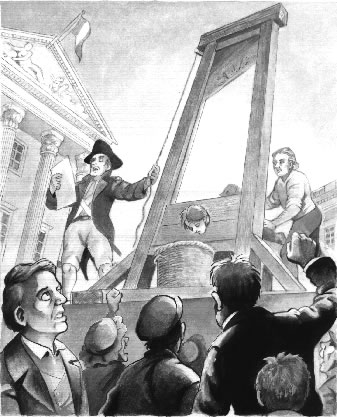
Crowd gathering around a guillotine execution

The king wisely had the computer scientist beheaded, and they all lived happily ever after.
{ 3 comments }

Podcast: Tucows Goes to the TRAFFIC Conference

by Joey deVilla on June 29, 2007

Photo: Traffic in Taiwan

Over at the Tucows Blog, I’ve got a podcast in which I interview Adam Eisner, Product Manager for Domains, about his experiences at the recent TRAFFIC conference (“the premier conference for the domain industry”).

{ 0 comments }

Graphic: Flying GNU and Penguin
Free as in godawful design.

In case you hadn’t heard (or, in case you actually cared), the Free Software Foundation is releasing version 3 of the GPL today. As you might expect, today’s iPhone release is eclipsing GPL v3′s release, but the FSF are undeterred in their mission. In fact, they’re using this coincidence to remind you that the iPhone is a proprietary device with proprietary software created by a proprietary company:

Peter Brown, the executive director of the Boston-based FSF, is also anticipating that the iPhone will include some free software licensed under the GPL. “On June 29, Steve Jobs and Apple will release a product crippled with proprietary software and digital restrictions: crippled, because a device that isn’t under the control of its owner works against the interests of its owner,” he said.

“We know that Apple has built its operating system, OS X, and its Web browser, Safari, using GPL-covered work. It will be interesting to see to what extent the iPhone uses GPL’d software,” he said.

Version 3 of the GPL fights the most recent attempts to take the freedom out of free software, and attacks “Tivoization”—devices that are built with free software but use technical measures to prevent users from making modifications to the software—which could prove to be a problem for Apple and the iPhone, he said.

Of course, if Free Software were the deciding factor for consumers, the GP2X would be the hot ticket in handheld games, not the Nintendo DS. And the hot console would be the…well, the Free Software console that someone will work on, as soon as they’re done with the HURD.

As much as I love and use Free Software, I’ve become quite cynical about its major proponents and figureheads. Whenever I hear someone say “As a card-carrying member of the FSF”, I automatically equate it in my mind with Grampa Simpson’s declartion, “I am not a crackpot!” [MP3 link]

Graphic: Grampa Simpson yelling at someone
Click the image to hear an MP3 of Grampa Simpson saying “I am not a crackpot!”

{ 0 comments }

“The Cult of the Amateur”, by Andrew Keen

by Joey deVilla on June 29, 2007

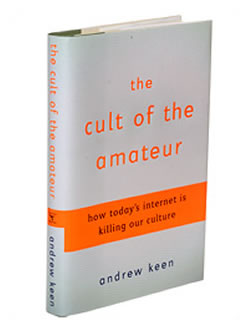
Photo: “The Cult of the Amateur” by Andrew KeenThe Ginger Ninja and I had a little time to kill before flying home from Connecticut last Sunday, so we headed over to Borders to get some cheap books.

Right now, thanks to a combination of:

…it’s far better for us Canadians to buy books in the states.

While at Borders, I saw a display full of Andrew Keen’s The Cult of the Amateur, whose subtitle is How Today’s Internet Is Killing Our Culture, which is covered in today’s New York Times. I had enough time to read the opening chapters and came to my conclusion, an old stand-by for stupid, reactionary works: I’ve seen better paper after wiping my ass.

I plan to write a more detailed review and compare it to David Weinberger’s Everything is Miscellaneous, which I received during my visit to the Berkman Center for Internet and Society at Harvard last week. However, I’m loath to fork over ducats to line Mr. Keen’s pokcets, which would only encourage him to keep going. Perhaps one of you has a copy that s/he’d like to sell me?

In lieu of such a review, let me point you to Larry Lessig’s blog entry on it, and more importantly, this comment made in response to said blog entry:

Keen’s a tool. I don’t need to read his book.

What have institutions added to our culture in the last hundred and fifty years?

Nothing.

If they had been running Rodin’s shop they would have thrown out the “mistake” that revolutionized his work. When a plaster model fell over, breaking the arm off, Rodin liked it. And changed art forever.

What has Keen done?

Besides edit and criticize?

Amateurs create signal, institutions mediate it—but can never improve it, only standardize it.

Every time an artist steps into new territory, he or she is, by definition, an amateur. We could quadruple the number of institutions and credentialed practitioners and never gain a single thing culturally, economically, educationally or personally.

This is nothing more than some weird kind of complete self-hatred.

No Sun Ra, no Sex Pistols, No Rolling Stones, no Knut Hamsum, no Pushkin, no Ginsberg — no nobody.

The answer is to stop fixing content prices and allow the market to differentiate itself just like every other market does. We have all the jeans we could ever hope to care about. Why not allow premium content to do the same with movies, books, magazines, music and TV?

It will eventually happen once digital distribution finishes destroying the very institutions Keen is trying to impress.

It’s not a moral question but a economic one.

{ 0 comments }

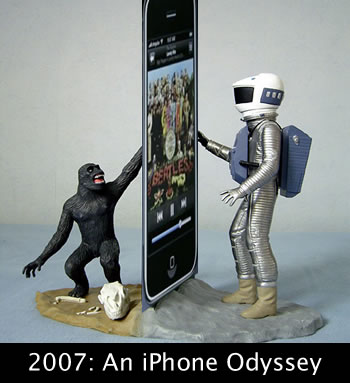
2007: An iPhone Odyssey

by Joey deVilla on June 29, 2007

Ain’t it just my luck. As I was whipping up this graphic:

Photo: “2007: An iPhone Odyssey”, featuring and ape and Bowman from the movie, touching an iPhone monolith

and this graphic:

Photo: “The Dawn of Man” scene from “2001″, with an iPhone replacing the monolith

I decided to do a little Googling and discovered that not only had I been beaten to the punch, I had also been beaten spectacularly, as this iPhone-based spoof of 2001 shows:

Ah well.

Anyhow, all this is preamble for the best advice I’ve seen regarding the iPhone, especially if you’re in the grips of severe technolust (like my friend and coworker James “For the last time, that’s my real name!” Koole, for instance). It’s a piece by Jeff Atwood in his always-excellent blog Coding Horror titled Why You Don’t Want an iPhone — Yet. If you can’t be bothered to read the whole thing, worry not — the meat of the essay is in this line, which I repeat here:

It’s not my goal to crush anyone’s dreams of owning their first iPhone. I know you’ve heard this a million times, but never, never has it been more true for any technology product: wait for version 2.0 before buying.

This goes double for folks like me, who live in Canada (Toronto, a.k.a. Accordion City, in my case). Even if the iPhone were available in Canada today, the data rates here are just so ridiculous that it’s not worth going online with your phone.

So when it comes to all the hype and cajoling to get my paws on an iPhone, my reply, in keeping with the 2001: A Space Odyssey theme of this entry will be…

Photo: The big red eye of Hal 9000 from “2001″

“I’m sorry, Steve, I’m afraid I can’t do that.”

(Well, not just yet, anyway…)

{ 0 comments }

Yet Another Excuse to Play “World of Warcraft”

by Joey deVilla on June 28, 2007

MMORPGs Build Business Skills?

According to a study by IBM and Seriosity, playing massively multiplayer online role-playing games isn’t a waste of time — in fact, it can build valuable business skills:

A study released by IBM and collaboration software maker Seriosity found significant parallels between business leaders and MMPORG gamers.

MMPORG games, which include World of Warcraft, Eve Online and EverQuest, can include millions of players who come together in various groups to accomplish a specific mission or task.

Gamers learn collaboration, self-organization, risk taking, openness, influence and how to earn incentives when involved in a MMPORG, according to a study of 200 members of IBM’s internal gaming community.

“Smart organizations are recognizing valued employees who play online games and apply their skills and experiences as virtual leaders to their ‘real world’ jobs,” says Jim Spohrer, IBM Research Center’s director of services research.

Half of survey participants said playing MMPORGs improved their “real world” leadership skills, while 4 out of 10 surveyed indicated they have applied such game leadership techniques to the workplace.

The survey found that leadership roles are far more fleeting among MMPORG players than in the real world. Leadership is viewed as a role an individual plays to accomplish a specific task, rather than one that remains for an indefinite duration.

I personally know a couple of big-shots who spend a fair bit of time playing World of Warcraft, even when they’re on the road: Joi Ito and my boss’ boss’ boss, Tucows CEO Elliot Noss. Perhaps I should buttonhole fearless leader and see if I can’t get him to do a podcast interview about his adventures on World of Warcraft.

The Dangers of World of Warcraft

I can’t resist including the comic below, The Dangers of World of Warcraft in this article. It’s an old “Dangers of Alcoholism” comic re-jigged to poke fun at people hooked on this very addictive game. Click it to see the full-sized version.

Comic: The Dangers of World of Warcraft
Click the comic to see it at full size.
Comic courtesy of Miss Fipi Lele.

{ 12 comments }

Grand Theft Auto IV: Trailer #2 Out Today

by Joey deVilla on June 28, 2007

The new trailer for Rockstar’s upcoming Grand Theft Auto IV came out today. I really want this sucker for my birthday!

Scenes from the new Grand Theft Auto IV Trailer.
Click the picture to see the trailer.

I rather like the music for the trailer, but am no longer hip enough to identify it. Can anyone tell me what it is?

{ 12 comments }

The Lightswitch That Might Explain a Lot About Java

by Joey deVilla on June 28, 2007

John Maeda at The Laws of Simplicity has an interesting photo of a lightswitch at Sun Labs:

Lightswitch at Sun with a lot of confusing features and instructions.
Click the photo to see the original.

He writes:

I gave a talk at Sun Labs where I encountered a special light switch in one of their conference rooms. At first I thought it was some kind of silly “engineer” joke. But the light switch functions as stated for real. Does it win the award for the most confusing light switch? I bet there are other ones out there that are equally complex to use.

The lightswitch design philosophy at Sun is quite clearly reflected in Java.

{ 0 comments }

Photo: Coffee being poured into a cup.

[Full disclosure: I work for Tucows as their tech evangelist!]

I’m going to present another set of results from The Duke of URL, an application I wrote to showcase the advanced domain name lookup features of the Tucows API. Given a word or phrase, the Duke makes a single API call yielding these results:

  • The availabilty of .com, .net and .org domain names for the word or phrase
  • Up to 15 Premium Domain Names — that is .com, .net and .org names based on the word or phrase that are available on the domain name aftermarket
  • Up to 100 suggestions for .com, .net and .org names based on the word or phrase that are available

Let’s take a look at some results from the Duke based on one of my favourite beverages: coffee.

Premium Domain Names Based on “Coffee”

Here are some premium domain names based on the word “coffee” that are available right now:

Premium Domain Price
choicecoffee.com 3400.00
coffeeart.com 5000.00
coffeebooks.com 3400.00
coffeecart.com 3288.00
coffeechat.com 3988.00
coffeeforum.com 4820.00
coffeegourmet.com 3888.00
coffeeguru.com 4688.00
coffeejunkie.com 3288.00
coffeekiosks.com 3490.00
coffeestation.com 4488.00
coffeestores.com 3488.00
nationalcoffee.com 3020.00
primocoffee.com 3288.00
teacoffee.com 4688.00

Coffeegourmet.com is my favourite of the bunch.

Premium Domain Names Based on “Cafe”

Here are some premium domain names based on the word “coffee” that are available right now:

Premium Domain Price
cafebistro.com 4088.00
cafebombay.com 3470.00
cafeeuropa.com 5000.00
cafefresh.com 3900.00
citymarketcafe.com 3288.00
classicrockcafe.com 3700.00
jetsetcafe.com 3410.00
koreancafe.com 4730.00
lebanesecafe.com 4150.00
moderncafe.com 3688.00
poetrycafe.com 3688.00
recafe.com 4088.00
starlightcafe.com 3288.00
theatercafe.com 5000.00
voodoocafe.com 4200.00

If I were going to open a cafe, I’d take VoodooCafe.com and go with the “Voodoo Cafe” name for the business.

Premium Domain Names Based on “Caffeine”

Here are some premium domain names based on the word “coffee” that are available right now:

Premium Domain Price
caffeine-connection.com 1850.00
caffeine-pills.com 800.00
caffeinebuzz.com 1888.00
caffeineconnection.com 2000.00
caffeinedrink.com 1500.00
caffeinedrug.com 850.00
caffeinedrugs.com 900.00
caffeinefacts.com 850.00
caffeineheadache.com 750.00
caffeinenation.com 1888.00
caffeinepowder.com 750.00
caffeinestore.com 850.00
caffeinetablet.com 1300.00
caffeinetablets.com 1700.00
caffeinetshirt.com 950.00

I rather like caffeinebuzz.com.

For More Info

If you’d like to learn more about Premium Domain Names, check out these links:

{ 0 comments }

Dog pooping

In testing The Duke of URL, my application that displays available domain names, domain name suggestions and available domain aftermarket names based on a word or phrase you enter (see this entry for details), I tried a number of interesting words. This week, I’ll present the results of these tests.

Today’s word is poop, and here are the Premium Domain Names that are based on it and for sale:

Premium Domain Price
dog-poop.com 800.00
insidepoop.com 1088.00
poopheads.com 1188.00
poopismyfriend.com 248.00
pooplab.com 1088.00
scoopthatpoop.com 488.00

{ 0 comments }

Last Tuesday, I had the good fortune of being able to attend a Tuesday luncheon session at the Berkman Center for Internet and Society at Harvard. Doubling my good fortune was the speaker, who was none other than danah boyd, who talked about her research into MySpace and other social networking sites and their use by youth. It was during this presentation that I first heard her thesis about the class divide between MySpace and Facebook, which has since become a popular topic thanks to her recent posting on the topic.

I took notes and photos during her presentation and present them below…

danah boyd making her “MyFriends, MySpace” presentation at the Berkman Center
danah boyd making her “MyFriends, MySpace” presentation at the Berkman Center at Harvard, Tuesday, June 19th, 2007.

To Begin, Some Quotes from Teenagers…

  • “If you’re not on MySpace, you don’t exist” — Skyler Sierra
  • “My mom doesn’t let me out of the house…” — desperate desire to be social, even in the face of increasing strictness

Who is danah boyd and What Does She Do?

  • What danah does: ethonography, which means “writing culture”
  • Her field of study: youth in America
  • In her studies, she’s been moving between online and offline worlds
  • Since 2004, she’s been “hanging out in and being present among youth culture”, doing things like:
    • Fast food places and malls
    • Riding buses when school’s out
    • Interviewing not only youth, but parents, pastors, teachers, etc.
    • Looking over something int he area of 10,000 MySpace profiles

Networked Publics

  • 55% of online American teens 12 – 17 claim to have a profile on some social software system.
  • Note that these are teens who will admit this sort of thing in front of their parents; the actual number is porbably higher
  • A social software system can be called a networked public
  • What is a networked public?
    • A space or collection of people that exist within and through tools that network people
    • Sometimes it’s a civic space, sometimes it’s not
    • Usenet was an early form of networked public
    • As time passed, people migrated to mailing lists, which are also a networked public
    • Then, with the web explosion, people moved to forums, which are also networked publics
    • And now, in the Web 2.0 age, we’ve got social software, which are also networked publics
  • Early networked publics — newsgroups, mailing lists and forums — were organized by topic
  • Web 2.0 changes rules of organization — now they’re arranged by friends and communities

Friendster

  • One of the earliest social software sites
  • Not mainstream — its populace fell could be divided into three categories:
    • Self-defined geeks. It was popular among geeks in San Francisco, who in 2003 — the afternath of the dot-com bubble bursting — had lots of spare time.
    • “Freaks” (as in counter-culture). A large number of the freaks were Burning Man regulars who used Friendster communicate with fellow “Burners”.
    • Queers (mostly gay men in New York). Gay men in New York City were using Friendster to arrange “hook-ups”
  • In June 2003, Friendster hit the mainstream news, with 300,000 users, most of whom were active
  • A distinction arose between real friends and Frienster friends — “She’s not my friend, she’s my Friendster”
  • Friendster was originally designed to be a place to find and arrnaged dates
  • As such, its creators tried to enforce rules that fit its intended purpose:
    • No fake images: you were supposed to use only a real photo of yourself in a profile, not an icon or avatar a la LiveJournal
    • Profiles were formal
    • No “Fakesters” — that is, no fake personas or pseudonyms. Each Friendster profile had to correspond to a real person
  • Trying to make people follow these rules was like playing “Whack-a-mole”:
    • Rather than treating it like a dating site, as its creators intended, people treated it as a fun online space and a place to experiment with self-expression
    • People created fake profiles, a.k.a. “Fakesters” for all sorts of reasons
    • Some people created fake profiles — usually with a very attractive photo — simply to build a collection of friends
    • Friendster didn’t have groups like Facebook’s, so some people created Fakesters for this purpose. Harvard had a fakester so that Harvard people could find each other.
  • While these transgressions of the rules served Friendster’s users well, they did not align with the creators’ wishes
  • The creators responded not by listening to their users base, but by killing off the goofy things, which in turn killed off some of Friendster’s useful populations

MySpace

  • Right from the very beginning, MySpace was meant to be a complete rip-off of Friendster
  • MySpace’s creators reached out to people kicked off from Friendster for various transgressions
  • One crowd the MySpace creators actively courted from the beginning were independent rock musicians:
    • Many indie rockers were kicked off Friendster for using Fakesters to network with their fans
    • They listened to their indie rock band users and added features they requested
    • L.A. music promoters started using MySpace as a means of tracking and communicating with music and DJ event fans
    • Bands started using MySpace to convince clubs to book them — “Check out our MySpace page! See all the fans we have!”
  • The first group of music fans to make use of MySpace were the 21+ crowd
  • The younger people began to join
  • Kids want to read about youth slightly older than them — consider that the readers of Seventeen magazine are on average 13 years old
  • MySpace began extending it “downward reach”, age wise: they dropped the minimum age to join from 16 to 14. 14 is as low as they can go without requiring parental consent or getting into dangerous legal territory
  • The first kids to join MySpace were the “arts scene” kids in high school
  • They liked being able to collect friends
  • A teen found that the MySpace people weren’t too tech savvy, and that they didn’t filter a lot of their input. He found that he could include HTML tags in all sort of MySpace input and started using them
  • Rather than try to stop this, the MySpace people allowed it and observed how people took advantage of the oversight
  • This led to what danah called “Copy/paste literacy” — people knew enough to figure out what HTML and JavaScript code to copy from other people’s MySpace sites, but not enough to know how it worked
  • One side effect of this was the rise of phishing on MySpace

danah boyd making her “MyFriends, MySpace” presentation at the Berkman Center
danah boyd’s presentation at the Berkman Center, June 19th, 2007.

Properties of Social Networking Sites

  • Most social networking sites provide these three things:
    • A Profile, where you can provide a picture and other information about yourself
    • A mechanism that allows you to declare other members as “Friends”. Note that “Friends” in the system is a different concept from real-life friends:
    • Friends in the system aren’t all people whom you trust or are close to. Sometimes, you declare people as friends when:
      • You want to look cool (especially if these people are popular)
      • You want to get to know them
      • They’re a band you like
      • “Why not?”
      • It seems impolite to say “no”
    • Ability to write public comments. This got started in Friendster as “testimonials” and lives on in MySpace as comments and Facebook as “The Wall”.
    • In Friendster, there were two highly followed Fakesters, “Table Salt” and “Pepper”, who would write glowing, gushing testimonials of each other
    • Strangely enough, people don’t seem to mind communicating to each other in public. In Facebook, over 66% of the messaging is done by writing on people’s walls, as opposed to using private messages
  • Unlike “real-world” publics like the park or the mall, networked publics have these qailities:
    • Persistence: What you “say” in a networked public can last at least as long as the service does
    • Searchability: And in a matter of seconds, too.
    • Replicability: What you “say” in a networked public can easily be copied
    • Invisible audience: You don’t know how many “witnesses” are around to “hear” what you “say” — nobody? A few people? Tens? Hundreds? Thousands? Even more?
  • Given these properties, young people have found ways to make sense of it all
  • Online spaces, like real life spaces, have rules…
  • The “like-minds effect” of the early internet disappeared after the boom
  • You might have many audiences, for which a different “voice” is best. Which voice do you use?
  • Celebrities and their effects on these new publics:
    • This generation is growing up with celebrity-style publics
    • They’re getting their cues from Paris Hilton, and the lesson is that it’s better to be public and be seen than private and invisible
  • Kids are turning to networked publics to get access to publics that would otherwise be denied to them

The Creation of the Teenager and the Rise of Age Segregation

  • During the Great Depression, moral reformers teamed up with the government to instill the high school regime
  • This led to the rise of age segregation
  • They created sports and other extra-curricular activites to keep people off the street and away from labour organizers
  • Having adolescents occupied with high school was protection for the labour force, so they wouldn’t be displaced by these younger, more able-bodied people
  • High school’s system of age segregation led to the rise of bullying, which was a largely unknown phenomenon before 1950
  • The term “teenager” was created in 1941 by marketers
  • Another effect of age segregation: adults don’t understand young people
  • Fear of things like the Catholic church scandals is reinforcing age segregation
  • Another effect: teenagers are kept out of public life
  • Teen mobility is becoming increasingly limited:
    • Urban and suburban design is such that cars are necessary, limiting access to many places
    • Even in cities with good public transit systems, many kids aren’t let out of sight. In the UK, people are practically terrified to let the kids out of the house
  • These days, kid time is high structured. Think of the rise of things like “play dates”, the increase is extra-curricular activities and so on — all upper-middle class phenomena

Messaging in Public

  • Why are people on social networking sites like Facebook communicating by writing comments on the publicly-viewable wall as opposed to sending private messages?
  • One reason: It makes for better “cred” for social interactions
  • It provides control of the situation:
    • Many kids break up not in person, but in mediated fashion: through phone, IM or MySpace
    • Breaking up this way allows for control of the conversation
    • It provides witnesses. People “hear” what you said, rather than “what she said you said”
  • Database rules as a reflection of real life: in MySpace, deleting a friend deletes their comments. It effectively “wipes them out”, at least in your world
  • Friend deletion is rare, which makes deletion a very strong statement
  • “You write your community into being”

An Interesting Tidbit About MySpace Profiles

  • 2/3 of MySpace profiles are private

danah boyd and Ethan Zuckerman at the Berkman Center.
danah boyd and Berkman Center fellow Ethan Zuckerman.

“The Most Dramatic Part of MySpace

  • MySpace’s “Top 8″ feature — where you can rank friends as your “top 8″ — is the most dramatic part of MySpace
  • Many fights ensue as a result of people being added to or removed from a friend’s Top 8
  • To quote one teenager, MySpace’s Top 8 is “the new dangling carrot for gaining superficial acceptance”

Dodging audiences

  • Which audiences do kids want to dodge? It’s people with direct power over them, such as their parents
  • “Chi-mos” or child molesters are not as big a problem as spammers and scammers
  • How do you evade people in a networked public?
    • You can build walls — things that keep unwanted audiences out — through lies
    • You can make demands to the people who run the sites, asking for features that allow you to evade people
    • You can “play ostrich”, which is the number one way adults deal with panic of publics
  • The assumption that what you plut online is public only to people like you is based on an assumption we make based on physical space

Public Life is Changing

  • We don’t have the techniques to educate people about how to interact within networked publics
  • The new generation is one that wants to socialize, but is constrained by time and structure
  • Email is dead to young people. It’s used as a means of communicating with people who have power over them
  • In social software, you click on a person’s pic and you know it’s them
  • Social software message systems have less spam
  • The rates are getting better — better than 10 cents per SMS
  • Outside the US, social network sites are profile-centric as opposed to message-centric
  • Meanwhile, it’s rude to SMS cause we have to pay to get the message.

Question-and-Answer/Discussion Session

These network publics are for-profit, which means that business decisions shape them. Are the users cognizant of that? Does it affect their decisions?

  • My activist self wantsd to believe that the users are aware of that, but sadly, that’s not the case
  • To them, seeing ads means that the service is free
  • Kids are so used to being blasted with ads that they don’t notice them
  • There is a sharp divide between the MySpace and Facebook cultures: Facebook is working class and subculture, which Facebook is upper-middle-class and college-bound
  • This divide is playing out at all sorts of levels
  • Note that the U.S. military is banning the use of MySpace, but not Facebook. They’re banning what the soldiers are using, not what the officers are using.
  • In Facebook culture, it’s better to be less commercial and more tasteful. Ads in Facebook are more like Google ads
  • In MySpace culture, it’s all about bling, so loud ads are acceptable and commercialization is cool
  • “They don’t know a world that’s not commercial. They don’t know a public life that’s not commercial”
  • But there’s no way to support a system like MySpace without commercials
  • Advertisers and social netowrking site creators are iterating based on youth desires — it’s not that kids don’t want ads, they don’t want ads that aren’t relevant to them.

What do you think the next step for social networking sites will be?

  • That kind of stuff is always hard to predict
  • I don’t think that that immersion — a la Second Life or World of Warcraft — will be the next big thing
  • Rather, I think that mobile — access via phones or phone-like devices — will be the next big thing
  • There are two possible mobile futures:
    • Genuine wireless, where there’s no “carrier barrier”
    • Something like Blyk, where you get a free mobile phone in exchange for viewing ads
  • Growth will affect what becomes the next big thing. If you’re dealing with people on Wall Street, you need to demonstrate that your social networking site will grow.
  • But growth means dealing with multiple audiences, which leads to fragmentation
  • Consider Facebook: it’s gaining an older audience at the cost of its younger audience
  • Successful social software needs cluster effects
  • If only 80% of your friends can participate, you won’t
  • An interesting aside: many MySpace users have their profiles managed by other people — friends, girlfriends and so on. People know each other’s login credentials
  • On successful social software sites, everyone participates at different levels

Can social networking sites be used to counteract some of the effects of age segregation, the way things like Hakim Bey’s “Temporary Autonomous Zones” or World of Warcraft, where people of different ages and other classifications seem to?

  • It’s tricky
  • The vast majority of teens are talking to ony to people within their groups
  • They’re told that all adult strangers are bad
  • “My mom says it’s okay to talk to you”
  • Recounted a story about a lost boy scout troop that took longer to find because they were hiding from search parties, all of whom were adult strangers. They were rescued only when the search parties clued into this and brought children with them
  • The online world is probably not the place to introduce adult strangers
  • There’s been a pervasive sense of “Stranger Danger” since 2000
  • It’s a problem for reasearchers trying to talk to kids
  • Adults are doing a bad job of navigating the future — you’ll have to navigate the future yourself

Have you seen any differences in the ways boys and girls use social networking sites?

  • “Most of it’s not surprising”
  • Many boys’ profiles are created by their girlfriends
  • There seems to be equal numbers of boys and girls
  • When it comes to ad-hoc socialization, it seems to be stronger on the girls’ side. Data from Pew Research confirms that they use to maintain contacts
  • Boys are more likely to talk to strangers — “especially hot ones” and more likely to collect strangers in their friends lists
  • Girls more active in terms of deep participation
  • Girls know the copy/paste stuff, boys know HTML and proxies
  • The predator panic did damage to MySpace
  • Kids are switching to Facebook because “it’s where my friends are and it’s where mom lets me go”

There was some discussion about the “NYU 2011″ Facebook group, a group of kids who are graduating from high school this summer and will be attending New York University as the class fo 2011 in the fall. In essence, they’ll be “meeting” each other ahead of time, something that wasn’t possible when most of us were in college.

  • This sort of “pre-meeting” online might take away from the excitement
  • Might foster self-selecting groups — consider homophily
  • It’s not clear what cause-and-effects of homophily are
  • More things in common: more likely that you’ll stick
  • Consider the side effect of “Stranger Danger”
  • Colleges are social experiments

What are the reasons provided by the minority of kids who don’t participate in these sites?

  • Parents don’t allow it
  • Church doesn’t allow it — although some are providing alternatives like Jerry Falwell’s Battle Cry
  • Some claim that they’re “too cool” to participate
  • Of the people who aren’t already online, 75% don’t want to be
  • Online access transcends race and class, although the kids in inner cities know how to access the proxies

Moms with kids use the net to skip past time constraints. Do teen parents use the net similarly?

  • Typically, teens with kids are living at home and get their advice from their parents
  • Social networking sites are not being used by teen parents as a way of communicating with other teen parents

Social networking sites are now a part of youth culture. What do you think we should do?

  • Currently, there are 57 pieces of legislation to ban these sites
  • We need to educate people about negotiating these publics
  • Rather than give edicts to young people, make them think about these publics. One way: Morality plays that start with the question “How would you feel if…?” — Ask questions, make ‘em work on hypotheticals!
  • We make so much fuss about online sexual predators, and then jail them, only to release them a very short time later. Don’t make new laws, enforce the existing ones!
  • Street outreach programs have proven their worth in the real world — perhaps it’s time for an online equivalent
  • We need to figure out what to do about “Stranger Danger”

{ 6 comments }

Tucows Introduces Premium Domains

by Joey deVilla on June 22, 2007

Man flashing a dog in the woods.

Full Discloure Time: Before I begin, let me make it very clear: I work for Tucows. I hold the position of Technical Evangelist, and my job is to extol the virtues of Tucows’ services to technical audiences as well as curious laypeople.

The Domain Name Aftermarket

There used to be a time when a domain could fall under one of two categories:

  • It was available, which meant that you could buy it
  • It was taken, which meant that it was in use

That’s changed. These days, “taken” doesn’t mean necessarily mean that you can’t acquire it. Many taken domain names live in domain name portfolios, which are pools of domain names that have been purchased for later resale. The set of all such portfolios out there is collectively referred to as the domain name aftermarket.

Venn diagram showing the domain name aftermarket as a subset of domains that are taken.
Image from the Tucows Premium Domains Screencast. Click to watch the screencast.

Oftentimes, the “unavailable” domain name that you want is actually for sale, but most domain name vendors don’t make that clear — they simply say that the domain name is taken. Even if you’re aware of the aftermarket, you have to search several portfolios to see if the domain name that you want is there.

Tucows’ Premium Domain Names service makes life easier for customers of Tucows’ domain name partners. We connect our partners with a number of domain name portfolios so that they can offer their customers domain names from a number of portfolios, opening a universe of names that they otherwise wouldn’t know were for sale. Best of all, purchasing one of these premium domain names hides the complexities of transferring the domain name — the transfer takes less than 60 seconds, and to the customer, it’s as quick as buying an available domain name!

domain-name-aftermarket-2.jpg
Image from the Tucows Premium Domains Screencast. Click to watch the screencast.

Want to find out more? Let me point to you a couple of places with the details:

  • There’s an entertaining screencast with me chatting with Tucows Domain product manager Adam Eisner about Tucows Premium Domains.
  • I’ve written version 2.0 of The Duke of URL, a cute little demo app that shows the Tucows API’s features for checking domain name availability, finding premium domain names and making domain name suggestions.
  • Tucows also has an information page on its Premium Domains.

{ 0 comments }

The World Needs More Dialog Boxes Like This

by Joey deVilla on June 21, 2007

Here’s a dialog box from Aegisub, an application for subtitling video:

Dialog box from Aegisub warning of the dangers of using “Comic Sans”
Screen capture courtesy of Miss Fipi Lele.

For the benefit of RSS readers and search engines, here’s the text of the dialog box:

You have chosen to use the “Comic Sans” font. As a programmer and a typesetter, I must urge you to reconsider. Comic Sans is the most abused font in the history of computing, so please avoid using it unless it’s REALLY suitable. Thanks.

I’m really glad that such a dialog box exists!

If you’d like to join the cause to rid the world of that horrible font, I suggest that you visit the Ban Comic Sans site.

{ 40 comments }