Gatherings

sharepoint and cloud

Yaroslav Pentsarskyy is a busy guy. He’s a Technical Specialist with Habanero, Systems Architect at Bluekarbon, SharePoint MVP, author, and a TechDays presenter. He’ll be doing the IE9 Turbo Talk on Tuesday and the Microsoft SharePoint Server 2010 for Developers of Microsoft ASP.NET presentation on Wednesday.

If you can’t catch him at TechDays Calgary (taking place this Tuesday and Wednesday), you’re in luck: Yaroslav will be doing a presentation on Tuesday night at Calspug – the Calgary SharePoint User Group. His presentation: Taking Your Existing SharePoint 2010 Solution to the Cloud. Here are the details:

Topic

Taking Your Existing SharePoint 2010 Solution to the Cloud

Audience

SharePoint application/solution developers and architects

Abstract

In the last year – there has been significant interest in hosting SharePoint solutions in the cloud. There are many vendors out there offering SharePoint 2010 hosting in the cloud. This session will focus on understanding key differences that affect solution development for the cloud. Developers will learn how they can leverage their existing tools to create basic and advanced solutions ready for the cloud.

Time, Place and Other Details

  • When: Tuesday, December 14, 6:00 – 7:30 p.m. (doors open at 5:30)
  • Where: Global Knowledge (formerly Nexient) 2nd Floor Training Centre
    144 – 4 Avenue SW, Suite 200
  • Cost: Free
  • Donations: Calspug is accepting non-perishable food item donation for the Calgary IF Food Bank. Bring something!
  • Food and beverages will be provided

Bonus Goodies

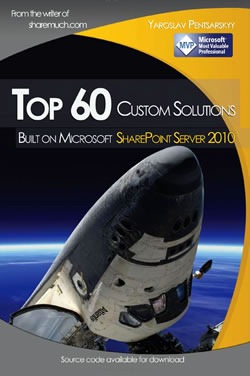
yaroslav book

Yaroslav will be giving away copies of his book, Top 60 Custom Solutions Built on Microsoft SharePoint Server 2010.

Registration

Registration for this event is free – just sign up on the registration page.

This article also appears in Canadian Developer Connection.

{ 0 comments }

AzureFest

by Joey deVilla on December 12, 2010

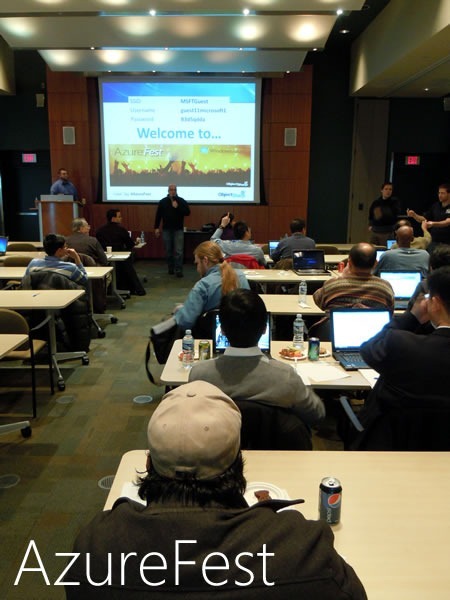
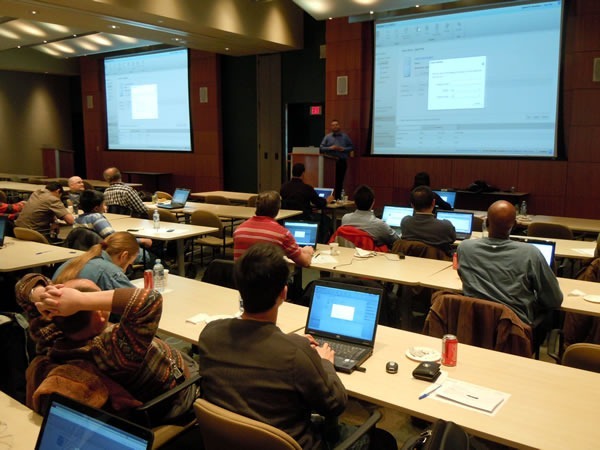
AzureFest attendees in Microsoft Canada's MPR room watch Cory Fowler and Barry Gervin at the front of the room.

AzureFest, the get-together where developers and aspiring developers learn how to use and deploy applications and databases to Azure, took place at Microsoft Canada headquarters in Mississauga on Saturday.

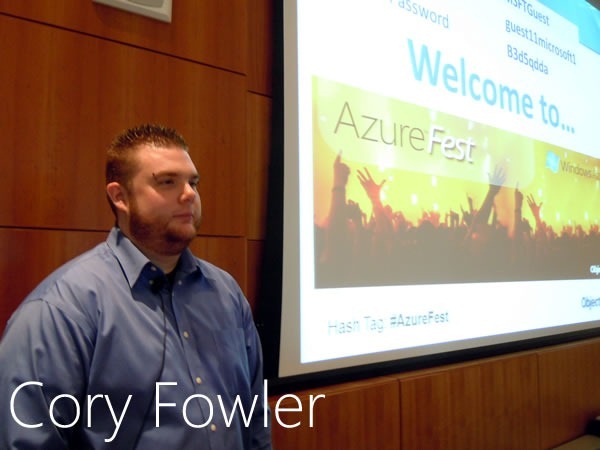
Cory Fowler stands beside the big screen in Microsoft Canada's MPR room

The event was held by our partners ObjectSharp and led by Cory Fowler, an Azure MVP. There was a morning sessions and an afternoon session, and my rough estimation of both events put the attendance at around 130 in total.

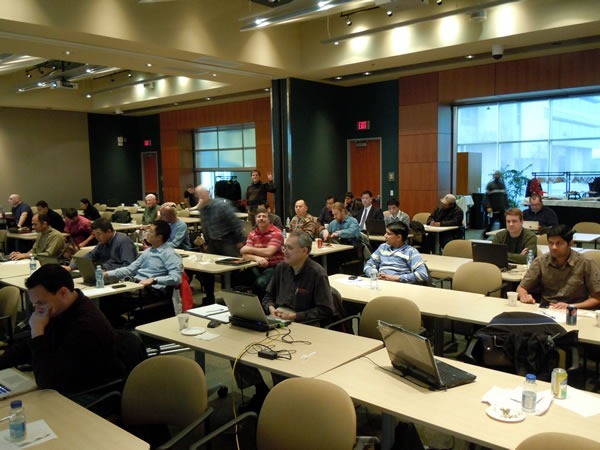
The AzureFest attendees, working away at their computers.

Each three-hour session consisted of a quick overview of the Azure platform, the distribution of all the necessary developer tools, signing up for an Azure account and using the prototyping-and-wallet-friendly Introductory Special and deploying that old ASP.NET MVC standby app NerdDinner and its associated database to the cloud. The three-hour format covered more practical ground than the typical one-hour conference session and gave Cory and the ObjectSharpies a chance to make themselves available for one-on-one assistance.

Cory taking the AzureFest attendees through one more example

In Case You Missed AzureFest…

If you couldn’t make it down to Mississauga to participate in AzureFest, you can still benefit from the AzureFest session. The ObjectSharpies are recording a version of Cory’s Azure deployment walkthrough and making it available online. Watch this blog for more details.

Try Azure and Get Some Money for Your User Group!

If you’re the member of a Canadian Microsoft User Group, you can help them make a quick $25 which they can use to fund their activities. All you have to do is:

  • Open an Azure account: either the introductory special offer or using the Azure benefit that comes with your MSDN subscription
  • Deploy an application – any application, including pre-written ones like NerdDinner – to Azure
  • Send an email to cdnazure@microsoft.com with the following:
    • A screenshot of your application running on Azure
    • The name of the user group to which you’d like to get $25
    • Feedback about your experience with Azure

This article also appears in Canadian Developer Connection.

{ 0 comments }

Friday Morning Ritual

by Joey deVilla on December 5, 2010

Biking Downtown

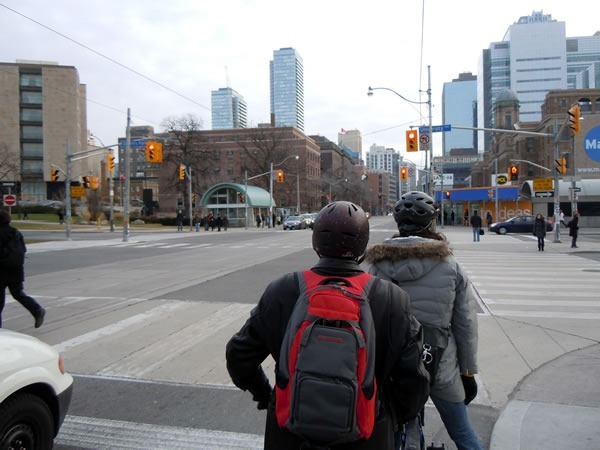
View from the eastbound bike lane at University Avenue and College street, with two cyclists ahead

With Accordion City’s rapid transit being quite prone to delay and the distance from my home in High Park to downtown being just over 7 km (about 4.5 miles), biking downtown is often just as quick as taking the subway. Biking has the added benefit of “free” exercise in addition to getting me from point A to point B, hence my tendency to get to the core via two wheels whenever possible and practical.

College Street is a good east/west thoroughfare for bikes. It’s mostly level, many parts of it have a dedicated bike lane, there’s lots to see and some good places to stop by if you have the time, and during the day, it doesn’t get as congested as some of the east/west streets further south.

I shot the photo above at the corner of College and University. The eastbound bike lane on this part of College at the time I took it – around 8:30 a.m. on a Friday – is usually quite full. I was at the head of a pack of bikes, with these two cyclists ahead of me and another half dozen or so clumped behind me. Most of the cyclists appeared to be students or people who worked in places with casual dress codes, although I saw a couple of guys in suits with their right pant legs strapped (so as not to get caught in the gears) and with executive-type leather laptop bags slung over their shoulders.

Greg Wilson’s Nerd Breakfast

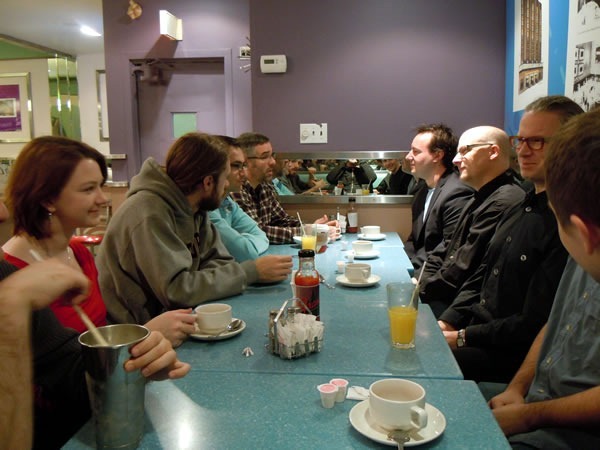
A long booth at Fran's diner, with assorted Toronto nerds drinking coffee and conversing

The reason I was biking downtown was to attend Greg Wilson’s weekly nerd breakfast. I first met Greg via email when he was doing some editorial work for Dr. Dobb’s Journal (back when it was still available in dead-tree form) and asked me to write a couple of book reviews, then in person through DemoCamp and various activities he organized when he was one of University of Toronto’s best-loved computer science profs.

He’s since left academia and is working on his own, and that’s why he holds these weekly breakfasts. Escaping the Land of Cubicles and working on your own has many perquisites, but one of the big downsides is the isolation. Greg holds a Friday morning breakfast gathering at Fran’s near Yonge and College as a way of staying in touch with his peers, and it’s become a Friday morning ritual for local nerds both student and professional, indie and corporate.

If you’re a techie local to Toronto and want to catch one of these breakfasts or become a regular, I’m sure Greg wouldn’t mind if you simply dropped by. We’re usually at the back of Fran’s on Fridays from 8:30 a.m. to 9:15-ish.

This article also appears in Canadian Developer Connection.

{ 0 comments }

Technologic’s Inaugural Gathering

by Joey deVilla on December 3, 2010

technologic logo

Last night, I helped my friends at Unspace with the inaugural session of Technologic, their new monthly series of gatherings that’s part cocktail party, part mini-conference, part salon (in the sense of bright people getting together informally to share ideas rather than in the hair salon sense).
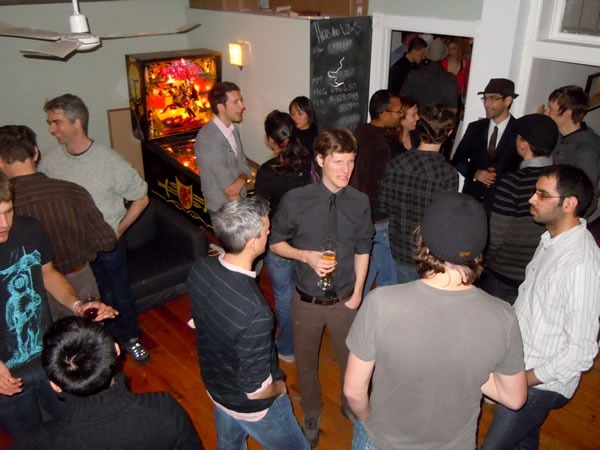
Unspace's "pinball room", filled with nerdy partygoers.

The event was held at their office, which is located in Toronto’s Queen West, a neighbourhood that mixes boutique-type shops, resto-bar/night club type-places and a number of start-ups and tech consultancies.
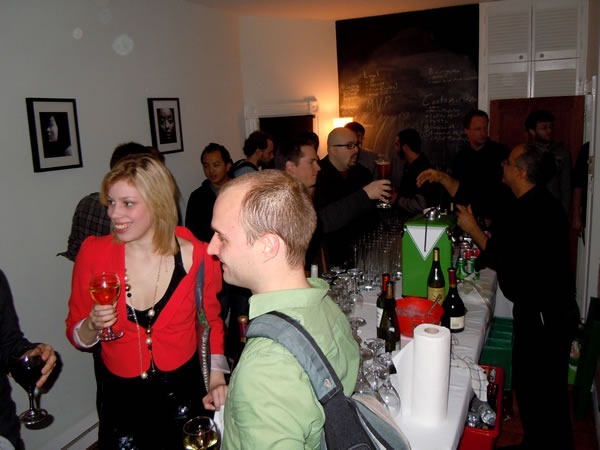
Unspace's boardroom, converted into a bar, filled with nerdy partygoers

Unspace have strong ties to the Toronto developer community and a reputation for putting on some of the best indie developer conferences around, having set the bar rather high with RubyFringe and FutureRuby. Technologic is but one of their big plans for the coming year, and these plans are going to make Toronto’s developer scene even more interesting. Better still, they’ve invited me to help out with these events whenever I’m available. Looks like I’m going to be the Microsoft go-to guy at these events, as well as someone you talk with about development, the industry, or whatever else you like.
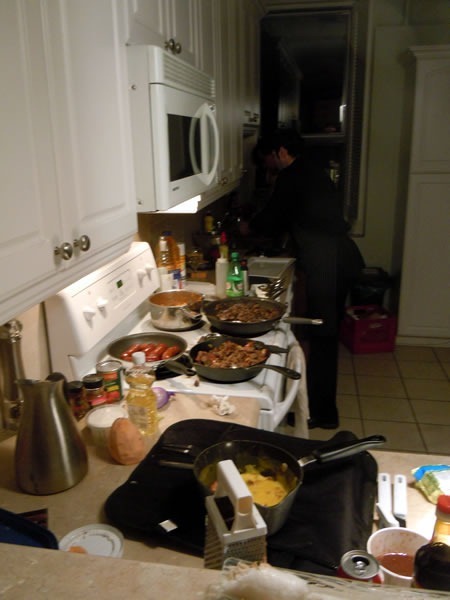
Unspace's kitchen, with the catering crew preparing food

There were no pizzas, box lunches or other food typical of developer gatherings. They did charge a cover, but it went to good use – they got a catering service to make use of their kitchen (Unspace’s office could easily be converted into a very sweet downtown condo) and crank out some excellent hors d’oeuvres: chili meatballs, chorizo sausage, egg rolls, mushrooms and goat cheese in pastry and my favourite: puff pastry filled with bacon custard. I will have to atone for my dietary sins in the gym this weekend.
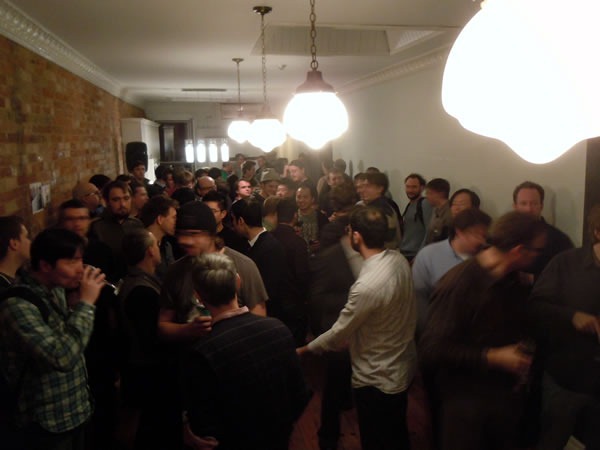
Unspace's bullpen, cleared of desks and filled with Technologic attendees

The photos above and below show the Unspace bullpen. Normally it’s packed with desks and bookshelves, but they cleared the room in order to create a makeshift standing-room-only conference space, with a riser at one end of the room functioning as a stage. With the initial drinks and food served, the attendees were herded here so we could start the presentation portion of the evening.
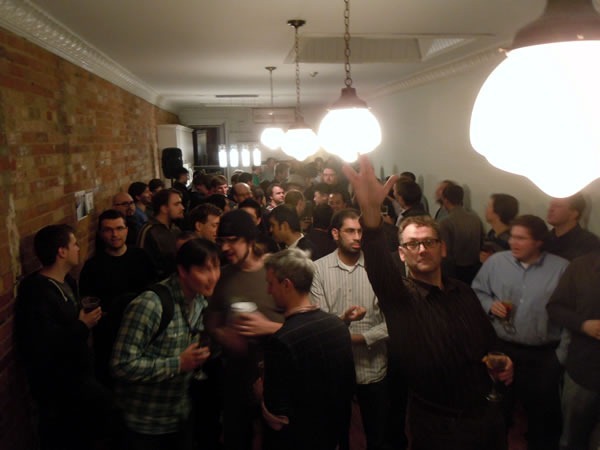
Unspace's bullpen, cleared of desks and filled with Technologic attendees

It started off with a quick intro by Unspace partner and master planner of all events social, Meghann Millard:
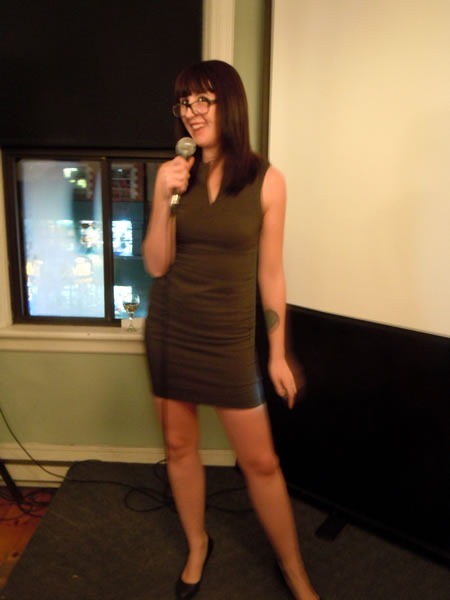
Meghann Millard onstage

And with the quick intro out of the way, Reg “raganwald” Braithwaite took to the stage for the first lightning talk.
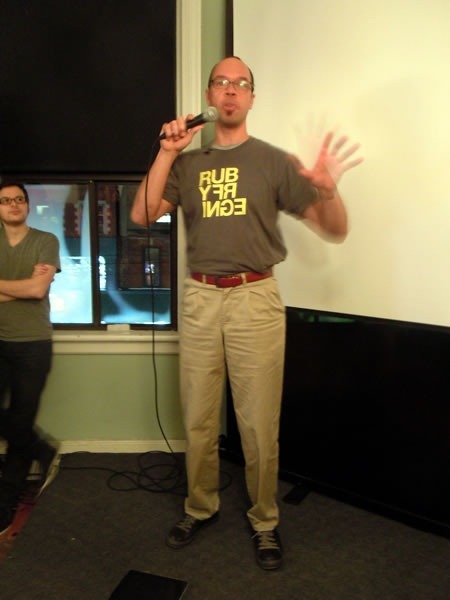
Reg Braithwaite giving his presentation

Reg’s talk was titled Bullshit, and it was about how many of the popular beliefs held by computer programmers may just be that. Sure, we believe that object-oriented programming makes us more productive than structured programming, but can we actually prove it? Or that you can be more productive or less error-prone or some other superlative in programming language X than programming language Y? Or that pair programming produces benefits other than preventing you from constantly checking your email or idly following Digg/Reddit/Hacker News links?

As you can see in the photo below, taken during Reg’s presentation, the topic gave them considerable food for thought:
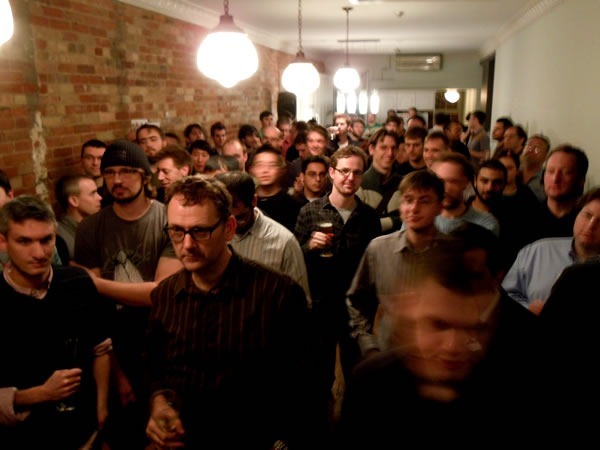
Reg Braithwaite's audience, a packed room of nerds, as seen from the stage area

Next up was Unspace partner Pete Forde, who talked about one of Unspace’s current projects, a web application that lets people who make TV shows and films find music for the soundtracks based on criteria like style and mood.
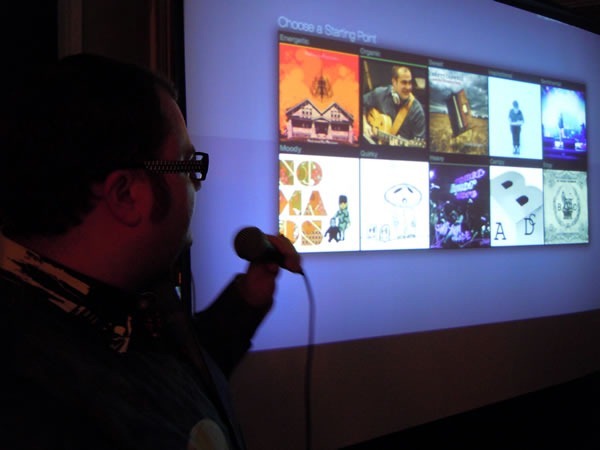
Pete Forde showing off the screens from the music web app

The application makes great use of HTML5 to create a slick yet usable user interface that would’ve been all but impossible in web pages only a little while back.

I got called into my role as “Guy who can kill time onstage while the big presenter sets up” and a couple of jokes and a performance of the Oompa Loompa Service Pack 2 song later, Rails core team/Merb Guy/jQuery core team guy Yehuda Katz took the stage for the big presentation, titled Explaining What You Do.
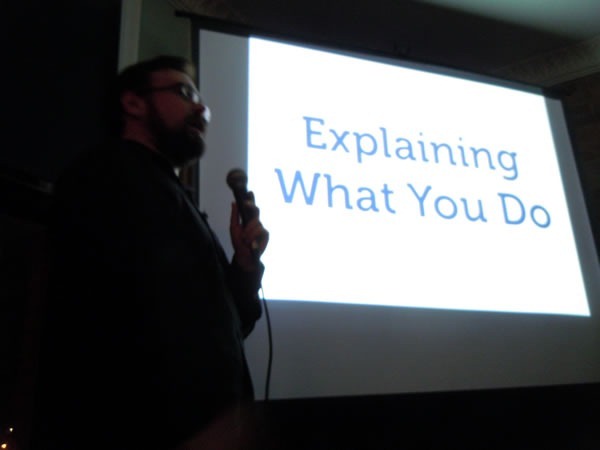
Yehuda Katz giving his presentation with a slide in the background that reads "Explaining What You Do"

This was a non-technical talk for techies and focused on explaining to laypeople – specifically, the creatives and “suits” with who we work or who are our clients – what it is we do and what the technology we work with does. All too often, we techie types take a techno-snobbish, high-priesthood kind of attitude and expect laypeople to learn about our world, all the while refusing to learn about their work. Yehuda’s talk was about the first step in fixing that relationship and explaining our work to laypeople so that we can work with them better. I certainly hope that it’s not the last time he gives this talk – there are a lot of developers who need to hear this message.
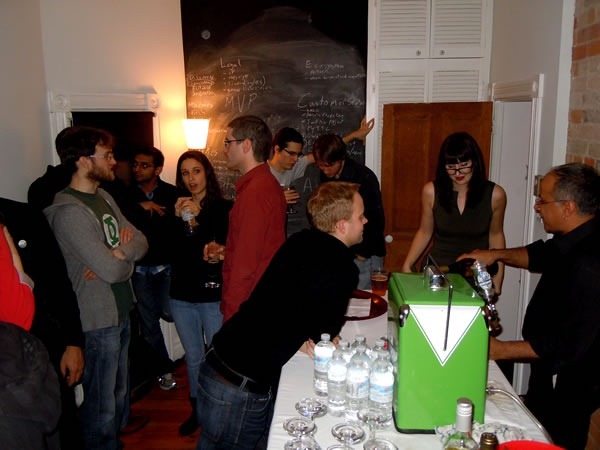
The bar at Technologic

With the presentations done, it was back to the cocktail party / salon aspect of the night, with good food and drink, good conversation and great people to share both with. A number of people asked me for a quick Windows Phone 7 demo, a request that I’m always happy to oblige, and I helped point people with questions about various Microsoft tools and technologies (namely ASP.NET MVC and Azure) in the right direction. It’s also good just to hang out with the folks who make Toronto’s tech scene fun, interesting and motivating.

Kudos to Unspace for putting on a great event! When I find out the details of January’s Technologic, along with the other things that Unspace is planning, I’ll let you know – I’d love to see you there!

Want to Find Out More About Technologic?
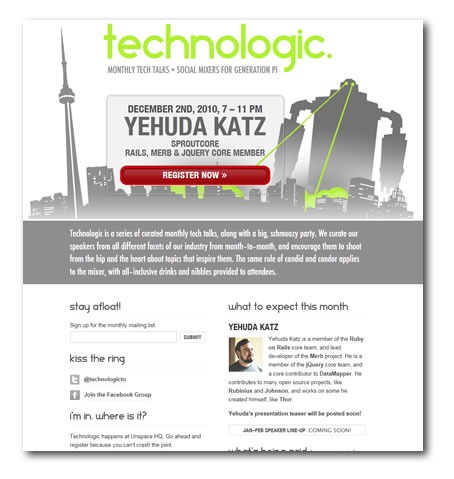
technologic site

Check out their site at technologicto.com, and also keep an eye on their Twitter account (@technologicto) as well as their hashtag (#technologicto).

This article also appears in Canadian Developer Connection.

{ 1 comment }

TSOT’s Ruby/Rails Project Night — Next Tuesday!

by Joey deVilla on January 4, 2008

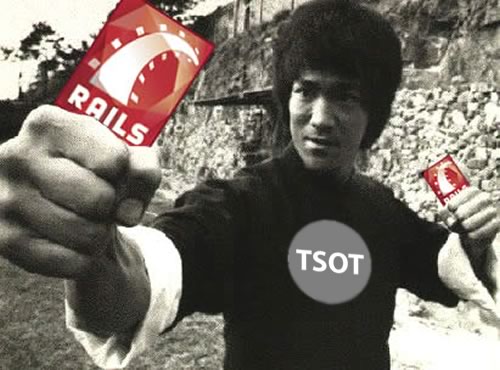
Bruce Lee, wearing a TSOT t-shirt and holding Ruby on Rails nunchuks.

Don’t forget: TSOT’s first Ruby/Rails project night takes place next Tuesday! Admission is free, but space is limited, so sign up now!

The Quick Version

TSOT Ruby/Rails Night
Tuesday, January 8th, 2008 (and the second Tuesday of every month)
@ TSOT’s office — 151 Bloor Street West (on the south side, just east of Avenue Road)
11th floor
Door open and food at 5:30 p.m.
Presentations start at 6-ish
FREE ADMISSION (but limited space)
To register, please email joey.devilla@tsotinc.com

About TSOT

TSOT is a Toronto-based start-up that develops — look out, here come the buzzwords — social networking applications using Ruby on Rails. Our first applications are FraternityLive and SororityLive, social software built specifically for people in fraternities and sororities. Both apps are currently being tested with a userbase of thousands of university students and alumni, and we expect to release them in early 2008.

About Ruby/Rails Project Nights

We believe that it’s good for Toronto to have a healthy developer ecosystem — it’s good not only for us as a Toronto-based development shop, but also as a group of developers who are passionate about the work we do. We’d like to see Toronto as “Silicon Valley++” — with the vibrant high-tech scene, but with all the amenities that make Toronto a better place to live than the Valley (such as not being a dreary 50-mile stretch of suburbia and having decent places to go at night).

Hence our contribution to the local developer scene: TSOT Ruby/Rails Project Nights, which will take place on the second Tuesday of every month. They’ll feature in-depth presentations by developers working on interesting projects — primarily Ruby and Ruby on Rails — along with drinks and munchies and a chance to socialize with your fellow developers. They’ll be hosted by Yours Truly, TSOT developer and DemoCamp regular Joey “Accordion Guy” deVilla.

The First Night: Next Tuesday, January 8th

This first Ruby/Rails Night will feature presentations by a couple of Ruby/Rails local heroes on their current Ruby/Rails projects:

The doors will open at 5:30, the first presentation will start at about 6, and we hope to wrap up the evening by 8:30 or 9. We’ll provide food and drinks, and if there’s enough of a demand, we can always go out to a nearby pub afterwards. There’s no cost to attend (but be advised that seating is limited).

If you’ve been thinking about making a Ruby or Rails presentation (perhaps you want to rehearse for RailsConf 2008!), we’d like to have you present it at one of our project nights!

Add TSOT Ruby/Rails Nights to your list of New Year’s resolutions!

How Do I Register?

Registration is free, but space is limited. To register for the upcoming Jan 8th gathering, please email joey.devilla@tsotinc.com

For More Information

For more information about TSOT Project Nights, please contact:

The event is also listed on Upcoming.org.

{ 0 comments }

Here’s a quick reminder about TSOT’s upcoming Ruby/Rails night, which takes place on Tuesday, January 8th, 2008:

Bruce Lee, wearing a TSOT t-shirt and holding Ruby on Rails nunchuks.

TSOT Ruby/Rails Night
Tuesday, January 8th, 2008 (and the second Tuesday of every month)
@ TSOT’s office — 151 Bloor Street West (on the south side, just east of Avenue Road)
11th floor
Door open and food at 5:30 p.m.
Presentations start at 6-ish
FREE ADMISSION (but limited space)
To register, please email joey.devilla@tsotinc.com

For more details, see this entry or this page on Upcoming.org.

{ 0 comments }

Bruce Lee, wearing a TSOT t-shirt and holding Ruby on Rails nunchuks.

The Quick Version

TSOT Ruby/Rails Night
Tuesday, January 8th, 2008 (and the second Tuesday of every month)
@ TSOT’s office — 151 Bloor Street West (on the south side, just east of Avenue Road)
11th floor
Door open and food at 5:30 p.m.
Presentations start at 6-ish
FREE ADMISSION (but limited space)
To register, please email joey.devilla@tsotinc.com

About TSOT

TSOT is a Toronto-based start-up that develops — look out, here come the buzzwords — social networking applications using Ruby on Rails. Our first applications are FraternityLive and SororityLive, social software built specifically for people in fraternities and sororities. Both apps are currently being tested with a userbase of thousands of university students and alumni, and we expect to release them in early 2008.

About Ruby/Rails Project Nights

We believe that it’s good for Toronto to have a healthy developer ecosystem — it’s good not only for us as a Toronto-based development shop, but also as a group of developers who are passionate about the work we do. We’d like to see Toronto as “Silicon Valley++” — with the vibrant high-tech scene, but with all the amenities that make Toronto a better place to live than the Valley (such as not being a dreary 50-mile stretch of suburbia and having decent places to go at night).

Hence our contribution to the local developer scene: TSOT Ruby/Rails Project Nights, which will take place on the second Tuesday of every month. They’ll feature in-depth presentations by developers working on interesting projects — primarily Ruby and Ruby on Rails — along with drinks and munchies and a chance to socialize with your fellow developers. They’ll be hosted by Yours Truly, TSOT developer and DemoCamp regular Joey “Accordion Guy” deVilla.

The First Night: Tuesday, January 8th

This first Ruby/Rails Night will feature presentations by a couple of Ruby/Rails local heroes on their current Ruby/Rails projects:

The doors will open at 5:30, the first presentation will start at about 6, and we hope to wrap up the evening by 8:30 or 9. We’ll provide food and drinks, and if there’s enough of a demand, we can always go out to a nearby pub afterwards. There’s no cost to attend (but be advised that seating is limited).

If you’ve been thinking about making a Ruby or Rails presentation (perhaps you want to rehearse for RailsConf 2008!), we’d like to have you present it at one of our project nights!

Add TSOT Ruby/Rails Nights to your list of New Year’s resolutions!

How Do I Register?

Registration is free, but space is limited. To register for the upcoming Jan 8th gathering, please email joey.devilla@tsotinc.com

For More Information

For more information about TSOT Project Nights, please contact:

The event is also listed on Upcoming.org.

{ 0 comments }

DemoCamp 16 Tonight!

by Joey deVilla on December 3, 2007

DemoCamp 16 banner.

Don’t forget — DemoCamp 16, the show-and-tell and networking event for Toronto’s tech community takes place tonight at the Toronto Board of Trade in First Canadian Place.

As of this writing, there are 51 free tickets remaining, after which you’ll need to purchase one of the 74 outstanding $10 tickets. You can order a ticket on DemoCamp’s EventBrite page.

For more details about what’s happening tonight, see this entry.

{ 0 comments }

DemoCamp 16 — Monday, December 3rd

by Joey deVilla on November 30, 2007

DemoCamp 16

Sometimes it’s hard to believe, but it’s true: this Monday, December 3rd, we’ll be hosting the 16th DemoCamp at the Toronto Board of Trade (located in First Canadian Place). What started as a boardroom gathering of a couple of dozen Toronto-area developers showing their current projects to their peers has grown into the city’s premier techie networking event, and the inspiration for other local “Camp”-type gatherings.

Here’s the schedule of events:

5:00 Doors open
6:00 – 7:00 Demos (see below for details)
7:00 – 7:30 Break
7:30 – 8:00 Ignite presentations (see below for details)
9:00 To the pub!

Although the Toronto Board of Trade’s meeting room is very large (and has a cash bar to boot!), it has a limited capacity. If you want to attend DemoCamp, you need to sign up on the EventBrite board. As of this writing, there are 59 free attendance slots remaining; if those get used up, there are 78 $10 donation slots, the money from which will be used to help pay for the venue rental.

Some Quick Explanations

Demos are five-minute presentations where the presenter demonstrates one of his or her current projects in action. This isn’t your ordinary presentation: we only want to see your software in action — no slides are allowed! Think of demos as a geeky show-and-tell showing actual software in action rather than a marketing slideshow with a lot of handwaving.

Ignite Presentations are rapid-fire presentations in which the presenter talks over a set of 20 slides that are timed so that each is shown for 15 seconds (the slideshow runs automatically; the presenter just does the talking). The format helps to ensure that the presentations are interesting and get to the point!

And now, the demos and presentations…

Demos

Teaching Test Driven Development with UTest (Igor Foox)

UTest logo

UTest is a tool developed at the University of Toronto to allow students to submit test cases to be run against a professor’s solution to a programming assignment. We will be demoing UTest, as well as an Eclipse plug-in for UTest and explaining how we think it will help undergrad computer science students learn TDD. The community will get to see a new tool to improve the testing skills of their future employees! They will be able to tell us their feedback and so indirectly influence the skills that students graduating in a few years will have.

Sketch Based 3D Modeling with ShapeShop (Ryan Schmidt)


Shapeshop’s demo video. Can’t see the video? Click here.

I will demo a 3D “sketch-based” modeling system called ShapeShop that anyone can learn to use, and scales from simple toy models to significant complexity. Think Google SketchUp, but for everything from CAD to complex organic characters, instead of just blocky shapes.

I have been building it as part of my MSc/PhD research, since 2004. It is under active development, there have been 2 public releases and I just started releasing betas of version 3. My demo should be selected because everyone I have ever shown it to has enjoyed it, from 6-year olds to jaded computer graphics researchers. Also, it’s a good example of what is possible in university research environments.

The community will get a sense of where 3D modeling and user interfaces might be going in the future, and learn about some of the other stuff happening in the UofT lab that BumpTop came out of. They will also get some new software, because ShapeShop is free. 3D modeling software is really hard to use. I have spoken to lots of tech people who maybe want to make a 3D logo, so they try Blender, and it’s incomprehensible, so they give up. ShapeShop isn’t like that – a real, non-trivial model can be sketched in seconds. And it’s fun. And learning the basic interface is extremely easy. When I get kids using ShapeShop on a SmartBoard, we always have to tear them away. So, I’m pretty sure I can “wow” the democamp crowd. As for inspire, the only thing I can say is that I have recently been demo’ing ShapeShop at UofT recruitment events, and there is always a jump in downloads the next day. So, hopefully some people might be inspired to give 3D modeling another try. I guess it might also inspire other students to try to turn some of their projects/research into usable software.

Last but not least, I might have some huge new top-secret features that I will release during the demo, but I can’t promise anything until Monday when the conference reviews come back…

HealthSpoke Demo (Dan Donovan)

HealthSpoke logo

We will be demonstrating an early version of the HealthSpoke practice management and integrated wellness application. We will focus on some of the automated test tools (NUnit, WatiN) we are using and frameworks (Microsoft Application Blocks) that make our development life easier. This will give the community another example of the application of these tools to real-world projects, and hopefully give people some ideas on tools they can try as well.

Coming from Waterloo, I am looking to get involved in the Toronto tech / startup scene, and DemoCamp sounds like a great opportunity. We are working on an interesting Web 2.0 / Social Networking application applied to a niche market. Our presentation will provoke some thought on automated test frameworks, and how these can be implemented with limited resources from Day 1!

Web Groups – Virtual Team Collaboration (Scott Annan, Mercury Grove)

Webgroups screen capture

My name is Scott Annan and I have been involved in the camp scene for the last 2 years and an active member of the Ottawa startup scene, (where I live). I have also introduced and organized the democamp concept in Cincinnati and Lexington, KY.

I will be doing a demo of our Web Groups collaboration software which is used by over a dozen fortune-500 companies and several more small businesses ranging from floral consultants to international advertising agencies. I would like to provide a perspective on how we financed our business through consulting, and are purposely growing it without ANY investment in a traditional sales team or marketing (including Adwords). We may be able to use DemoCamp to make a new release / killer feature announcement.

SlashID – Anonymous Identity Provider (Zeev Lieber)

SlashID logo

We will demonstrate a fully AJAX-based Identity Management system which allows you to manage your passwords and personal data without disclosing them to our own server. Our approach to authentication and identity management differs from traditional ones in that nobody has to ever rely on us or trust us in any way to complete user authentication and personal data disclosure to different web services. We believe that SlashID is the right way to do identity management in the internet setting (as opposed to enterprise setting), since people are becoming increasingly aware of privacy and trust issues.

We want to raise awareness of our approach with the community, and demonstrate the benefits that our system provides to the websites – ease of registration, one click login, single sign on and keeping user’s data always up to date. All these result in better user experience and more users willing to register – which may translate to direct profit for commercial websites. While the procedure of logging in to a website has always been a hassle rather than something inspiring, we believe we can clearly show that hassle going away. We will show how you can login to any SlashID-enabled website with a single click.

We will also show how updating your personal data on our website automatically propagates to all websites you registered with. All this is possible to do from any computer with just a browser. No data stored on your computer, no data disclosed to our server, no plugin installation required. Our system was launched October 16th, and is available at our website.

Ignite Presentations

Co-Creating the Creative City (Mark Kuznicki)

Mark KuznickiRichard Florida, author of Rise of the Creative Class and Flight of the Creative Class now calls Toronto home. How can creative people – from artists to software developers – be engaged in the act of city-building? This presentation is intended to quickly get the community up to speed on the creative city idea and to inspire them to participate in making Toronto a better place to create.

By showing the connections between DemoCamp/BarCamp and Burning Man, I hope to shift the perceptions of the community to see how an artist and a developer might have values and interests in common, and to inspire the audience to find the spark of their creative souls while making the city a better place to live and work.

Understanding What Is and Isn’t Critical (Fraser Kelton, Adaptive Blue)

AdaptiveBlue logoIn a start-up, where resources are always tight, it’s important to understand what’s critical and what’s not needed. This Ignite Presentation will explore lessons learned (so far) while building our start-up. It’s a study in what we know now, what we didn’t know then, and what we (luckily) got right all along. The goal is to help the democamp community understand what is and isn’t necessary for building a web start-up. From product development to building community, biz dev to IT infrastructure, human resources to pitching VCs… all done in 20 slides. In 5 min.

This presentation should be selected because what we’ve learned over the past year will benefit many start-ups. The learning has occurred through a mix of hard work, serendipitous events, painful mistakes, and reflective moments and we’d like to share these lessons with the community in a fun, 5 min, presentation. Contrasting what we have and what we don’t gives some insight into what is necessary and what a start-up can do without. We have over one million downloads of our first product. We don’t have a single server. We have people in three countries. We don’t have an office. We have a CEO who handles front-line support. We don’t have company email… and so on.

The presentation will entertainingly explore how we got to where we are today by loving constraint and learning to bravely question everything. Inspiring tales, told over 15 seconds, drills home what is and isn’t critical to growing an idea into a company.

[Cross-posted to The Adventures of Accordion Guy in the 21st Century.]

{ 0 comments }

Notes from FacebookCamp Toronto 2, Part 3

by Joey deVilla on October 10, 2007

The crowd at FacebookCamp Toronto 2.
Photo taken by Joseph Thornley — click it to see the original on its Flickr page.

And now, the last of my notes from yesterday’s FacebookCamp Toronto 2. If you missed the first two parts, follow the links below:

Monetizing your Facebook Application (Greg Thomson)

  • What does he consider a “failed app”? “An app that has less than 10K active users”.
  • What does he consider a success? An app with about 250,000 installs. With that, he says he “could go full time”.
  • What’s an active user worth per year? “About $3″.
  • “You can’t just throw one banner up and hope to make it.”

Case Study: “My Garden” App:

  • Each flower was worth a certain number of coins
  • Each user has an allotment of coins — extra coins had to be paid with cash
  • The scheme to make money through coin sales didn’t work — “In my experience, users will generally not pay for things.”
  • Across his apps — the big one being “My Aquarium” — the installed base progression was from 0 to 250,000 to 8 million installs across apps
  • Did not add ads until his installed base hit the 250,000 mark, and he regrets that
  • Why wait so long before adding advertising? He was worried that they might drive users away.
  • This was not the case: users are used to ads
  • There is a hidden upside to starting late: he didn’t get discouraged at the beginning when ad revenues would have been small.
  • The money he’s making covers costs of servers “definitely starting to mount”
  • “You really need large numbers to effectively monetize applications.”
  • Some demographics:
    • 60% of the users generate of 90% of revenue
    • 30% generate zero revenue
    • The country breakdown of his users:
      • U.K.: 20%
      • U.S.: 20% — These users represent the best monetization opportunities — try to increase them!
      • Canada: 20%
      • Other countries: 40%

Revenue basics:

  • Appsaholic (Social media) — pay per click — average $0.10/click
  • Adsense (Google) — pay per click — average $0.07/click
  • Adsense worked well with “My Garden”, since its theme tended to result in relevant ads — ads for florists and the like.
  • Adsense didn’t work well for “My Aquarium”, since “people don’t really send each other fish” in real life, and the ads weren’t relevant.
  • Incentivize your users to complete offers: give them rewards in exchange for their completing surveys, which generate revenue

Create a new want:

  • Most of the popular applications are entertainment-based
  • Revnues for apps go through a cycle: start / peak / decline / plateau
  • One way to avoid or at least forestall plateaus is to cycle through ads — change them up often
  • You have to keep putting new stuff up — both content and ads
  • Change things! Vary the order of ads, or run slightly different ads — any variation helps!

What else?

  • Cross-promote other apps in your app to generate new users — he does this
  • In his experience — he can deliver 50,000 installs for other apps because of his user base
  • If your app is a good fit, you have the opportunity to do custom advertising with large brands — such as the “Zombies” app, which got sponsored by Resident Evil
  • Use A/B testing to maximize revenue — show 2 different variations of an ad — see which performs the best

Selling your app

  • No major acquisitions just yet
  • There was talk of the “Where I’ve Been” app getting bought, but it hasn’t happened yet
  • Expect to get $1 per installed user or $10 per daily active user
  • You should:
    • Have a base of banners
    • Build incentivizable offers
    • Get surveys through affiliate networks
  • Note that a lot of offers are not incentivizable
  • Up until a week and a half ago — all users on 1 app server and 1 DB server
  • There are 10 rendering servers for Flash and jpegs
  • What his time to market? “Keep it to a week. More than a week? The odds of failure go up dramatically.”
  • How long to 250,000 users? “2 weeks”.
  • How long to 8 million users? “Been doing this for 3 months now.”
  • His operating costs? For servers — $2,500 a month

Secrets of PayPal interface used by Gift Cards Facebook Application (Steve Pritchard)

Background

  • His “Gift Cards” application was a convergence of business opportunities:
    • He had a Toronto business associate with abundance of gift cards to give
    • Toronto has a high density of active Facebook users (remember, it’s the #2 Facebook city after London)
    • Obvious application fit for his business
  • The application cried out for PayPal interface
  • Wanted to offer a simple payment scheme
  • Wanted to avoid complex HTTPS interactions
  • “Challenged by the challenge”

Challenges

  • PayPal data does not fit on Facebook Canvas
  • Required pop-up window
  • Had to be done with IFRAME; and the canvas and IFRAME cannot communicate
  • PayPal pop-up window must have specified dimensions
  • Have to update canvas under all PayPal termination conditions
  • Had to sync 3 threads on 4 subsystems

Solutions

  • Solution: Get user to click twice:
    • First click to start the PayPal/Facebook sync loop
    • Second click to open the PayPal pop-up window
  • Gift Cards server mediates
  • Again, a click-twice user interface:
    • First click to start Facebook canvas polling cycle
    • The canvas’ PayPal “checkout” button is replaced with an IFRAME version
    • Then, the intermediate step of asking user to confirm amount
    • Generates 2nd click

Q & A

  • How long did it to develop? “I was learning Facebook, I was learning Paypal…so about a week.”

Cross-posted to the Tucows Developer Blog.

{ 0 comments }

Notes from FacebookCamp Toronto 2, Part 2

by Joey deVilla on October 10, 2007

Ami Vora making her presentation at FacebookCamp Toronto 2
Ami Vora making her presentation. Image taken from Pink Internet Marketing.

Here’s part 2 of my notes from last night’s FacebookCamp Toronto 2 sessions. In case you missed part one, it’s here.

Building an App for Your Brand (Janice Diner and Michael Scissons, Segal Communications)

Segal Communications:

  • What they do: “Create experiences that help companies build brands and generate sales”
  • Showed video of Segal’s work:
    • Club kids
    • Hip hop soundtrack
    • Images of events and apps
    • Split it — testimonials

The advertiser’s view:

  • Brands are either on Facebook or thinking about getting on Facebook
  • They still get some calls along the lines of: “I want my ad put on people’s profiles”
  • They work with brands to figure out “how to engage in this space”

Facebook applications

  • Top 44 apps = 200M installations
  • 16M daily active application users

Brands have these advertising options on Facebook:

  • Sponsored stories
  • Graphical ad units (a.k.a. “banners”)
  • Sponsored groups
  • Flyers
  • Branded app dev

Estimates:

  • 100s of millions of dollars have already been spent by brands on Facebook (source: eMarketer)
  • It is expected that $1 billion will be spent by brands on Facebook by the end of 2009 (source: eMarketer)
  • There are more than 41 million active Facebook users

Inroducing Janice: Creative Director

  • She’s been “playing w/ brands on Facebook for close to a year”

Apps engage users in a number of ways, among them:

  • Social experience
  • Personal publishing

Branded apps they’ve worked on include:

  • A “Rock Paper Scissors” game for Red Bull called Roshambull
  • A political views survey for the Washington Post called The Compass
  • A college roomate expense-sharing assistant for TD Canada Trust bank called Split It

Brand Social Network

  • The idea is to link a brand to an experience that is social in nature
  • How? By connect brands with Facebook’s social graph
  • The hope is to create community of “brand ambassadors”

Brand opportunity

  • Facebook presents a new opportunity to connect brands with consumers
  • It may also present new revenue models
  • There aren’t many branded apps yet
  • Many are still in development

Red Bull’s Roshambull app:

  • 360,000 installs
  • For the day of October 6th, 7000 people played it
  • “Our goal was to create an app that users would enjoy having on their profiles and would want to share with their friends”

Washington Post’s The Compass

  • A “political compass”-style app

TD Canada Trust’s Split It

  • Aimed at students, who have a hard time asking for/sharing money
  • Allows students sharing a residence to track expenses and split bills on Facebook
  • Launched August 2007, still looking to build user base

Brand apps get consumers talking:

  • More and more companies will be designing their own Facebook apps
  • Designing and spreading an app requires a unique set of skills
  • Success requires a solid understanding of consumer needs and wants
  • Segal: “Helping brands develop the ideal Facebook advertising solution”

Marketing Your Application Inside Facebook (Roy Pereira)

  • At the last FacebookCamp Toronto, Facebook rep Megan Marks said that there were “at least 12 different touch points for your application inside Facebook”.
  • What are these 12 ways?

Simple Advertising

  • Banners
  • Flyers (very cost-effective)
  • Sponsored news stories
  • Sponsored groups

Advertising in other applications

  • Banners in applications
  • Ads in profile box

Application Directory (“The boring way” / “Like going through the telephone book”)

  • What you say in the description, the name of your app, the icon — all go a long way

Application “Add” Page

Profile Page

  • Add the URLs for your apps in your profile’s “Web Sites” section

Status Updates

  • Promote your app in your status updates: “X is happy about his Y application”
  • Message Attachments — to wall or email
  • Invite requests

Notifications

  • Different from news feed
  • Directed at a user

(External) Emails

  • Probably going to be deprecated by Facebook

Mini-Feed (“By far the best way”)

  • Mini-Feed is shown only on a user’s profile
  • Mini-Feed does not have any view/post restrictions like Newsfeed
  • Not too many apps publish to the Mini-Feed (publishStoryToUser vs. publishActionOfUser for newsfeeds)

Newsfeed — guess of what you want to see

  • Newsfeed uses rules — is based on:
    • the actions your friends take
    • the privacy settings of everyone involved
  • Send lots of feeds — use photos — make relevant to events that triggered them

Analyzing the Top Applications (Jesse Hirsch)

  • Actually, don’t look just at the top, but the “mushy middle”
  • Facebook is a “Social Operating System” — and as an emerging ecosystem, it needs diversity to survive and thrive
  • When viewing your user base, consider “Total users” vs “Active users”
  • Active users are those who touch your app every day
  • The long tail still applies in the Facebook ecosystem — see O’Reilly’s active user drop off graph

Application Approach 1: Filling a Void

  • These are apps that fill some kind of need not filled by any other Facebook feature of application
  • They have “First past the post” momentum

Application Approach 2: Infectiousness

  • Simple – Easy to understand
  • Social – Involve action towards a friend
  • Viral – Each action encourages a new user to repeat cycle
  • Involve contests and competitions that reward participation

Application Approach 3: Exchanges and Expression

  • With our friends, we engage in a shared daily narrative and collaborate on building a semi-public stage upon which to act out
  • The same need drives blogging and LiveJournal

Application Approach 4: Integration and Enhancement

  • Success often results from the relevance of the content for users in general as well as a balance when it comes to messaging and notification

Application Approach 5: Ratings, Reviews and Favorites

  • Social hierarchy is important — an organizing principle — consider the “Top Friends” app
  • Taxonomy or folksonomy adds layers of value

Successful apps are:

  • Original – they are unique and useful
  • Infections – they encourage social transfer and promotion
  • Engaging – they facilitate ongoing use and acceptance
  • Integrated – they have relevance and add value
  • Empowering – they offer control and allow organization

Cross-posted to the Tucows Developer Blog.

{ 7 comments }

Notes from FacebookCamp Toronto 2, Part 1

by Joey deVilla on October 10, 2007

FacebookCamp Toronto logo

Last night was the second FacebookCamp Toronto, and I took notes. Here’s the first part, with more to follow later today…

Introductory Presentation

The introductory presentation was made by the FacebookCamp Toronto organizers: Roy Pereira, Colin Smillie and Andrew Cherwenka.

They thanks the event sponsors:

  • Facebook
  • Segal
  • Refresh Partners
  • Trapeze
  • MaRS

Some updates on things that have happened since the last FacebookCamp Toronto:

  • There are now more than 43 million active users
  • fbFund has been established:
    • $10M in capital (may grow over time)
    • Accepting applications for grants from US$25K – US$250K
  • FBML 1.1 and FB JavaScript have been released

Here’s what the Facebook application scene looks like right now:

  • About 5,500 approved applications:
    • 84 of these apps account for 90% of the usage
    • At this point, “It’s anyone’s game”
  • The primary measure of an application is no longer installs, but now daily active users
  • Having good functionality is now up there with being first (e.g. Consider the number of “wishlist”-type apps — there are about 18)
  • 9 of the top 20 apps come from from the same development shop

They showed a chart of the top 30 Facebook cities (in terms of membership), 9 of which are Canadian. The top five Facebook cities are:

  1. London, UK
  2. Toronto, Ontario, Canada
  3. Vancouver, British Columbia, Canada
  4. New York, New York, USA
  5. Chicago, Illinois, USA

In August 2007, Canada beat the UK for monthly visits to Facebook.

There are a number of upcoming FacebookCamps:

  • Vancouver: October 23rd
  • Montreal: November 7
  • Toronto: Early December 2007

There are also plans for a Toronto “FacebookWeekend”, a full-weekend developer workshop — perhaps in early December 2007.

Facebook Application Best Practices (Ami Vora, Facebook)

Who am I?

  • The lead of Platform Product Marketing for Facebook
  • Her job: make sure the developers out there are successful and that the developer community is healthy and growing

Facebook, as a whole, is…

  • A tech company intent on building a social utility
  • 45 million active users (that’s up from 34 million, which was the figure at the last FacebookCamp Toronto)
  • 250,000 new users sign on every day, which means there’s a 3% week-on-week growth

Who are the new users?

  • They’re typically age 25 and older
  • Everywhere outside the U.S. — that is, in places where Facebook didn’t get its start in universities — there’s even distribution of ages for Facebook users

Stats

  • U.S.: 18 million users
  • Canada: 6 million (“That one in every 5 Canadians!”)
  • U.K. 5 million
  • 60 billion pages served a month
  • More than 50% of our users visit at least once daily

The Social Graph

  • What makes people come back to the site?
  • For them, it’s all about the social graph: the network of connections in the real world through which people communicate and share info
  • In Facebook, they’re trying to create an accurate online analog of people’s real-world social graphs
  • Value of the social graph to photos:
    • Facebook’s “Photos” app is relatively simple compared to other photo-sharing sites — you can only upload and share
    • In spite of its lack of features, it still has more activity than other photo sites
    • Why? Facebook’s social graph
    • There’s a social context attached to the photos — you can tag the photo, specifying with who’s in it, and the tagged people are told that they’ve been tagged
    • Photos become social content
    • Photos are shared with exactly the people who are interested in them
  • Value of the social graph to events
    • Facebook’s “Events” app is relatively simple compared to other event-announcing sites
    • Once again, in spite of a lack of features, they see more event traffic than competitors (for example, they get 3 times eVite’s pageviews)

The Facebook platform provides 3 things:

  1. Mass distribution
  2. Deep integration
  3. New opportunities
  • They’ve tried to open every integration point available to their own developers to all outside developers
  • When developing a Facebook app, think about the value you’re adding to the user experience

Best practices for Facebook features:

  • Mini-Feed:
    • Good for “temporal information”
    • Used by people looking for the latest info about me
    • If your app posts items to the Mini-feed, include a friend of the user’s where possible (e.g. “Pete Forde tagged Joey in 2 photos.”)
  • Profile Box:
    • Not really for content
    • It’s a representation of the user
  • Canvas Page:
    • Use for heavy information
    • Use it for interaction to build connections
  • News Feed:
    • Shows connections
    • Great driver for future engagement — shows a preview of what you’ll see if you dive in

Opportunities — Building a business online, you’re concerned with

  • Growth
    • Access to millions of potential users
    • Viral distribution through the social graph
  • Engagement
    • 50% daily return rate
    • Social context provides opportunity for engaging content
  • Monetization
    • Freedom
    • Several monetization paths:
      • Relationship with an ad network
      • Partnership with a brand advertiser
      • Cross-promotion
      • Institutional investment
      • fbFund

fbFund

  • Meant to lower the barrier to entry
  • Small no-equity grants
  • Not Facebook’s money, but the money of early funders of Facebook
  • Right of first refusal to fbFund companies

Advice

  • Provide engaging content / focus on the social
  • Provide relevant info
  • Showcase interactions between users (“Everyone loves a little voyeurism”)
  • Focus on usability
  • Keep providing your users with fresh content
  • One good idea for fresh content: turn-based games
  • Use the integration points into Facebook well
  • Iterate often
  • Think about intelligent promotion
  • Incorporate privacy:
    • Think of privacy as an asset, not as something that weighs you down
    • Users are more willing to interact if they feel their privacy is being protected/respected

Platform growth

  • 4000+ applications
  • 100 new applications added per day
  • 80,000 developer keys
  • 80% of users have added at least one application (which means that users think of apps as a key part of their Facebook experience)

This is just the beginning!

  • “We’re only 4 months in, and we have a long way to go.”
  • We’ve all got the same users — we’re all trying to build the same user experience — our success is contingent upon each other.

The Q&A Session

Ami, on the relationships represented in Facebook: “‘We hooked up’ is not the best relationship descriptor.”

On limiting the clutter presented by all the apps:

  • A hard problem — considered it when they first decided to open Facebook to third-party apps
  • Try to keep the profile clean
  • You have free rein on the Canvas page
  • Note that if you collapse an app on your own profile, it’s collapsed on all the other profiles you see

Q: Any other incentives other than fbFund?

  • The goal is really to create an open market where incentives come to exist
  • Don’t really want to be in the incentive business themselves

Cross-posted to the Tucows Developer Blog

{ 0 comments }

FacebookCamp Toronto 2: Tuesday, October 9th

by Joey deVilla on October 5, 2007

FacehookedThe second FacebookCamp Toronto — a gathering for local techies interested in developing Facebook applications — takes place next Tuesday, October 9th, at the MaRS Centre (101 College Street, a stone’s throw from Queen’s park subway station). I was at the first FaceBookCamp Toronto, and if you’d like to see my notes, they’re here.

Speakers will include:

  • Ami Vora (Corporate Communications, Developer PR) from Facebook Inc., flying in from Palo Alto
  • Janice Diner (Creative Director) and Michael Scissons (Director of National Sales) from Segal Communications
  • Geoffrey B. Roche (President) from Lowe Roche

The last FacebookCamp was quite tech-heavy — the one, while still aimed at developing applications, will be more focused on the business, marketing, branding and promotional aspects. Here’s the schedule:

  • 6:00 – Social/Mingling
  • 6:30 – Intro – update from last FBCT (Roy Pereira / Colin Smillie /Andrew Cherwenka)
  • 6:35 – High level presentation on platform and best-practices (Ami Vora – Facebook Inc.)
  • 6:55 – Building an Application for a Brand (Michael Scissons & Janice Diner – Segal Communications)
  • 7:15 – How Many ways can you Market your Application Inside Facebook? (Roy Pereira)
  • 7:30 – Top Applications and Why They Work (Jesse Hirsh)
  • 7:45 – Monetizing your Facebook Application (Greg Thomson)
  • 8:00 – Secrets of PayPal interface used by Gift Cards Facebook Application (Steve Pritchard)
  • 8:15 – Demos: 5 minutes each ( 3 Slots )
    • Demo #1 – Dogbook / Catbook (Geoffrey B. Roche)
    • Demo #2 – WishList (Bogdan Arsenie)
    • Demo #3 – DreamBook (Phil Tucker)

For more information, consult the event’s Facebook page or its wiki page. See you there!

{ 0 comments }

Don’t Forget: Furries vs. Klingons Tomorrow!

by Joey deVilla on September 28, 2007

Small version of the “Furries vs. Klingons” posterWell, tomorrow’s the big night — the second annual bowling tournament where Atlanta-area Furries take on Atlanta-area Klingons takes place at Midtown Bowl (1936 Piedmont Cir NE, Atlanta, Georgia). A hearty Qa’pla! and Meow! to all who are attending!

Someone set up a poll at Poll Boutique where you can vote for your favourite team. As of this writing, the Furries and Klingons are dead even, each with 50% of the vote.

In honour of this weekend’s event, I would like to share the most appropriate music in my collection for this event: the ever-lovin’
Star Trek Fight Music [1.8MB MP3]. Enjoy!

{ 0 comments }

Don’t you hate discovering an interesting party just after you’ve confirmed your plans for the weekend?

“Furries vs. Klingons” promotional graphic
Click to see the image on its original page.

This Saturday, the MurrFurr Furries will take on the USS Republic Klingons in their second annual bowling competition at Midtown Bowl in Atlanta, Georgia. Attendees are encouraged to come in their suits, whether furry or Klingon.

If only this were available on pay-per-view…

{ 0 comments }