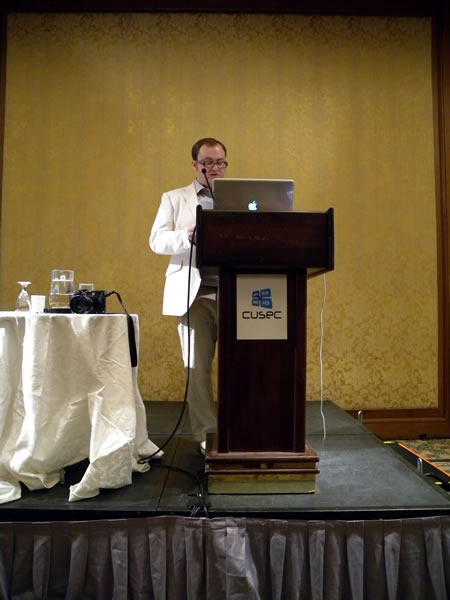
Here’s the second in my series of notes taken from keynotes at CUSEC 2010, the 2010 edition of the Canadian University Software Engineering Conference. These are from NSFW, a keynote given by my friend Pete Forde, partner at Unspace and one of the bright lights of Toronto’s tech scene.
My notes appear below. Pete’s posted his slides, notes and URLs online; be sure to check them out.
Introduction
“This talk is going to be adult,” began Pete. “If you can’t handle it, you should probably leave. I’ll buy you a Dasani afterwards.”
- I’m a partner at Unspace
- It’s a company where I decided to bet the farm on Rails, a platform I like
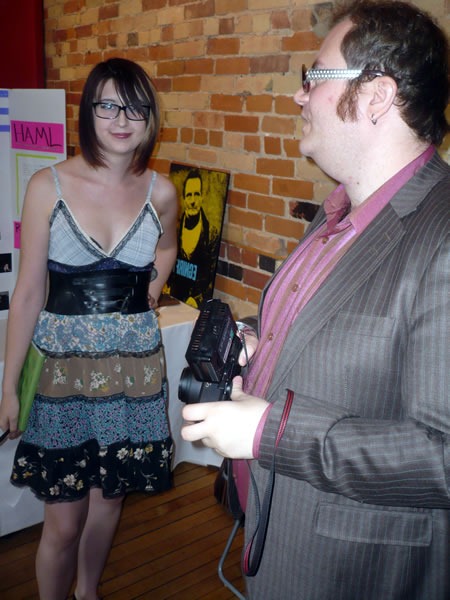
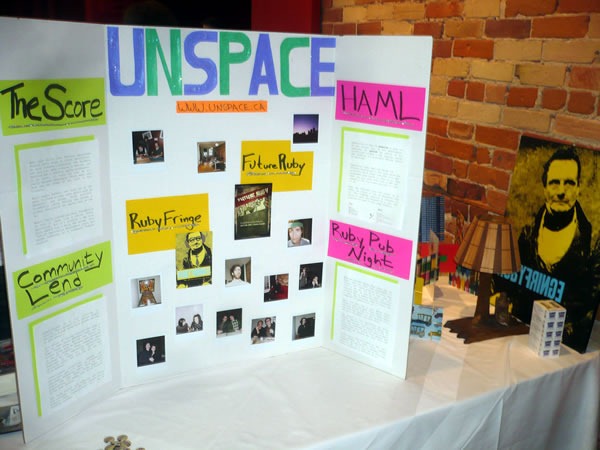
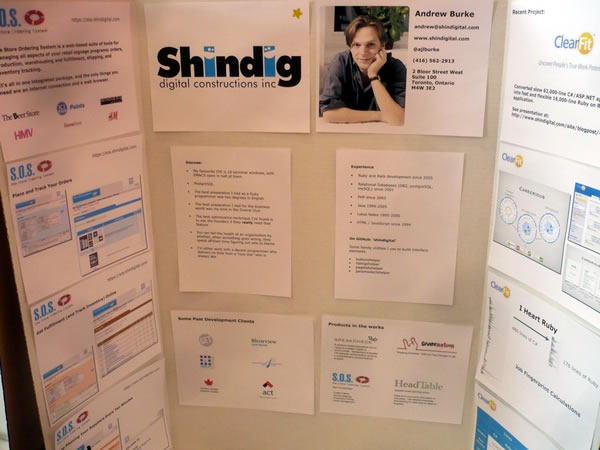
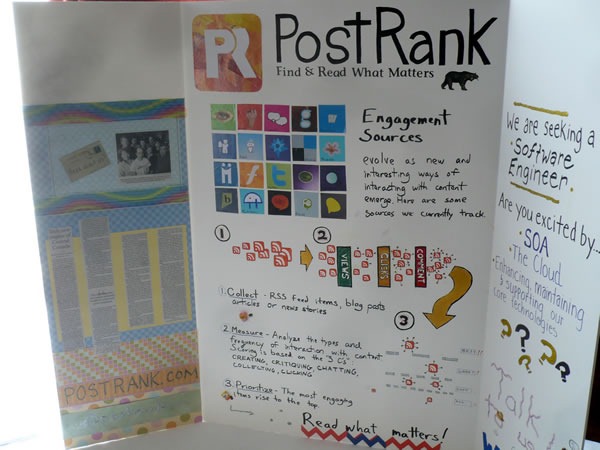
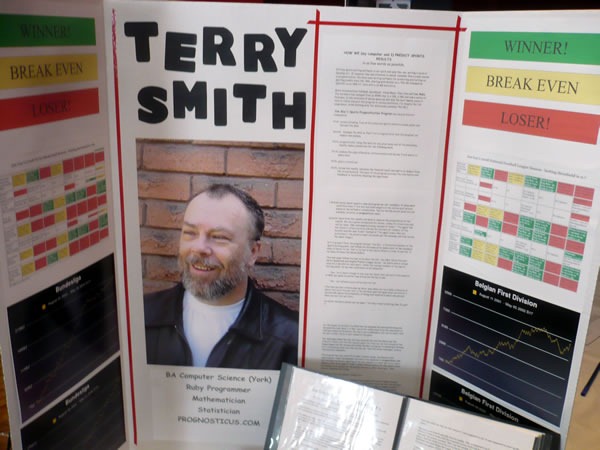
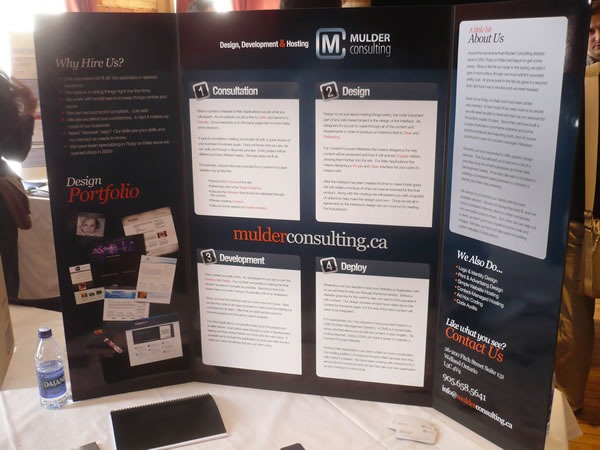
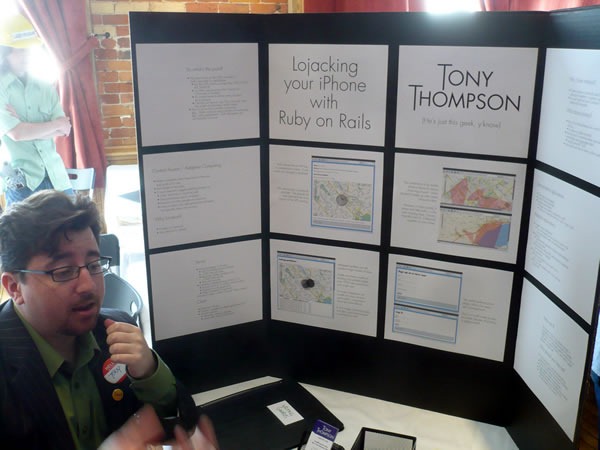
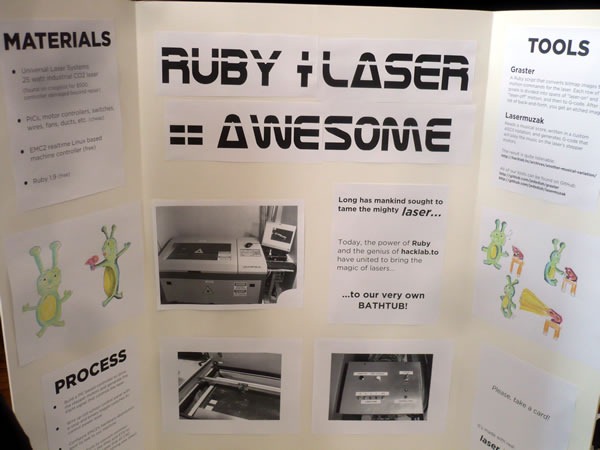
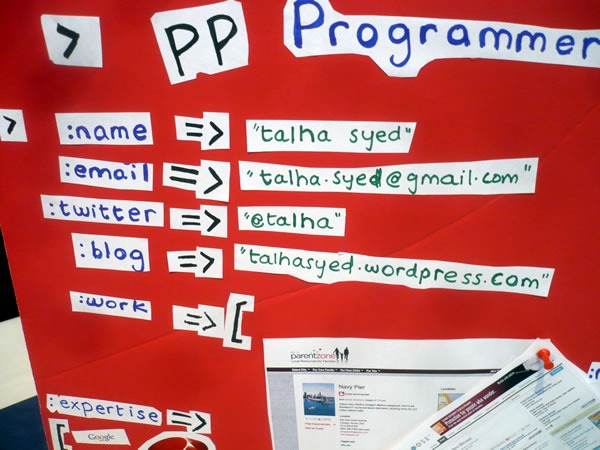
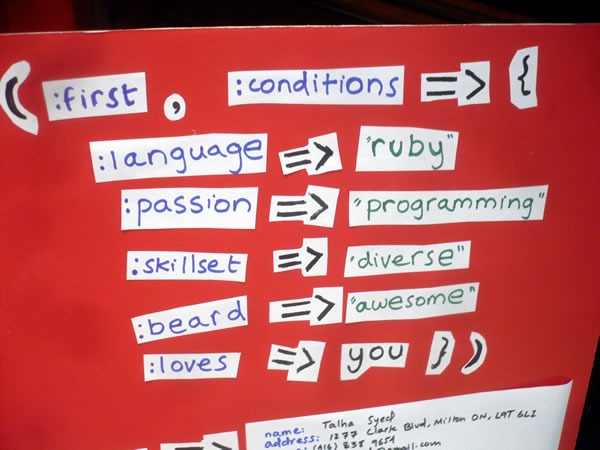
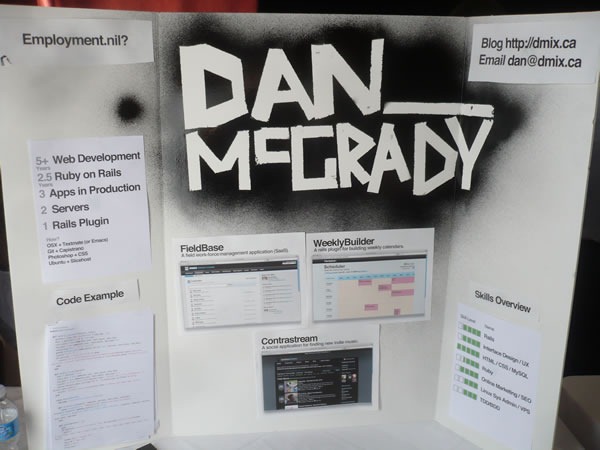
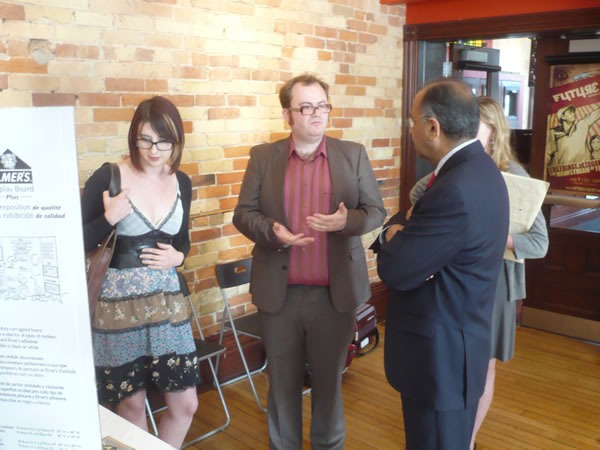
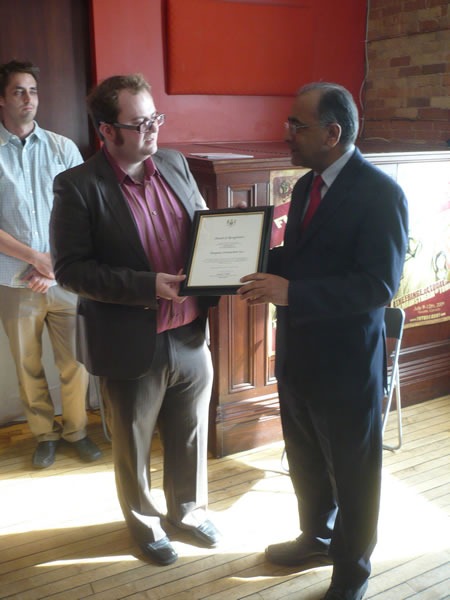
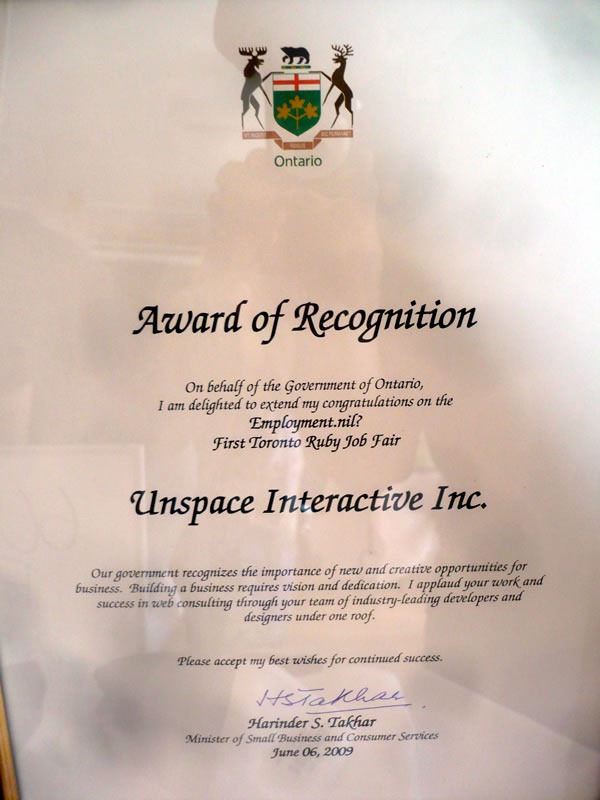
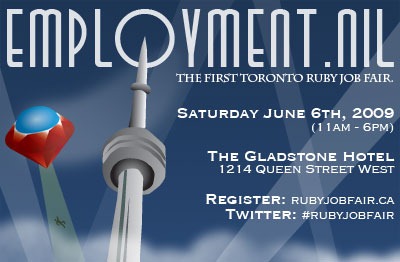
- We’ve done unusual things, like hold a job fair where local Ruby programmers could show off their work
- We’ve built software projects for the UN
- Every project we take on has a lot of heart
- We don’t want to work with anyone who isn’t super-excited to be there
- I’m a software developer, have been for a long time
- But deep down, I want to be a designer
- I have no formal training — I can’t draw; I can’t paint
- I see life as a series of carefully-executed series of five year plans
- I dropped out of high school 20 minutes before the final exam; I told the principal that I didn’t want him to take credit for future success
- I don’t recommend this; it’s probably not repeatable, not even by me
- You – as engineering and computer science students –- are better educated than me
- “You probably know math and stuff”
- In the past, I was a punk, and many other things
- I’ve been a musician
- I’ve also been a zine publisher
- I’ve tried on a lot of things to see if the shoe fits
- I’ve had an interesting run
- When I get to the end of 5 years of doing something, I review what I’ve done
- I’ve had 5 years of doing software at Unspace – what now?
On Pete
- My dad’s an engineer, and as such, is a perfectionist
- Engineers are by and large pedantic control freaks — and that’s okay, we need you to be that way!
- I’ve discovered that I’m a starter, not a finisher
- This tendency has put me at odds with my family and I used to feel really guilty about it
- Now I realize is that you need to play to your strengths — recognize that you have an instinct, and harness it!
- Is what you’re doing against the grain?
- "There’s no time like the present to get your life on track"
- "I could have saved myself a lot of time if I could talk to my present-day self"
- As a starter but not a finisher, I realized that I had to recruit doers, people who could take my ideas and run with them
- Some of these projects will succeed
- Some will fail…but they’ll fail grandly
- I’ve got lots of things on the go
- Am I arrogant? I see it as audacious
- Seth Godin said: “If you’re not uncomfortable in your work as a leader, it’s almost certain you’re not reaching your potential as a leader."
- I am an introvert
- See the article in The Atlantic, Caring for Your Introvert
- So what am I doing onstage?
- People who appear practiced onstage look that way because they are practiced
On Success
- Steve Jobs says: “Find what you love”
- People confuse “successful” with “happy”
- Are you putting your life on hold to go and make your paycheque?
- I’m convinced that many financially successful people are unhappy and bitte
- Malcom Gladwell’s The Sure Thing
- It paints a different picture from the one we see in the media of the entrepreneur as daring, as a “cowboy”
- Entrepreneurs who became empire builders turned out be highly risk-averse
- Their success comes from seeing opportunities in arbitrage and taking advantage of them
- Consider John Paulson:
- His hedge fund made money shorting America’s economy
- He bought shorts on subprime mortgages
- These men are predatory entrepreneurs in my opinion
- Do they really need billions?
- Maybe they don’t do it for evil – perhaps it might be for the thrill
- Don’t want to model himself after these people
- There’s a line written by Seth Tobocman, who wrote the comic book World War 3: "You don’t have to fuck people over to survive."
- My twist on that is "You don’t have to fuck yourself over to be successful."
- Who would I rather model myself after? Steve Jobs
- He said: “Good business makes for good art”
- Another good bit of advice comes from Andy Warhol: “Think rich, look poor.”
- On Being an Artist
- There used to be a harsh disciplinary division between technology and art and it’s reflected in code and art
- Different now in the era of Rails
- I like holding parties and inviting all sorts of people: if you put interesting people together from all walks of life, you’ve got a catalyst for change in your living room
- The lines are blurring: we’re all artists now
- Consider these guys
- Ronald Tackmann, escape artist
- "He hates being free"
- Blane Nordahl, Silver thief
- "The Mr. Belvedere of silver theft"
- Both really good, treated their work like artistry
- Ronald Tackmann, escape artist
On Starting Up
- How Unspace came to be
- It started 5 years ago with 2 friends in 170 square feet of space
- “There wasn’t enough room to lie down and make a snow angel”
- Everything that happened in those first years was "path of least resistance"
- We had this weird notion that Unspace would be worth nothing and function as a quasi-legal organization whose reason for being was so that we could write off tech toy purchases
- We got lucky: Two founding partners — moved on to other things
- One of them has since moved on, regrettably, to Ashley Madison
- Choosing partners was important decision
- Optimism springs eternal among entrepreneurs: there’s always that feeling that nothing can go wrong
- Daniel Tenier says: “Partnerships suck”
- It’s important to make your agreements explicit
- Don’t be afraid to discuss bad stuff
- Write everything down
- You can’t make it work at all costs – you need to know when to walk away
- Try to get to the bottom of questions like "What’s your definition of success?" Of failure? What’s the sunset clause? What’s the shotgun clause?
- If you absolutely don’t need a partner, go it yourself (I myself, since I’m not a finisher, need a partner)
- Look up what Chris Dixon has written about founder vesting
On Products
- Most consulting companies start as product companies that were broke
- Consulting is “kind of like a drug” — it keeps the fix coming
On Customer Development
- You need to read Steven Gary Blank’s The Four Steps to the Epiphany
- The ideas in this book led to the feeling in venture circles that customer development is a good thing
- If you’re starting a company that sells things to people, read it!
Leadership
- Seth Godin says this of leadership: It’s about painting a picture of the future for other people and then leading them to it
- Back in 2004, things went terribly wrong
- I partnered with my friend Ryan, and it lasted a month
- I had “lots of partners” – it was hard to get things done
- Having a captain is good
- In addition to being a “time-and-materials” company, we also started holding events
- We instituted Rails Pub Nite, a monthly event that created a sense on community and gets regular attendance
- Opposite of a user group: no agenda
- It’s the "smartest thing we’ve ever done as a company"
- At the time, “people making a living off Ruby you could count on both hands”
- One of the raisons d’etre of Rails Pub Nite was to create meaningful competition
- We went so much farther ahead by giving it the generic name Rails Pub Nite as opposed to Unspace Pub Nite
- What we wanted to do was not create a feeling of participating in a corporate social experience
- It was successful: Rails Pub Nite’s mailing list has 450 people, and every Pub Nite gets 40 – 50 attendees, and not just Ruby programmers, but also Java, .NET and PHP
- We instituted Rails Pub Nite, a monthly event that created a sense on community and gets regular attendance
Building Your Team
- Another benefit of Rails Pub Nite is that it lets us meet all the smart people first
- We have a “non-traditional fit test”
- I feel that 8 – 14 people is perfect size for company
- I’m tired of working for small companies that grew to large companies that started to suck
- I’d rather have 3 companies with 12 people than 1 with 40 people
On Guilt
- I have no high school education — how am I building projects for the UN?
- It’s why sometimes, I feel like a fraud
- Many people have this feeling; it’s called “Impostor Syndrome”
- I feel like living embodiment of "fake it until you make it"
- Refactoring makes me feel like a fraud
- It’s the "Embarrassing Pattern": after looking over my code, it seems that I could replace a lot of it with existing stuff and patterns
- “Your entire codebase can be abstracted away”
- "I just spent a month writing 40 lines of code"
- You have to recognize that it happens
On Getting Ahead
- Read Derek Sivers’ (he’s the guy who created CDBaby and later sold it) article, There’s No Speed Limit
- He says that “the standard pace is for chumps”
- To get ahead, you have to push yourself beyond what you think your limits are
- We can do whatever we want, as fast as we want
Adventure
- Learning Giles Bowkett’s story through his RubyFringe presentation completely changed my life
- [Joey’s note: really, you should watch the video of this presentation, even if you never ever plan to write a single line of Ruby in your life. It’s inspiring.]
- It was all about leading a life less ordinary
- In our line of work, we create things that didn’t exist before
- When someone who doesn’t know how to create things is put in charge of people who do, it’s bad
- I believe that Giles called them "Weasel-brained muppetfuckers"
- Giles quotes Steve Jobs: “Real artists ship”
- My advice on dating websites: "Don’t make them"
On Marketing
- I’ve mentioned Seth Godin many times already
- Sometimes his books have 3 pages of insight buried in 100 pages – I supposed it’s a case of “The Devil’s in the details”
- Read The Dip, skip Tribes
- In Tribes, Godin says that people don’t believe what you tell them, sometimes believe what their friends tell them and always believe the stories they tell themselves.
- So give people stories they can tell themselves
On Ideas
- Dr. Edwin Land: Invented instant photography – Polaroid
- Polaroid was thought of as dead until enthusiasts like Florian Kaps bought the Polaroid factory and now they’re bringing Polaroid film back to the market
- I wanted to bring him to FutureRuby, but he was too busy changing the world
- Another person to watch: Kacie Kinzer, the creator of Tweenbots
- Also watch: Neil Gershenfeld
- He builds fablabs
- He’s building them in places so low-tech that they don’t even have electricity
- Get involved with the MIT "Bits and Atoms" program
- Another person to read about: William Kamkwamba (see The Boy Who Harnessed the Wind)
- [Joey’s note: Watch his presentation at TED!]
Grand Visions for the Future
- Disney wanted EPCOT to be a utopian city, a city of the future, but bureaucracy got in the way
- Jacque Fresco: 93-year-old chronic inventor — a radical revolutionary
- He designs amazing future habitat buildings
- He has a whole compound of bubble domes in Venus, Florida
- See the movie Future by Design
- He’s 93 — "You know what that implies"
On Being Happy
- Listen up!
- Once again, a Steve Jobs quote: "Your time is limited. "
- Look at Jessica Hische, who’s obsessed with type and makes beautiful things
- She followed her passion, and now she’s an internationally sought-after type artist
- She recently said: “The work you do while you procrastinate is probably the work you should be doing for the rest of your life."



 The final presentation of the afternoon,