startups

David Crow Answers 5 Questions and Visits Vancouver

by Joey deVilla on August 14, 2010

Who is David Crow?

David Crow

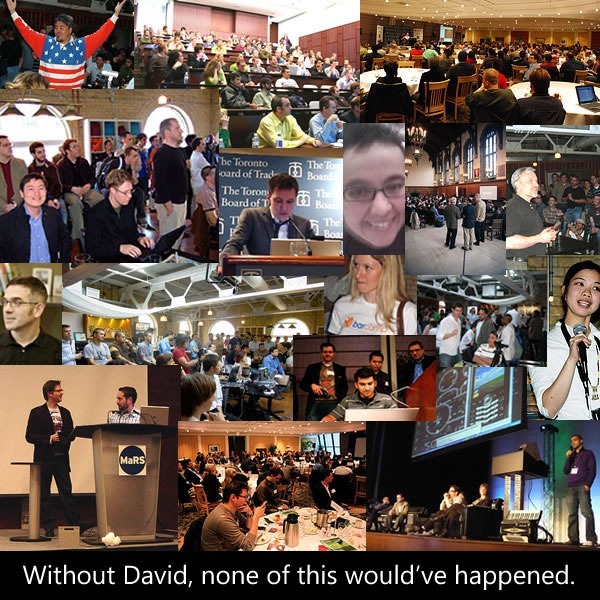
David Crow is probably the most recognizable face in the Toronto startup tech scene, and rightfully so. Without the effort he’s put into events like DemoCamp and other gatherings where techies, entrepreneurs, social media types and anyone else who wants to build “World 2.0”, we wouldn’t have anywhere near as active or as interesting a tech scene as we do (and not just in Toronto, but across Canada as well).

Collage of DemoCamp photos: "Without David, none of this would've happened."

My current job at Microsoft, as well as the previous two, grew out of opportunities created by David’s hard work, either directly or indirectly. I suppose I owe him a couple of drinks!

5 Questions

TechVibes logoDavid is my coworker at Microsoft Canada’s Developer and Platform Evangelism team and also one of the Windows Phone 7 Champs. Karim Kanji caught up with him and did a quick “5 Questions” interview, featuring these questions:


  1. What motivates you to do what you do on a daily basis?
  2. Do you have any success start-up tips for people wanting to create a name for themselves in your industry?
  3. In your opinion why is Toronto a hotbed for cool tech start-ups?
  4. What’s your favourite tech toy and social media site and why?
  5. Who would you say are Toronto’s social media/tech stars and why?

Check out the article at TechVibes!

David’s in Vancouver This Coming Week

Vancouver: Downtown Vancouver as seen from the Granville Street Bridge

grow2010-logoDavid’s going to be in Vancouver from Monday, August 16th, through Friday, August 20th to attend the Grow Conference on Thursday and Friday, which is aimed at startup techies, entrepreneurs, idea people and investors. “If you’re a startup, an investor or a service provider in Canada,” wrote David, “you should be at this event.”

bootup labsHe’s going to be in the downtown area and available to meet up in the earlier part of the week. If you want to find out more about BizSpark, pick his brain about startups and product/market fit, you can catch up with him at Bootup Labs (where he’ll be working from). To find out more his trip to Vancouver and how to catch up with him, check out this blog entry.


Vancouver photo taken by JamesZ_Flickr and licenced under Creative Commons.

This article also appears in Canadian Developer Connection.

{ 1 comment }

Introducing WebsiteSpark

by Joey deVilla on September 24, 2009

What is WebsiteSpark?

If you run or work at a small web design or development firm, WebsiteSpark might be for you! WebsiteSpark is Microsoft’s new global program who goal is to help small web companies succeed.

What Do You Get When You Join WebsiteSpark?

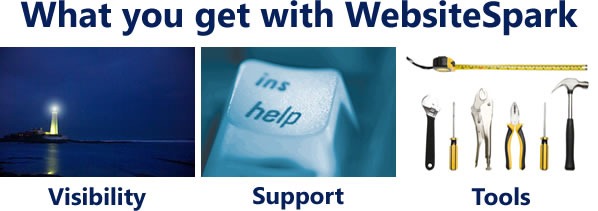
What do you get with WebsiteSpark? I put together a little graphic that explains it pretty quickly:

What you get with WebsiteSpark: Visibility, support and tools

  • Visibility: By being showcased in the WebsiteSpark marketplace as well as through opportunities creating through The Empire’s marketing and business networking programs.
  • Support: You’ll get hooked up with an entire ecosystem of Microsoft support, network and hosting partners, and web developers and designers so you have a wide range of technical and business resources.
  • Tools: Full-on access to full versions of current Microsoft web tools and technologies, such as the goodies listed below:

What You Get


What It Is

Microsoft Silverlight Silverlight
For building rich internet applications that can do multimedia, access data from the web and can also be run on the desktop.
Microsoft Expression Expression
A suite of tools for building websites, user interfaces for Silverlight and desktop applications, making web and application graphics, encoding video and building prototype applications in a hurry.
You get:
- 1 user licence for Expression Studio
- Up to 2 user licences for Expression Web
Microsoft SQL Server 2008 SQL Server Web Edition 
Microsoft’s database platform for data needs of all sizes, from the simplest web form to full-on enterprise applications.
You get a 4-processor licence of SQL Server 2008 Web Edition.
Windows Server 2008 Windows Server 2008 (and 2008 R2 when it becomes available)
A server that’s both powerful and easy to maintain, featuring the IIS 7 web server and the Web Platform Installer, which makes it easy to install and upgrade popular web applications.
You get a 4-processor licence of Windows Server 2008 (and for 2008 R2 when it comes out).
Microsoft Visual Studio Visual Studio Professional
The IDE (integrated development environment) that has it all.
You get up to 3 user licences of Visual Studio Pro.

Are You Eligible to Join WebsiteSpark? Answer These 2 Questions.

The number 2 If you can answer “yes” to the two questions below, you are!
  1. Is your company a professional service firm whose primary business is providing Web development and design services for its clients?
  2. Does your company have 10 or fewer people, including owners and employees?

Once you join WebsiteSpark, there’s a simple obligation: in order to continue participating in WebsiteSpark, you must deploy a new public, internet-accessible website developed using the tools and tech given to you by WebsiteSpark within 6 months of joining.

You can stay in WebsiteSpark for up to 3 years. On the first and second anniversary of your initial enrollment, you must update it – that is, confirm your company hasn’t gone public or its ownership hasn’t changed.

I Don’t Have a Fee-For-Service Web Shop, I Have a Startup. Can I Get in on This?

No, but we have a program for you – it’s called BizSpark.

I’m a Student and Have Limited Money, and It’s for Books and Beer. Can I Get in on This?

Dude, we have something just for you! It’s called DreamSpark.

How Do You Find Out More?

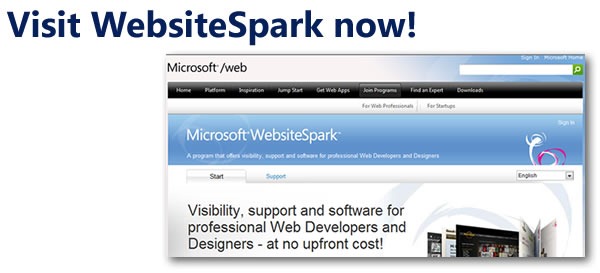
The details about the program are at the WebsiteSpark site. Check it out, and if it’s right for you, sign up!

Visit WebsiteSpark now!

This article also appears in Canadian Developer Connection.

{ 1 comment }

2008: Annus Assrocketis (The Year of Assrockets)

by Joey deVilla on January 2, 2009

Cork popping off a ribbon-ringed bottle of champagne

At the end of 1992, when the marriages of her children, Prince Charles, Prince Andrew and Princess Anne all dissolved and Windsor Castle caught fire, Queen Elizabeth II alluded to the title of John Dryden’s poem Annus Mirabilis (“Year of Miracles”) and referred to the year as an annus horribilis (“horrible year”).

As H.R.H. the Queen of England riffed on Dryden’s coinage, so shall I riff upon hers. If I had to summarize the year between 2008 in a quick soundbite, I would use the pseudo-Latin coinage Annus Assrocketis, as in “Year of Assrockets”.

Assrockets and Opportunities

A little bit over a year ago, I wrote an article titled Assrockets and Opportunities explaining why I was leaving my job as Tucows’ Technical Evangelist, a relatively safe, secure and cushy job – one that its CEO Elliot Noss said “fit me like a glove” — for a startup in the rather iffy social software space.

I had been feeling a little bit restless for a little while, but that restlessness alone wasn’t enough to make me take the leap. Strangely enough, it took a video of a guy sticking a bottle rocket up his butt and an observation made by Charles Follymacher in the blog The War on Folly. Assrockets and Opportunities summarized how the video and Follymacher’s blog entry inspired me to change jobs.

As a quick refresher, here’s the video. Be advised that it may not be safe to view at your workplace, as it shows a young man’s bare bottom and a bottle rocket stick being inserted into said bottom. It also has a lot of crude vernacular that young men are wont to use. That being said, I still think it’s one of the funniest internet home videos of all time and it still makes me laugh out loud, even after hundreds of viewings:


Still the funniest video of all time.

In response to this video, Follymacher, a person of colour (I myself prefer the term “force of darkness” – it has a little more oomph) wrote a hilarious and insightful observation titled why White people rule this age. The relevant excerpts appear below:

…I’m once again reminded why White people rule the globe. It’s not a new idea, just feeling compelled to state it once more, this time without feeling: they run the world because they have a much (much) higher percentage of folk who will do absolutely *anything.* any bloody, assinine [sic] thing at all. if you can name it, guaranteed it will be tried, if it hasn’t been already.

it is out of these absolutely stark, raving, barking mad experiments that new discoveries are made, which in turn lead to a fresh new batch of shit to fuck with. new answers urge new questions and all that, right?

us colored peoples of the world tend to leave well enough alone a lot more, not much for forcing Mother Nature’s hand. our ancient sciences are lost. that’s our bad. who knew? we didn’t ask. and now it may be too late to churn up that kind of insatiable hunger for knowledge.

a lot of White folk die off in these quests to discover and experience the unknowns, large or wtf. but some small percentage do manage to live to tell the tale and, wherever possible, wreak [sic] the profits.

I read the article in mid-October of last year and decided that it was high time I stuck a rocket up my ass, at least in the figurative sense. I put out a few feelers into the local tech job market.

Soon after that, I ran across an announcement of an open position at a startup looking for Ruby on Rails developers. The salary offered was a good deal better than my then-current one, and the opportunity to get back to writing code was very tempting. In five weeks, I went from replying to the offer to my first day on the job, the Monday after American Thanksgiving 2007.

Since that time, I have had three jobs.

The First Job (November 2007 – March 2008)

The startup I left Tucows to join – I don’t even like mentioning their name; you can look it up in this blog’s archives if you really must know – was building a Facebook-like web app for fraternities and sororities (“So you’re telling me that it’s like Facebook, but for students,” Cory Doctorow would say much later).

It might’ve stood a chance if it had these three missing ingredients:

  1. A business plan. The original plan was to make money by advertising. The sales guy came up with a much better plan – selling that app as a way for fraternity and sorority chapters to collect dues and charging them on a per-member basis — but it was too little, too late. It wouldn’t have hurt for the founder to have actually written down his business plan, even his lame-o first one.
  2. A product plan. The app was the result of “wouldn’t it be neat if this existed?” pipe-dreaming, and there wasn’t much thought or research put into it after that.
  3. A CEO who wasn’t just in love with the idea of running his own “Web 2.0” business and the associated trappings. He was hooked on the idea of creating office spaces with cool custom furniture like Joel Spolsky’s Bionic Office, “20% projects” like Google’s and “Hero Training”, in which we’d take a full day off work to do personal development. He also had some kind of fanatical belief in Ruby on Rails’ ability to solve any problem, from rapid development to world peace, curing cancer and fixing erectile dysfunction.

Truth be told, having missing ingredient number 3 might’ve given us missing ingredients number 1 and 2.

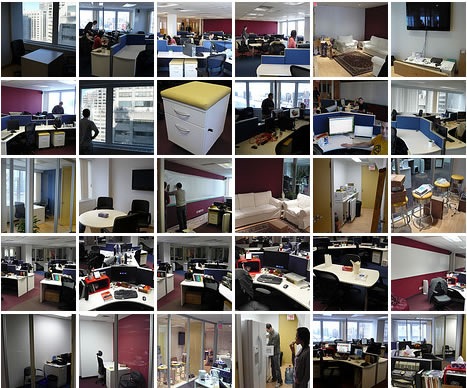
Montage of photos of the office for the first job
Click the montage to see the Flickr photoset.

Perhaps I’ll write about it at length someday, but for now a quick summary of what happened to this startup will have to suffice. They burned through money irresponsibly in many ways, including:

  • Renting office space in a pricey office building in a posh boutique district of town. We were located between the Mont Blanc and Ports International stores and across the street from the downtown Four Seasons.
  • Hiring an interior decorator to do a custom design of the office space, with custom furniture. I’d have kept the decent chairs, but we would’ve been just as productive with folding tables as we were with the custom desks.
  • Purchasing two large flat-screen TVs, neither of which were ever used for business purposes. They were pretty great for Wii and Xbox 360 games, though.
  • The ice sculpture and oyster shucker at the office-warming party. The party was black tie optional for some reason that still eludes me. At least they scaled down their ice sculpture purchase; they originally wanted the Chrysler Building, but settled for the less complex (and less expensive) company logo instead.

The ice sculpture at the office-warming party.

Alarmed at the company’s burn rate and lack of income, the source of the startup’s funding threatened to cut off the money. We were then informed by the CEO that unless we accelerated the schedule unreasonably, we’d all have to take a 20% pay cut. He went on vacation to Hawaii with his girlfriend a couple of days after that because he always went on vacation to Hawaii with his girlfriend at that time of year, crisis at his own company be damned.

While he was away, the entire senior developer team, of which I was part, started circulating their resumes and putting out the word that they were looking for new jobs. Within six weeks, the senior team had left the company. Within six months, the company had all but vanished. The website for the software no longer works, and the website for the company is now a single page showing the startup logo and nothing more.

My job at the startup, which had gone from dream to nightmare, lasted three months and a few days. The name of the startup still gets mentioned from time to time at local geek gatherings, sometimes as a cautionary tale, sometimes as a joke.

The Second Job (March 2008 – September 2008)

While searching around for jobs, I noticed that b5media was looking for a technical project manager. “b5”, as they’re often called, is a local startup success story, having grown from a small core of five bloggers and an office in Mark Evans’ garage to a network of over 300 blogs. I also knew that they’d landed funding thanks to meeting VC Rick Segal at DemoCamp, a semi-regular “show and tell” event for the Toronto tech community that I help host.

I showed up at b5media for an interview at 11:00 a.m. on one cold day in February, expecting a one-hour interview. It turned into a seven-hour series of multiple interviews with various people at the company, mostly testing me for how well I fit in with the office’s culture. I pretty much landed the job that day, and a couple of weeks later, I had my first day on the job, which involved flying down to Austin, Texas to attend the South by Southwest Interactive Festival for a week. I’d have to say that it was the best first week on the job I’ve ever had.

Regular readers of this blog know what happened in the end: changes in the market and at the company left me with nearly nothing to do, and they let me go…on the day of my wedding anniversary (they didn’t know that, but their timing still left something to be desired). I hold no ill will towards them; paying me to warm a chair does neither b5 nor me any good. It was the right thing to do, and they treated me quite well during the process.

Still, I felt like this:

Demotivational poster featuring dejected stormtrooper sitting on subway. Caption: "Unemployment: Sucks when your job is blow'd up."

The Job Search

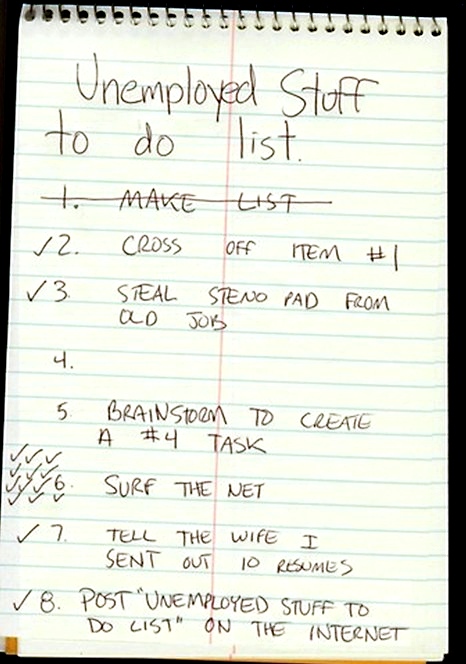
The Unemployed "Stuff to Do" List

I decided to treat my getting laid off as an opportunity in disguise, a chance to explore all my options and do a little long-term career planning. At the same time, watching my old schoolmate Ali Velshi on CNN talking about the credit crunch and dealing with a worried wife meant that I should try to secure some income as quickly as I could.

I had one big thing working in my favour: nearly seven years’ worth of tech evangelism and seven years’ worth of blogging meant that I had a lot of what VC Howard Lindzon calls “social capital” in the bank. I did not have to go looking for job openings; they came looking for me. A number of people called, emailed, instant-messaged and tweeted me, asking if I’d be interested in working for their company and if I could make some time to meet them for an interview. The jobs ran the gamut from doing some development for an adult entertainment site to doing tech evangelism for some pretty high-profile companies. I did interviews with just about everyone who called me, which meant that I was actually busier as an unemployed man that I was during my last weeks at b5.

I even got a call from an editor at a very reputable book publisher in New York asking if I’d ever given any thought to writing a book. The answer, by the way, is “yes”, and as soon as an idea comes to me, I plan to fly down to Manhattan in a nice suit and do a pitch over cocktails, which if Mad Men is not lying to me, is how these things go.

Most of the companies who called were the type I’d always worked for: either startups or small operations where I’d have the ability to wear many hats, make a significant contribution and have a great degree of freedom. Medium to large companies were completely off my radar, but I’d have to say that it was mostly because I’d grown accustomed to thinking of myself as a small company man.

As a result, it seemed unreal when I got a number of calls from different people from the same organization, all asking variations on the same question:

“Have you ever considered joining The Empire?“

Imperial Considerations

LOLcat: "Pensive cat is not sure about that"

I’ll be honest: I had some qualms about joining Microsoft.

Fear of “selling out” and working for a big company wasn’t even a factor. It probably should matter at 21, but not at 41. To borrow a saying often misattributed to Churchill: if you’re not at least a little liberal at 21, you have no heart; if you’re not at least a little conservative at 41, you have no brain.

There’s also the standing order from The Missus: “No more working for fucking under-30 CEOs!”

Finally, consider the great truth expressed in the comic below:

Congratulations! You kept it real and never sold out! Now you're "the old guy!"

My qualms didn’t arise out of loyalty to Apple; they make some really nice machines and an excellent OS, but I’m not really one of those “It’s Apple or nothing” types. They also didn’t come from an “open source forever, Microsoft never!” feeling either. Open source has resulting in some great things happening, but once again, I’m not a “F/OSS or nothing” kind of guy, either.

My qualms came from the feeling that Microsoft had little to offer to me as a developer. Once upon a time, back when my friend Adam Smith and I had a little software development constancy, Microsoft was my friend. From the mid-1990s to the release of .NET 1.0, it felt as if they were constantly reaching out to developers. Then somewhere along the way, at around the same time as the rise of web applications, Apache, PHP and later things like Rails and Django, something happened. Microsoft had apparently switched their focus away from developers and towards the suits – the decision-makers who approved the tech purchases, rather than the people who actually had to live with the decisions. I’m sure that many developers felt the same way I did: Microsoft slowly faded from my radar because it seemed as if I’d faded from theirs.

I think that my friend Danny O’Brien expressed this best when he wrote:

One of my big bones with MS stuff is that it always makes me feel like I’m eating out of the trash bins outside a cubicle farm. All of their software is designed to help busy executives plan their lives. Everyone I know uses it to try and write birthday cards and chat with their friends. When people use Microsoft Office they use it anywhere but in an office. Microsoft knows this – but it also knows that the money comes from their corporate clients, so there’s a limit to how much it can bend its software toward a wider customer base. Ultimately when you use MS software, you’re not the end user MS perceives at all: we’re just living off the scraps Microsoft leaves out after feeding its big customers.

One thing that convinced me to join Microsoft was a small-seeming but important sense of a “sea change” at Microsoft.

Perhaps it was their hiring of some people I’d never expect: David Crow (I’ll admit that I was ready to bet some good money on his leaving within six months, saying “It’ll either end in tears…or gunfire”), Bryce Johnson, John Lam and Danah Boyd.

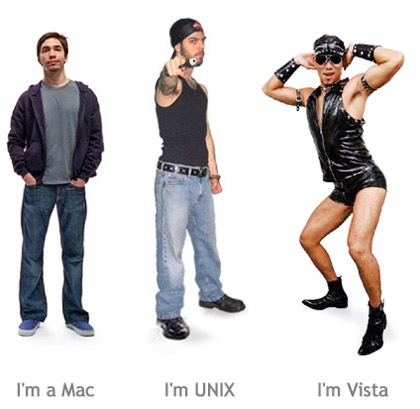
It might have been their willingness to even consider talking to me after my posting this graphic on my blog:

"I'm a Mac." "I'm Unix." "I'm Vista."

It might have been some very lengthy conversations I had with friends who worked at Microsoft.

It might have been this thing:

XBox 360

I won an XBox 360 at the 2006 Boston Ajax Experience conference, and I was surprised at how much I loved it. It doesn’t feel like a “Microsoft product” – it feels like something built by people who love games for people who love games. The “Less Hulk, More Bruce Lee” story behind the design of the XBox 360 that Jean-Luc David told me probably helped as well.

Mark Relph and John Oxley

What probably convinced me most was the opportunity to work for a couple of great people who believed in me, Mark Relph and John Oxley. They offered the combination of a lot of support and a great deal of latitude, the ability to work largely from the home office and most importantly, the freedom to inject my own personal style into the work I’d do. I think Mark’s line, “We enter as friends, we leave as friends”, struck a chord with me.

At the end of my sixth(!) interview, John said “We’d like to take you on. Are you interested?”

I replied “To quote Homer Simpson, I have only two questions: ‘How much?’ and ‘Give it to me!’”

In the end, I was unemployed for a grand total of three weeks. Considered the economic collapse taking place all ‘round, that’s not bad at all.

Fry-Kirk Syndrome (or: The Third Job; October 2008 – Present)

Philip J. Fry from "Futurama" and Captain James T. Kirk

At the dawn of 2009, just over a year after leaving my tech evangelist job, I have escaped from one imploding company, been laid off from a downsizing one and finally ended up at a job that fits me like a glove. After this journey, I have become…a tech evangelist.

I feel like “Fry” from Space Pilot 3000, the premiere episode of Futurama. Fry, a p[izza delivery boy in 1999, is frozen on New Year’s Eve 1999 and revived a thousand ears later. In the year 3000, a computer determines that he is best-suited to being a delivery boy, and he spends much of the episode trying to escape this fate. In the end, he cheers as he finds work with a distant relative…as a delivery boy.

Captain Kirk had a similar experience: he always returned to his first, best destiny – being captain of the Enterprise. I feel that I’ve managed to do the same, and with the added bonus of not having a court martial, blowing up the ship, losing my son and getting demoted from Admiral.

Like the young man in the “Bottle Rocket” video near the start of this essay, I took some risks and got a little singed in the process. But as Charles Follymacher also pointed out, sometimes you “manage to live to tell the tale and, wherever possible, wreak [sic] the profits,” and that’s what happened to me in the end.

As any decent poker player will tell you, winning isn’t in the cards you’re dealt, but how you play them. In spite of all the craziness this year, I did quite well.

I’m looking forward to 2009.

[This article also appears in The Adventures of Accordion Guy in the 21st Century.]

{ 2 comments }

VeloCity Project Exhibition

by Joey deVilla on November 25, 2008

Yesterday, I (along with David Crow and Barnaby Jeans, my colleagues at Microsoft Canada’s Developer and Platform Evangelism Team) went to the University of Waterloo to see the projects on display at the exhibition of a new initiative at the university called VeloCity.

VeloCity

VeloCity has been described as a “dorm for entrepreneurs”; I’ve also heard it referred to as a “dormcubator”. Taking a cue from successful businesses such as Dell, Facebook, Google, RIM and Yahoo!, which were started by students working in their dorm rooms, the VeloCity project aims to create an atmosphere that will encourage and enable Waterloo’s students to sharpen their technical and entrepreneurial skills, and perhaps even come up with “the next big thing”.

The university converted its Minota Hagey residence from a standard dorm into a place where its residents would have access to a boardroom, a mobile device lab, high-bandwidth wifi, large flatscreens, workstations, programmable lighting and other goodies that you might find at a high-tech company’s campus. Students in the VeloCity program live and work on their projects there; they also attend professional development workshops for entrepreneurs at the nearby Accelerator Centre.

The VeloCity projects are currently treated as extracurricular activity – they’re done in addition to their regular courseload. Adding to the challenge is the short timeline: they’ve only been working on their projects since the start of the school year in September.

Why wasn’t something like this around when I was in university?

The Exhibition

View From Above 2

Yesterday’s exhibition was the VeloCity students’ first chance to show off their projects in their current state. Each project team set up a booth science-fair style in the foyer of Waterloo’s Davis Centre and did presentations to attendees and passers-by; they also had to do a three-minute pitch presentation onstage.

Extreme Venture Partners were there to judge the projects. They would provide $1000 to fund the project they deemed most worthy.

The projects participating in the exhibition are listed below.

Project Description
Grocerus A location-aware web application that helps users create grocery lists and find the best prices for items on that list in their area.
Gruup A web application that lets its users do group purchases of items for volume discounts.
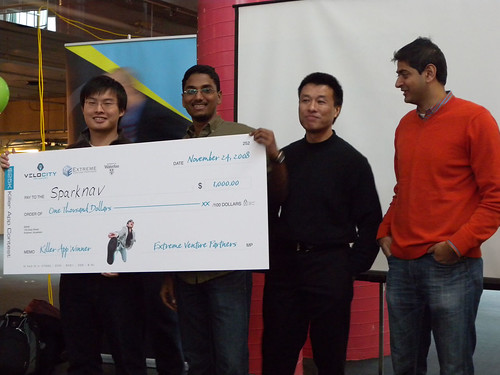
Sparknav A mobile navigation application with a twist: it’s for finding your way around indoor or enclosed spaces, such as malls, airports, university campuses and amusement parks.
Emoshion A mobile app that provides “location-based high-end fashion news”.
Find It Off Campus A web application that helps University of Waterloo students find off-campus housing.
Szello Mobile A consultancy that does mobile UI design and provides a mobile UI development kit.
Fading Hearts / Magical Aces Two projects: Fading Hearts is an anime-style multimedia “choose your own adventure” story-game. Magical Aces is a 2-D vertical shooter arcade game (in the style of Raiden) with manga-inspired story elements.
Ufansi A web application that connects charities with donors, keeps donors apprised of their charities’ activities and helps to lower charities’ administrative costs.
Giftah A web application that creates a marketplace for retailers’ gift certificates and gift cards.
ClassAlbum A web application for managing class schedules and finding vacant classrooms.
Comic Battle A multiplayer Flash-based online fighting game.
My Story An “online platform where authors can share their creativity”. Authors can publish their stories, add media elements such as background music or voice-overs, get constructive feedback from their readers and even collect money for their stories.
CashIn A wallet with an electronic component that acts as a financial advisor, tracking your spending and warning your spending is threatening to break your budget.
inPulse A watch interface that acts as a secondary display for your mobile phone, allowing you to see caller ID, email and SMS messages or your calendar without having to fish your phone from your pocket or its holster.
Threadband A 2-D casual game for the iPhone.
Metacast A web application that combs the internet for video, places them into category-specific channels which can be viewed in a TV-like fashion.


Before announcing the winner, the judges told the audience who their top three picks were:

  • inPulse
  • Sparknav
  • My Story

Of these three, they picked Sparknav.

...Sparknav!

VeloCity will be holding another exhibition in March. It will be interesting to see how far  these project (and the people behind them) progress in the interim.

Suggestions and Observations

Startups vs. Lifestyle Businesses

There is a difference between a startup and what Austin Hill referred to as a “lifestyle business” at the recent Startup Empire conference.

A lifestyle business is a service or consultancy that addresses the needs of a small or localized market. What it doesn’t do is make a product nor does it change the market it’s in or define a new one. There’s nothing wrong with these businesses; they meet certain needs and give their owners some money, ranging from discretionary income to enough to support a pool of small employees. Some notable lifestyle businesses include small development shops like 37signals and Toronto’s own Unspace, popular money-making sites like the Dooce and I Can Has Cheezburger? and applications like 37signals’ BaseCamp, Remember the Milk, Delicious Library and Hampton Catlin’s iPedia. While they are entrepreneurial and even fun to run (I’ve done one), they’re not the sort of thing that investors are looking to fund.

A startup is an attempt to create a new product that often creates a new market, or changes or becomes a big player in its market. It involves the creation of a new technology or the use of existing technology in a particularly novel way to solve a problem, often for a large market, if not the entire world. Apple, Microsoft, Yahoo!, Google, eBay and – to cite a Canadian example –- RIM are particularly big examples of startups. They are the sort of venture that investors are looking to fund.

The line between startups and lifestyle businesses can be fuzzy. A lifestyle business can sometimes grow into something startup-like or even a true startup because it defines a new market or changes the one it’s in. Craigslist falls under this category. Flickr and Blogger are examples of startup-like companies that grew out of side projects and were later acquired. Facebook started off as a lifestyle business but turned into a startup.

I believe that while VeloCity is trying to encourage tech entrepreneurialism in general, what they’re really trying to do is encourage students to become startup entrepreneurs. I think that the VeloCity participants should be mindful of the difference between startups and lifestyle businesses and steer towards projects that are more startup-like in nature.

Look Beyond the Consumer Market

A lot of people come up with product ideas for the consumer market because they’re graspable: they’re easy to think up and easy to implement. There’s a world of problems beyond consumer applications, and sometimes even a small solution can make a big difference. Think of the big issues that are on people’s minds today: the economy, the environment and healthcare, for starters.

Beware of Living Off Advertising

Once again, I’ll take a quote from Austin Hill: Advertising is not a business model. A business model is something that answers the question “How can I get customers no one else will get?”

Perfect your pitches

Pitching is considered a “soft” skill, which is the sort of thing that techies tend to discount. Even businesspeople sometimes consider it unimportant: at the recent Startup Empire, VC Austin Hill said that he’s seen CEOs who couldn’t pitch their way out of a paper bag. This is a mistake: no matter how good or cool your technology is, no one will care unless you can tell a story about it, and tell it well.

In “The Valley”, pitches are so important that they agonize over them. Countless blog posts, articles and books have been written on the art of pitching, and there are regular workshops where they work on their pitches.

Half of what makes a pitch is its content; the other half is its delivery. Your pitch needs to cover what your product is, what kind of problems it solves and why it’s the basis of a viable business. You also have to be able to make your case in two to three minutes, with delivery that engages the audience. You need to practice your pitch to the point that you can do it in your sleep.

One key point to remember is the point of pitching is not to go over your product’s feature set, but about its market and the needs that it will fill. Remember, people don’t really buy drills, they buy holes.

The best pitch of the bunch was delivered by Eric of inPulse, who started with the problem he was trying to solve, presented his “smart watch” phone interface as a solution, and then explained why inPulse was viable as a technology and a business. He quickly explained what the current state of the project was, what his expecting timelines were, his technology partners and what the goal was. His delivery was good, and he had some memorable lines in his pitch, most notably “We want to be the industry leader of smart watches in 2010” and “If you have any question, send an email…directly to my watch!” (David Crow groaned at that line, but I liked it. More importantly, we’ll both remember it.)

Honourable mention for good pitch goes to Caleb, Dane and Eric from CashIn, who also had a good presentation style and structure.

Links

{ 7 comments }

David Cohen at Startup Empire: Boulder and TechStars

by Joey deVilla on November 14, 2008

david_cohen

startup_empireAnother afternoon presenter at yesterday’s Startup Empire was David Cohen, founder and Executive Director of TechStars, which provides a unique opportunity for early-stage startups. Here are my notes from his presentation:

Boulder, Colorado

  • Why did I come here today? Because I’m hearing more about Toronto every day
  • I started out in development
    • Did three startups
    • Then went to the dark side: angel investing
    • Started all kinds of companies in all different ways
  • I’m based in Boulder, Colorado
    • Two of my companies are ZOLL Data Systems, Earfeeder
    • One of my startups failed, but there’s no evidence on the net that it ever existed
    • What’s Boulder known for?
      • Mork and Mindy
      • “4:20”
      • Nearby skiing
      • University of Colorado
    • It’s northwest of Denver and has a population of 125,000 – with students! Denver has about 1 million people

VC in Boulder vs. VC in Toronto

  • VC in boulder
    • $311 million in Q1 2008 in Boulder County
    • Taking into account its population of 125,000, that makes for about $2,500 in venture capital for each person in Boulder
  • VC in Toronto
    • $130 million in Q1 2008
    • Taking into account its population of 5.5 million, that makes for about $23 in venture capital for each person in the Toronto area
  • Toronto has a chicken-and-egg problem
  • We learned in Boulder, VC follows innovation
  • A UFO didn’t land in Boulder and drop off VCs
  • There was a strong telecom industry that grew up there (Colorado is the home of telecom and storage)
  • People who got rich off those industries stayed in Boulder and asked "What can I do with this money?"
  • 2nd- and 3rd-time entrepreneurs decided to become angels
  • Most angels are driven by more than just the money
  • Companies in Boulder: Lijit and Newsgator to name a few
  • The VC followed

The TechStars Concept

  • Along with me, other people mentoring at TechStars are:
  • TechStars is a mentorship-driven seed stage investment fund
  • It’s been referred to as "Incubator 2.0, boot camp for entrepreneurs", but to me it’s mentorship-driven
  • The big benefit for companies in the Techstars program is not small amount of money we provide, but the people we surround you with
  • At Techstars, you share ideas early, get the feedback
  • 10 teams of typically young entrepreneurs come to Boulder for the summer
  • If you get in, you get this incredible mentorship experience
  • Mentors spend time with the 10 companies
  • Atmosphere of camaraderie between the companies
  • Companies get integrated into the tech scene
  • Our “New Tech Meetups” are the 2nd largest in US, after NYC
  • We make our companies uncomfortable – we make them pitch often
  • First month: we ask them not to work on their product so much; it’s laregly about learning
  • At the end of program, they get just enough funding to get them to the next point
  • Techstar’s progress so far:
    • 2 summers = 20 companies
    • Only 1 of the 20 companies is now defunct
    • 2 of the 20 companies experienced positive exits (SocialThing, IntenseDebate)
    • 13 of them have acquired angel or VC funding
    • All told, we’ve invested under $600K in 2 years — positive ROI
  • Benefits
    • 40 jobs in Colorado created (probably 40 more elsewhere)
    • AOL set up an office in Boulder after SocialThing acquisition
    • 9 of the 20 companies have stayed in Boulder

Lessons

  • Try not to focus to much on VC. Focus on product and customers
  • Your community can be more powerful than you imagine if it works together
  • Promote your community when you promote your company
  • Mentorship is the scarce resource that matters

{ 2 comments }

Rick Segal’s Advice at Startup Empire

by Joey deVilla on November 14, 2008

rick_segal

“Never ever take the title of CEO,” said Rick Segal between speakers at yesterday’s Startup Empire conference. “We fire CEOs all the time. Be a founder instead.”

{ 0 comments }

howard_lindzon

startup_empireLater on in the afternoon at yesterday’s Startup Empire conference, Howard Lindzon took the stage. Howard manages a hedge fund and is the creator of the finance news humour site Wallstrip, which he sold to CBS in May 2007. He also has a very popular financial blog at HowardLindzon.com.

I shot some video asking Howard about his idea of “social leverage”; I’ll post it a litter later on. In the meantime, here are my notes from his presentation, Why Now is a Great Time to Start Your Startup.

The Current Situation

  • Capital, which was so plentiful, is now gone
  • Reminiscent of the real estate bubble in Phoenix (where I live half the time)
  • Really important right now to shut out the noise
  • From 2002 – 2006, it was fun to read Valleywag, TechCrunch and make "me too" products. You can’t do that anymore
  • It’s also a bad time to base products on:
  • Sometimes you have to shelf your ideas for when the times are more suitable for them
  • The headlines are all doom and gloom these days:
    • "Financial Ice Age" – BusinessWeek
    • Startup Depression – Calacanis (I’m not a fan)
  • You must remember that even during good times, 80 to 90% of businesses fail
  • The VC model isn’t broken

Social Leverage

  • Financial leverage has come home to roost
  • We’re in a period of deleveraging: there is no bottom, because we don’t know what everyone owns
  • P/E ratios — it’s all about expectation, people expect less
  • You can’t get what you got six months ago
  • Expectations are in "this ratchet-down mode"
  • I also think that "we’re going into a depression" is crazy talk
  • I’m anti-financial leverage
  • Social leverage is all-powerful
    • Nothing you do in social leverage will haunt you
    • It’s a gift from the likes of Facebook, LinkedIn, Twitter
    • Perhaps you shouldn’t start building social leverage with a blog unless your passion is for writing
    • Start small: work with people
    • Be mindful of the etiquette of social networking tools
    • The time to ask people for something is when they’re least expecting it

Too Small to Fail

  • Wall Street was all about "too big to fail"
  • I’m not seeing signs from the presidents about being small – they seem too concerned with conglomerations and unwilling to bust up things
  • Bailouts just prolong the process
  • This is not a headline, it’s a state of being
  • It’s a great time to start a web-based business
  • If you’ve ever played the board game “Risk”, you know:
    • If you’re starting all your armies in Europe, you’re screwed
    • Start off in New Guinea
  • Consider one of my projects, Stocktwits.com
    • I like to stay in businesses I know
    • Started in Twitter — thought it was dumb in the beginning
    • Guys, this should be about ideas
    • Wrote post about how there should be a message board for stocks using the reputation model in Twitter
    • Twitter allows you some sort of reputation — everything you say is there for people to see
    • Stocktwits — one employee, $30K to start
    • Twitter offers possibilities: dating, betting — supports an ecosytem
  • Be careful in whom you trust
  • Embrace social leverage
  • Be too small to fail: do the one thing you do very well
  • Take as little money as you need; things will get better
  • Ignore the people saying that this is “a new Ice Age” – they’re idiots

Fear

  • Zig while others zag
  • Take a look at this graph, in which the pink line is the Vicks index and the blue is RRSPs: 

    fear_zig_while_others_zag

  • From 2003 – 2005:
    • Fear level low
    • Calacanis’s company, TechCrunch and other stupid tech businesses wree founded when fear was low
  • It’s always a good time to start a web business
    • The truth is that it’s never a good time to start any business
    • Successful business can be started anytime
    • 80 – 90% of businesses fail anytime

Why businesses fail

  • It’s important to have structure right from the beginning
  • Mistakes made at start can come back to haunt you
  • Sometimes partners fight, so rules and agreements at made at the the start are valuable
  • The keys: Structure, funding and realistic valuation
  • When it comes to spreadsheets and plans, keep in mind that it’s important to do one thing, do it well and get that customer – this is far more important than the spreadsheets
  • Make sure you’re fishing where the fish are
    • “Swim near the shark”
    • Be around certain ecosystems

My Advice

  • Social leverage: good
  • Financial leverage: bad
  • Be an expert at something
    • For good or bad: mine is finance
    • "I don’t really like the people in my industry"
    • Applications of my expertise:
  • Investing: more art than science

      Q & A

      How do you balance your day?

      • StockTwits is the only thing I run
      • Knightsbridge pays me to be on the road
      • I’m usually up at 5am
      • Private equity: long hours, long weekends

      How do you make use of social leverage?

      • One example: Fred Wilson
      • Two months invested in reading his blog
      • I found out that Fred was a basketball fan and took him to a Phoenix Suns game
      • We talked business
      • Fred just happened to be friends with Jim Cramer
      • Through Fred, I  met everybody else — I counts it as my “real day 1 “
      • “You make your own luck”

      What are you looking for with companies?

      • I’m more of an angel and a scrapper
      • I want to to be early
      • I want to see a finished product
    • { 3 comments }

      Austin Hill at Startup Empire: Slow Down and Speed Up

      by Joey deVilla on November 14, 2008

      austin_hill

      startup_empire The second presenter at yesterday’s Startup Empire conference was Austin Hill. Austin’s one of the founders of the Company Formerly Known as Zero-Knowledge Systems (they’re now Radialpoint), where he served as both Chief Technology Officer, Chief Strategy Officer and Executive Vice President. He’s the co-founder of Montreal-based tech startups Akoha, where he serves as CEO and Standout Jobs, where he is Chairman. Austin’s blog is Billions with Zero Knowledge.

      Here are my notes from his presentation, Slow Down and Speed Up: Handling a Fast-Moving Startup in Turbulent Times.

      Reality Check

      • It’s time for a reality check
      • The general attitude: things are bad out there — there’s a lot of fear
      • Summed up in Sequoia’s presentation, R.I.P. Good Times
      • The collapses of companies are mirrored by collapses of infrastructure in the U.S. (shows picture of bridge in Minnesota)
      • The reality: There is a very rough recession out there

      Business Models

      • Mary Meeker’s take: advertising is get killed, and the upcoming downturn will be worse than the last one
      • I don’t believe advertising is a business model
      • A business model is something that answers the "How can I get customers no one else will get?"
      • Advertising is just a way to get revenue
      • Look at the tech blogs: you’ll see lots of stories on firings and layoffs
      • Blogs like TechCrunch are becoming "Fucked Company 2.0"
      • Most of the companies laying off people have a burn rate of $10,000 per employee per month
      • Companies like Mahalo had a burn rate was $600,000 a month — in many cases, without a business model
      • This is not the model Canada exists in
      • You hear stories saying that the VC model being broken; the truth is that it’s been broken for years
      • The IPO market has been closed for tech since the last downturn
      • The VC model will only get worse, especially in the US — the economics do not hold up
      • "In a tornado, even pigs get to fly"
      • The guys who weren’t serious and didn’t provide real value will start going home
      • Everyone in US is playing "lemming meets ostrich"
      • The myth of tech startups went like this:
        • You have a great idea
        • People throw money at you
        • You flip the company
      • Can’t do that any more
      • Top-tier VCs and investors are looking at these times as an opportunity to create real value

      Canada

      • In Canada, we’ve already washed out the hosers and posers
      • VCs in Canada have funds ranging from $5 to $150 million
      • They’re well-sized and can pay off their entire VC with one fund
      • The remaining funds are solid
      • US VC funds got a reprieve
      • Here in Canada, our entrepreneurs know how to operate lean
      • Back in 1996, my ISP’s customers were estimated to cost $1000 per year
        • Held strategy meeting to find out how to turn away customers — couldn’t afford infrastructure to maintain the customer base
        • Sold the company for less than 1x revenue
        • Company we sold to went on crazy ride: for a $35K investment, they got a $13 million return
      • 2001: Zero-Knowledge
        • Fortunate to raise money at the end
        • $2.5m revenue, but expenses like mad
        • A "crazy, crazy structure"
        • We survived it very well — went back and bought out VCs and sold a minority stake to a large private equity fund — all in the middle of the worst downturn
        • How did we do it? We cut expenses, but cozied up to a few key customers whom the big vendors ignored: Telus and Bell Canada, who’d been dumped by Symantec and McAfee
        • If you can get in good with key customers, they’ll feed you good requirements

      Self-Assessment Test

      • The title of this presentation, Speed Up and Slow Down, is about self-assessment
      • Runway: How much cash do you have?
      • If you’re 2 or 3 people, you can be "Ramen Noodle Profitable" — a handful of founders, mostly programmers, can be profitable this way
      • If you’re a larger company:
        • Know exactly where youre going
        • Be efficient
        • Watch the gauges
        • Don’t go on "sightseeing trips"
      • You need to have a cash flow model and be able to answer the question "What is the minimum amount of cash to take us to the next risk reduction milestone?"
      • You need paying customers
      • If you’re running any type of decent burn rate, your #1 job is to not hit the wall
      • Watch the gauges:
        • How much cash do I have?
        • Are we accomplishing what we’re committed to doing?
      • Keep an eye on the end game too
        • Some businesses may pay you but not scale
        • Think about what the market will look like in 3 – 5 years
        • Can you get a defendable customer acquisition strategy that will be profitable?
      • Think of the company as a motor vehicle:
        • How far will our gas take us?
        • Many people come to me presenting companies based on a "rickshaw" model — a good "lifestyle business", which pays the bills, supports them and their families, but really isn’t set to grow and not really a VC candidate
        • Can’t go with a "Tesla" concept car model for your company either
        • Nor a "Hummer" model where it’s all brute force
        • Go with the "Prius" model for your company: practical, goes easy on the gas
        • The most dangerous model for your company: the "Submersible RV":
          • The car that tries to do everything but as a result accomplishes nothing
          • It show that you don’t know what you are
          • You need to be able to answer the questions:
            • "What kind of company are we running?"
            • "Is it the right size and structure for where we want to go?"

      Where are You Going?

      • Need to paint a picture of what your business will look like in 3 – 6 years
      • This picture needs to be based on the market, not your feature set
      • "You’re pitching a product, not a company!"
      • There are big trends and shifts occurring:
        • Cloud computing
        • Environmentalism
        • Social software
        • Time spent online
      • There are huge demographics that don’t go away just because Wall Street had a hiccup
      • Store metaphor: your business can’t be like a convenience store or bodega — investors don’t go for that
      • Your business has to follow the model of either:
        • The Apple Store: a profitable niche
        • Walmart: a big box
      • Learn to pitch!
        • I’ve seen CEOs who couldn’t pitch their way out of a paper bag
        • Practice your pitch and get good coaching
        • 95% of Canada sucks pitching
        • In the Valley, you see people working on their pitches and honing them
        • You have to get across the idea of why your biz is viable
        • When you step into an investor’s room, make sure you’re ready
        • There are lots of people who can give you coaching on your pitches
      • Analytics
        • You need to know your numbers
        • Go to SlideShare and look up "Pirate Metrics"
        • Go to Startonomics
        • You need to have a waterfall and cash model
        • You need to be able talk about your business in that flexible way: "With x money, we can do this, and with y money we can do this…"
        • Have a risk reduction model
          • You need to talk to investors and existing shareholders about this
          • If you’re in web properties, use Product Planner — it helps map out user flows
          • Shows what you should be tracking every step of the way
          • It’s a YouTube for user flows for the most successful companies
        • "Pirate Metrics": the mnemonic is "AARRR!":
          • Acquisiton
          • Activation
          • Referral
          • Revenue
          • Retention
        • Balsamiq
          • It’s a wireframing tool
          • When you talk to investors about what you will build, you need to be able to show wireframes and sitemaps
          • What part of your app drives acquisition? Investors need to be able to see this

      My Advice

      • Ask "Who is losing the most money? How can I help them?"
        • Cozy up to customers who have needs
        • Standout jobs saw this coming and made money helping HR companies feeling the pain of the current economic/job situation
      • Go talent shopping
        • People say "Fire, fire, fire!", I say "Topgrade!"
        • Ask yourself "Am I getting the best people?"
        • Watch the layoff rolls. We were doing this actively — I watched companies I admired and who were laying off people and talked to their HR departments
        • Build up a "bench" of good people, even if you’re not hiring now
        • Get good at outsourcing. There are a whole bunch of freelancers out there and you can make use of them if you can write small specs — but don’t do at expense of having a tech team
        • Use communities and open source to get leverage
      • Think very wide on your fundraising strategies: build your pitch so you have angels, advisors
      • Fire for culture, not expenses
      • Having "double vision" is critical: you need to have both an immediate and long-term view of your company. It’s like driving a car — you need to look at your dashboard instruments and down the road

      Why am I giddy like a schoolgirl?

      • It’s now a great time to build meaning
      • Over last 4 or 5 years, we’ve been building "hammers for carpenters"
      • Nerd tools like bookmarking, sharing video, vertical social networking: we can now use this stuff for real-world meaning
      • If you have a way to make real-world meaning rather than tools for technologists, you can do well

      Q&A

      What if you have great ideas, mediocre people and no VC contacts?

      • Go join a startup and gain experience
      • Ideas are a dime a dozen
      • I have never seen an idea so time-specific that I leapt on it — the quality of the people in the company are far more important

      How do people show that they an understanding of their market?

      • DO NOT QUOTE GARTNER REPORTS! It’s the surest sign you don’t know what you’re talking about
      • You need to be able to talk intelligently in a 10-minute conversation about your market
      • Most people fall down when it comes to talking about their competitors: "No! They don’t have this feature!" — your end customers don’t care about that
      • You need to be able to talk about:
        • Global trends and shifts
        • Unique ability
      • Come in with customer references — be able to say "We’ve done specs with x customers who’ve agreed to be beta users…"

      What are the red flags for hiring?

      • A lack of passion. Luckily, most programmers can’t fake passion
      • Note: sales and business development people can fake passion — it’s their job!
      • Can’t pass practical exams
        • When hiring a community manager, I gave him five days to answer a set of questions using community tools
      • Bad cultural fit
        • Don’t hire a 9-to-5er for a company that requires lots of dedication outside 9-to-5 hours
        • You can’t afford a culture clash right now
      • Someone who can’t talk about results
        • They need to be able to answer the question: "Can you hit these targets in 30 days, 60 days, 90 days?"
        • Great top performers love having specific requirements like that

      What is meaning?

      • Meaning always translates to money
        • Consider the meaning provided by Youtube: "Explore your world through someone else’s stupid videos"
        • They’re still working on how it’ll make money, but no one who invested in it feels bad
      • My preference is for companies that:
        • Provide entertainment or
        • Promote or assist energy conservation or
        • Have strong social goals

      Austin Hill / Rick Segal discussion

      • The rule about pitching is: "Hearts, minds, wallets". Hearts first!
      • The elevator pitch, where you don’t have very much time, is always about the heart
      • Answer a question and place that question in the person’s mind
      • Don’t talk features; talk about end results. Say "we had a beta customer who saved money and got their info organized thanks to our product/service"
      • The next step is to walk them through the revenue model.
        • An examples: Real-world asset sales for online game — player average revenue per user is in line with teen casual games
        • Used a reference to Webkinz, a point of reference that both customers and investors will understand
      • Need to be able to answer the "Where are you?" question: need to have a specific answer "60 days out of beta"
      • Believability is key when you pitch an investor
        • When you say unbelievable things like "We can do a 10x return", it means I have to retrain you
        • Say "Here’s what we know, here’s what we don’t know"

      { 1 comment }

      don_dodge

      startup_empire The first speaker at yesterday’s Startup Empire conference was Microsoft’s own Don Dodge, Director of Business Development for Microsoft’s Emerging Business Team and author of the blog Don Dodge on the Next Big Thing.

      Don’s been in the industry for over 20 years. He started with Digital’s database group and went on to work with five startups over the next dozen years: Forte Software, AltaVista, Napster, Bowstreet and Groove Networks. He now works with VCs and startups in my home away from home, the Greater Boston area.

      I got a video interview with Don about BizSpark that I’m currently encoding; in the meantime, here are my notes from his presentation, Starting a Company in Difficult Times.

      It’s a Good Time to Start a Company

      • In spite of the business news out there, it’s a good time to start a company – it’s a tough  time, but a good time
      • Markets are driven by two things:
        1. Fear
        2. Greed
      • Fear is rampant now
      • Even Microsoft is down 40%, Google down 60, maybe 70%
      • When fear takes over, markets get irrational
      • But remember:
        1. Fear is temporary
        2. Greed is permanent
      • Greed will eventually take over and markets will get better

      Why start a company now?

      1. People are the most important determinant of success
        • #1 hurdle is finding great people
        • When the economy is in a shambles, great people are available
        • During the AltaVista/Napster era, it was the boom times, and it was hard to find people
        • In bad times, companies entrench and do just the core things
        • The good people at companies get bored doing just the core things — it’s a hiring opportunity for you
        • Great people get bored during lulls
        • Startups are fun — they’re challenges, but people like challenges
        • Startups create tremendous value that allow great people to make a lot of money
      2. When the economy is bad, customers want to save money
        • If you have a product or service that will save them money, they’ll buy it
        • Tough times make customers willing to try new things if they believe they’ll make times less tough
        • You have to demo to customers how your product/service will save them money
        • Productivity boosts are not enough
        • Ask yourself: "Is your product or service a vitamin (a nice-to-have) or painkiller (a must-have)?"
      3. VCs are sitting on tons of cash right now
        • In Boston, 10 VC firms are sitting on $2.5 bn
      4. Infrastructure is cheap

      It’s Who You Know

      • In the recent past, in Silicon Valley and Boston, even marginal ideas got funding
      • Times are tougher now, and “me too” ideas will no longer get funding
      • Of the 200,000 companies that got VC funding since 2001; only 380 went public
      • That’s a small percentage of successes, but those 380 were enormous hits
      • Venture capital is like the music industry; it’s a hit-based business – just as one hit single or album can pay for dozens of so-so ones, so can one great investment
      • Ad-supported models will be questioned
      • Do the math to figure out what how many hits and what CPM you need to make a million dollars from advertising — it’s shocking, I tell you
      • Experienced people with great ideas will always get funding
      • Investors will fund people they know or ideas they understand
      • The difference between angels and VCs
        • Angels are easier to convince to invest in you:
          • If they know you or know people who vouch for you, or
          • If they understand the business and have an affinity for it
        • If they don’t know you, they’re more difficult to convince
        • VCs are easier to convince in you if your situation isn’t suited for angel investment — they take more risks and are more willing to “think outside the box”
      • Networking is incredibly important
      • In Silicon Valley, "we have events like this [Startup Empire] every week"
      • Investors get comfortable with people they see all the time
      • Take time to do some homework on the investors, know who they are and who they’ve invested in

      Infrastructure

      • Infrastructure is cheap
      • When we were starting Napster, it was the boom times
      • Finding people and getting office space were incredibly difficult
      • Our office’s landlord made us pay 2 years’ worth of rent up front in cash and also demanded stock options
      • In these recessionary times, the tables are turned
      • Several companies have renegotiated their leases — one has cut their lease down to one-quarter of the original
      • You can sublease spaces — many companies have leased too much space and are looking for people to fill it for peanuts
      • Office equipment: you can buy used

      BizSpark

      • Another way to save money: Microsoft’s BizSpark program
      • BizSpark provides software for startups, basically for free
      • Your startup is eligible to participate in the BizSpark program if:
        • Your startup is less than 3 years old
        • and makes less than $1 million per year
      • Program members get full-featured software:
        • Development tools like the full versions of Visual Studio and Expression
        • Platform tech like  Windows Server, SQL Server and Sharepoint
      • You’ll get visibility from being promoted on Microsoft Startup Zone
      • We’ll connect you with a united global community of support resources
      • It’s so easy to start a startup right now — everything is in your favour
      • Cloud computing make things cheaper — you can go with Amazon, Microsoft or other cloud providers
      • For more about BizSpark, contact David Crow, Mark Relph or Don Dodge

      Q&A

      Q: What’s the idea behind BizSpark?

      • Microsoft can’t succeed without lots of companies building on its platform and technologies, using its tools
      • We’re competing with open source
      • When startups are tiny and just getting started out, they take the easy route and go with free software
      • Why not level the playing field and make our software free for startups for the first three years or after they get $1 million in revenue?
      • So we give them free software, support and visibility

      Q: Is Microsoft’s cloud service available through BizSpark?

      • Yes. It’s not just the tools, but the cloud services are also available for free
      • More details on the site

      Q: Are there any particular types of applications that BizSpark is looking for?

      • BizSpark is open to any application
      • If you’re building an application that adds value or fills a gap, we want to talk to you
      • MS acquires about 20 companies a year
      • Those companies are generally filling gaps in our product line, doing things better than us or opening new markets
      • We partner, and if things go well, we acquire

      Q: Do we sign NDAs before going on BizSpark?

      • We don’t get into that
      • Don’t tell us your secrets
      • VCs are the same — most will not sign NDAs
      • In my experience as a VC, not a single NDA was invoked — they’re kind of pointless

      Q: Could you provide some examples of the types of companies you’ve acquired?

      • Powerset
      • Fast
      • aQuantive
      • Currently, the “hot spots” are advertising and online services, but our acquisitions are all over the map

      { 1 comment }

      “Startup Empire” Happens Tomorrow

      by Joey deVilla on November 12, 2008

      A Conference on Startups? In the Middle of a Meltdown?

      startup_empireGiven the doom and gloom coming from all the business new outlets, it may seem crazy to try and start a startup in the current economic crisis. Y Combinator’s programmer-turned-essayist-turned-venture capitalist Paul Graham would disagree:

      The economic situation is apparently so grim that some experts fear we may be in for a stretch as bad as the mid seventies.

      When Microsoft and Apple were founded.

      As those examples suggest, a recession may not be such a bad time to start a startup. I’m not claiming it’s a particularly good time either. The truth is more boring: the state of the economy doesn’t matter much either way.

      If we’ve learned one thing from funding so many startups, it’s that they succeed or fail based on the qualities of the founders. The economy has some effect, certainly, but as a predictor of success it’s rounding error compared to the founders.

      If the quality of a startup’s founders plays a far bigger role than the state of the economy, the question changes from “Why would would you want to start a startup when the economy is in such sorry shape?” to “How do we prepare our startup’s founders to be at their best?”

      There are many answers to the latter question, and tomorrow’s Startup Empire conference’s goal is to showcase and share as many of those answers as possible. It’s a small conference with a single track and completely dedicated to providing the best advice, ideas, information, inspiration and contacts to help entrepreneurs get their startups off the ground. Organized by the people at StartupNorth and DemoCamp’s (and Microsoft’s) David Crow, the speaker and attendee list is packed with entrepreneurs, mentors, VCs and other people in both the local and international startup ecosystem. It’ll be interesting to see what happens when you gather them all under a single roof and put them in a more intimate, focused conference setting.

      The conference is sold out, but I’ll be attending and providing lots of coverage and notes from the sessions. Watch this blog for reports!

      Who’s Speaking at Startup Empire

      Here’s the final schedule for Startup Empire:

      8:00 a.m. – 9:00 a.m.
      Registration

      9:00 a.m. – 9:10 a.m.
      Introduction
      David Crow

      9:10 a.m. – 9:45 a.m.
      Why You Should Startup in a Downturn
      Don Dodge

      9:45 a.m. – 10:30 a.m.
      Slow Down and Speed Up: Handling a Fast-Moving Startup in Turbulent Times
      Austin Hill

      10:30 a.m. – 11:00 a.m.
      Break

      11:00 a.m. – 11:45 a.m.
      From Napkin to First Steps
      Mathew Ingram, Darryl Ballantyne, Thomas Whitiker, Mike Kirkup

      11:45 a.m. – 12:30 p.m.
      Your First Structures: Legal, Organizational and Funding
      Rob Hyndman

      12:30 p.m. – 1:00 p.m.
      Why Now is a Great Time to Start Your Startup
      Howard Lindzon

      1:00 p.m. – 2:00 p.m.
      Lunch

      2:00 p.m. – 2:45 p.m.
      The Funding Game, from Friends to VCs
      Craig Hayashi

      2:45 p.m. – 3:30 p.m.
      The Ins and Outs of Term Sheets: Angel Loans to Preferred Shares
      Suzie Dingwall Williams

      3:30 p.m. – 4:15 p.m.
      Instapitch: From Elevator to PowerPoint
      Roger Chabra, Kevin Talbot

      4:15 p.m. – 4:45 p.m.
      Break

      4:45 p.m. – 5:15 p.m.
      We’re So F***ed
      Hugh MacLeod

      5:15 p.m. – 6:00 p.m.
      Boulder, TechStars and Why VC Doesn’t Have to Matter
      David Cohen

      6:00 p.m. – 9:00 p.m.
      Microsoft BizSpark Launch Party

      Links

      Technorati Tags: ,

      { 1 comment }

      Salmagundi for Tuesday, October 21, 2008

      by Joey deVilla on October 21, 2008

      Like Being on a Deserted Island

      The Lord of the Flies from "The Lord of the Flies"

      Evan “First Blogger, then Odeo, now Twitter” Williams says “Starting a company is like landing on the shore of a deserted island”. The first question that came to mind was “Is that a regular deserted island or a special Lost-style deserted island?”

      The simile is apt. Earlier this year, I was in a start-up that was pretty much like Gilligan’s Island or the one in Lord of the Flies.

      Geeks vs. Suits

      The techie view of a company vs. the business view

      In the blog pl patterns, Jonathan Tran writes about Techies vs. The Business, in which he compares the ways techies and suits look at the same business:

      For technical people, they know computers. They know software. Given the right resources, they can make a computer do anything — anywhere, anytime. Their deep-rooted belief is that passive income can be achieved by writing software once (a fixed cost) and distributing it to millions who each pay a fee (variable income).

      For business people, they know cashflow. They know the symbiotic relationship between employees and business owners. And in this day and age, there will always be people looking for jobs. Given the right resources, they can employ people to do anything — anywhere, anytime. Their deep-rooted belief is that passive income can be achieved by creating a repeatable business process once (a fixed cost) and teaching it to thousands who each execute the process (bringing in variable income).

      What technical-minded and business-minded people are doing is essentially the same. What differs is their belief in what scales.

      Future Creep

      Zapp brannigan from "Futurama"

      Over at 37signals’ blog, Jamis Buck says Beware of Future Creep, warning us about the dangers of adding infrastructure to your products in preparation for features that may or may not be added later. It’s a variation on the YAGNI (You Ain’t Gonna Need It) principle.

      { 0 comments }

      Nine Startup Diseases and How to Cure Them

      by Joey deVilla on August 13, 2008

      "Game Over" screen from the '80s arcade game "Battlezone"

      Maybe I’m a glutton for punishment: my current job as Tech Project Manager at b5media marks the fourth startup for which I’ve worked; if you count Mackerel Interactive Multimedia — whose story, Burying the Fish, was written by Cory Doctorow for Wired but never published — I’ve worked at five. I like the “feel” of working at a startup, and now that I’ve got experience and real-world and blog-based reputations to back me up, startups are willing to pay me not only to be part of their team but to also be the “adult supervision”. At the ripe old age of 40, I’m an elder statesman in these parts (and playing an old man’s instrument only adds to that image).

      That’s why I read SitePoint’s article Nine Deadly Startup Diseases—and How to Cure Them with a sense of deja vu, going through each item in their list of mistakes and saying “yup, did that one…did that one too…”

      Put together, the startups for which I worked had all but one of the diseases listed in the article except for “Marketing Blind Spot”. For some reason, there was always a marketer in our midst, drumming it into our heads that marketing was necessary.

      I’ve taken their list of startup diseases and cures and summarized it in the table below. For full explanations behind each disease and cure, be sure to read the article.

      Startup Disease Cure
      Imaginary User Syndrome: Your product isn’t targeted at anyone in particular. Establish a small, defined set of users who could benefit from your product and tailor it to them.
      Frenetic Distraction Pox: Wasting time on non-essential tasks that don’t bring the business closer to break-even or profit. Focus!
      Wrong Hire Infection: You’ve hired people who can’t perform or who underperform. “The smart, brave solution in those cases is amputation. Let them go gently if you want, but let them go.”
      Implicit Promise Fever: You’re assuming that there are certain promises made between you and your co-founders, but you haven’t discussed them directly or put them in writing. “Have those discussions. Write the results down.”
      Stealth Product Delusion: You’re waiting way too long to show your product to users while honing it to perfection (or as close to perfect as you can get). Get people to look at it! They’ll have some criticism, but that feedback is going to be very valuable.
      Wrong Platform Fracture: The platform on which you’re developing (language, framework, technology) keeps getting in the way of development. Maybe you think you’ve gone too far to turn around and switch platforms. Switch platforms! ““We’ve walked this far already” isn’t a good enough reason to continue heading in that direction. Chances are, you’re much, much further from the completion of your product than you think.”
      Other Interest Disorder: Other interests are pulling at you; you’re either saying “but I’m still working on my startup” and “I’ll get back to my startup soon” or working on several startups at once. Pick the project you want to work on, and break cleanly from the others.
      Perfection Hallucination: You’re spending a large amount of time getting your prodcut to the point where it’s perfect, especially close to the end of the product development cycle. “Users are more forgiving of progress in the wrong direction than of a lack of progress. What you’ve built will never be perfect, but if it’s close enough your users will tell you how to improve it…Release early, release often.”
      Marketing Blind Spot: You’re not doing any marketing. Do some marketing! “Marketing doesn’t have to cost much, but if you don’t do enough of it, you’re setting yourself up for failure.”

      { 0 comments }

      Ten Most Densely Populated Technology Startup Regions is a list created by Valleywag by using the Google Maps mashup Startup Warrior. The regions listed are: Downtown Palo Alto, San Francisco around the 101 between McAllister and Grove, Mountain View near Google, Midtown Manhattan between 34th and 40th, Downtown Manhattan just west of South Street Seaport, Seattle near James Street, Santa Monica near where the Santa Monica Freeway turns into Palisades Beach Road, Sunnyvale near Yahoo!, Austin around Congress Avenue, Downtown Vancouver – especially around Gastown.

      { 3 comments }

      What They Don’t Tell You About Starting a Startup

      by Joey deVilla on April 28, 2008

      What They Don’t Tell You About Starting a Startup: “Most of the times when we discuss startups, we only discuss success stories. We just see the end result of entrepreneurs making multi-million dollars. We talk about what a great life that entrepreneur must be living now. We always neglect the other side of entrepreneurs’ life. The painful life.”

      { 0 comments }