
Categories
Artificial Intelligence Meetups

Notes from the AI panel at “Machine Learning / AI / Technology / Risk + Happy Hour Prototype v0” (Sept. 17, 2026)

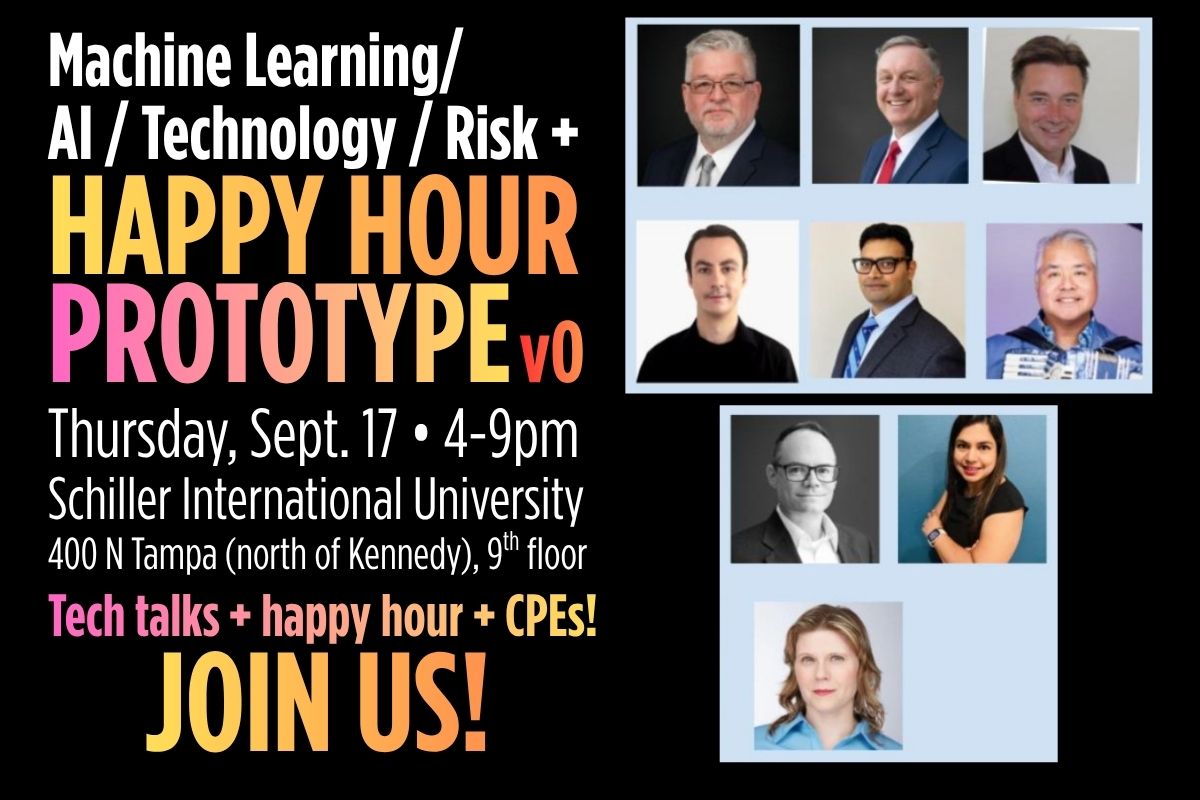
Banner for my earlier article, “Machine Learning / AI / Technology / Risk + Happy Hour Prototype v0: Thursday, September 17!”
Click to read my post promoting the event where the AI panel took place.

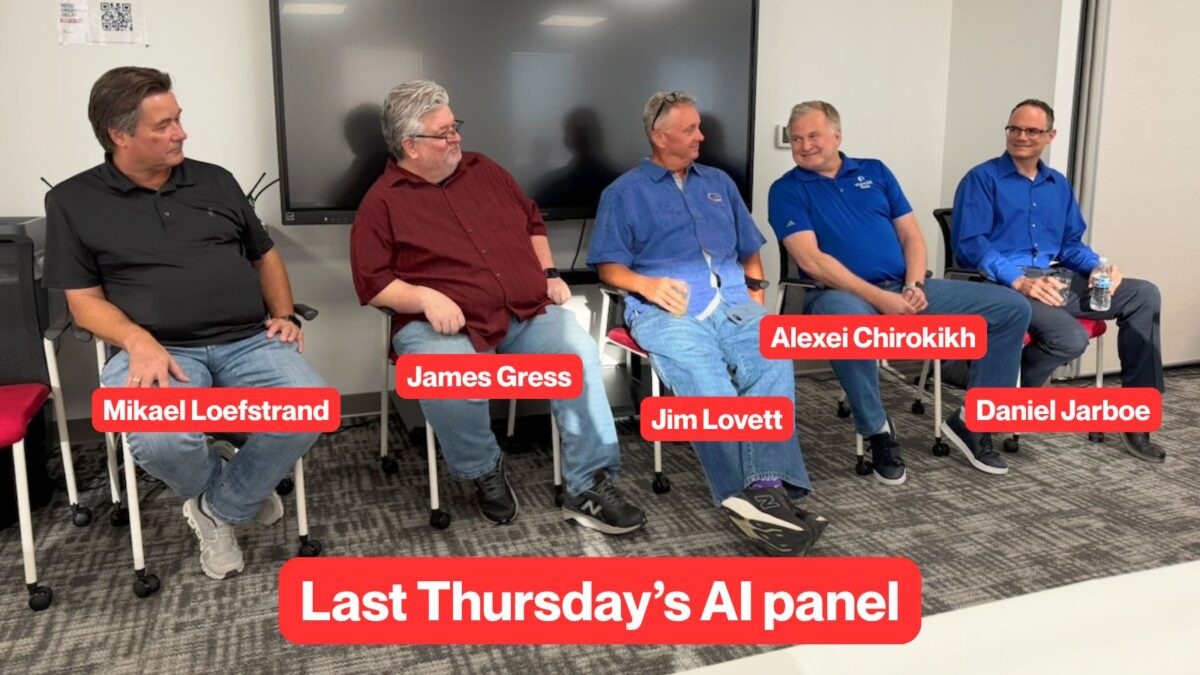
Last Thursday, I was at the Machine Learning / AI / Technology / Risk + Happy Hour Prototype v0 (they’ve got to work on that name) organized by ISACA’s West Florida Chapter. It’s going to the be the first of a monthly series of get-togethers, and the first one centered around an AI panel witrh the following panelists:

From left to right, as seen from the audience

  • Mikael Loefstrand — focused on data protection and data security for AI workloads
  • James Gress — Accenture, 26 years this month. Splits his time between showing people how to be more productive with AI and building AI solutions for complex business problems, governance and monitoring included
  • Jim Lovett — St. Pete born and raised, Gator, 26-ish years as an Oracle DBA, now an AI Ops engineer at Athena Health. Introduced himself by noting he has all of your medical records and won’t let anybody see them
  • Alexei Chirokikh — PhD in physics, twenty years at IBM on Wall Street, then CIO roles in Moscow, Nairobi and across 20 countries for a global microfinance organization, then Citibank. Now CTO at a small, aggressively growing community bank
  • Daniel Jarboe — five years in cyber risk management, currently wearing both the CISO hat and the business-enablement hat at an ~80-person publicly traded property and casualty insurer

Here are my notes from the panel. You might want to read to the end, because there’s a great quote…

Contents

The room was more regulated than you might expect
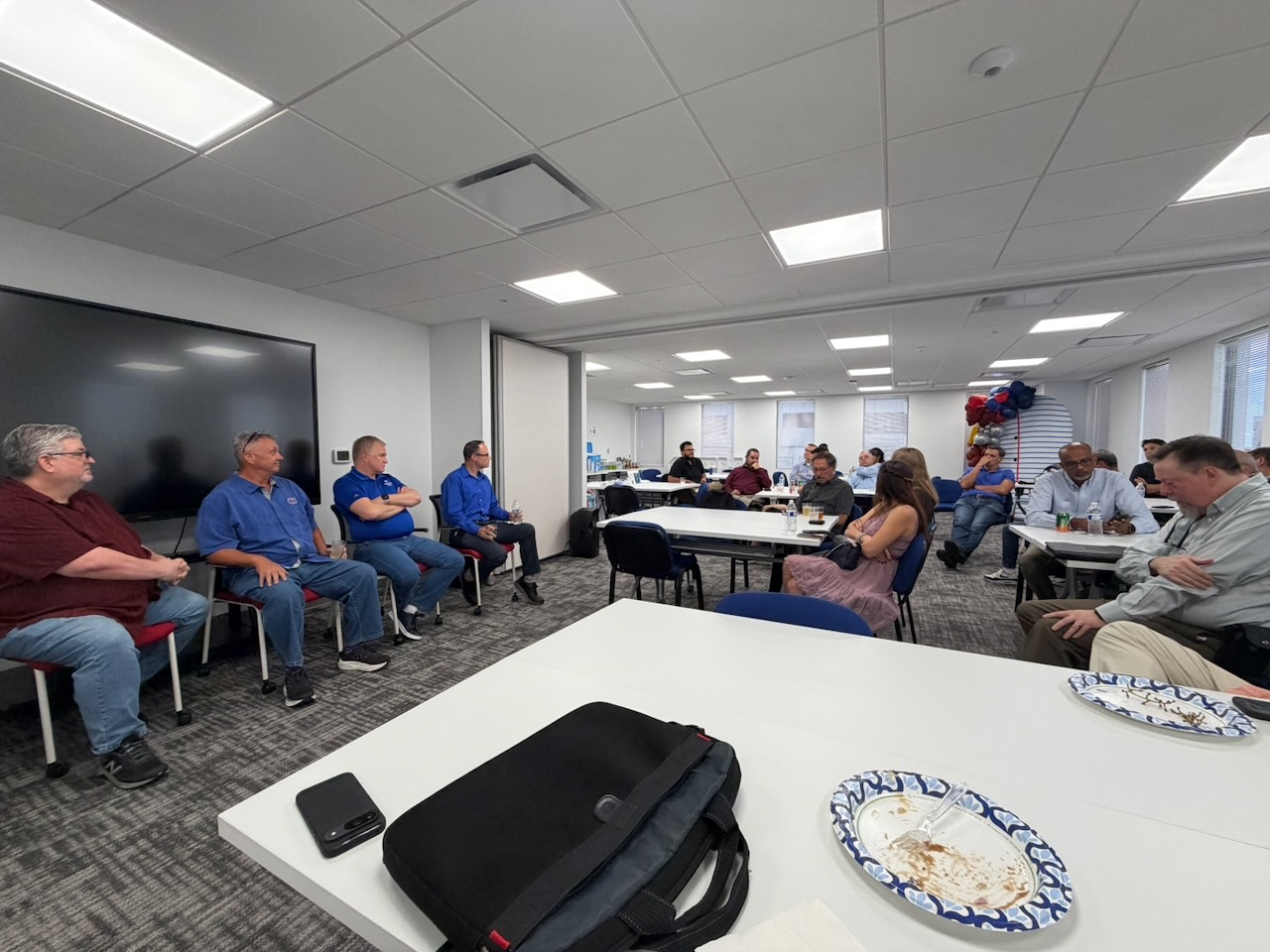
AI panel and some of the audience

Before taking questions, the panel asked for a roll call of what industries audience members worked in. The answers shaped the discussion that followed, and they were:

  • Banking and finance
  • Six people in healthcare
  • Somebody from Experian
  • Legal
  • Higher ed
  • OT/SCADA and maritime security
  • Healthcare
  • Manufacturing
  • DHS
  • A former deputy for cyber governance at a combatant command
  • Air Force

Nelson pointed in my direction and said “Joey, you were military,” to which I replied “No, cybersecurity!” but I then turned around, and right behind me was the Joey he was referring to: Joey Hernandez.

Clearly, this wasn’t a room of startup founders who can YOLO deploy on a whim on a Friday. Most of us did work that would be audited by one or more regulatory agencies. When a room like that says something is now possible, it’s usually possible for everyone.

From PowerPoint to AI giving you what you asked for, but not what you wanted

Before the panel started, I had a quick chat with Jim Lovett, who asked me “What are you doing now with AI that you couldn’t do six months ago?”

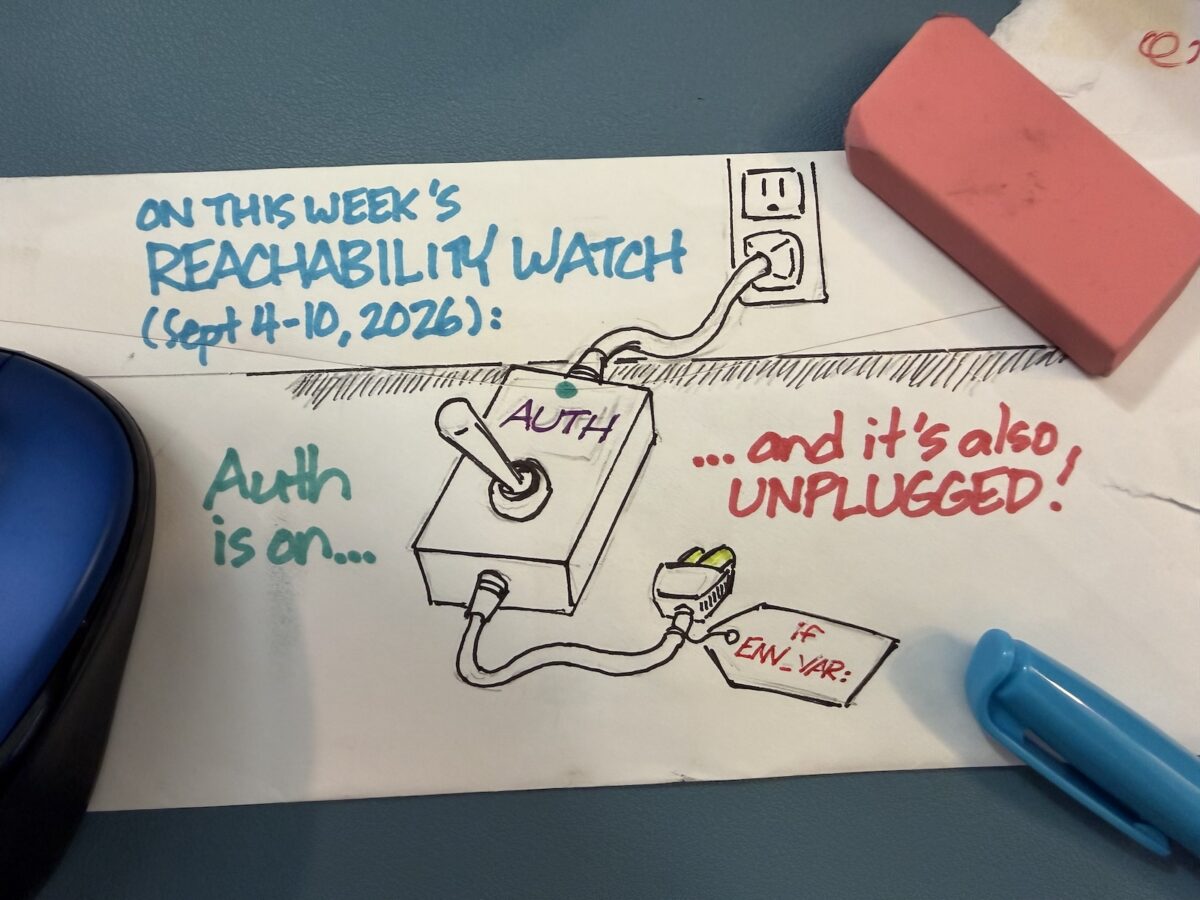
For me, it was a combination of more complex coding, and having it look at my “back of the envelope” cartoons and asking if I’d missed or misspelled anything (Claude is quite good at interpreting my drawings these days).

Jim posed the same question to the audience. Someone pointed out that if you have an idea you want to show someone, you can now ask a model to produce it as a single interactive HTML file in minutes, with all the data living in that one file, complete with user interface and interactivity. They’d used it in various scenarios, including raising money, and pitching an idea internally, within their organization. Pre-AI, they’d need a week, and the result would be something more static: a PowerPoint presentation, a spreadsheet, or the dreaded Word doc.

An audience member pushed back, and the pushback turned into the longest thread of the discussion. Their complaint: Sure, AI generates the text and builds the presentation,  but the output still isn’t ready for public consumption. Every single slide needs tweaking, because they like things a certain way. “You can’t press a button and be done. You always have to intervene.”

(I myself have remained fully in charge of writing and designing my own slides. In my case, it’s professional pride.)

Every panelist had a different answer, and collectively they amount to a decent field guide:

Set up a persona. This was Alexei’s suggestion. He  runs multiple concurrent engagements — CTO on one, chief architect on another, infrastructure on a third — and maintains a separate persona per engagement: interests, tone, language. The model learns the shape of what you want instead of relearning it every session.

Stop asking for the artifact you don’t actually want. Mikael answer was more blunt. He said he hates PowerPoint, and the AI tooling around PowerPoint was especially bad six months ago, so he stopped. He now builds single-file HTML presentations and passes them around as files that open in a browser. He told his boss, roughly, that PowerPoint sucks and he’d deliver something stunning as a single HTML file, and if PowerPoint was truly required, someone else could execute it.

Calibrate what “automation” means. One of the panel (I forgot to write down who said this, which is a shame, because this answer most closely aligns with my thinking) made the point that a lot of people expect full automation and that’s not what this is. It’s an intern. You say “go make a deck that does X”,  you read it, you roll your eyes at their dumbass rookie mistakes, point them out, and say “Here’s how to fix them.”

Grill yourself before you generate. Alexei described the grill-me skill, which you drop into your agent’s workspace, and it interrogates you with thirty or forty questions about your content and structure before it attempts to write anything. It supposedly results in fewer bad outputs because it has fewer under-specified inputs.

One caveat I’d add, since nobody on the panel did: he described skills as “just text” with no security vulnerability, which is true of a plain-Markdown instruction file and not true of skills that ship executable scripts or pull in remote content. “It’s just text” is exactly the assumption prompt injection is built to exploit. Don’t trust blindly; read what you’re dropping in your workspace!

Iterate once, then capture the recipe. James’s version is the one I’ve started using: don’t over-engineer the initial prompt. Run one thread, push it until you like the output, then ask the model to write you the prompt that would reproduce this style. Start there next time.

Expectations are the actual problem. Daniel reframed the whole complaint as misaligned expectations. You expected a perfect deck from one prompt with no edits, which realistically isn’t happening, even though plenty of people out there claim it is. He was pointed about the hype: a lot of people are being negatively affected by exaggerated claims about what AI can deliver. And by the audience member’s own admission, she’s still saving an enormous amount of time. That’s the win. Take it.

An audience member — a recent government departee now consulting with small businesses — offered the framing I liked best. They tell clients it’s a relationship. It sounds ridiculous, because it’s a computer, but it’s a back-and-forth made up of conversations. If you have a slide you like, upload it and say this is how I want all my slides built from now on. And on personas: there’s him as a dad, him as a husband, him as a consultant, him as a military guy, him as a Dallas Cowboys fan. Those are the voices he wants to respond in, depending on who he’s talking to.

Never mind the human in the loop; where’s the leader in the loop?

Jim spent the evening running the most opinionated workflow in the room, and this was his thesis:

“The hell is a human in the loop? I want a leader in the loop!”

A human in the loop, he says, is a rubber stamp. A leader in the loop is someone capable of constructive criticism who brings taste, intent and accountability, and who states all three explicitly, because the model can’t infer them.

He backs this with an absurd amount of written specification. He described building two- and three-thousand-line Markdown files so that anyone could drop one in and get output shaped by that person’s intent, taste and accountability. His own standard output spec is a full page of hierarchy, and he reads back to the model exactly which rule it broke. It’s all plain text, and he makes it a point not to sound authoritative in a register he wouldn’t naturally use.

He told a story to justify all that ceremony. At a previous job, a single spreadsheet with fifteen tabs fed fifteen unique PowerPoints for twelve to fourteen executive directors, each with their own taste, intent and accountability. Fifteen people were employed to maintain it. He was told there was no way AI could ever do this. He asked for a sample; they said it had real data in it; he said he couldn’t help them then. Eventually someone sat with him and screen-shared, and he built it.

His conclusion, which got the biggest laugh of the night was not to fire the fifteen people, but fire the fifteen recipients. “Why do we mandate a spreadsheet that mandates PowerPoints? We’re using that tool because of precedent, and precedent alone.”

He also offered a method, delivered as a sixth-grade algebra story: nobody told him the solutions were in the back of the book. Ever since, he starts at the back and works forward. Don’t start at the front with the newest tool, the newest loop count, the newest memory feature. Start from the answer you need and work backward. If you have something good, let the AI rip it apart.

Then he demonstrated live. He picked up his phone, told Gemini he was on a panel with friends, described the question that had just been asked, and requested something precise, concise and not overly verbose in the next sixty seconds. His aside while doing it was sharper than the demo: talking to inanimate objects in front of other people is uncomfortable for the other people, even when it isn’t uncomfortable for you.

An audience member asked how many times you should loop before you share something. Jim’s answer was so good that I’m simply going to quote him from my recording:

You need to beat it up 16 different ways to Sunday until your eye agrees with what comes back. And it’s layman’s terms and I can hand it to someone. Not only does it make sense, it provides a solution, and at the end of the day, damn it, it better bring value for all the shit we’re paying for, because — Lord have mercy — it’s expensive, and people want to know what we’re doing with it, and it’s the same people that never asked us what the hell we were doing with Excel?

(Jim is at his best when he’s slightly unhinged. We need Jim on more panels.)

The five-minute agent, and the shadow IT it leaves behind

Quite unsurprisingly, James provided the single most concrete answer to the “What are you doing with AI that you couldn’t do six months ago” question.

He’s been building a RAG system to answer common new-joiner questions used to mean a team of five people over months, plus ongoing maintenance. He recently encountered a team that wanted a graph database, a client AWS environment, the whole apparatus. He stopped them: the client has SharePoint and Teams. He went into M365, created an agent scoped to exactly one SharePoint site, pointed it at new-joiner information, and it worked. Five minutes. He was done before the call ended.

Two years ago, he says, it would’ve taken five people, six months, plus a maintenance burden forever.

Daniel took that exact story and turned it into the risk thesis of the evening. The entire premise of AI is speed. You’re enabling everyone to be more productive. So you can predict what happens next: everybody generates applications and use cases, and you end up with giant shadow IT. When those people leave, so does a lot of institutional knowledge. Nobody knows how those applications were built, or how to maintain them, and meanwhile the business is running on them.

Alexei’s counter was that this is the same problem we’ve always had: lack of documentation, and lack of discipline in how you build things. The difference is that pre-AI, all this happened with Excel.

Daniel rebutted with: That’s legacy, and legacy is different. Before, maybe you had one application, built by a team over ten years, where the company’s still around and so is that application, but the developers are gone. The problem now is that you have a hundred and fifty similar applications supporting the business and nobody knows anything about any of them. It’s a problem of scale.

Jim, whose job is to answer when those panicked pages come in, agreed. He added that he’s not primarily worried about security risk; he called that “his hobby”. He’s worried about operational risk. He has to support everyone’s five-minute widget. A number of them will eventually break, each break is going to end up as a ticket, and the growth of unsupportable band-aids is already getting unmanagemable.

You can call the person who created the agent, but once it goes GA and becomes part of day-to-day operations,  there’s nobody to call. His organization has three teams building agents that push code autonomously, and they’ve deferred going live for two months specifically because they don’t believe they can support it operationally.

James added the enterprise version of the same caution: Accenture restricts roughly half the functionality of frontier tools, and agentic desktop tooling with broad local filesystem control is largely off-limits across the organization.

Daniel suggested this for small companies: You still need some form of center of excellence, even if it’s a part-time role for one person. Figure out your operational controls. Decide what’s allowed. His wife’s 20-person company does exactly that: a short list of permitted tools and clear guidance to staff.

In the end, there is no single “right” answer. Different organizations have different risk tolerances. Smaller companies with less to lose are going to go ahead and see what happens.

Saying “no” costs political capital

The discussion moved to a favorite ISACA topic: governance.

Somebody described arriving at an organization with a six-month backlog for building applications and no intake process at all. People asked, and the team built. The fix was unglamorous: What do you need this for? What are you using right now? Someone has to own that, which slows business down, which is the cost. If a spreadsheet does the job, use the spreadsheet.

This led to the question underneath all governance work: What is the definition of “no”, and how do you squash the squeakiest wheel?

Someone else made an excellent point: Shiny is the enemy. AI is extremely shiny compared to the legacy systems and capabilities you’re trying to build on. If you’re not modernizing infrastructure, are you actually going to be able to use AI the way you think? You’ve got a fifteen-year-old server at the back of the data center that would take the whole business down if you turned it off, and you want to onboard 20,000 GPUs.

Jim’s response was that this happens every single day at every organization, and that he’s watched three decades of it, where people ignore the technical debt on the cash cow and throw money at the shiny new thing because that might drive double-digit revenue growth. In an ideal world, the right thing to do would be to say “no”, but Jim spelled out the problem with that approach:

“Saying ‘no’ costs an incredible amount of political capital.”

He described arriving at work every morning with a truckload of it and dumping it on the step, because that’s what the job takes.

This was followed by a discussion about tool sprawl. Jim wants a single tool, and his argument isn’t technical. It’s about human friction and his own operational sanity. Models update faster that we can evaluate them. He’d rather pick one and make it work well inside the institution than maintain opinions about five.

An audience member suggested “Right tool, right time, right people.” A receptionist and a finance person do not need the same toolset. The receptionist may not need AI at all.

My take: You can declare a single tool all you like, and then the receptionist uses ChatGPT to answer customer questions anyway, and nobody’s taking inventory of how much data has been shoved into the cloud.

Jim observed that at his work, the resistance isn’t at the bottom. It’s at the top. Executives think Copilot is fine because they live in email and meetings.

“One plus one? It depends.”

Jim stopped and asked for a show of hands: “Does everyone know what ‘non-deterministic’ means?”

We all fell in love with this technology because it’s reasonably human-like. It’s human-like because it randomly samples at the end. It computes top-p and top-k and then picks. Ask it one plus one and the honest answer about the mechanism is “it depends”. Which led him to ask, a couple of years ago, how anyone could possibly deliver ambulatory AI, because it will never give you the same correct answer twice.

The best rebuttal came from the panel itself: Two doctors  (or experts in any field) will never give you the exact same answer either, and they’ll sometimes differ by quite a bit.

Alexei added to this, saying that what we’re seeing today is a genuine simulation of the world we live in. The classic computer science maxim “garbage in, garbage out” applies. It means that if your processes are biased, especially in credit risk and financial services, the output carries the same bias. The world is also full of contradictions, and those contradictions live in the output.

Mikael offered the engineering response: you can constrain this. Skills, directives, instructions, templates. You can make the piece you care about deterministic, even if the prose around it varies. You can’t do this for every use case, but you can do so more than people assume.

Daniel pointed out that if you talk to an actual subject matter expert, they can usually tell you whether the output is accurate. The problem is that we’ve branched into areas where we’re not experts, and then we assume nobody can correct it. That’s not true.

What they’d actually let AI touch

Jim was the most specific person in the room about data, presumably because he’s the one holding the medical records.

His org doesn’t let AI touch production unmasked data at all. Lower environments only, everything masked before it leaves the walls, masking hundreds of millions of records weekly with Delphix so the lower environments carry no PII or PHI.

When they needed to clean PHI out of their source repositories, they evaluated multiple vendor tools and none came close to what a frontier model did from the command line. He said the model did a noticeably better job than any vendor could offer, and the vendors simply hadn’t reached that level of proficiency.

I agree with his take on vendor trust: zero trust! One vendor says they’re not looking at any clinical data. He can’t verify it. Once it’s outside his network, it’s gone. His advice: at minimum, have a legal agreement with whoever you choose.

He also took a detour into what operations looks like at scale now:

  • Kafka clusters and OpenSearch on-prem
  • 6 figures of pods
  • Tens of thousands of Kubernetes namespaces, each carrying their own ingress and egress rules
  • Hybrid nodes running the same thing on-prem and in cloud because management decided a decade ago to run two systems instead of one
  • Data stretched across two platforms, usually three.

Jim’s summary of his own job: AI Ops has a lot to do with data integrity, performed by a machine with no integrity.

There was a JPMorgan story in there too, about spinning up something like a hundred thousand EC2 instances to crush a workload ahead of a market event, being asked to halve it on cost grounds with no technical reasoning, and demonstrating that you could pull information out of memory on shared servers. His note on that last part: with today’s tooling, it’s easier.

AI fatigue

Jim described the shape of his days now: “You’re always on.”

You’re either heavily reviewing something, heavily creating something, or heavily doing idea generation. The toil that used to give your brain a break between hard things is gone. He runs fifteen agent windows, moves between them, waits, moves again. As a developer he used to enjoy the two or three minutes of compile time to think about something. He never gets to wait for the compile anymore.

An audience member asked the right question: What’s your error rate? Because you cannot tell me your errors don’t go up while you’re managing fifteen things.

Alexei answered: He feels more productive. He isn’t focused anymore. Productivity used to be linked to focus; now everything is concurrent, and he thinks that’s dangerous. He can do in three hours what used to take a week, and he can no longer concentrate on one thing, which was his actual answer to the panel’s opening question about what changed in six months.

He also gave the most specific failure mode of the panel: In six months he’s given a task to the wrong agent maybe three times. Before AI, this never happened, but in the his current environment, there are multiple desktops and so much going on. It’s all to easy to copy in one window and then paste into the wrong place.

He then brought up what I think is the real risk: information that’s inaccurate but looks shiny. It’s beautiful, makes sense, and makes you feel good (that’s what it was built to do), but it may also be completely wrong.

Two mitigations came out of that exchange, both worth stealing:

  1. Instruct the model, up front, to tell you when it doesn’t know, and to not exercise judgment it wasn’t authorized to exercise. Treat it as a model, not a decision maker.
  2. Build a red team agent. The consultant in the audience does this for every small-business application build: an adversarial agent that audits everything from the requirements forward. It should come back with things like “This button doesn’t make sense”, “This color scheme won’t render”, or “You’re rounding wrong”. He does it precisely because he’s multitasking and doesn’t want to go back and check.

Daniel supplied this general rule: Responsible use of AI takes discipline. Ask what the cost of being wrong is, and how well you’d be able to detect an error. If the cost is high and your detection is poor, you don’t delegate that to an agent.

The value question nobody has answered

Running underneath everything was money. (Surpise, surprise.)

Jim talked about his frustration: Now that AI has a line item, people demand proof of value. These are the same people who never once asked anyone to justify the value of an Excel spreadsheet. The old term was “Fail fast!”, and nobody blinked at a million dollars a quarter in experiments when the mandate came from the board.

His proposed number, offered as opinion and immediately acknowledged as a big one nobody wants to touch: If you believe someone’s productivity will increase value for your firm, you should be willing to increase payroll by 12% (I assume he’s thinking one-eighth, rounded down to the nearest percent).

James countered, drawn from his own earlier history as a developer. Given a week to do something, he’d spend three and a half days playing with the code because he enjoyed it, then realize he had a day and a half left and wrap it up. Give an engineer five days with AI, and they’ll still take five days. They’ll just spend the extra time trying to get an agent to one-shot what previously took five shots. The time savings don’t automatically become business value, because engineers like playing with technology. Why wouldn’t they?

Jim brought in accountability. Developers could barely be held accountable for their output before AI. Now make them do ten times the work, and they’re still accountable for every PR. He sees real hesitation there; people don’t want to take on anything they’re not directly assigned, and story point allocations per two-week sprint haven’t moved at all.

The question was posed: If a project is a failure, is it really a failure, or is it learning? The counter: If I spend two million dollars on AI this year, do I mostly find out which employees won’t learn it?

We can make a bad process look very shiny and very efficient. We need to ask:

  • What’s the optimal process?
  • What’s the change management?

Sometimes the honest answer is that you had a bad process to begin with, and AI just made it beautiful.

The takeaways
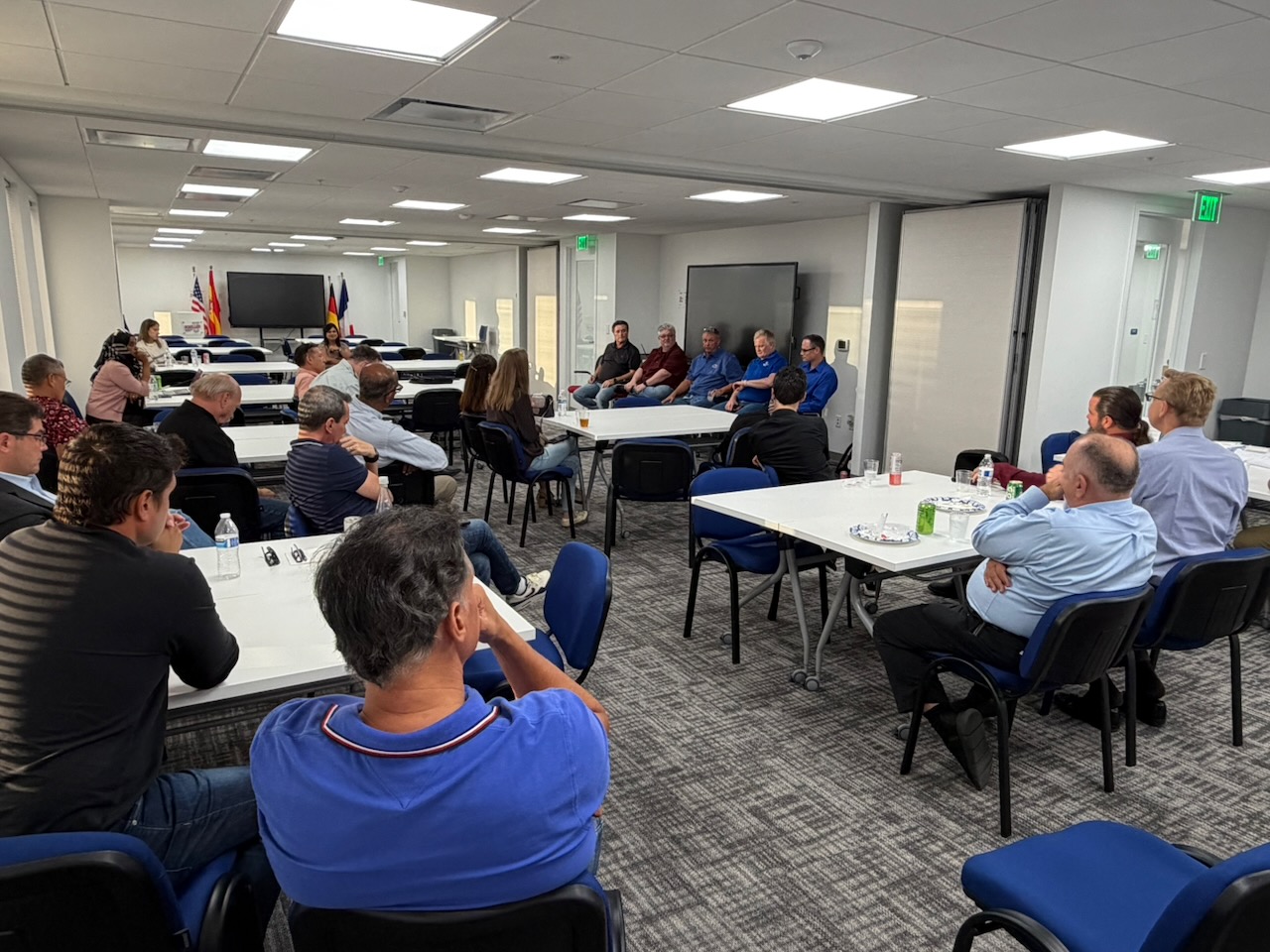
AI panel and audience, as seen from the back of the room

Congrats if you made it this far into this writeup! You’re ahead of a lot of people these days, what with their goldfish-like attention spans.

Here are my takeaways from this panel discussion:

Leaders in the loop, not humans in the loop. Reviewing without taste, intent and accountability is just a rubber stamp with extra steps. All three have to be written down, because the model can’t infer them.

Write the spec, then reuse it. 3,000-line Markdown standards sound insane until you see the fifteen-PowerPoint story. Cheaper version: iterate once, then ask the model to write the prompt that reproduces the result.

Cost of being wrong × ability to detect the error. The cleanest delegation heuristic I’ve heard for agents.

The scale problem is real and nobody’s solved it. Everything we knew about undocumented systems is still true. There are just going to be waaaay more of them, built in five minutes each, by people who then leave.

“Beautiful and wrong” is the failure mode to fear. (It’s also the dating mode to fear) Not refusals. Not obvious hallucinations. Polished, confident, well-formatted output that feels good and isn’t right.

AI fatigue is real. It’s being reported by the people getting the most out of these tools. A panelist mentioned his boss can now see he’s working 82 hours a week, that he stopped about a month ago, and that he took up golf and feels like he’s in purgatory because he isn’t allowed to work. The room laughed. It wasn’t entirely a joke.

Truer final words were never spoken

The last words on the recording, delivered deadpan after seventy minutes of this:

I need alcohol. Thank you for listening to this panel.”
Categories
Picdump

Saturday picdump for Saturday, September 19

Happy Saturday, everyone! Here on Global Nerdy, Saturday means that it’s time for another “picdump” — the weekly assortment of amusing or interesting pictures, comics, and memes I found over the past week. Share and enjoy!


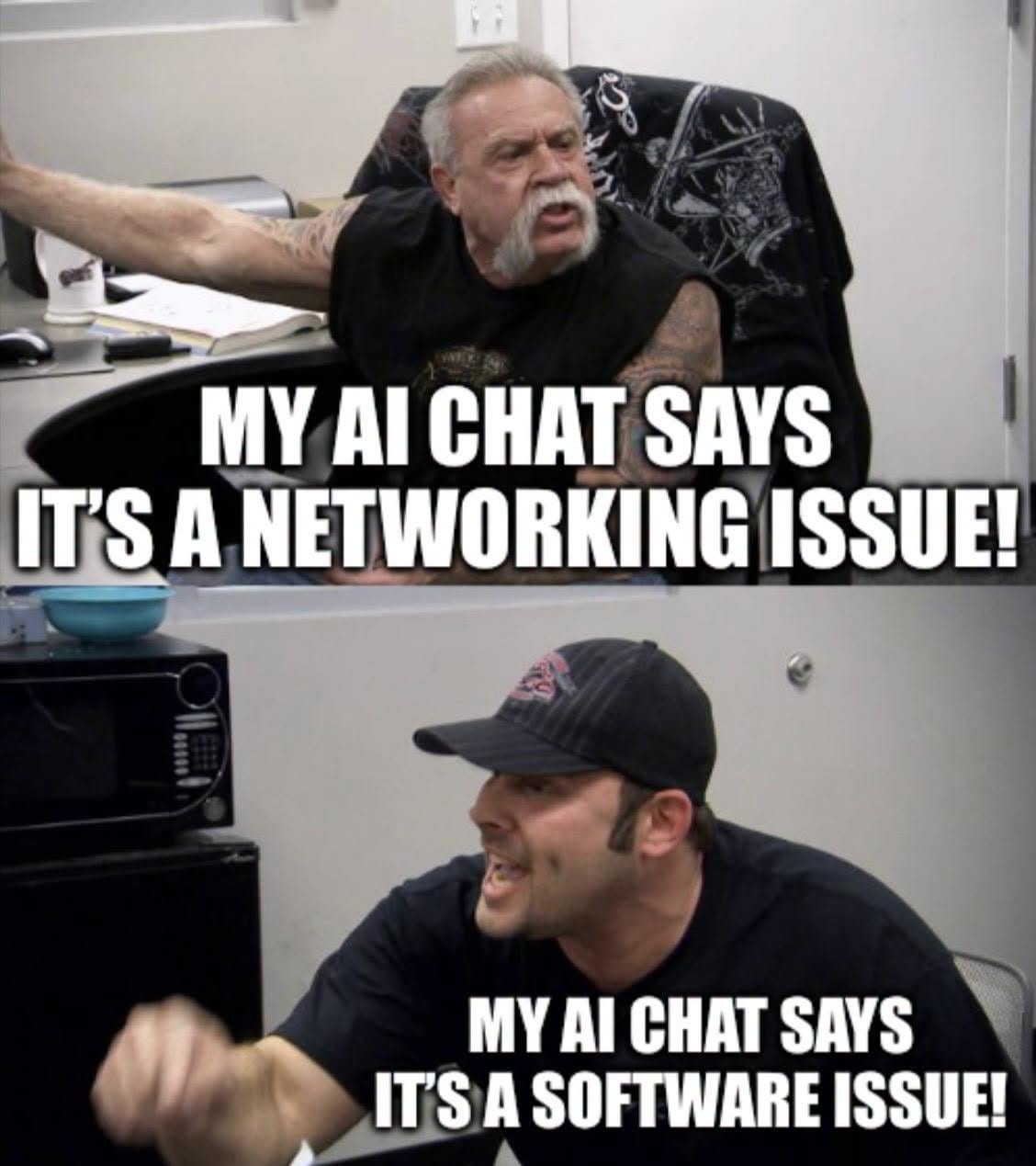
809736295_2668733000252580_3447715592947734992_n

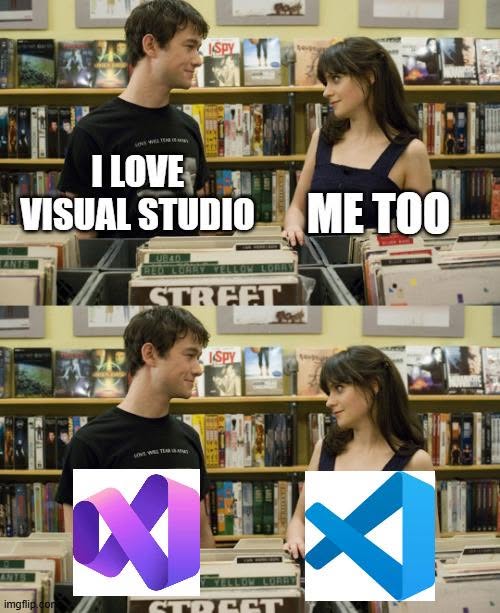
800231327_1078169904958425_2409078445875119835_n


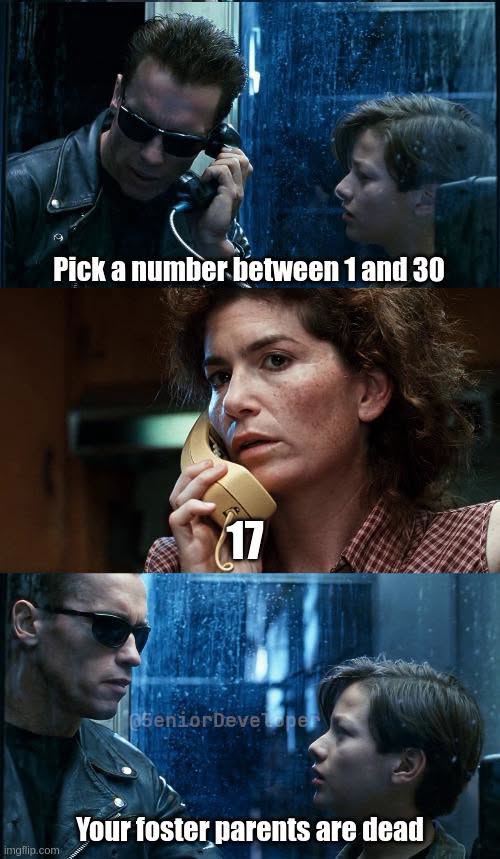
814629893_2066451587566498_3028079197909388900_n

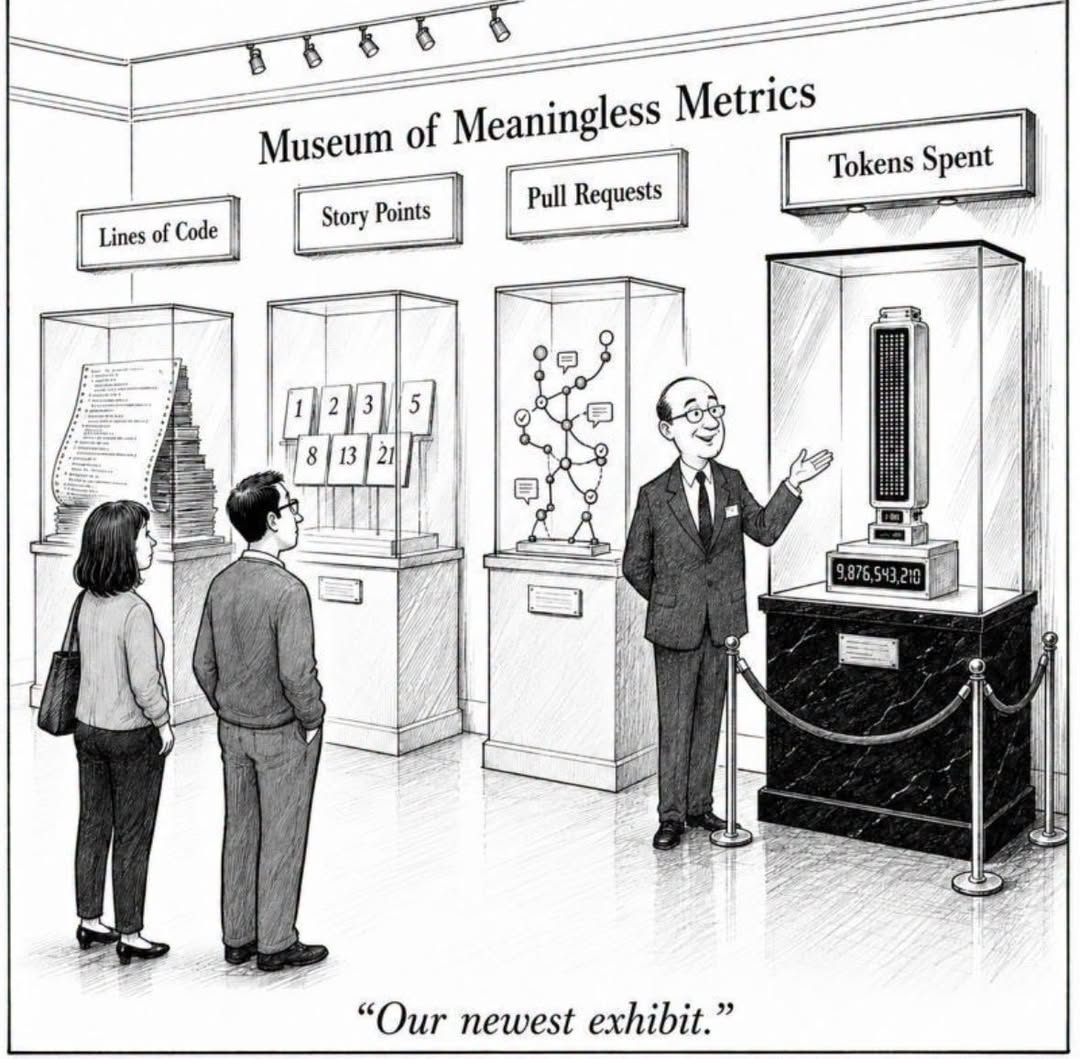
812729848_4982860658609031_6744776380019181100_n

809076307_18616381888051094_5537329556694259724_n

794467627_931975849503507_2042193606426255549_n

Screenshot
Screenshot

813623871_1072275922367522_1177058285462177199_n

811962950_28011019351903816_4878617338058872667_n

811340367_1108632551633008_2551169047288799783_n

809235359_1839952340692714_4253538675259368674_n

813949153_1388118819550189_1321269260852682301_n

IMG_3225

1be653563d6179d3

814769099_1051266824576359_401024661707947908_n

810321013_1515082307306776_2289214949372843680_n

810282210_1576741140805630_5476965240015620578_n

813020843_2349874082086669_5961702913250015415_n

802699483_1063410456504092_4415264001902739485_n

IMG_3188

812255397_1423500132528420_4592399028365217841_n

813546522_1454769463168714_1217289950886689970_n-1

809076547_1763460504979952_3456978243604598474_n

809409673_2123095565750308_6608664770126534815_n

809844125_1621586569747213_7124325472428472234_n

814575419_1652950716162164_360984297323814716_n

810485538_1369801752030948_3648799208428949595_n

Screenshot
Screenshot

800842051_1818914899279325_8244106522838955773_n

801149719_3226790934198671_4283835043458164512_n

Screenshot
Screenshot

813546522_1454769463168714_1217289950886689970_n

809235392_2473746956454953_9109311201967534482_n

810900479_1737007650857414_6729834963341212605_n

IMG_3325

811935579_1660068808873730_4645592423631999131_n

IMG_3208

812730603_950012364828405_5107683569141982249_n

811028544_1360206339435846_4844020090934424873_n

813911975_1074365765332133_3480041683321722396_n

809536881_1087400190813105_1418473194949429156_n

799859031_1116635740816768_4914245971706743020_n

809133848_4555380601451252_154533306147734545_n

802853993_1392612166186463_3689304476853364659_n

794967077_1089005723639000_8786812793624090971_n

IMG_3184

797059242_10174964397505570_6518791450835732802_n

806053761_10245682916591191_8627854039558624916_n

813020858_2168826904044337_5640720295464629188_n

809095062_2051759065545388_789781118570102912_n

814453764_1952895688721241_4456232420934270254_n

IMG_3186

Screenshot
Screenshot

813421407_878172541915968_6532121083641972748_n

812030259_1601523068236435_4195721376465525877_n

809736317_1640306711055732_7908195314689151618_n

813467177_1353356273255891_4984171654307467225_n-1

IMG_3180

813672753_1071411405533402_5181186072244845878_n

806687324_18624577036004935_3439715615885952025_n

804445632_1743830910249327_1343017500814330428_n

809076910_981246078334332_1971121088326846921_n

811303750_1116350877493450_2916707762833594233_n

813386417_1419095080314837_6563295921297964500_n

812612016_1428949872491581_3214441261125340462_n

813966160_1627277908234654_7695667293036546892_n

814750030_4402023113385621_5306318504589171789_n

805752627_10238446251709067_8108637959185342374_n

Screenshot
Screenshot

IMG_3200

813421102_1401775584666362_4230498957593406284_n

814310362_2508534476321921_7667905288838637700_n

812227839_849297101604531_3270973494274533591_n

813901508_1047850031579533_6216308581075679468_n

797071514_4555378298118149_1158547369064246059_n

799983699_2201606287443586_8428512834520179211_n

810246545_4509546009326097_3039526545419467769_n

809235392_2473746956454953_9109311201967534482_n-1

Screenshot
Screenshot

809235371_10165032740696131_2133767423471867651_n

813959147_1069655059223165_1501617316928397731_n

810246518_1036034496130188_2684464247850339603_n

IMG_3179

814728944_4385826604896139_1474453269466893733_n

799525931_1020012467761285_4544524687832860148_n-1

793324291_1125316960172070_4362545694613795021_n

794727123_1061263246514391_625489330811158825_n

794459989_1016140041477472_5929906494043965522_n

809602425_902774256019890_4854833844889314141_n

808285887_1400360681551822_2663578147450027735_n

811792399_1497933115790794_5915064742013001157_n

815209960_937233488966626_4564977963220913871_n

813582768_3425243150990721_4518442000455883873_n

808109920_4410308435896726_976281476137638635_n

812754932_1660974368878117_6555114304129097291_n

809465407_2101076690769253_2450339647340750259_n

814629888_1647738420302695_2688315902014195270_n
Categories
Current Events Meetups Tampa Bay

Tampa Bay tech, entrepreneur, and nerd events list (Monday, September 21 – Sunday, September 27)

Here’s what’s happening in the thriving tech scene in Tampa Bay and surrounding areas for the week of Monday, September 21 through Sunday, September 27!

This list includes both in-person and online events. Note that each item in the list includes:

✅ When the event will take place

✅ What the event is

✅ Where the event will take place

✅ Who is holding the event

This week’s events

Monday, September 21

Event name and location Group Time
Venice Area Toastmasters Club #5486
Online event
Toastmasters District 48 7:30 AM to 9:00 AM EDT
Speakeasy Toastmasters #4698
Online event
Toastmasters District 48 6:00 PM to 8:00 PM EDT
ACE Advanced Toastmasters 3274480
Online event
Toastmasters Divisions C & D 6:00 PM to 7:30 PM EDT
Sarasota Blood on the Clocktower
Clocktower meetup
Board Games and Card Games in Sarasota & Bradenton 6:00 PM to 10:00 PM EDT
MTG: Commander Night
Critical Hit Games
Critical Hit Games 6:00 PM to 11:00 PM EDT
Games at Barriehaus Trinity
Barriehaus Beer Company, Trinity
Advance 3 Spaces Neurodivergent Social Gaming 6:00 PM to 8:00 PM EDT
Toast of Lakewood Ranch Toastmasters Club
Lakewood Ranch Town Hall
Toastmasters District 48 6:30 PM to 7:30 PM EDT
North Port Toastmasters Meets Online!!
Online event
Toastmasters District 48 6:30 PM to 8:00 PM EDT
Euchre – Voodoo Brewery
Voodoo Brewery
Euchre- At Voodoo Brewery 6:50 PM to 9:15 PM EDT
Lakeland (FL) Toastmasters Club #2262
GFWC United Women’s Club of Lakeland
Toastmasters Division E 7:00 PM to 9:00 PM EDT
Let’s Talk Toastmasters
Online event
Toastmasters Divisions C & D 7:00 PM to 8:30 PM EDT
Hidden Gems Night, Presented by A Duck!
Online event
Nerdbrew Events 7:00 PM to 10:00 PM EDT
Virtual Event: Hiawassee Book Club
Online event
Library Book Clubs – OCLS 7:00 PM to 8:30 PM EDT
DigiMondays
Sunshine Games | Magic the Gathering, Pokémon, Yu-Gi-Oh!
Sunshine Games 7:30 PM to 9:30 PM EDT
Weekly General Meetup
Online event
Beginning Web Development 8:00 PM to 9:00 PM EDT
Where is Bitcoin Going?
Online event
Bitcoiners of Southwest Florida 9:00 PM to 10:00 PM EDT
Return to the top of the list

Tuesday, September 22

Tuesday from 10:00 a.m. to 11:00 a.m. (online): Computer Coach, via their Tampa Cybersecurity Training Meetup group, presents Career Changing Successfully!

Ready for a career change? Join our webinar, “Career Changing Without Resetting Your Journey,” and learn actionable steps to transition successfully. Recognize your current skills and seize new opportunities without starting from scratch. Register now and take the next step in your career!

Find out more and register here.

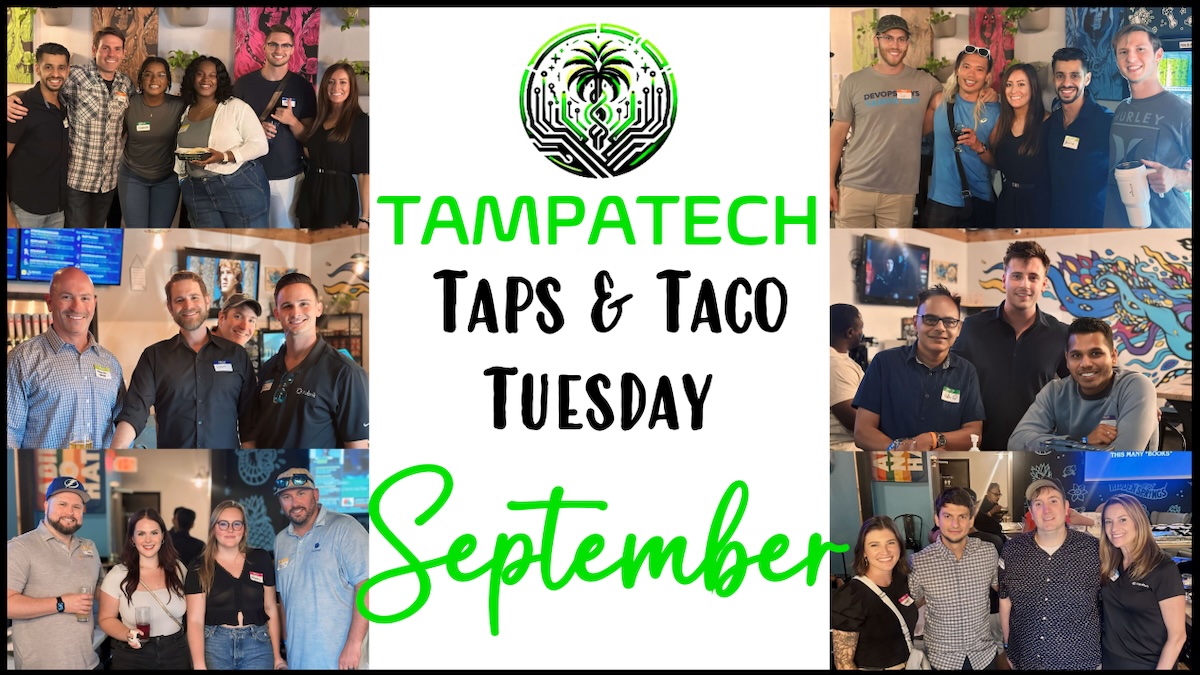
Tuesday from 5:30 to 8:30 p.m. at Hidden Springs Ale Works (Tampa): It’s the September edition of TampaTech Taps & Taco Tuesday!

This is a once-a-month gathering of Tampa Bay’s tech community for good company, good conversations, 15% off the regular beer prices, and most importantly, FREE TACOS!

Find out more and register here.

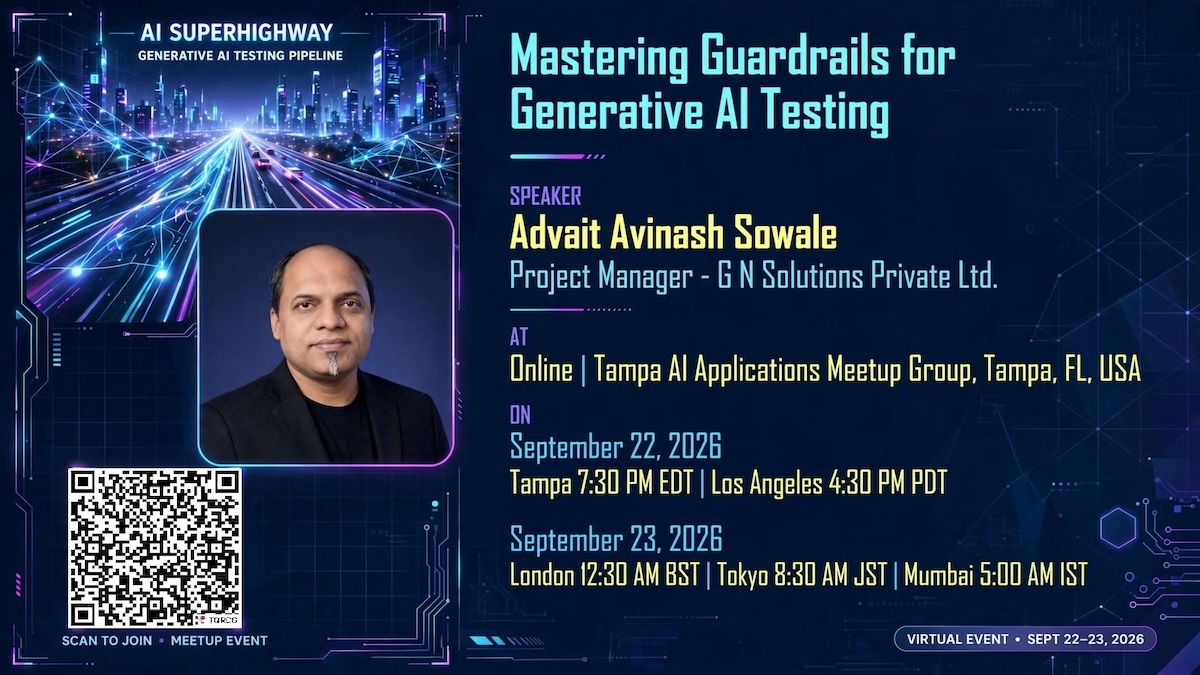
Tuesday from 7:30 to 9:00 p.m. (online): Tampa AI Applications Meetup Group presents Mastering Guardrails for Generative AI Testing!

This session explores key strategies for testing and validating AI guardrails: covering bias detection, hallucination control, and output validation. Gain valuable insights into building trustworthy AI systems and effectively testing generative models in real-world applications.

Find out more and register here.

Event name and location Group Time
Career Changing Successfully
Online event
Tampa Cybersecurity Training 10:00 AM to 11:00 AM EDT
Post 10 Euchre Tournament
American Legion Post
Greater Orlando Euchre Players 12:00 PM to 3:30 PM EDT
September | TampaTech Taps & Taco Tuesday
Hidden Springs Ale Works
Kelsey Puryear 5:30 PM to 8:30 PM EDT
Bartow Toastmasters HYBRID Meeting
2250 S Floral Ave
Toastmasters Division E 6:00 PM to 7:15 PM EDT
Spanglish Toastmasters Club 7703731
Online event
Toastmasters Division G 6:00 PM to 7:30 PM EDT
Disney Lorcana Night
Critical Hit Games
Critical Hit Games 6:00 PM to 11:00 PM EDT
Hobby Night
Critical Hit Games
Critical Hit Games 6:00 PM to 11:00 PM EDT
Winter Haven Toastmasters
St Paul’s Episcopal Church
Toastmasters Division E 6:30 PM to 8:30 PM EDT
Loner Seekers Euchre – Tampa
Shamrocks Ale House
Loner Seekers Euchre – Tampa 6:30 PM to 9:30 PM EDT
D&D @ Critical Hit Games (Full)
Critical Hit Games
RPG-Pinellas 6:30 PM to 11:00 PM EDT
Find Your Voice: Dunedin Toastmasters
Unity Community Church
Dunedin Toastmasters 2166 7:00 PM to 8:30 PM EDT
Winter Springs Toastmasters Club
Online event
Toastmasters Divisions C & D 7:00 PM to 8:15 PM EDT
Boards & Bones Table Top RPGs
Gambit Games
Nerdbrew Events 7:00 PM to 10:00 PM EDT
Yu-Gi-Oh Evening Tournament
Sunshine Games | Magic the Gathering, Pokémon, Yu-Gi-Oh!
Sunshine Games 7:00 PM to 11:00 PM EDT
St. Pete Beers ‘n Board Games Meetup for Young Adults
3 Daughters Brewing
St. Pete Beers ‘n Board Games for Young Adults 7:00 PM to 10:00 PM EDT
Mastering Guardrails for Generative AI Testing
Online event
Tampa AI Applications Meetup Group 7:30 PM to 9:00 PM EDT
Badass Babes – Weekly Movie Night
Online event
Nerdbrew Events 7:30 PM to 9:30 PM EDT
Trading Tuesday
Online event
Bitcoiners of Southwest Florida 8:00 PM to 9:00 PM EDT
Return to the top of the list

Wednesday, September 23

Wednesday from 12:30 to 1:30 p.m. (online): Heart of Agile St. Pete – Tampa – Orlando is hosting an online coffee corner!

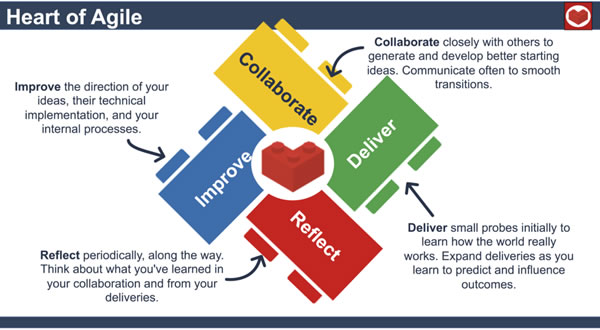
The Heart of Agile Coffee Corner brings people together from around the world via Zoom in a casual setting to share and discuss ways we Collaborate, Deliver, Reflect, and Improve.

We explore the kinds of topics people ask for: real-world stories of Agile in practice, small high-leverage changes in how we work together, and the intersections between Heart of Agile and emerging areas like AI — shaped by who’s in the room and what you bring.

The Heart of Agile is not just for software teams. It applies anywhere people work together — healthcare, education, community work, product development, coaching, and beyond — so you’re welcome whether or not you work in tech.

This is not a formal talk or webinar. Expect an informal, conversational space where you can join for as much time as you have, listen in, and contribute when you’re ready.

Find out more and register here.

Wednesday from 6:00 – 9:00 p.m. at Coppertail Brewing (Tampa): ISACA West Florida Chapter is hodling their Q3 2026 Networking Event!

Whether you’re deep in tech or work in a technology-adjacent field, this is the perfect chance to connect with fellow professionals, share ideas, and just have a good time.

Find out more and register here.

Event name and location Group Time
World Toasters Toastmasters Club
Online event
Toastmasters Division E 7:05 AM to 8:00 AM EDT
Tampa Highrisers Toastmasters
Hyde Park United Methodist Church
Toastmasters District 48 7:45 AM to 8:45 AM EDT
Computer Repair Clinic
2079 Range Rd
Tampa Bay Technology Center 8:30 AM to 12:30 PM EDT
⚫ NAT’L CHECKERS DAY—YOUR MOVE FOR SOME FUN!Wednesday, September 23, 2026
Citrus Park Town Center Mall
Tampa (Citrus Park Area) Games Meetup Group 10:00 AM
Productivity Wednesday
300 E State Street
Kazba Cafe – Oldsmar FL 10:00 AM to 1:00 PM EDT
ChatGPT Beyond Chatting: 10 Things You Didn’t Know It Could Do
Online event
AI Tool of the Week 12:00 PM to 2:00 PM EDT
Heart of Agile Coffee Corner–September 2026
Online event
Heart of Agile St. Pete – Tampa – Orlando 12:30 PM to 1:30 PM EDT
BrowserStack Meetup Orlando: AI for Proactive QA Defect Prevention
Online event
BrowserStack Meetup group Orlando 1:30 PM to 2:30 PM EDT
Wednesday Night Gaming
Nerdy Needs
Brandon Boardgamers 5:00 PM to 10:00 PM EDT
40k Escalation League
Battlebrush Games
Battlebrush Games: Paint Minis & Play Warhammer/Warmachine 5:00 PM to 9:00 PM EDT
CNC Wednesday’s
MakerSpace St. Petersburg
Makerspaces Pinellas Meetup Group 5:30 PM to 7:30 PM EDT
Wednesday Board Game Night
Bridge Center
Tampa Gaming Guild 5:30 PM to 11:00 PM EDT
Orlando Chess Association
West Osceola Library
Greater Orlando Chess 5:30 PM to 8:30 PM EDT
ISACA West Florida Chapter – Q3 2026 Networking Event
Coppertail Brewing
ISACA West Florida Chapter 6:00 PM to 9:00 PM EDT
Casual Commander Wednesdays
Sunshine Games | Magic the Gathering, Pokémon, Yu-Gi-Oh!
Sunshine Games 6:00 PM to 11:00 PM EDT
Board Game Night
Critical Hit Games
Critical Hit Games 6:00 PM to 11:00 PM EDT
Board game night at CHG!
Critical Hit Games
Saint Pete Boardgamers 6:00 PM to 11:00 PM EDT
Tampa Writers Alliance Critique Group
Online event
Tampa Writers Alliance 6:30 PM to 8:30 PM EDT
Magic Pioneer Event
Sunshine Games | Magic the Gathering, Pokémon, Yu-Gi-Oh!
Sunshine Games 6:45 PM
Sun Coast Euchre Club
The Hanger Restaurant & Flight Lounge
Suncoast Euchre Club -St Pete 6:50 PM to 8:50 PM EDT
Carrollwood Toastmasters Meetings meet In-Person and Online
Jimmie B. Keel Regional Library
Toastmasters District 48 7:00 PM to 8:30 PM EDT
Apopka Foliage Toastmasters
Online event
Apopka Foliage Toastmasters 7:00 PM to 8:30 PM EDT
Games & Grog! Board game night @ Peabodies
Peabodies
Nerdbrew Events 7:00 PM to 11:00 PM EDT
St Pete Wednesday Game Night
Right Around The Corner
St Pete Game Night 7:00 PM to 9:00 PM EDT
Presentation Wed 9/23 at 7 pm: Creative Photography by Barbera Maker
Online event
The Art Of Photography – Tampa/St. Pete 7:00 PM to 9:00 PM EDT
Board Games at M+M
M+M videogames
Tampa 20’s and 30’s Social Crew 7:00 PM to 10:00 PM EDT
Cardfight Vanguard!! OverDress Weekly
Sunshine Games | Magic the Gathering, Pokémon, Yu-Gi-Oh!
Sunshine Games 7:30 PM to 9:30 PM EDT
The Strength Born from Adversity: A Stoic Perspective
Online event
Philosophy for Everyday Life – Talks and Classes in Florida 8:00 PM to 9:00 PM EDT
Return to the top of the list

Thursday, September 24

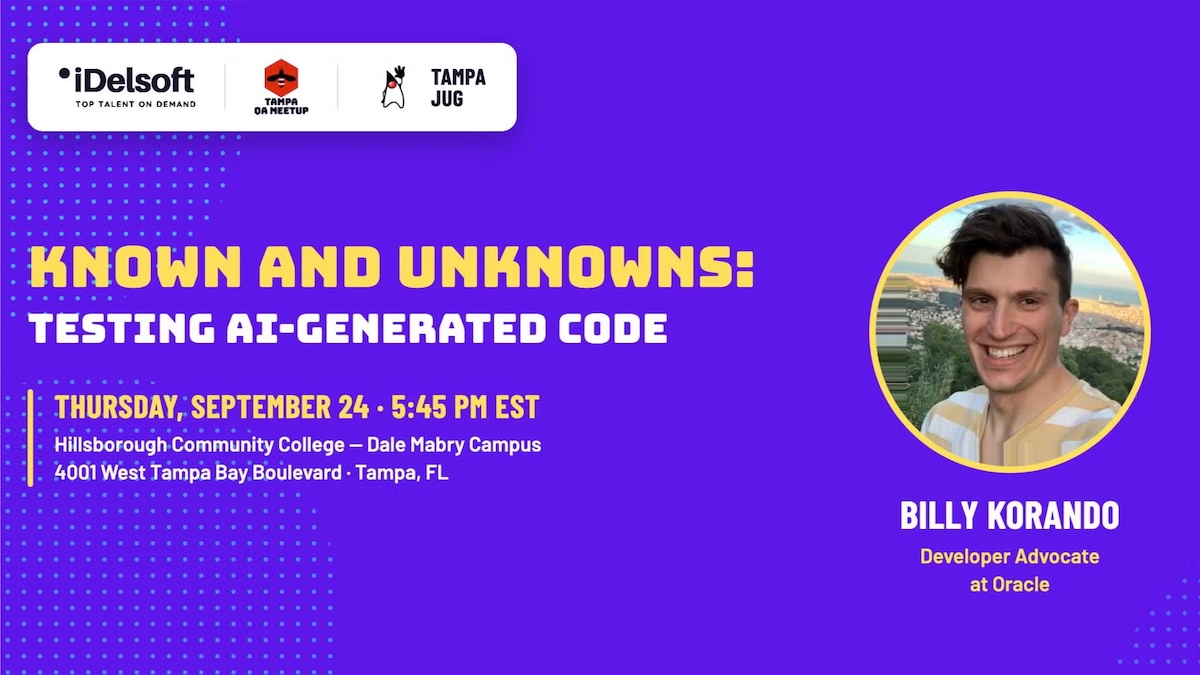
Thursday at 5:45 p.m. at Hillsborough Community College’s Dale Mabry Campus (Tampa): TampaBay AI Meetup / Tampa QA Meetup / Tampa Java User Group present Known and Unknowns: Testing AI-Generated Code!

Billy Korando (developer advocate at Oracle) is visiting from Kansas City and will be here to walk us through three distinct phases of testing AI-generated code, from defining expected business behavior and covering edge cases to uncovering bugs and risks you may not have anticipated. Telling your coding agent to “write tests” isn’t enough, and Billy’s here to show us ways that work.

Find out more and register here.

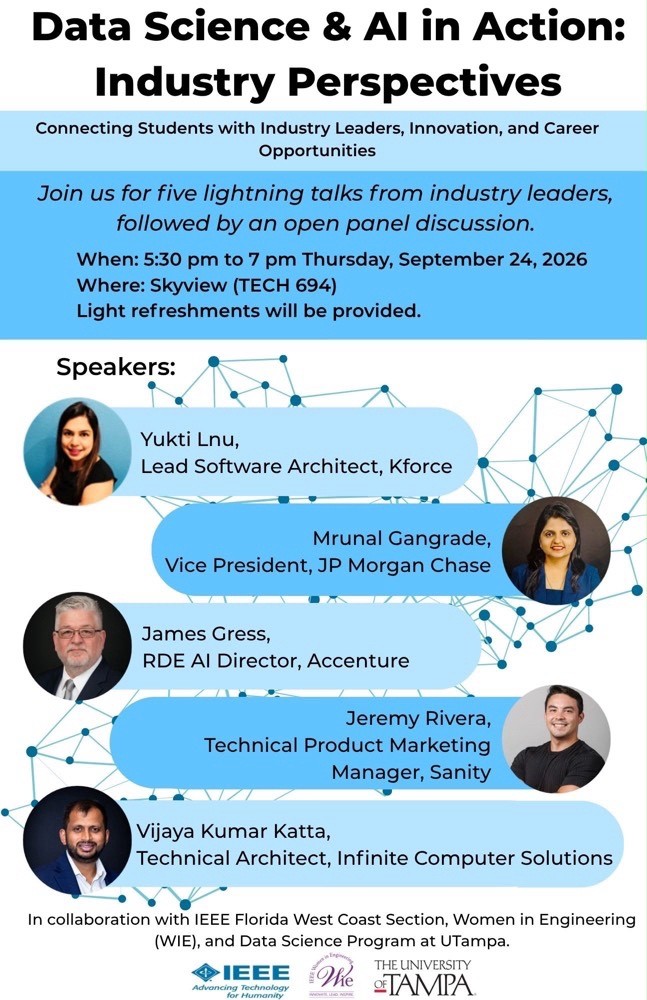
Thursday from 5:30 – 7:00 p.m. at University of Tampa’s Skyview/TECH 694 (Tampa): IEEE Florida West Coast and Women in Engineering present Data Science & AI in Action : Industry Perspectives!

This event will feature 5 lightning talks from industry leaders, followed by an open panel discussion.

Find out more and register here.

Event name and location Group Time
Sarasota Speakers Exchange Toastmasters
Online event
Toastmasters District 48 12:00 PM to 1:00 PM EDT
Open Board Gaming Day at Dark Side
Dark Side Comics & Games
Board Games and Card Games in Sarasota & Bradenton 4:00 PM to 10:00 PM EDT
September Networking Event!!
Fat Rabbit Pub
Business and Social Networking 5:30 PM to 7:30 PM EDT
Data Science & AI in Action : Industry Perspectives
University of Tampa – Skyvoew (TECH 694)
IEEE Florida West Coast 5:30 PM to 7:00 PM EDT
Known and Unknowns: Testing AI Generated Code
Hillsborough Community College
Tampa Java User Group 5:45 PM to 7:45 PM EDT
Known and Unknowns: Testing AI-Generated Code
Hillsborough College – Dale Mabry Campus
Tampa Bay AI Meetup 5:45 PM to 7:45 PM EDT
Omni Toastmasters Club 6861
Online event
Toastmasters Divisions C & D 5:45 PM to 7:00 PM EDT
[AL] Phandelver and Below: The Shattered Obelisk [APL 4 Tier 1]
Coliseum of Comics Kissimmee
Adventurers of Central Florida 6:00 PM to 9:00 PM EDT
Board Game Night
Unrefined Brewing
Tarpon Springs Community Fun & Games 6:00 PM to 9:00 PM EDT
Warhammer Night
Critical Hit Games
Critical Hit Games 6:00 PM to 11:00 PM EDT
Shut Up & Write!® Tales and Teas
The Muddy Root Kava Cafe
Shut Up & Write!® St. Petersburg 6:30 PM to 8:00 PM EDT
Writing Meetup
HotWax Coffee Shop, Kava Bar & Tap House
Tampa Free Writing Group 6:30 PM to 8:30 PM EDT
Tampa Writers Alliance Poetry Group
Barnes & Noble Carrollwood
Tampa Writers Alliance 6:30 PM to 8:30 PM EDT
Creative Writing club
Foxtail coffee
Cozy Club 6:30 PM to 8:00 PM EDT
Privacy Workshop
Tampa Bay Innovation Center
Tampa Bay Bitcoin 7:00 PM to 9:00 PM EDT
Palm Harbor Toastmasters Club #8248
1500 16th St
Toastmasters District 48 7:00 PM to 8:30 PM EDT
Book Club: “The Tainted Cup”
World of Beer
Geekocracy! 7:00 PM to 9:00 PM EDT
FABulous Thursdays
Sunshine Games | Magic the Gathering, Pokémon, Yu-Gi-Oh!
Sunshine Games 7:00 PM to 11:00 PM EDT
One Piece Thursdays
Sunshine Games | Magic the Gathering, Pokémon, Yu-Gi-Oh!
Sunshine Games 7:00 PM to 10:00 PM EDT
Pathfinder Society
Critical Hit Games
Critical Hit Games 7:00 PM to 10:00 PM EDT
Book review: Victorian Psycho by Virginia Feito
Three Birds Tavern
Cocktails and Convos 7:00 PM to 9:00 PM EDT
Live streaming production and talent
124 S Ring Ave
Live streaming production and talent 7:00 PM to 9:00 PM EDT
Thursday Tacos & Tax Write Offs
Online event
Nerdbrew Events 7:30 PM to 10:30 PM EDT
Return to the top of the list

Friday, September 25

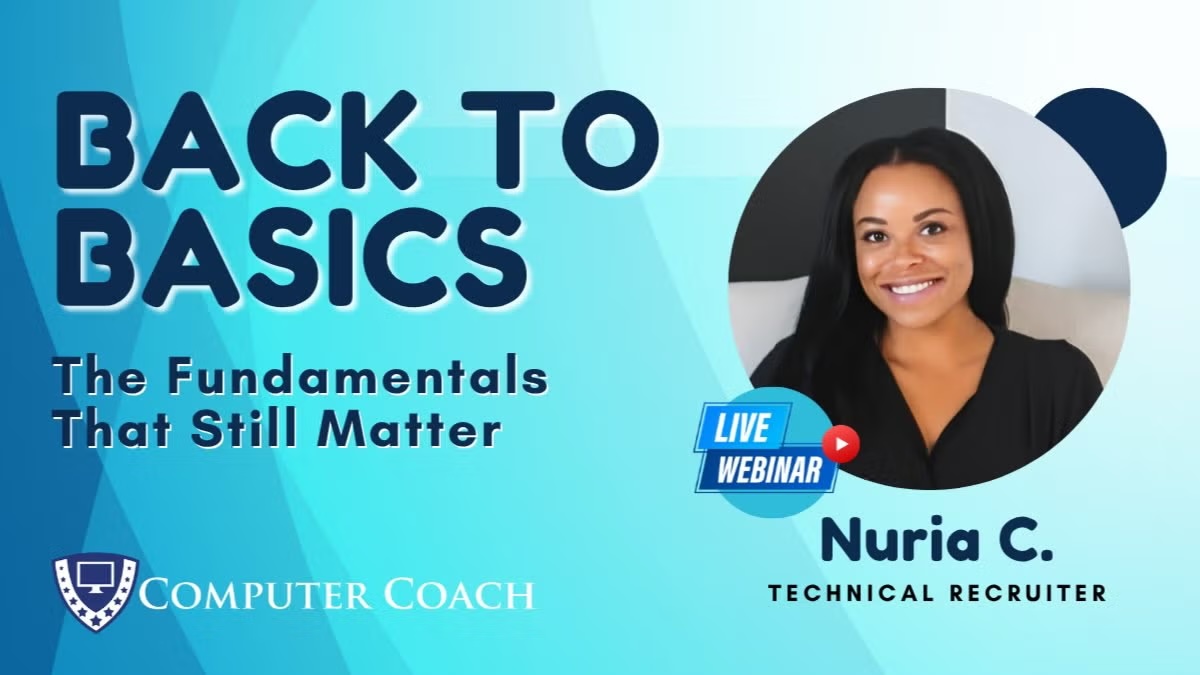
Friday at noon to 1:00 p.m. (online): Computer Coach, via their Tampa Cybersecurity Training Meetup group, presents Back To Basics: The Fundamentals That Still Matter!

Back to Basics is a practical look at the fundamentals that can make a difference in your job search. This presentation will discuss what is working for candidates, along with the importance of preparation, professionalism, and knowing how to make a strong impression.
The conversation will cover:

  • What candidates should know about the current job market
  • Why preparation matters before applying and interviewing
  • How professionalism can influence the hiring process
  • Ways to stand out without overcomplicating your job search
  • Simple fundamentals that are easy to overlook

Find out more and register here.

Event name and location Group Time
Osceola Toastmasters Club
Kissimmee Utility Authority (KUA)
Toastmasters Division E 7:30 AM to 9:00 AM EDT
Computer Repair Clinic
2079 Range Rd
Tampa Bay Technology Center 8:30 AM to 12:30 PM EDT
Back To Basics: The Fundamentals That Still Matter
Online event
Tampa Cybersecurity Training 12:00 PM to 1:00 PM EDT
Age of Sigmar: Escalation League
Battlebrush Games
Battlebrush Games: Paint Minis & Play Warhammer/Warmachine 5:00 PM to 9:00 PM EDT
Friday Board Game Night
Bridge Club
Tampa Gaming Guild 5:30 PM to 11:00 PM EDT
MTG: Commander FNM
Critical Hit Games
Critical Hit Games 6:00 PM to 11:00 PM EDT
Modern FNM
Sunshine Games | Magic the Gathering, Pokémon, Yu-Gi-Oh!
Sunshine Games 7:00 PM to 10:30 PM EDT
Friday Pokemon Tournament
Sunshine Games | Magic the Gathering, Pokémon, Yu-Gi-Oh!
Sunshine Games 7:30 PM to 11:30 PM EDT
Return to the top of the list

Saturday, September 26

Event name and location Group Time
Saturday Chess at Wholefoods in Midtown, Tampa
Whole Foods Market
Chess Republic 9:30 AM to 12:00 PM EDT
EZ Stock (Stock, Options, Market)
2079 Range Rd
Tampa Bay Technology Center 10:00 AM to 12:00 PM EDT
History Talk – Pottery of the Tocobaga Indians @ Safety Harbor Museum
Safety Harbor Museum
Tampa Bay Mosaic 11:00 AM to 12:00 PM EDT
Let’s Learn to Turn Pens!
Tampa Hackerspace West
Tampa Hackerspace 1:00 PM to 4:00 PM EDT
Saturday Gaming
Nerdy Needs
Brandon Boardgamers 1:00 PM to 6:00 PM EDT
FREE Fab Lab Orientation
Faulhaber Fab Lab
Suncoast Makers 1:30 PM to 2:30 PM EDT
D&D (5e) @ Game-o-Storus (FULL)
Game-o-Storus
St Pete and Pinellas Tabletop RPG Group 1:30 PM to 5:30 PM EDT
D&D @ Game-O-Storus (FULL)
Game-o-Storus
RPG-Pinellas 1:30 PM to 5:30 PM EDT
Level Up & Play!
Level 99 Disney Springs
TNT Well of Whimsy 3:00 PM to 5:00 PM EDT
NATIONAL LUMBERJACK DAY—CHOP INTO A FUN GAME NIGHT!Saturday, Sept 26, 2026
Winners Sports Grill
Tampa (Citrus Park Area) Games Meetup Group 4:15 PM
Board Brews
Zephyrhills Brewing Company
Nerdbrew Events 5:00 PM to 10:00 PM EDT
Warmachine Journeyman League
Battlebrush Games
Battlebrush Games: Paint Minis & Play Warhammer/Warmachine 5:00 PM to 9:00 PM EDT
Annual Halloween / Cosplay Event!
Plant City Railroad Museum
The Lakeland Shooters, Polk County Photography & Modeling 5:00 PM to 8:00 PM EDT
Game Night, Sept 26th – Good Times!
IHOP
New Port Richey Game Night 5:30 PM to 9:00 PM EDT
Yu-Gi-Oh Evening Tournament
Sunshine Games | Magic the Gathering, Pokémon, Yu-Gi-Oh!
Sunshine Games 7:00 PM to 11:00 PM EDT
80s Trivia Night
Sages Bistro
Gen X Midlife Shenanigans Social Club 7:00 PM to 8:30 PM EDT
Return to the top of the list

Sunday, September 27

Event name and location Group Time
Ice Cream Social
Carrolwood village Park
Geekocracy! 12:00 PM
Meeting 7: Gangsters of Capitalism by Jonathon Katz
Heights Lounge (Coffee, Kombucha, Herbal Teas, Hookah)
The Culture Club – A Nonfiction Book Club 1:00 PM to 3:00 PM EDT
Adventures of the Tomb of Annihilation (5e 2024 D&D Campaign)
Cozy Dragon Games
Adventurers of Central Florida 2:00 PM to 6:00 PM EDT
Sunday Chess at Wholefoods in Midtown, Tampa
Whole Foods Market
Chess Republic 2:00 PM to 5:00 PM EDT
D&D Adventurers League
Critical Hit Games
Critical Hit Games 2:00 PM to 7:30 PM EDT
Sunday Pokemon League
Sunshine Games | Magic the Gathering, Pokémon, Yu-Gi-Oh!
Sunshine Games 4:00 PM to 8:00 PM EDT
Escape Room & Dinner! ️‍♂️
2480 East Bay Drive
St. Pete Life & Fun 50+ 4:00 PM to 7:00 PM EDT
Community Hang-out Night
Online event
Nerdbrew Events 6:00 PM to 9:00 PM EDT
A Duck Presents NB Movie Night
Discord.io/Nerdbrew
Nerd Night Out 7:00 PM to 11:30 PM EDT
Return to the top of the list

About this list

How do I put this list together?

It’s largely automated. I have a collection of Python scripts in a Jupyter Notebook that scrapes Meetup and Eventbrite for events in categories that I consider to be “tech,” “entrepreneur,” and “nerd.” The result is a checklist that I review. I make judgment calls and uncheck any items that I don’t think fit on this list.

In addition to events that my scripts find, I also manually add events when their organizers contact me with their details.

What goes into this list?

I prefer to cast a wide net, so the list includes events that would be of interest to techies, nerds, and entrepreneurs. It includes (but isn’t limited to) events that fall under any of these categories:

    • Programming, DevOps, systems administration, and testing
    • Tech project management / agile processes
    • Video, board, and role-playing games
    • Book, philosophy, and discussion clubs
    • Tech, business, and entrepreneur networking events
    • Toastmasters and other events related to improving your presentation and public speaking skills, because nerds really need to up their presentation game
    • Sci-fi, fantasy, and other genre fandoms
  • Self-improvement, especially of the sort that appeals to techies
  • Anything I deem geeky
Categories
Meetups Security Tampa Bay

Machine Learning / AI / Technology / Risk + Happy Hour Prototype v0: Thursday, September 17!

Yes, it’s short notice, but if I can do a talk on short notice, perhaps your schedule might allow you to show up TONIGHT (Thursday, September 17) to attend the first Machine Learning / AI / Technology / Risk + Happy Hour event, taking place from 4 – 9 p.m. at Schiller International University in downtown Tampa!

Calling all devs, designers, AI and data geeks, cyber and everyone in the “tech-ish” orbit!
This event brings together technologists and technology-adjacent professionals to connect, share knowledge, learn and grow together.

Yes, it’s last minute, but a lot of people have signed up already, and for those of you collecting cybersecurity CPEs, attending this one will earn you 2!

The agenda

AI Panel –  Revisiting AI Transformation opportunities due to the rapid evolution of capabilities

With AI model performance and tooling evolving at a breakneck pace, the lifecycle of technical feasibility has compressed. Solutions deemed impractical just months ago are frequently production-ready today. We will examine how enterprise leaders and practitioners are navigating this shifting baseline—reassessing former roadblocks, managing risk, and executing sustainable AI transformation strategies.

Panelists:

Talk: Detection of Confounders in Computed Tomography Datasets

Computed Tomography (CT) scans are used to train machine learning models to predict cancer outcomes. Datasets are frequently composed of images collected using different devices or settings, which can reduce classifier accuracy.

This talk covers an automated method for screening CT datasets to detect features that make models learn spurious associations – called confounders – and other unwanted variations in data. By understanding what affects data quality, we can mitigate these issues or adjust image acquisition processes to prevent them from happening in the future.

Speaker:  Nikolai Fetisov

Talk: The chart is already multimodal. Why isn’t the model?

Every clinical decision draws on labs, coded history, notes, and imaging at once. Most deployed models read one.  The work began as an ONC engagement, built as a physician assistant and trained with split learning, so records never left the institutions holding them. Asked which task would earn a place in their day, physicians answered consistently: help with the differential.  The 2015 National Academies report found that most people will experience at least one diagnostic error in their lifetime. These are usually failures of consideration rather than knowledge: the right diagnosis was never placed on the list.

Solution is valuesets governed data trained with multimodal model built with fusion architecture.  Each branch is projected to a shared width, given its own self-attention, and combined in one late fusion feeding condition heads that share a representation.  Results are early with no prospective study with clinicians yet, but the validation metrics looks promising.   Future improvements with contrastive learning and focal loss will drastically increase recall and additional testing is carried out by analyzing Krippendorf alpha.

The opportunities of this engine serve six workflows: diagnostic support, risk adjustment, trial recruitment in phase3, quality measurement, Hedis scoring, and rare disease detection. Only the label set, the threshold, and the recipient change.

Differential diagnosis is the capability. The opportunity remains open.

Speaker: Sravan K. Elineni

Talk: AI-Powered Defense for PHI: Smarter Cybersecurity for Healthcare Compliance

As cyber threats targeting patient data grow more sophisticated, healthcare providers are turning to AI to stay ahead. Rather than reacting after damage is done, AI-powered tools spot unusual activity early, streamline HIPAA compliance, and speed up incident response—helping protect EHRs, medical devices, and telehealth systems while preserving the trust patients place in their care.

Speaker: Yukti Goyal

Talk: ADios: Breaking up with Active Directory

(previously presented at 2026 BSides Tampa)

Active Directory (AD) became the de facto standard for Windows-centric organizations to add security, but today, removing AD or minimizing its footprint is considered a security enhancement.

More than a technical optimization, switching from hybrid-AD to cloud-native Entra ID is a risk reduction strategy. Have the capabilities of cloud native reached a tipping point where more organizations can seriously consider reducing or eliminating AD? This session will discuss a regulated organization’s journey to cloud native, reasons to do so, challenges, and lessons learned.

Speaker: Daniel Jarboe

Talk: The Market is Trying to Tell You Something

The tech job market has been sending signals for two years. Most of us have been too busy surviving it to read them. After 15+ years in tech and a recent job search that took me across a couple dozen companies, I came away with both a new role and something just as valuable: a pattern.

Job descriptions have quietly shifted. Hiring panels are asking different questions. “ROI” means something specific now that it didn’t mean in the zero-interest 2010s or the Great Resignation era of a couple of years ago. The skills companies say they want versus the skills that actually get you hired don’t look like they come from the same list.

This talk is an honest, experience-based, practitioner-level read of what the market is telling us about where tech is headed. It doesn’t have any LinkedIn takes or recycled frameworks; just patterns from the front lines, with implications for how you position yourself, make the case for your team, and think about the next few years of your career.

Speakers: Joey de Villa (and maybe Anitra Pavka)

A bit of singing and creativity:

Singer: Kat Casperson

The venue

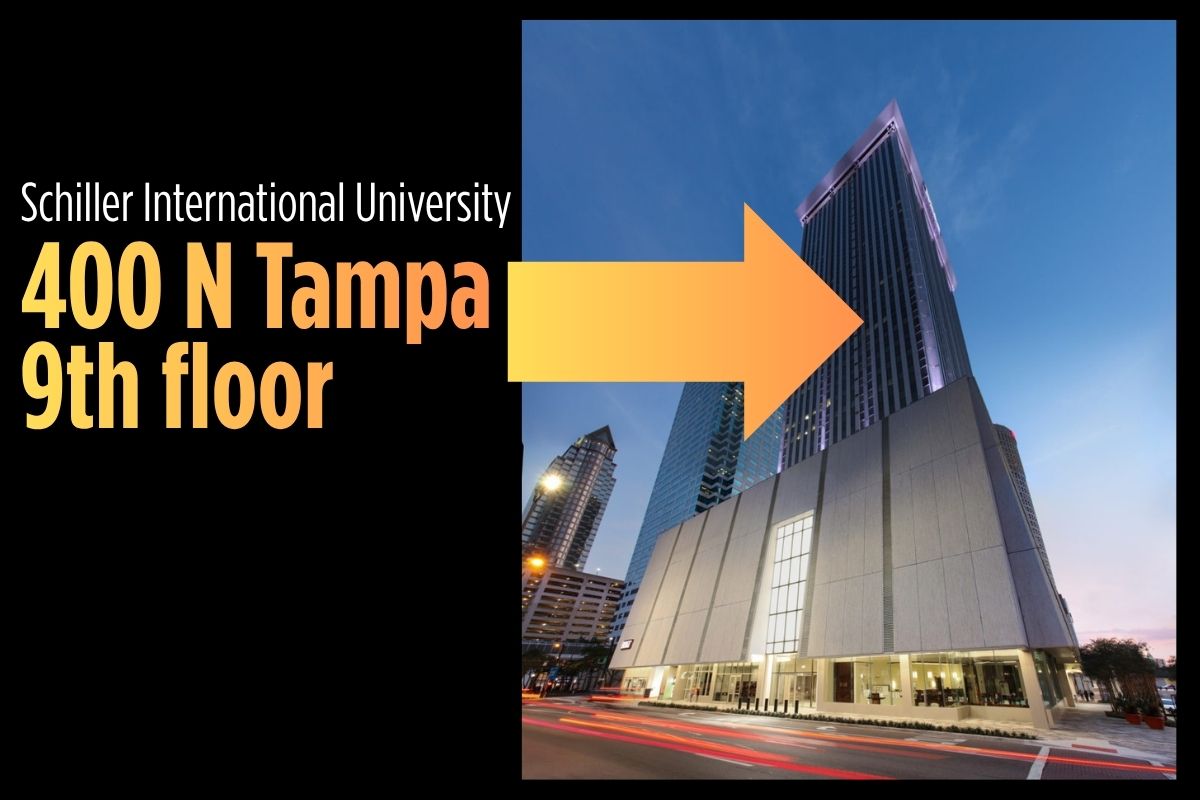
The event will take place at Schiller International University, which is located in Park Tower, located in downtown Tampa at 400 N Tampa St, on the 9th floor.

There will be food and drink, sponsored by ISACA West Florida Chapter.

Want to attend?

It’s free! Register here!

Categories
Artificial Intelligence Meetups Programming

Notes from Pratik Patel’s talk, “Building a Mini-Software Factory using Pi.dev and Local LLMs” (September 14, 2026)

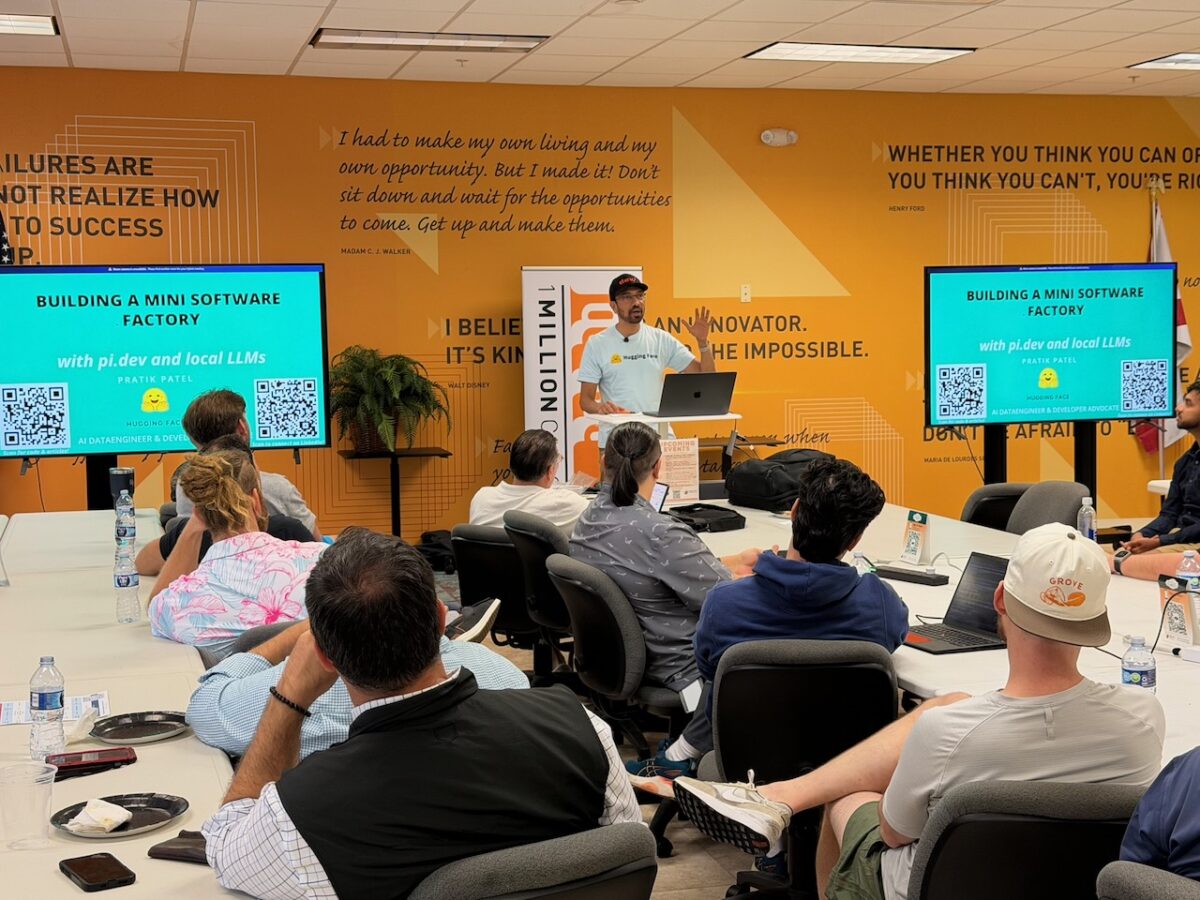
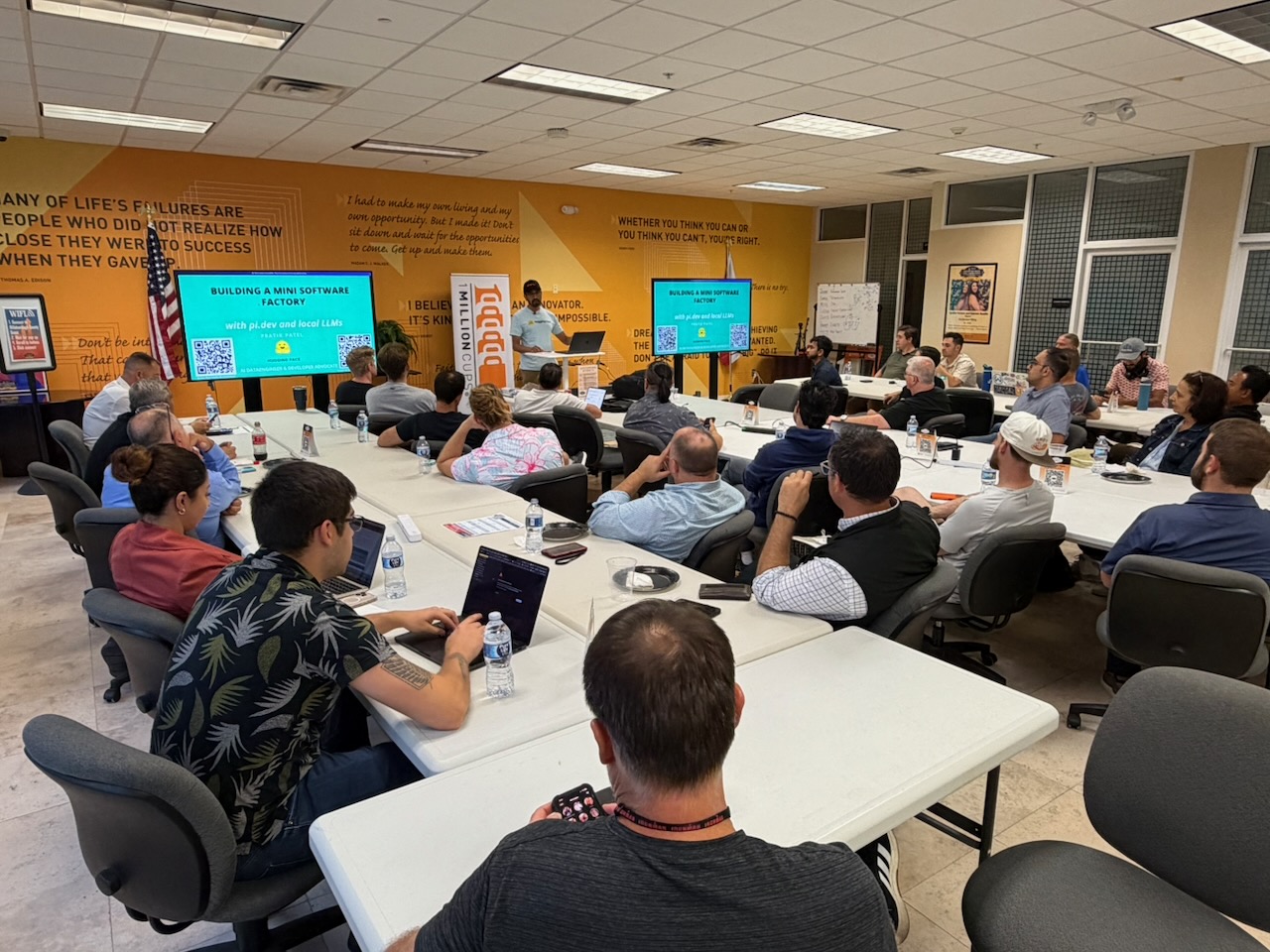
On Monday, September 14, Pratik Patel gave his talk, Building a Mini-Software Factory using Pi.dev and Local LLMs, to a full room at the Entrepreneur Collaborative Center in Tampa’s Ybor City neighborhood. Here are my notes from his talk.

Blasphemy!

The quite-full ECC was about three-quarters software developers, and Pratik had just finished taking a headcount of the Java people, the TypeScripters, the Pythonistas, and of course, the Rustaceans (“most people want to rewrite everything in Rust, and I find it extremely annoying”). That’s when he said what would’ve gotten him tarred, feathered, and run out of a Java meetup if we’d been back in the days of Java SE 18 or 19:

“One of the things that you may get from this session is that the programming language doesn’t even really matter anymore.

Of course, his paln was to prove that statement by the end of the night, as well as the conclusion that you should draw if you still plan to remain in software: If you hand the coding off to a machine, the valuable work moves up the stack.

Pratik is a longtime Java/JVM guy, one of the organizers behind the DevNexus conference in Atlanta, and as of about a month ago, he works at Hugging Face. He also polled the room on what Hugging Face actually does, and enjoyed the answers (mine: “Hang out with Jensen!”). The correct one, which he eventually told us, was that they own Transformers and the rest of the library stack that lets you download, and better still run the models.

The gamble: Building before the presentation

It takes time for an software factory to build things, even on a late-model MacBook with 64GB RAM like Pratik’s. Sp he started the demo at the beginning and then talked over it, which I suppose is the new version of “live coding”. I do that myself (both live agentic coding as well as raw-dogging the code the old-fashioned way), so I have to respect Pratik’s boldness.

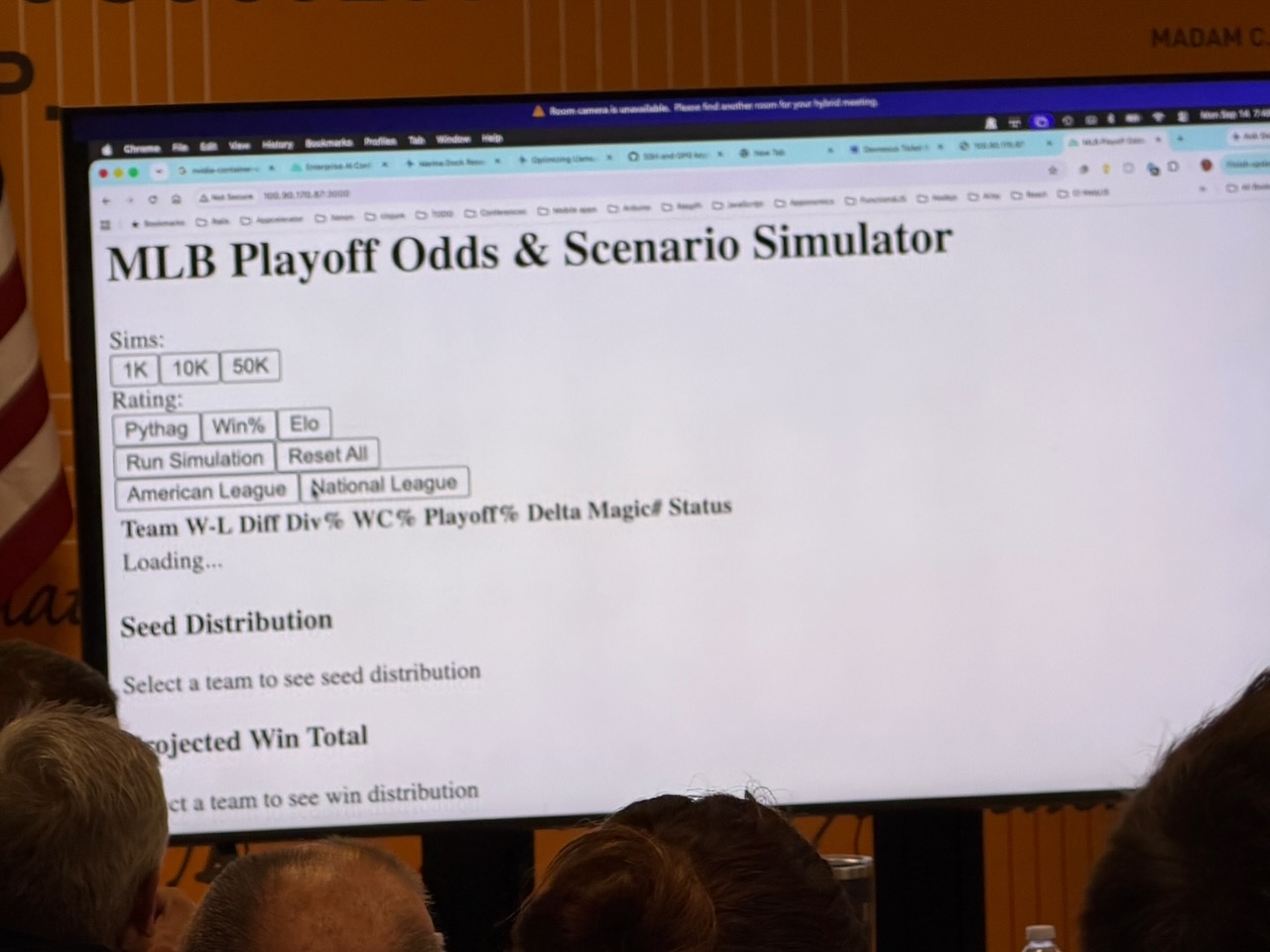
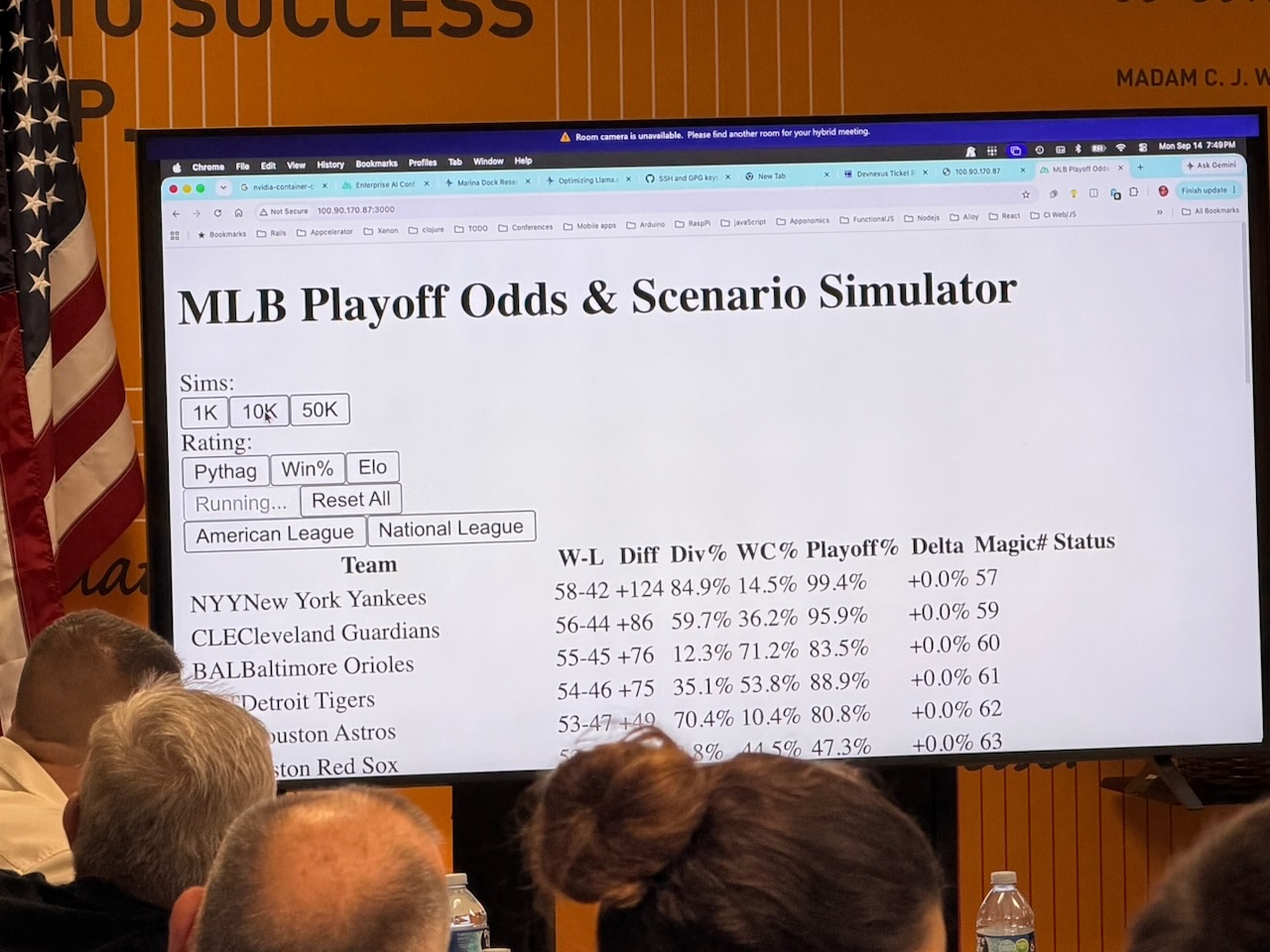
He asked the room for an app idea. Someone suggested a horse-boarding scheduler, which was too big. Charles, who works for a sports organization, suggested a playoff odds calculator. Pratik assessed that it was doable within the given time, so he agreed to build that.

Pratik opened Gemini and, off the cuff, dictated a rough spec: look at the remaining season schedule for all 30 MLB teams, calculate each team’s chance of making the playoffs, and let the user tweak the metrics on the page to try different scenarios.

Gemini spat out a 255-line spec in a few seconds. He pasted that into his software factory, told it “Create a new app called MLB Odds, here’s the spec, let me know when it’s finished and what the URL will be,” hit enter, and walked away from it to start the actual presentation.

“Again,” he said, “this may be a total disaster. It may not work, but let’s see how it goes.”
So what is a software factory?

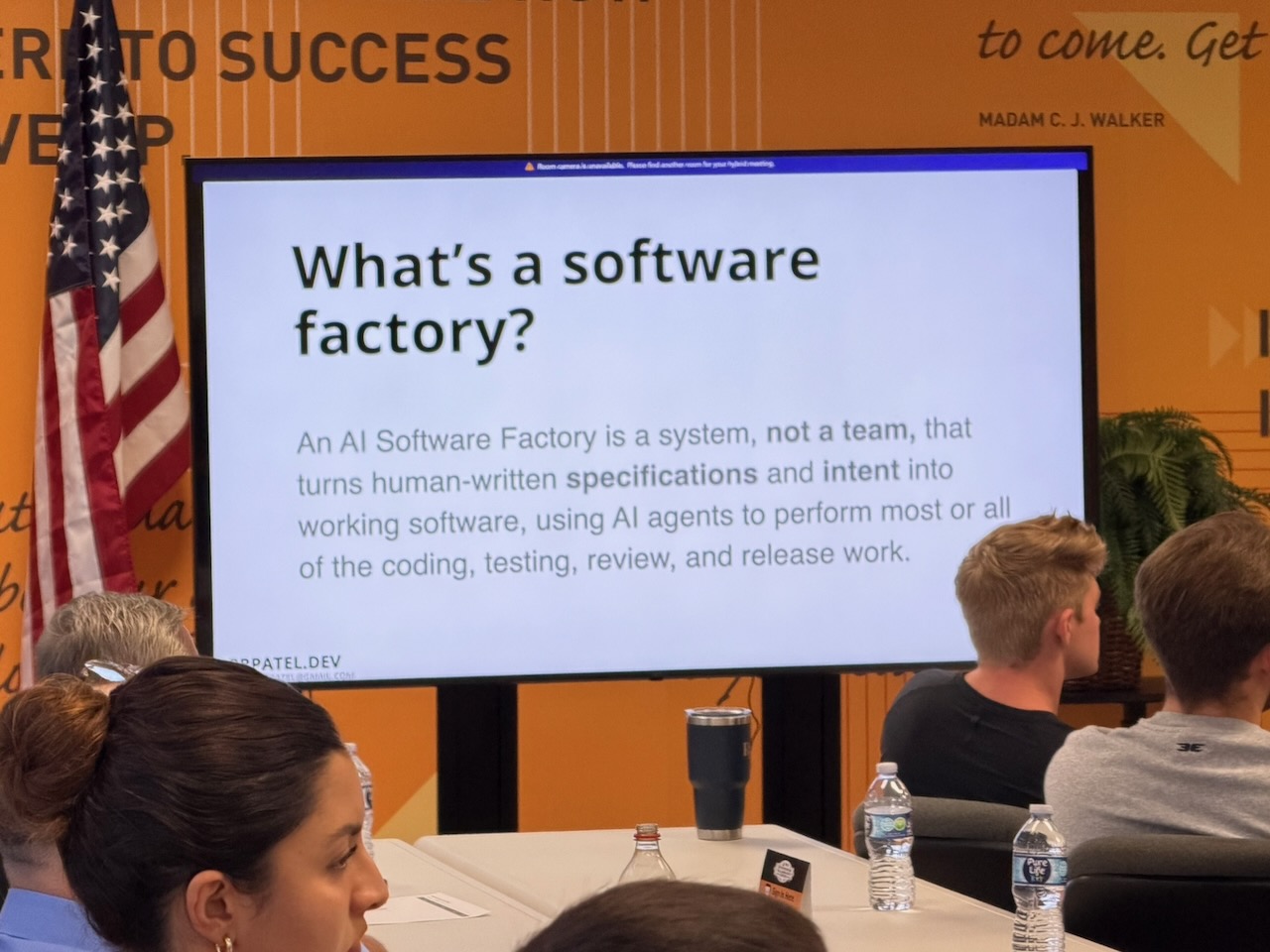
Pratik was upfront that this is the most undefined term in the industry right now: “If you ask 10 people in this room what a software factory is, you’ll probably get 10 different answers.” Here’s his:
An AI software factory is a system, not a team, that turns human-written specifications and intent into working software, using agents to perform most or all of the coding, testing, review, and release work.

The key word is system. You say “go build this,” walk away, and come back hours or a day later to working software. It’s like handing a project to a team of engineers and going off to do something else (or hey, nothing. You’re the boss!).

And critically, a software factory is not one-shotting. Telling Claude or ChatGPT “build me this website” and pasting in a detailed description relies entirely on the raw intelligence of the model. A factory applies rigorous software engineering process around the model: planning, architecture, implementation, testing, QA, security review, version control. The process is the product.

The levels: where you are on the ladder

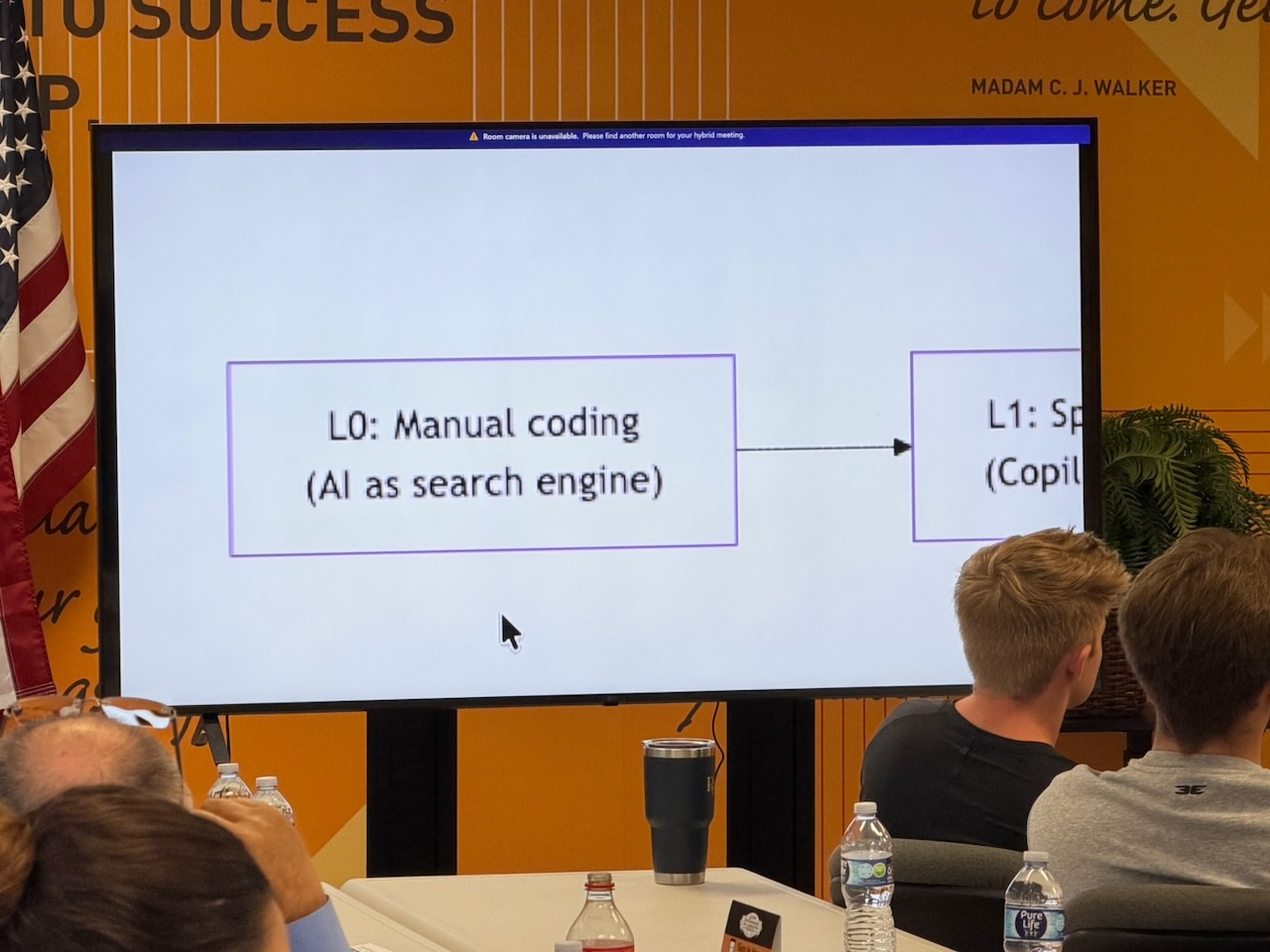
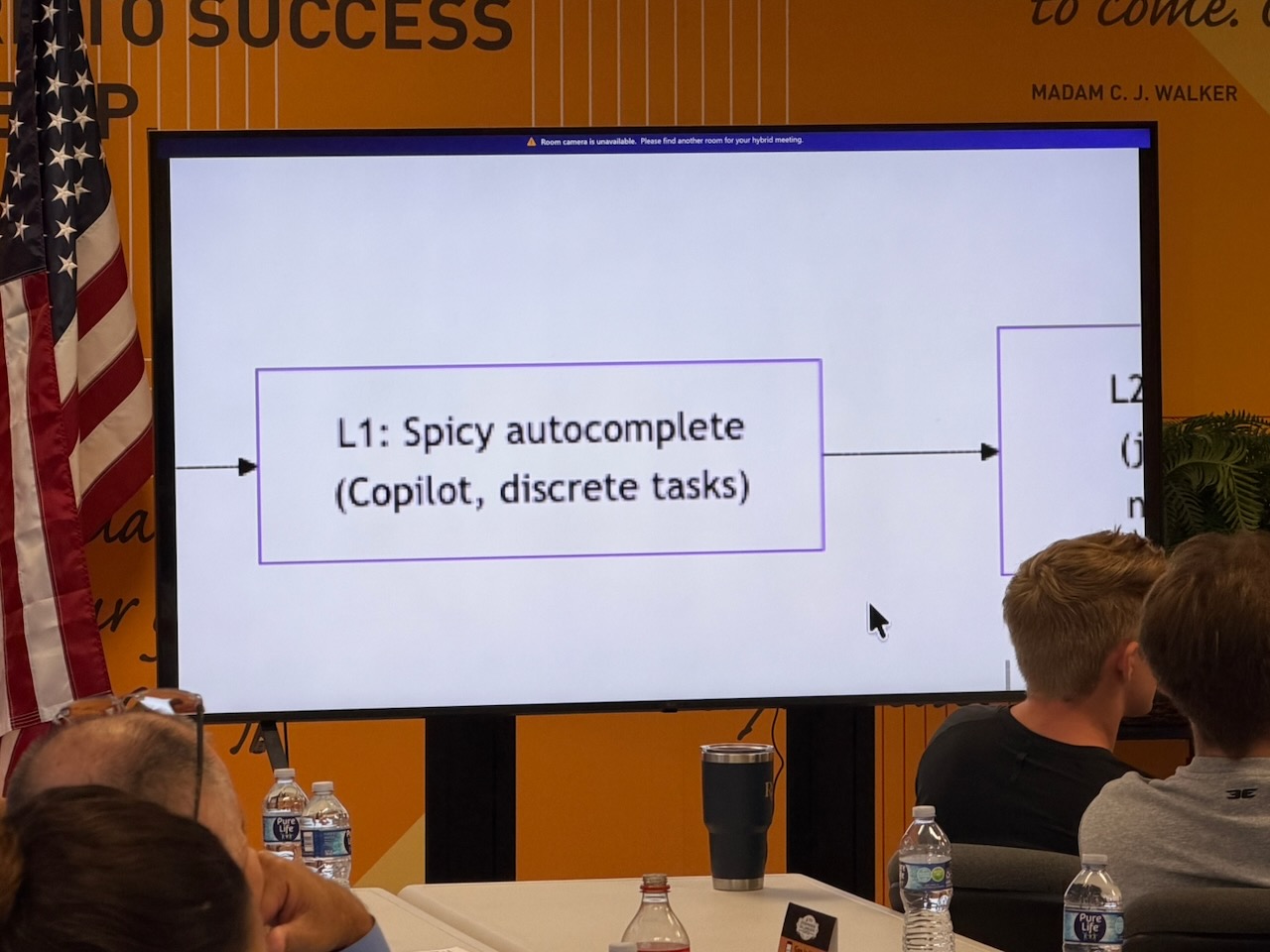
Pratik walked through a progression that got a lot of nodding in the room:

  • L0: Manual coding: Open an editor, translate what’s in your brain (or in a written spec) into code, hit a wall, go read the docs or Stack Overflow, keep going.
  • L1: “Spicy autocomplete”: IDEs got language servers and started completing large fragments for you. A genuine step change in velocity.
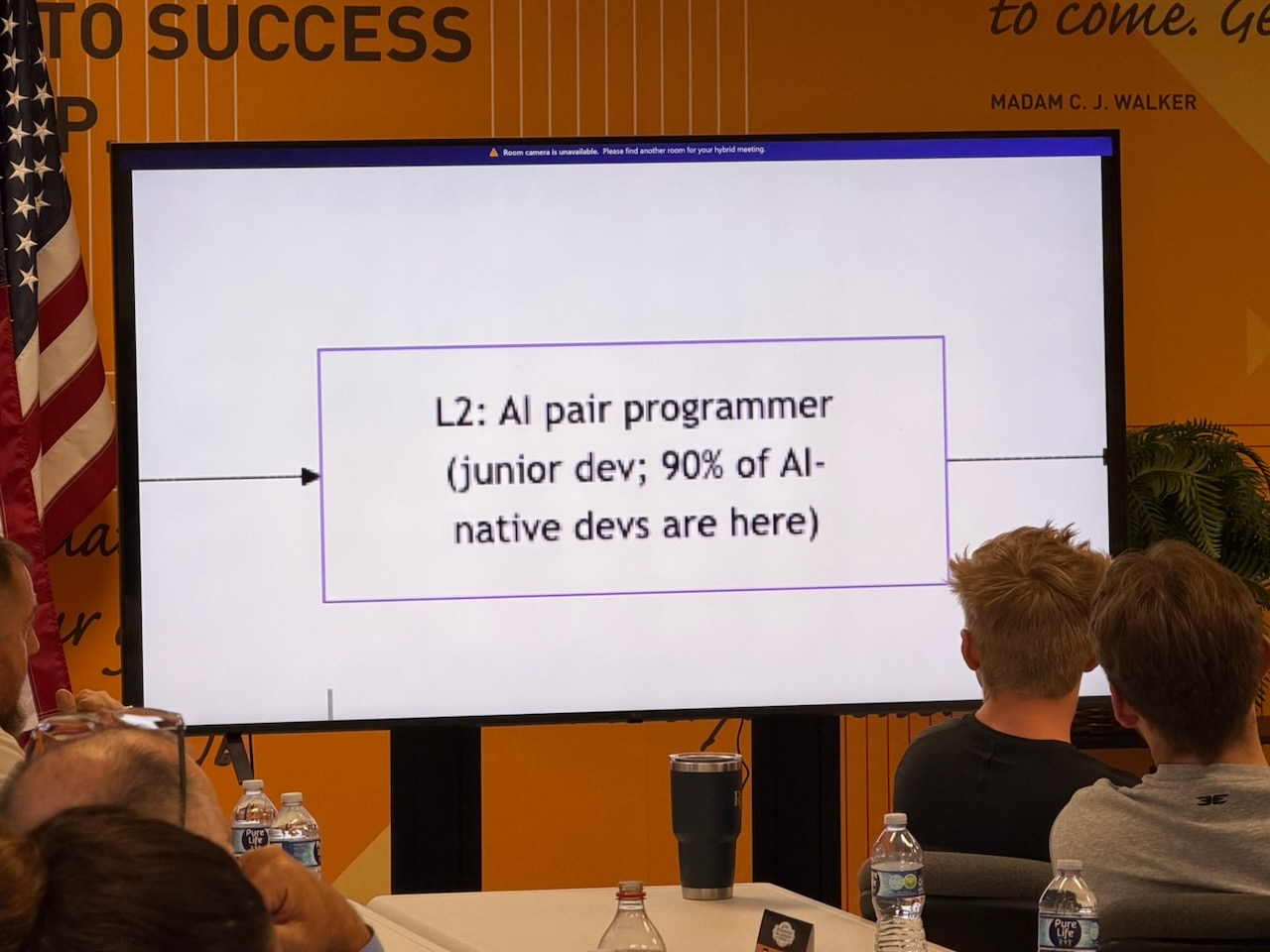
  • L2: AI pair programmer: You describe what you want to a chatbot, it emits code, you copy it into your editor and fix it up. You’ve effectively stopped going to Stack Overflow directly, because the model already ate it.
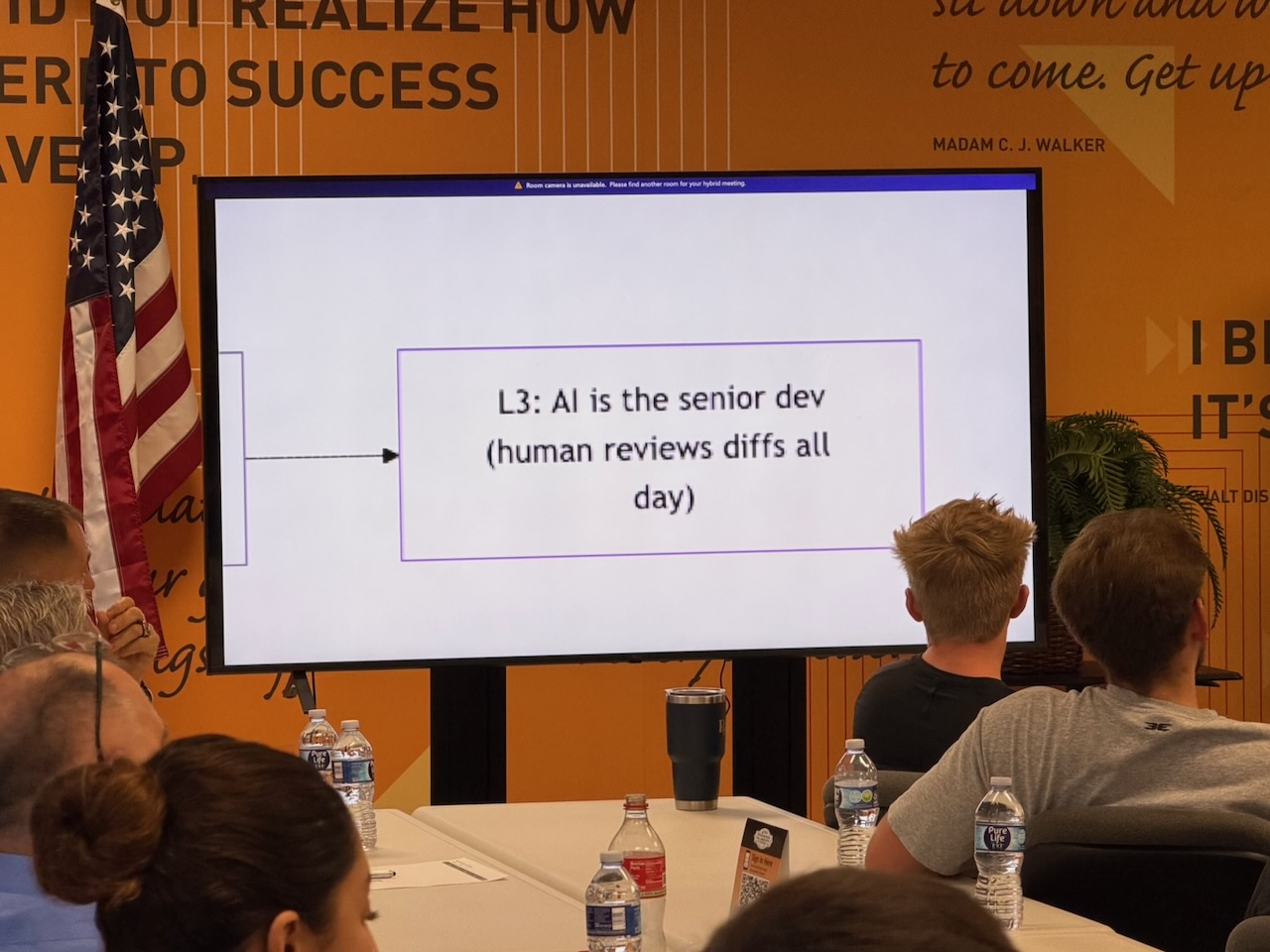
  • L3: AI as a senior developer: You give it a spec, it builds, you review the code and tell it when it picked the wrong approach.
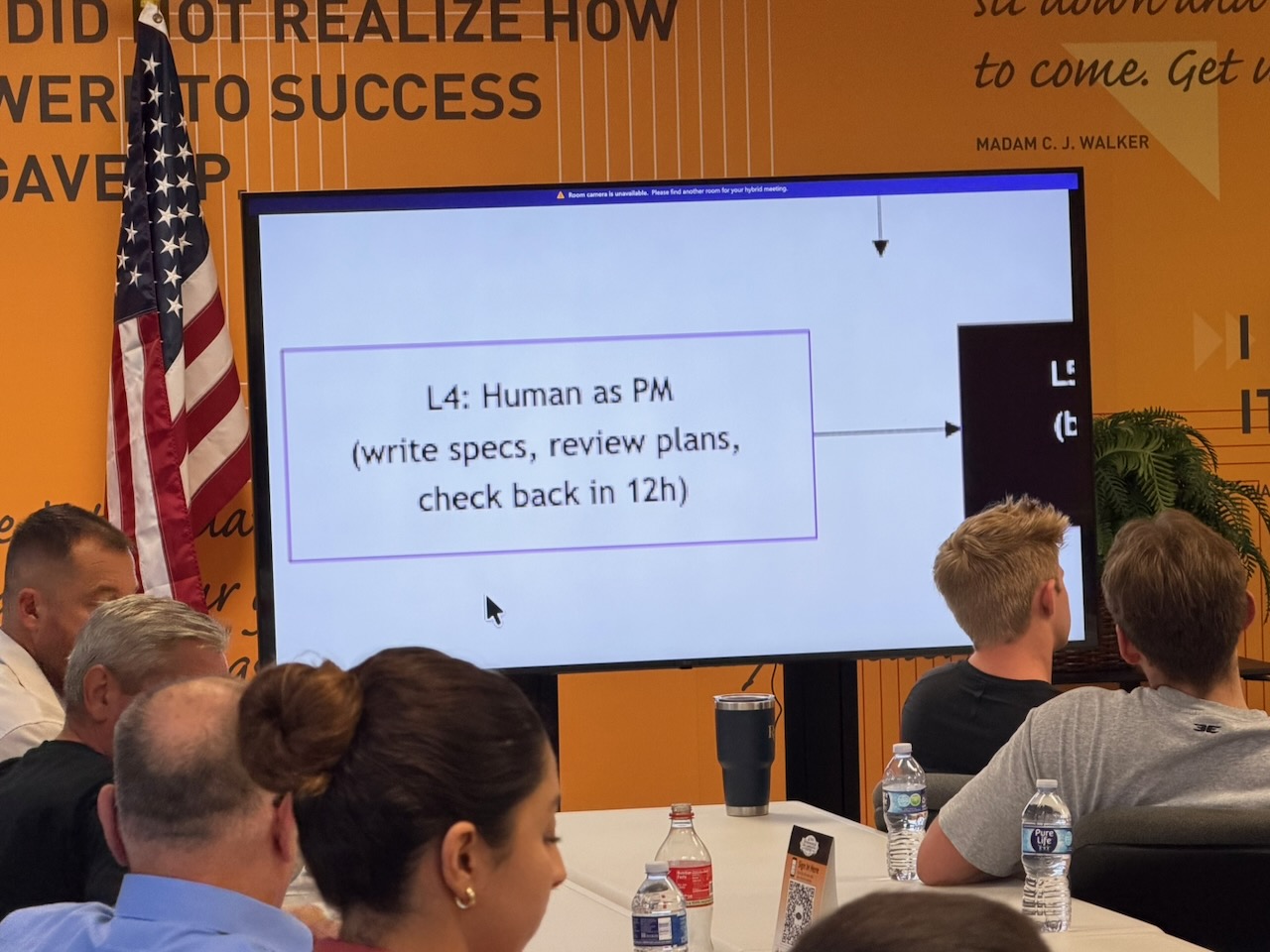
  • L4: You’re the PM: You write specs, you review plans, you check back later.
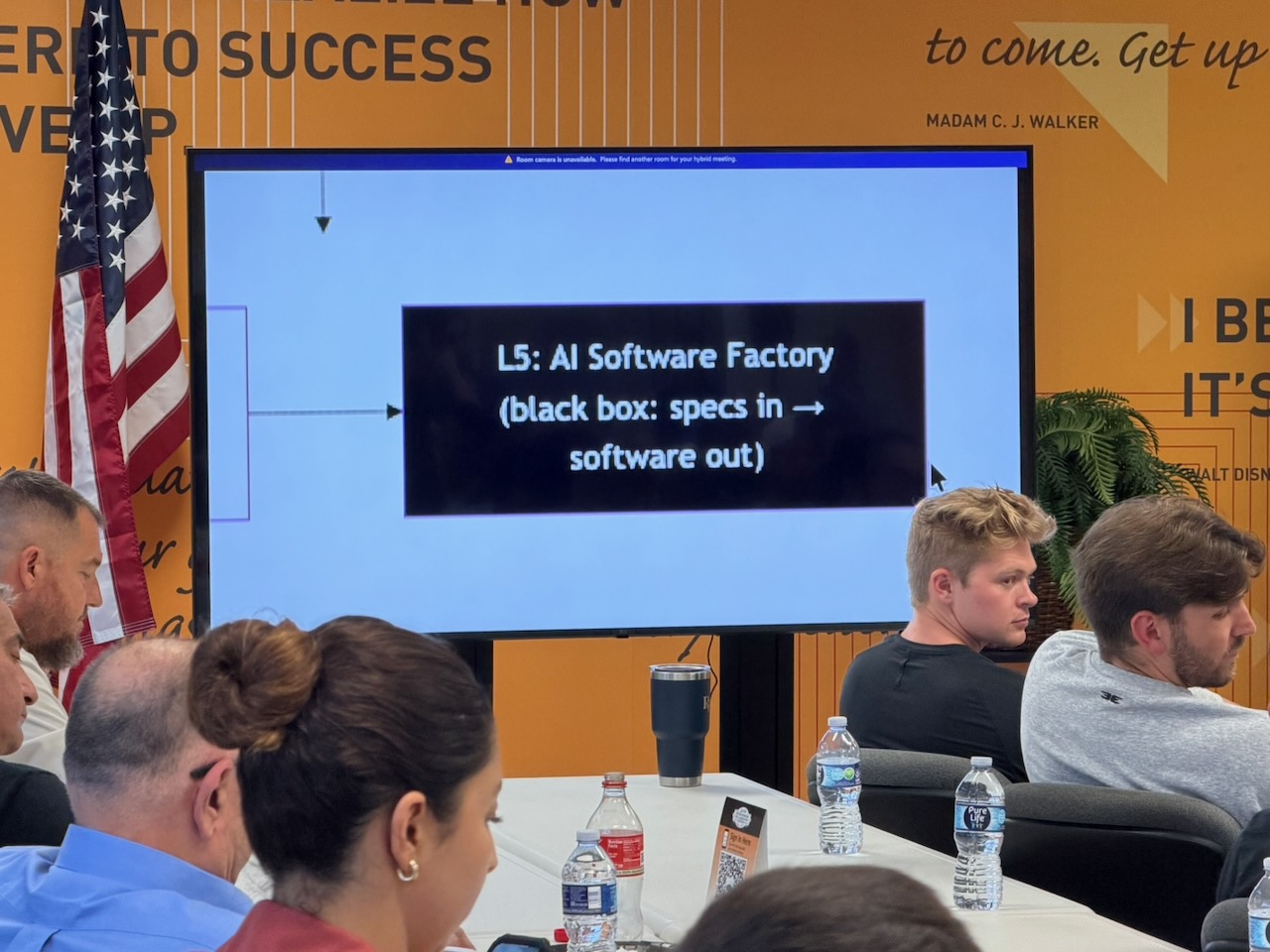
  • L5: Software factory: specs go in, software comes out. You review the product, and you may never look at the code at all.

His take: most working developers are somewhere between L2 and L4 right now, depending on how much freedom their employer gives them.

What’s left for software engineers, then?

Pratik clearly flagged this part as his own opinion. Like a lot of developers, myself included, he went through the “there’s no way AI replaces me” phase. He concluded that it doesn’t replace software engineers, but it does dramatically change what they spend their day doing, which is the remaining high-value work. I get the feeling that programmers went through something similar when going from assembly to higher-level languages.

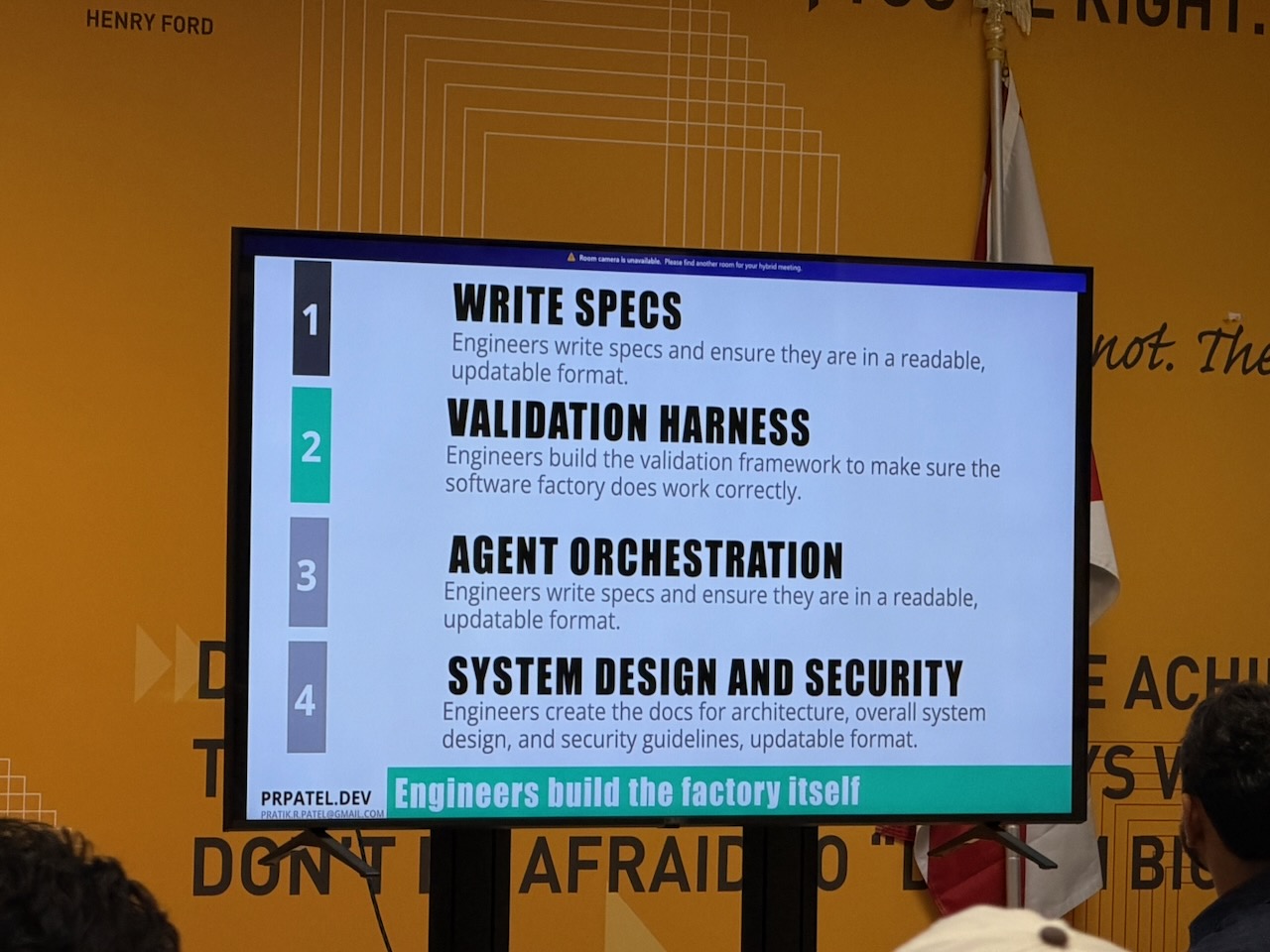
With AI writing the code, the process of programming becomes even higher-level, with these becoming our main activities:

  • System design. The model knows how to write code. It does not know that you can’t build a browser front end in Python, and it doesn’t know that your real-time app needs in-memory caching to hit a sub-three-second response. And if it improvises those decisions unprompted, you will not like the implementation.
  • Security.
  • Making sure user requirements are actually met.
  • Writing and maintaining the specs and the architecture.
  • Building the validation harness that keeps the factory honest.
  • Agent orchestration.

He also noted, to the product managers in the room, that the line between PM and engineer is blurring fast in both directions.

The four jobs of a factory

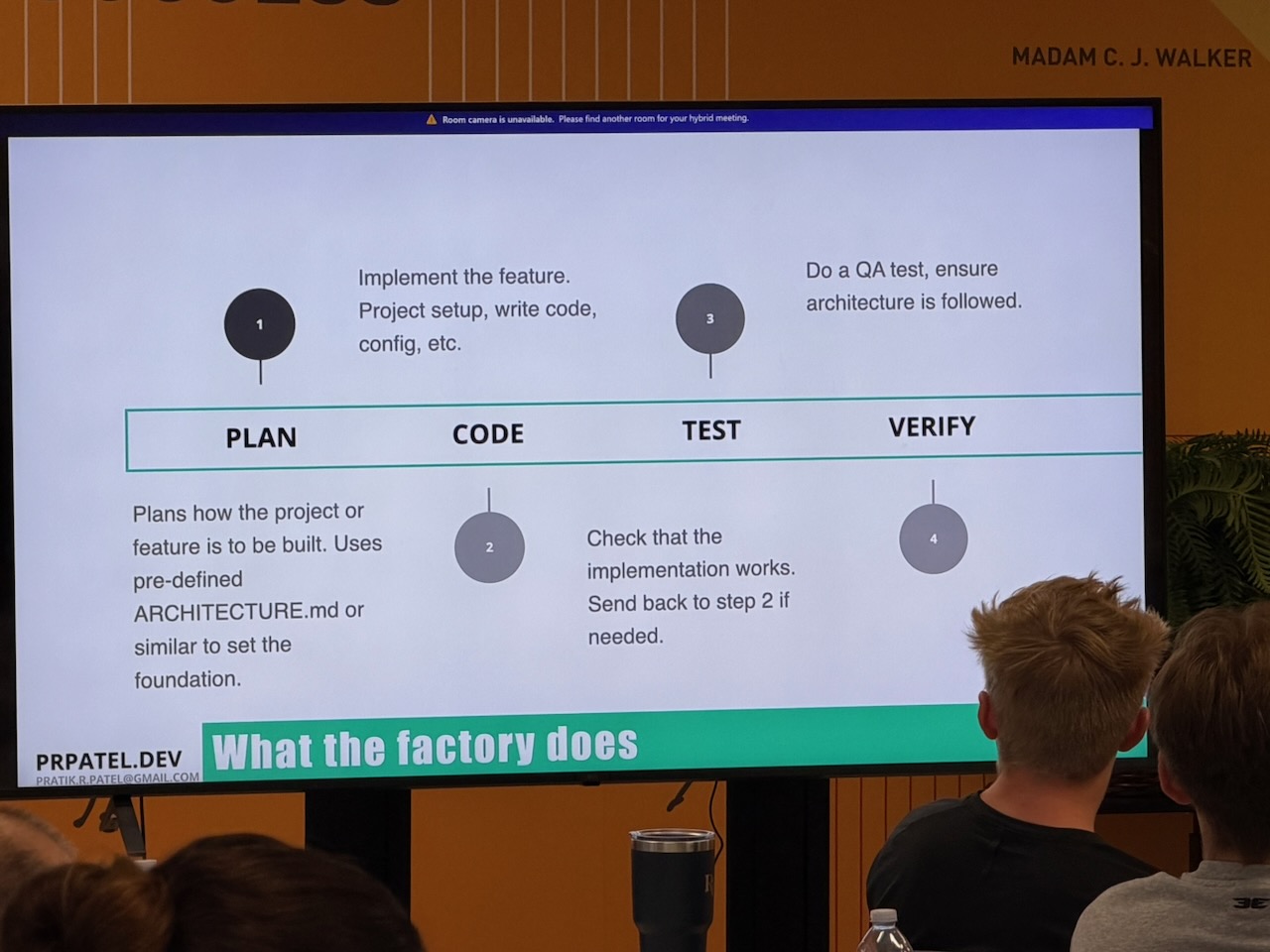
At minimum, Pratik argues, a software factory has to do four things:

  1. Plan the build
  2. Code it
  3. Test it (looping back to implementation when tests fail)
  4. Verify with a QA/security/architecture-compliance pass (the kind of review a human QA engineer would do by using the result as a user would, not only unit tests)

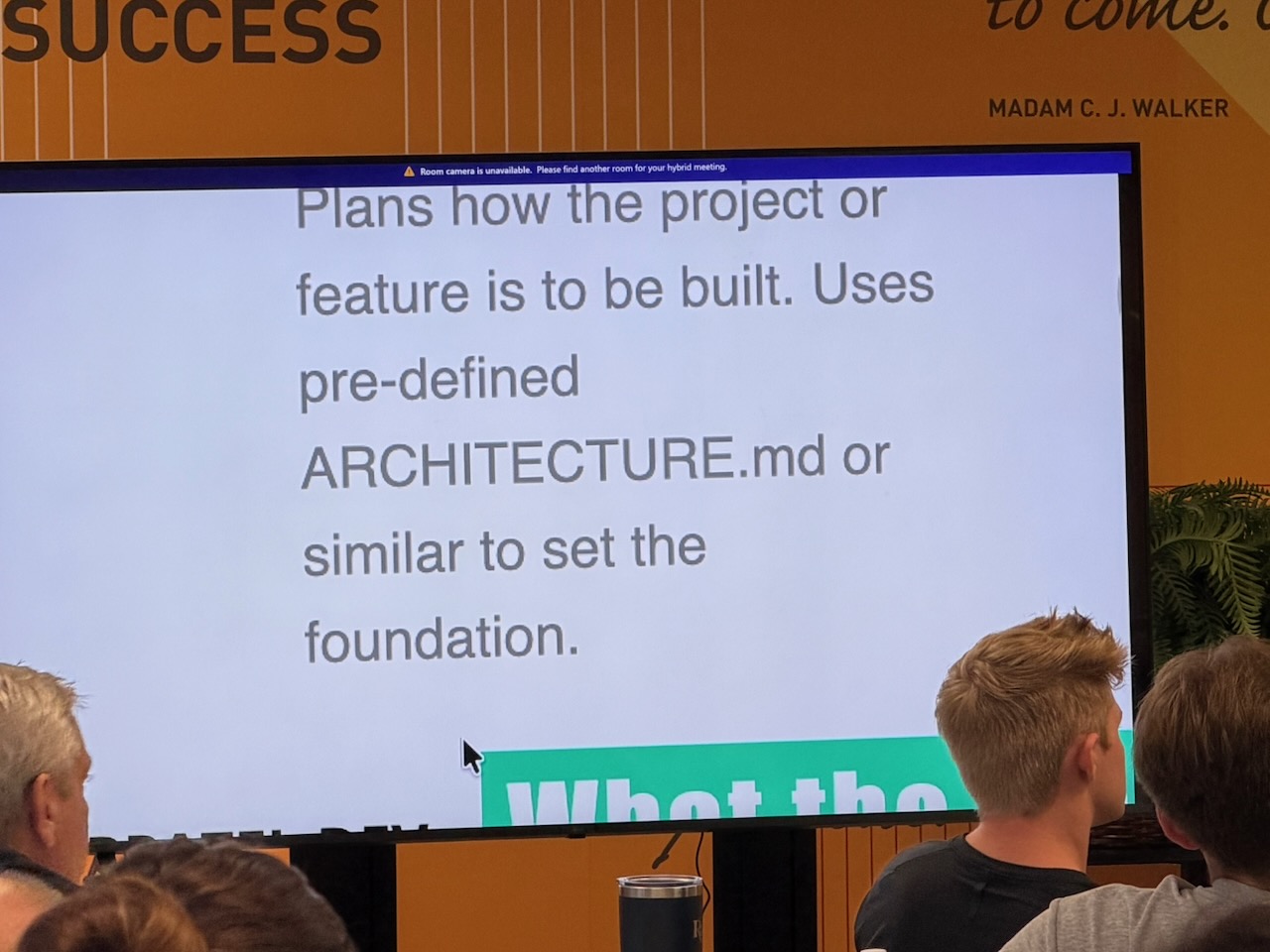
The single most important artifact in all of this is architecture.md. That file is where you, the engineer, do the system design: “This is a web app, use Vue, this is the backend, these are the performance targets, this is how we build things around here.” It’s exactly what you’d tell a new team lead. The factory can’t extrapolate it from your brain.

Specs are a separate thing from architecture: specs are the features, architecture is the system. For spec format, Pratik mostly writes Markdown, though he noted that larger teams use a more rigid PRD structure, and GitHub’s Spec Kit is out there if you want something opinionated.

Pratik’s actual stack

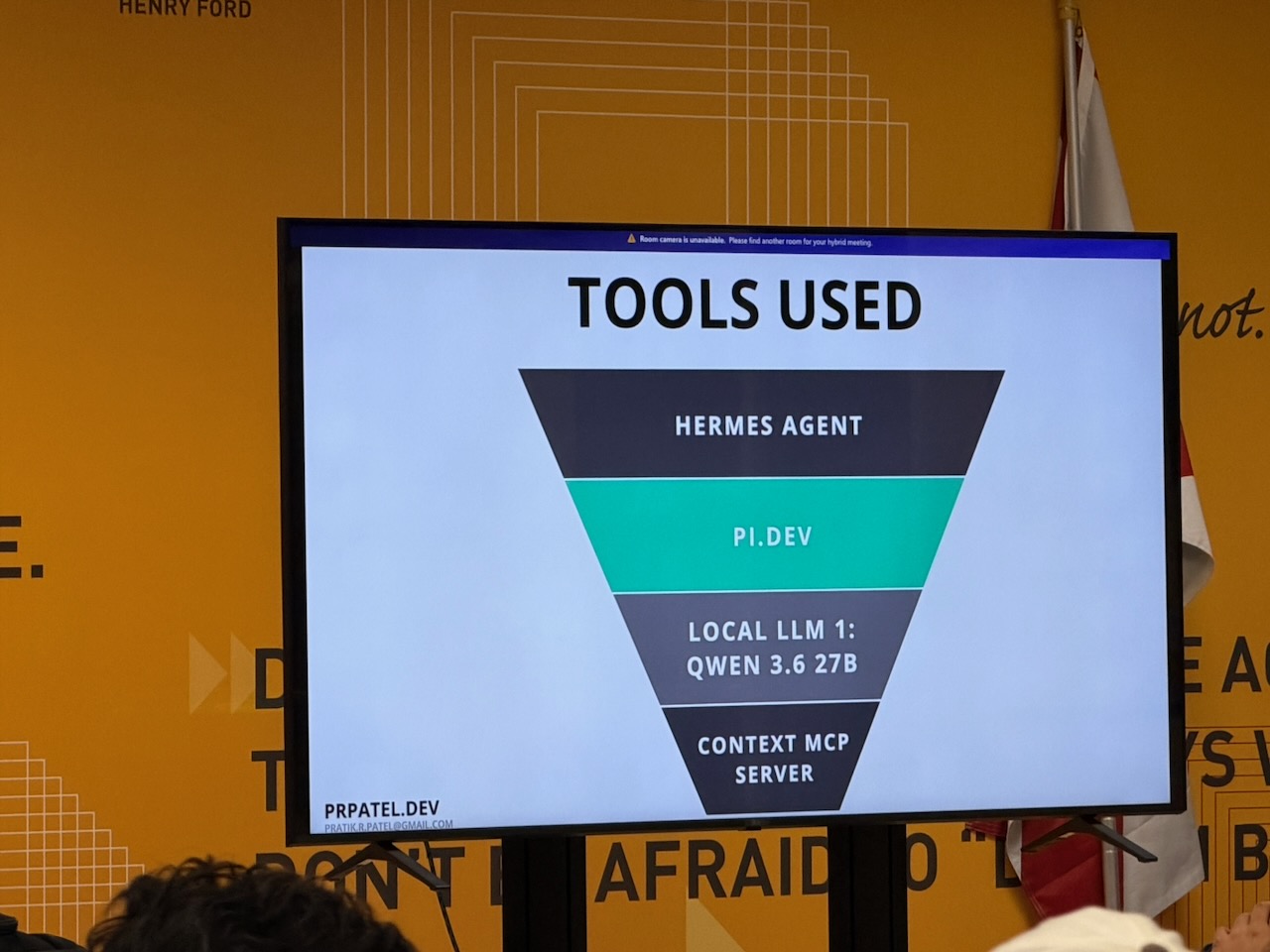
Here’s what he’s running, top to bottom:

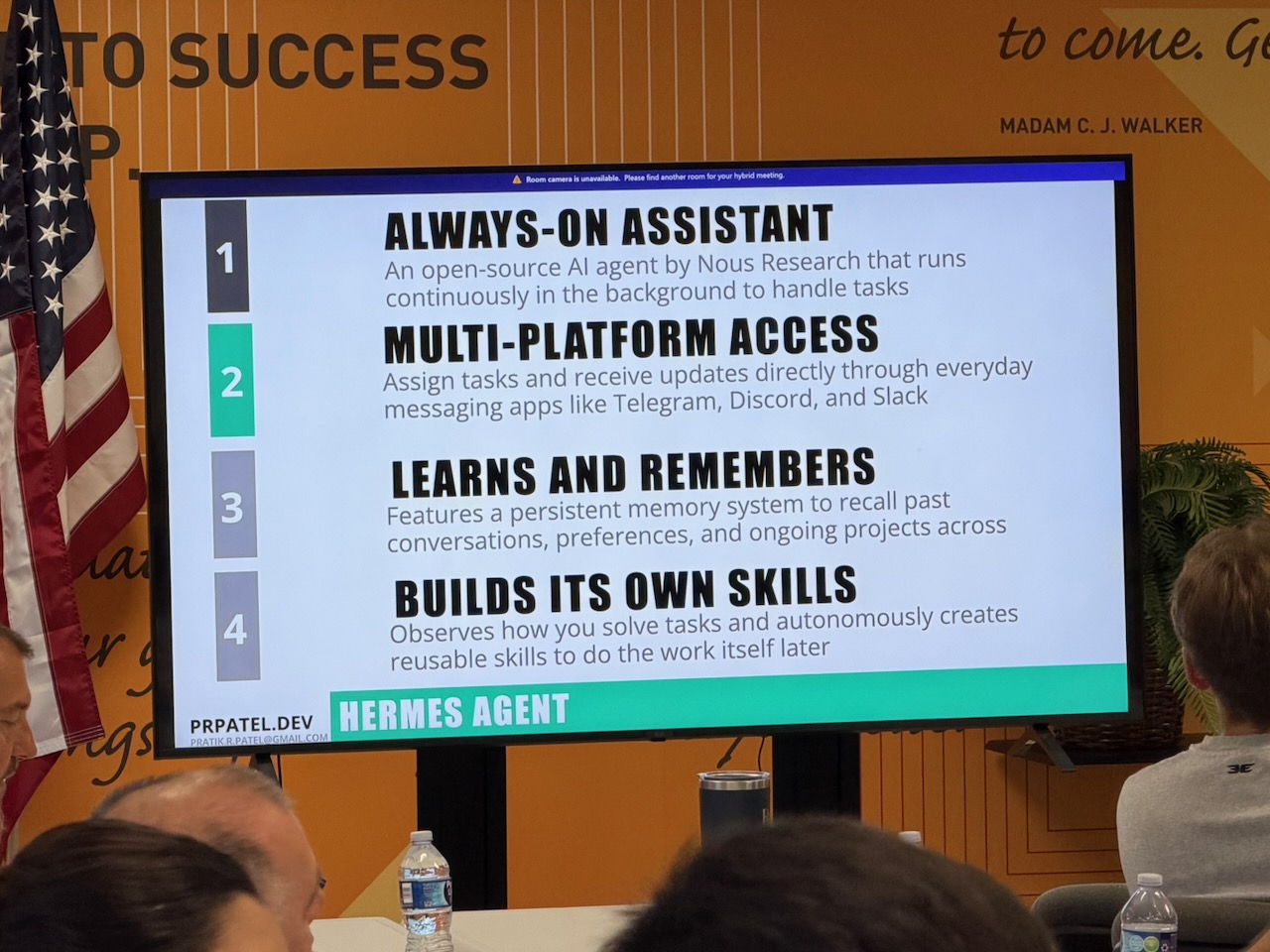
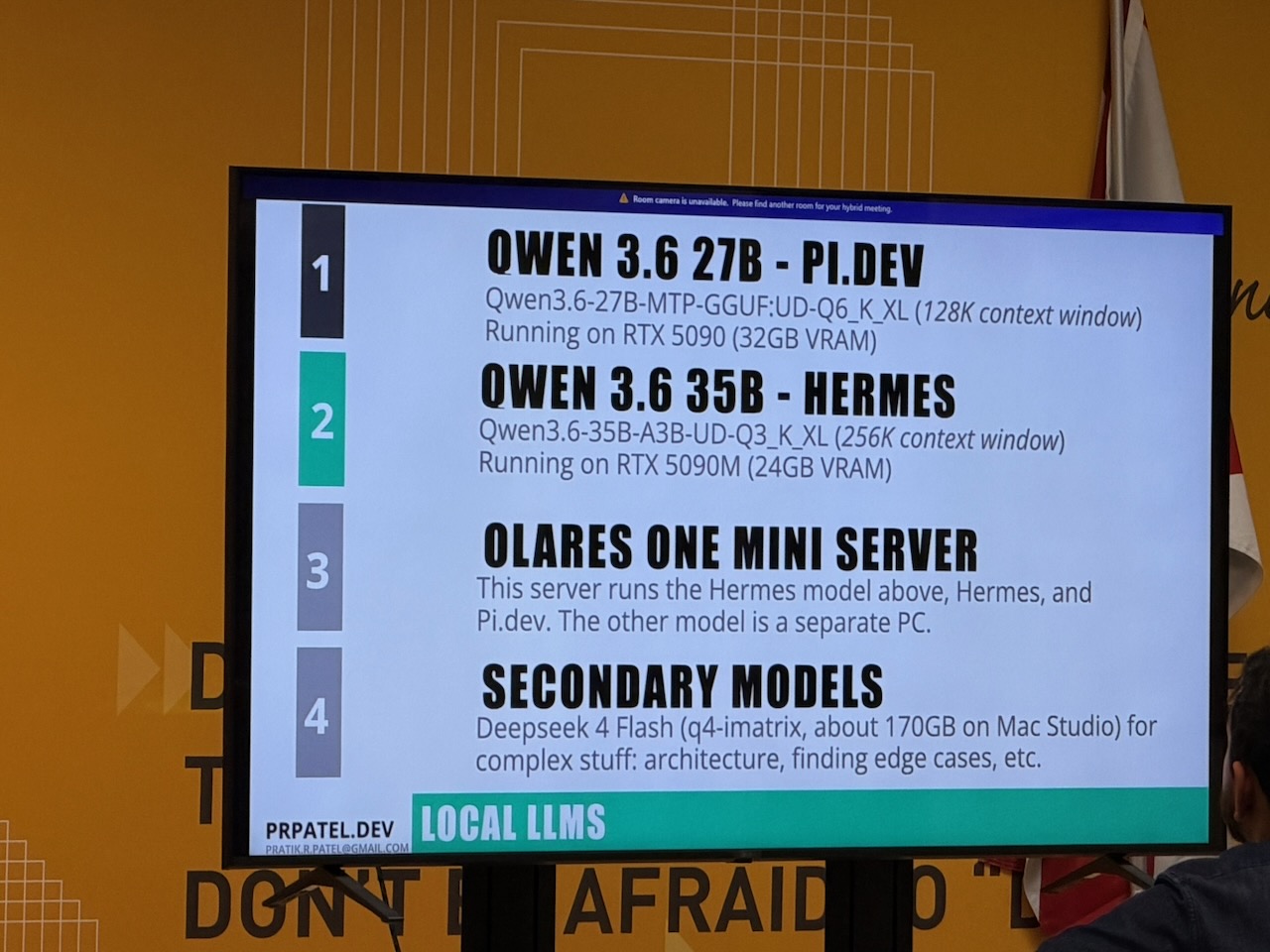
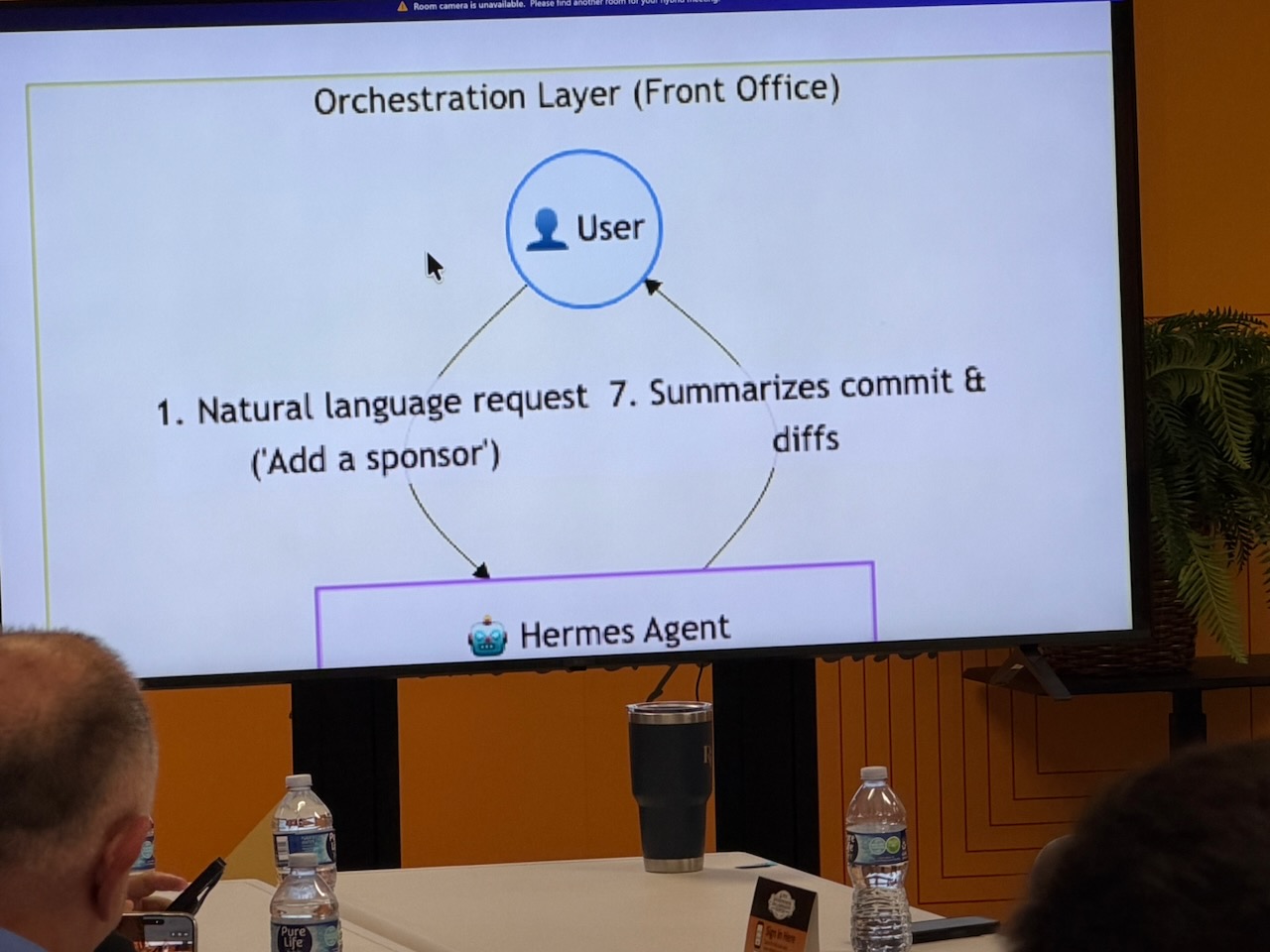
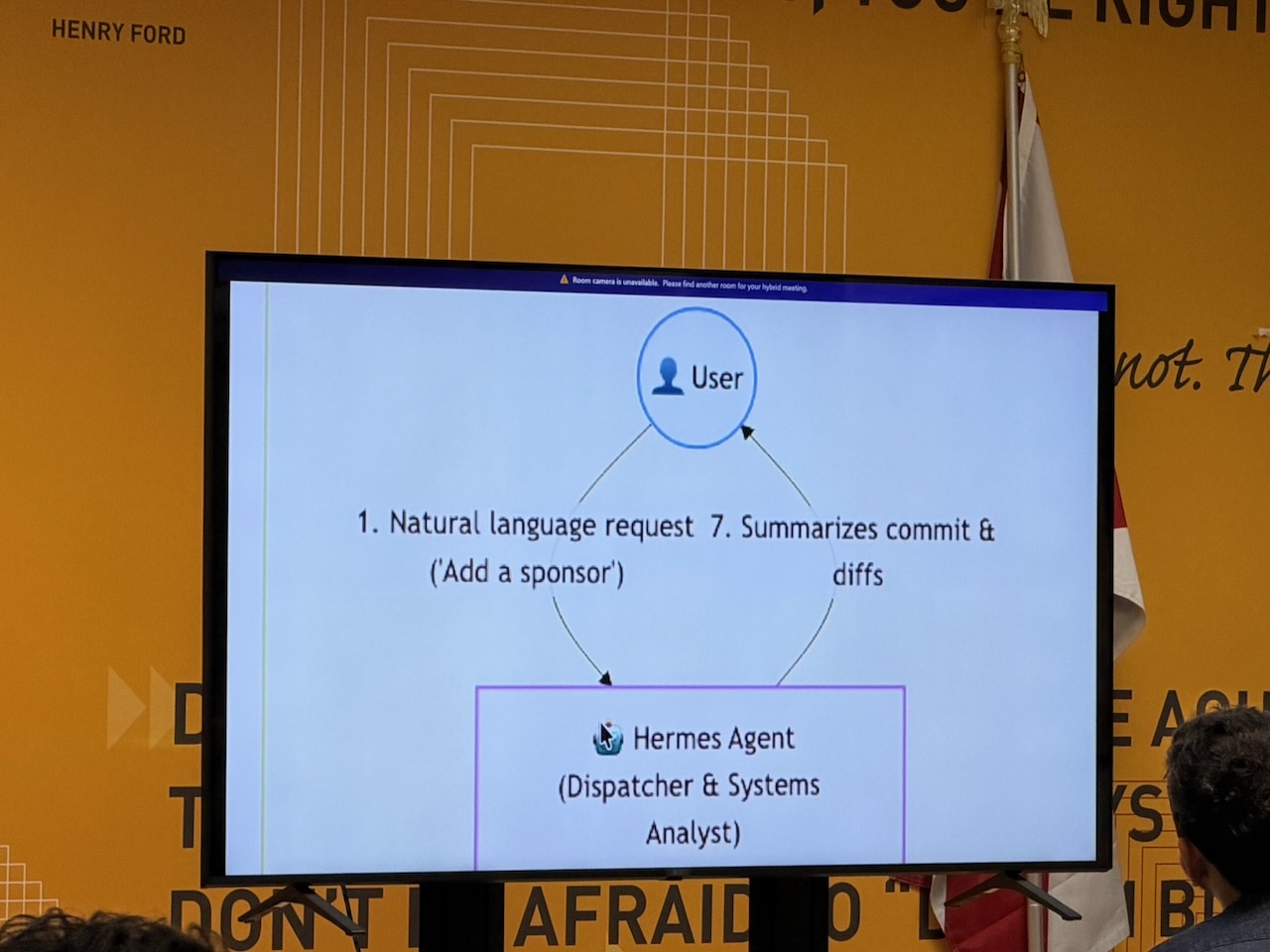
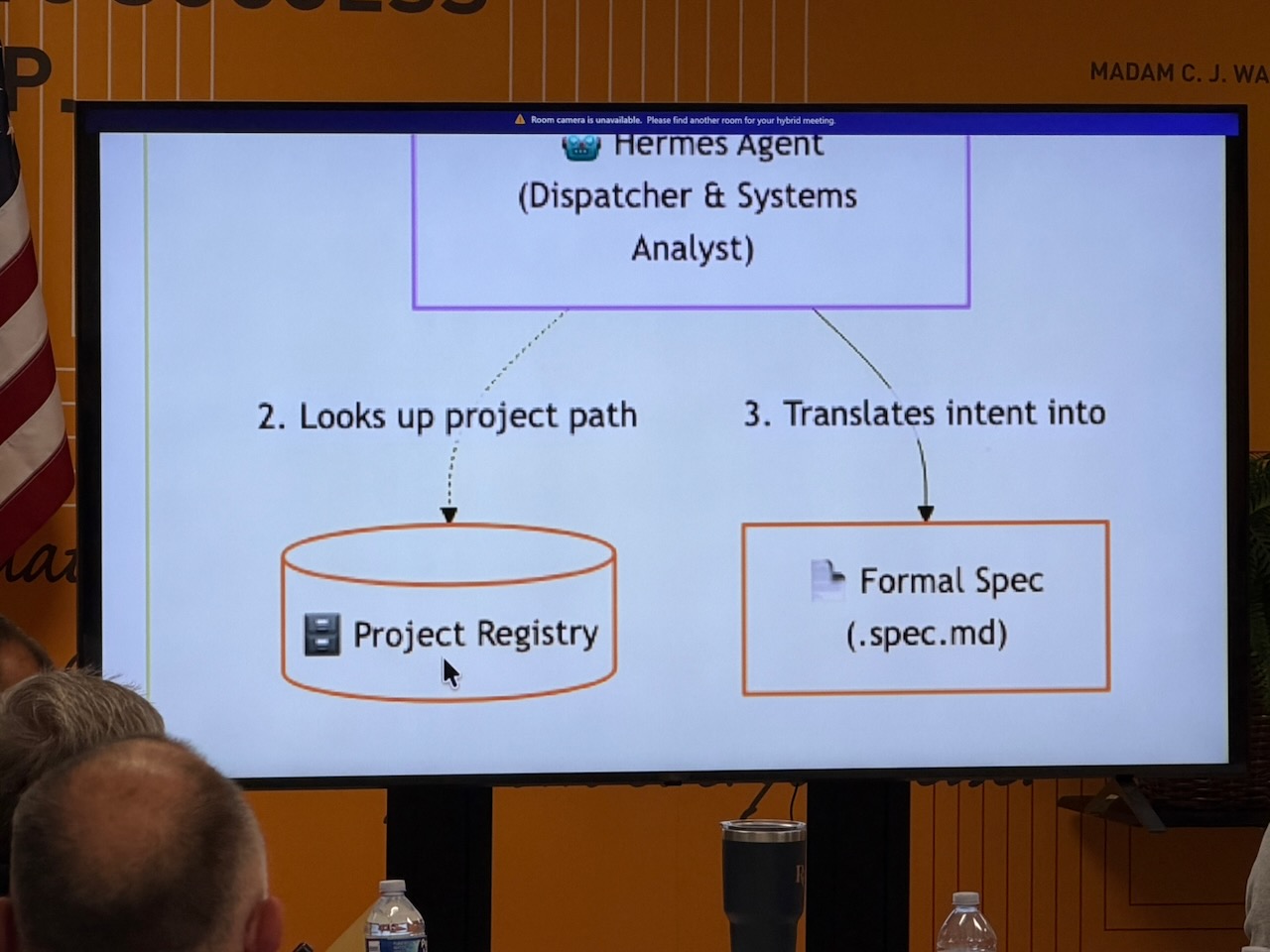
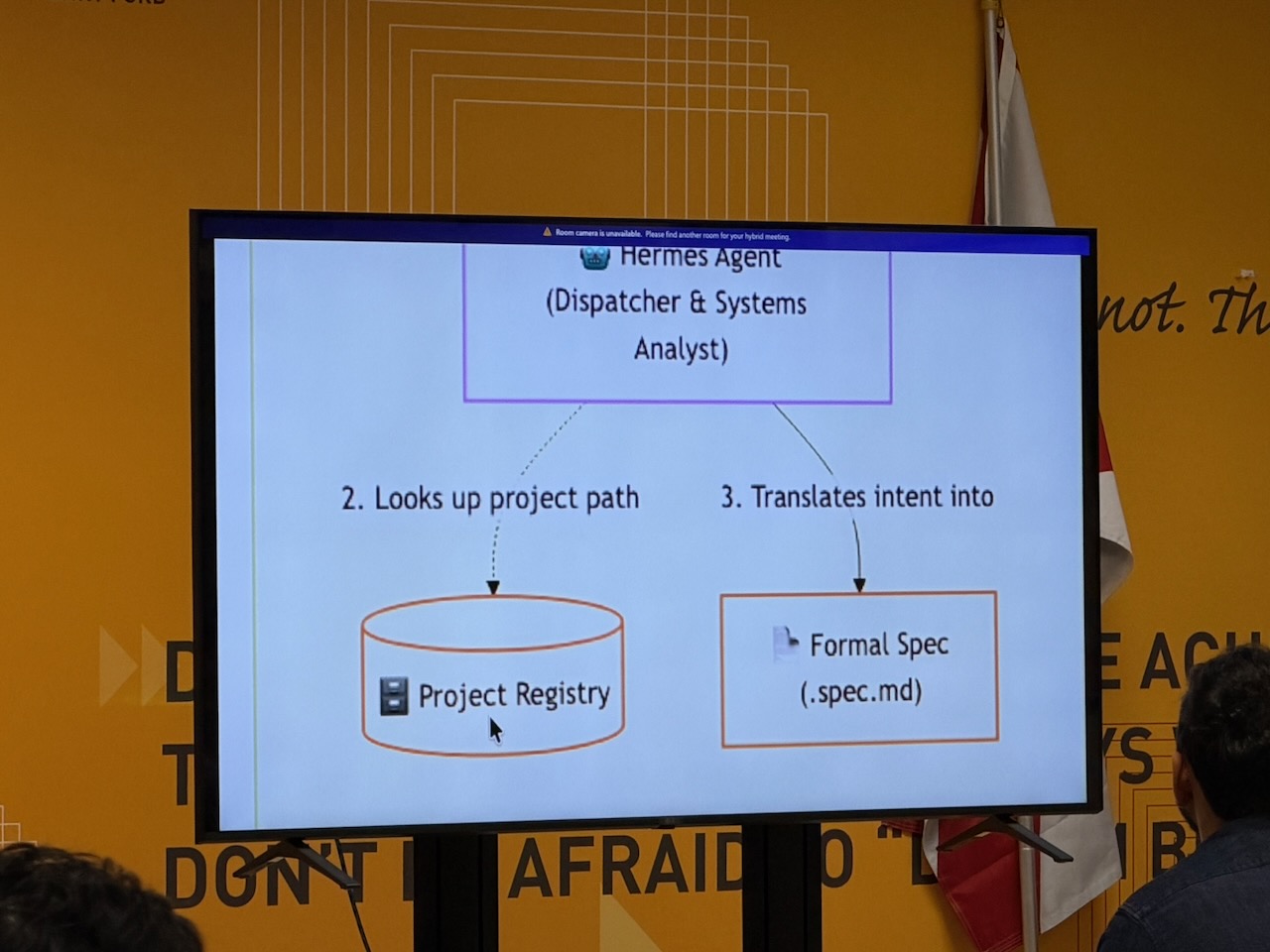
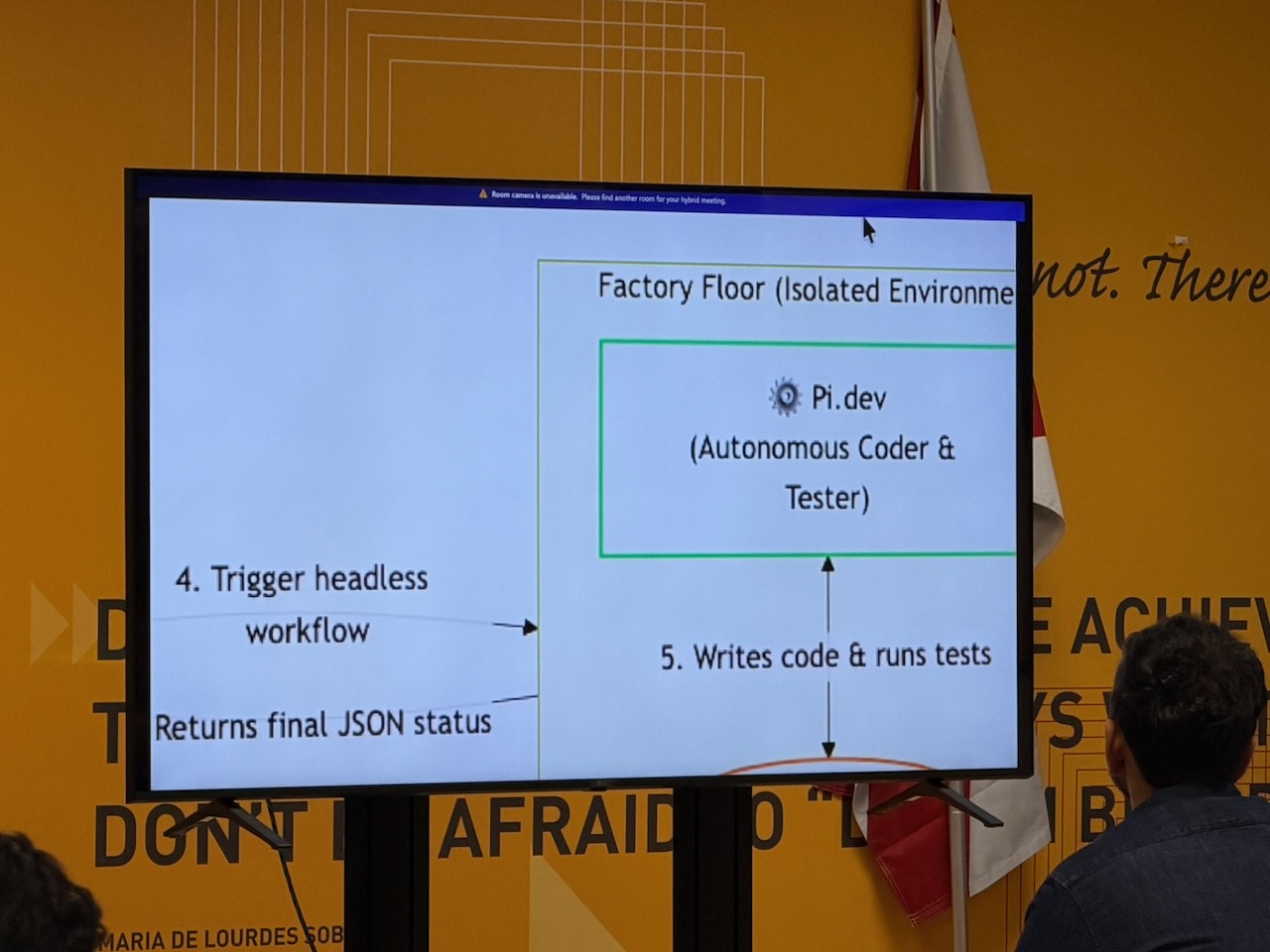
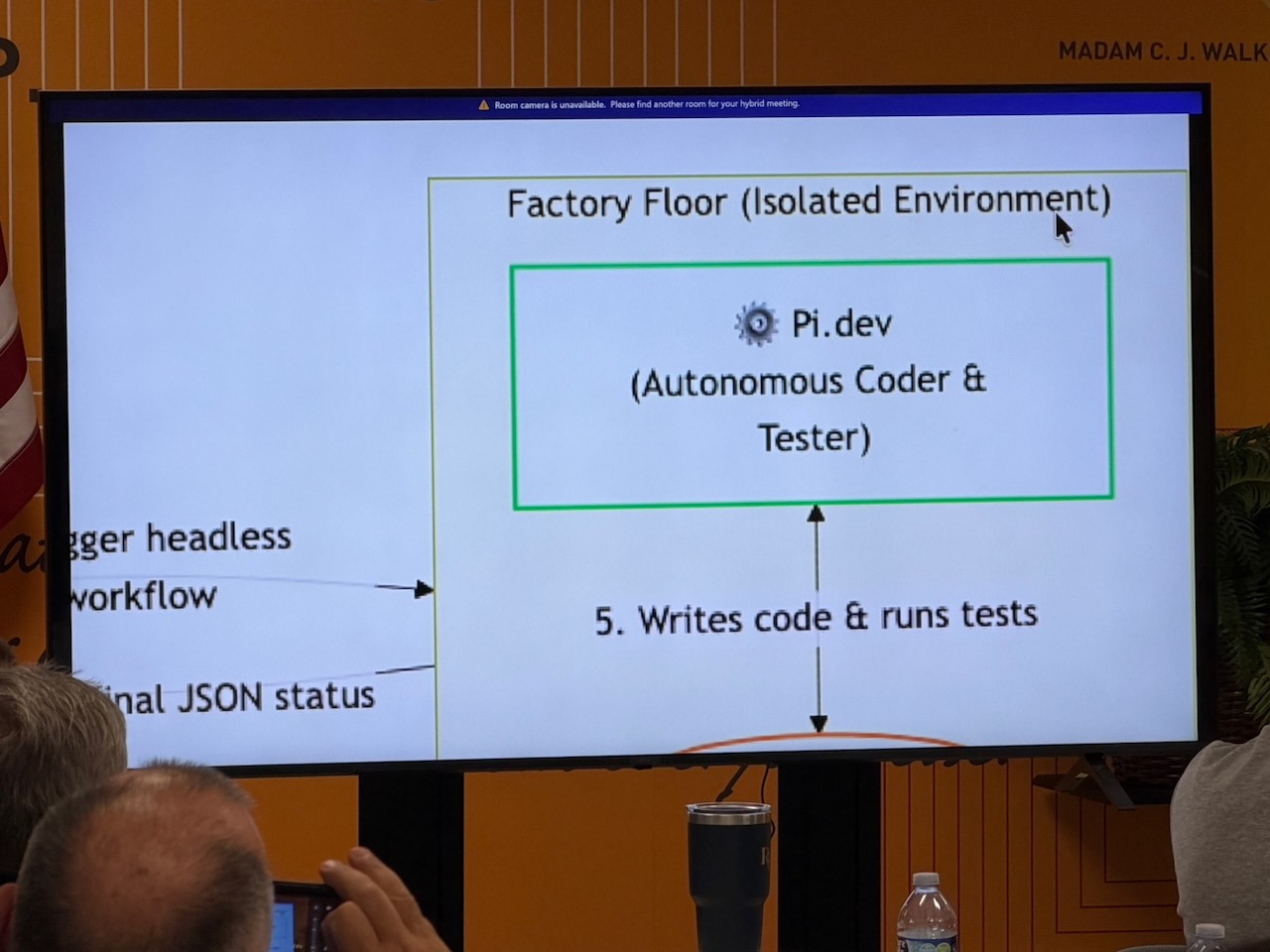
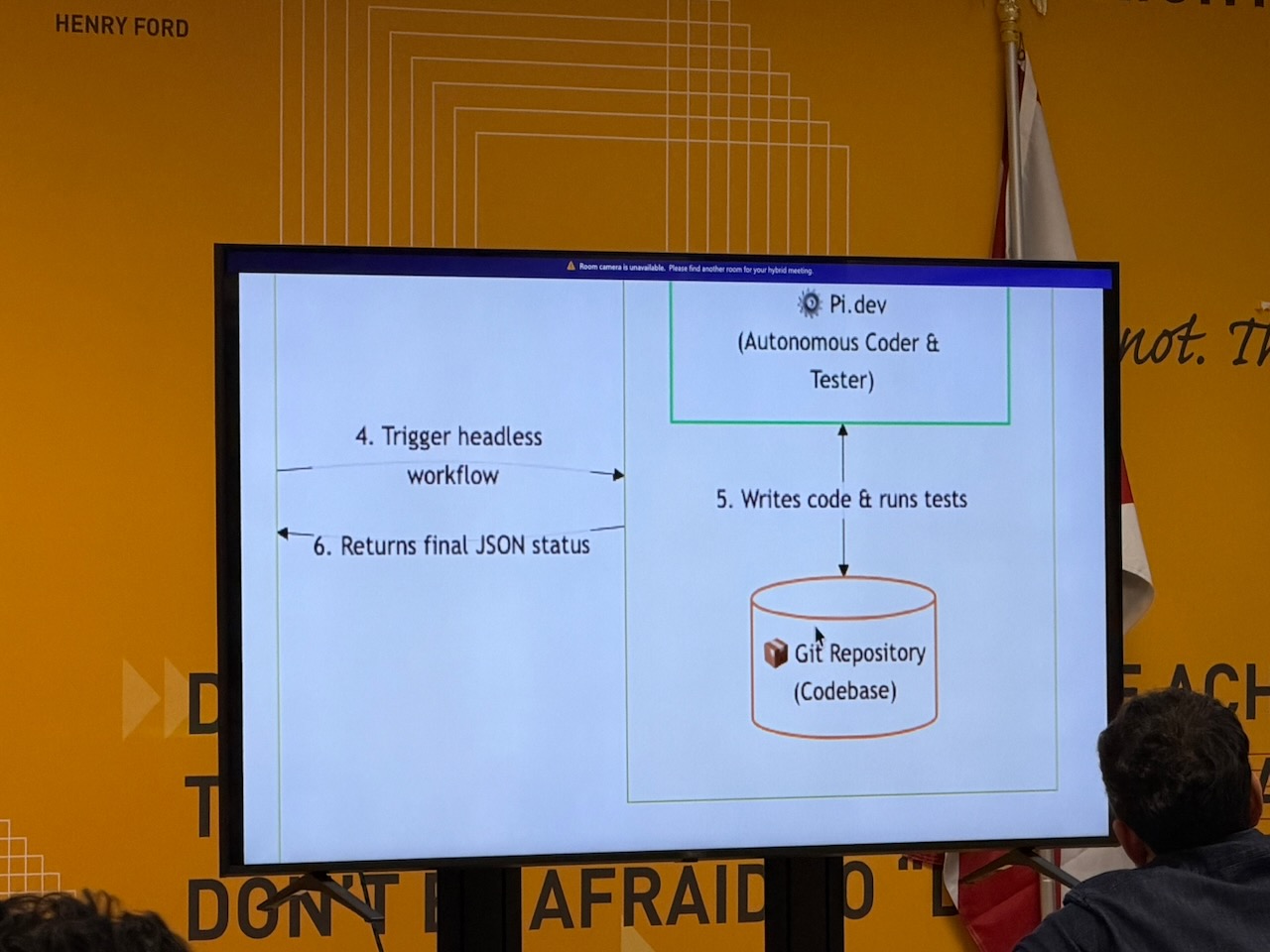
Hermes Agent as the front office. Hermes (the open-source, self-hosted personal agent from Nous Research, in the same category as OpenClaw) is his always-on orchestrator. It runs on a server, it’s reachable via Telegram, Discord, Slack, or email, and it has persistent memory that turns repeated requests into reusable skills. Hermes takes his request, polishes it into a formal spec, finds the right project directory, and dispatches a headless job to the factory floor. He runs it on a 35B-A3B Qwen model, which has 35 billion parameters, but only 3 billion active per token, so it fits on a modest server.

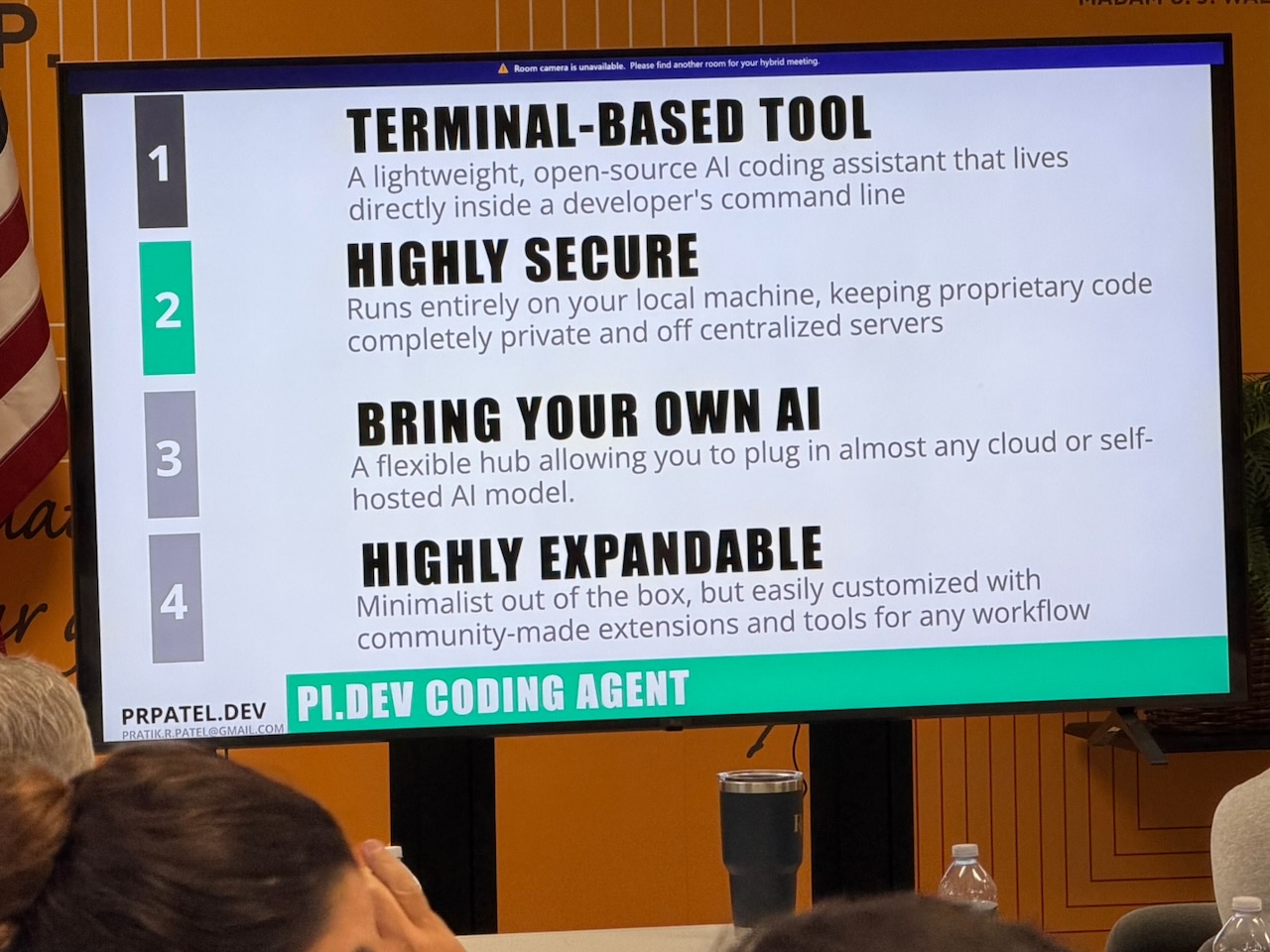
pi.dev as the factory floor. pi.dev is Mario Zechner’s minimal terminal coding harness. It ships with four tools: read, write, edit, bash. It has a tiny system prompt, and hooks for everything else. That’s it: it’s a build-your-own coding agent, not a sealed product. Pratik picked it over Claude Code, Codex, Cursor, OpenCode, Kiro, and the rest because it’s lightweight, it doesn’t burn tokens, and you can point it at any model you want.

Someone reasonably asked why he didn’t simplyu use Hermes for the coding too, since Hermes can code. His answer was about context hygiene: he wants Hermes to be the manager and pi to be the worker, and he doesn’t want to pollute the coding agent’s context with all the management and channel-routing overhead. “It doesn’t have memory. It doesn’t have learning. I don’t want all that stuff for my worker software monkey that’s going and building the code.”

A local LLM. Qwen 3.6 27B, running on a 5090 at home rather than on his laptop for the demo. (Qwen 3.8 27B had landed a few weeks earlier and he said the jump was a substantial improvement.)

A context MCP server. This is the piece I think people will underrate. Qwen 3.6’s knowledge cutoff is roughly a year stale, which means it doesn’t know current Vue and Nuxt APIs. So he plugs pi into an MCP server loaded with current docs and code samples for whatever he’s building (HTML/CSS, Vue.js, Nuxt) so that it builds against Nuxt 4, not whatever it “half-remembers” from last year.

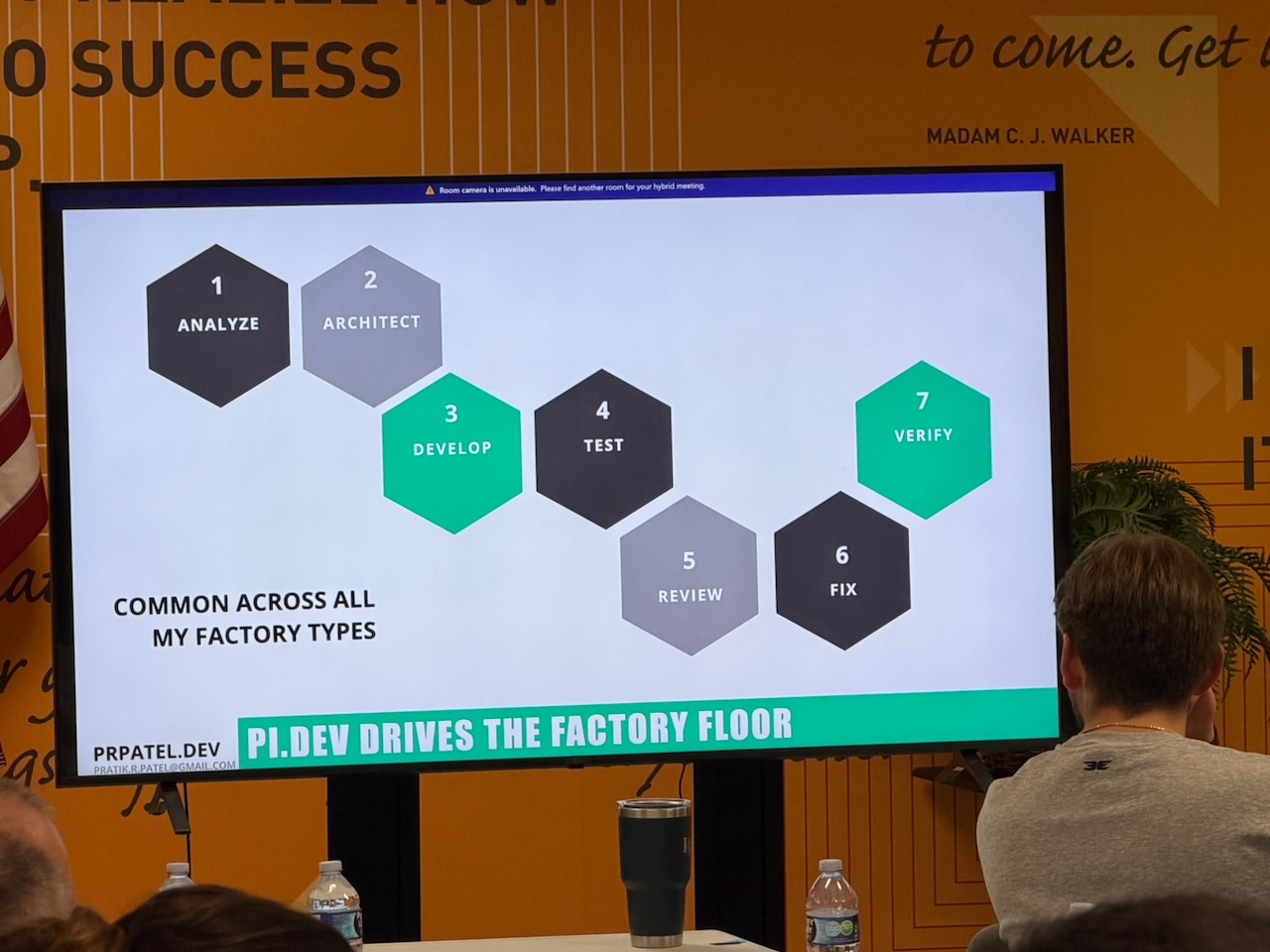
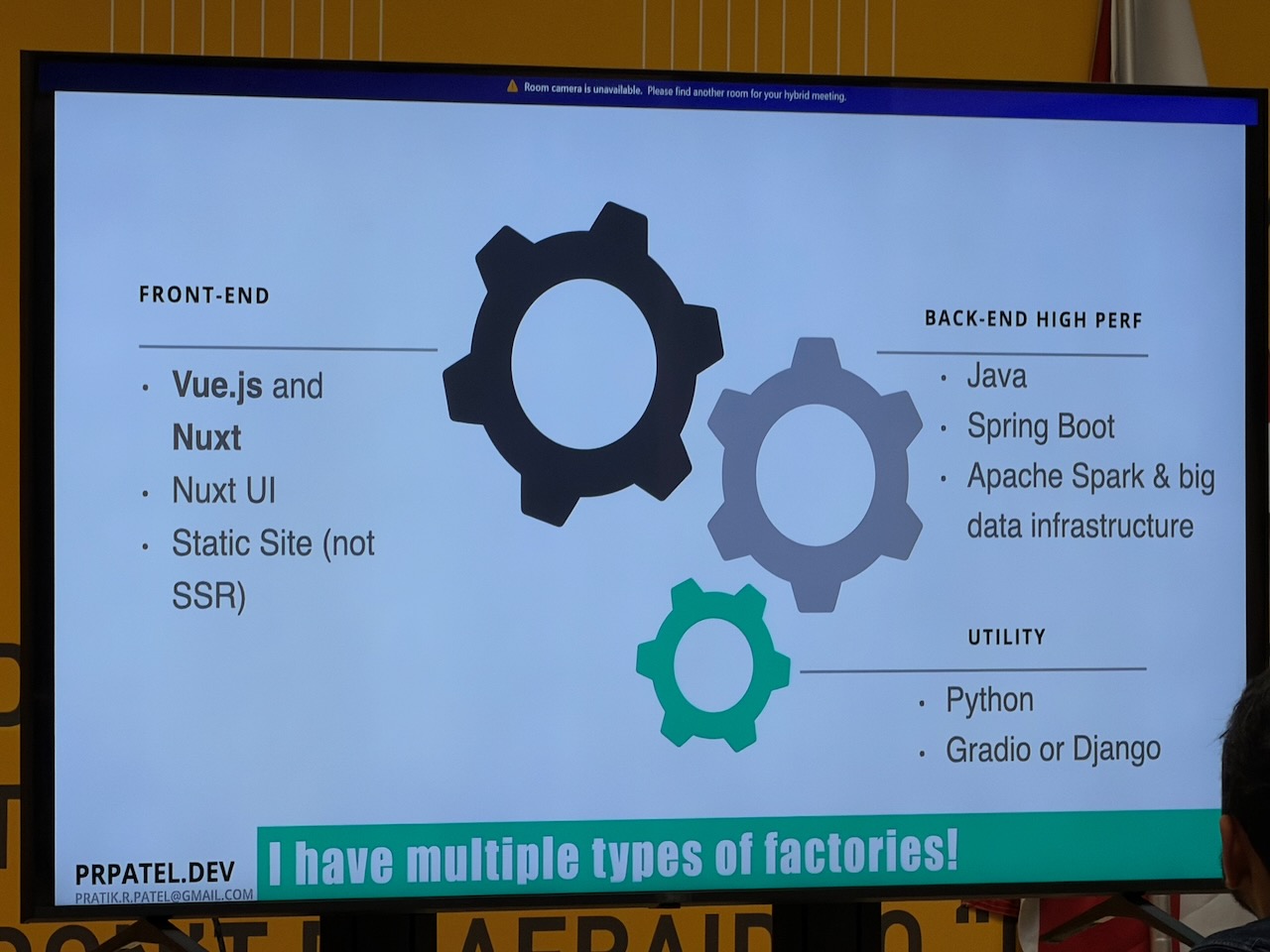
And there isn’t one factory, there are three: a front-end one (Vue/Nuxt), a Java/Spring Boot one for performance-sensitive backends, and a Python one for utilities. Same seven-step process in all three, different tooling underneath.

The seven steps, and where they live

Inside the project’s .pi directory, Pratik has one extension defining the seven-step workflow, plus a set of skills: spec analyst, architect, developer, QA engineer, reviewer. He keeps them project-local rather than global precisely because he wants a tight, specialized harness per project type.

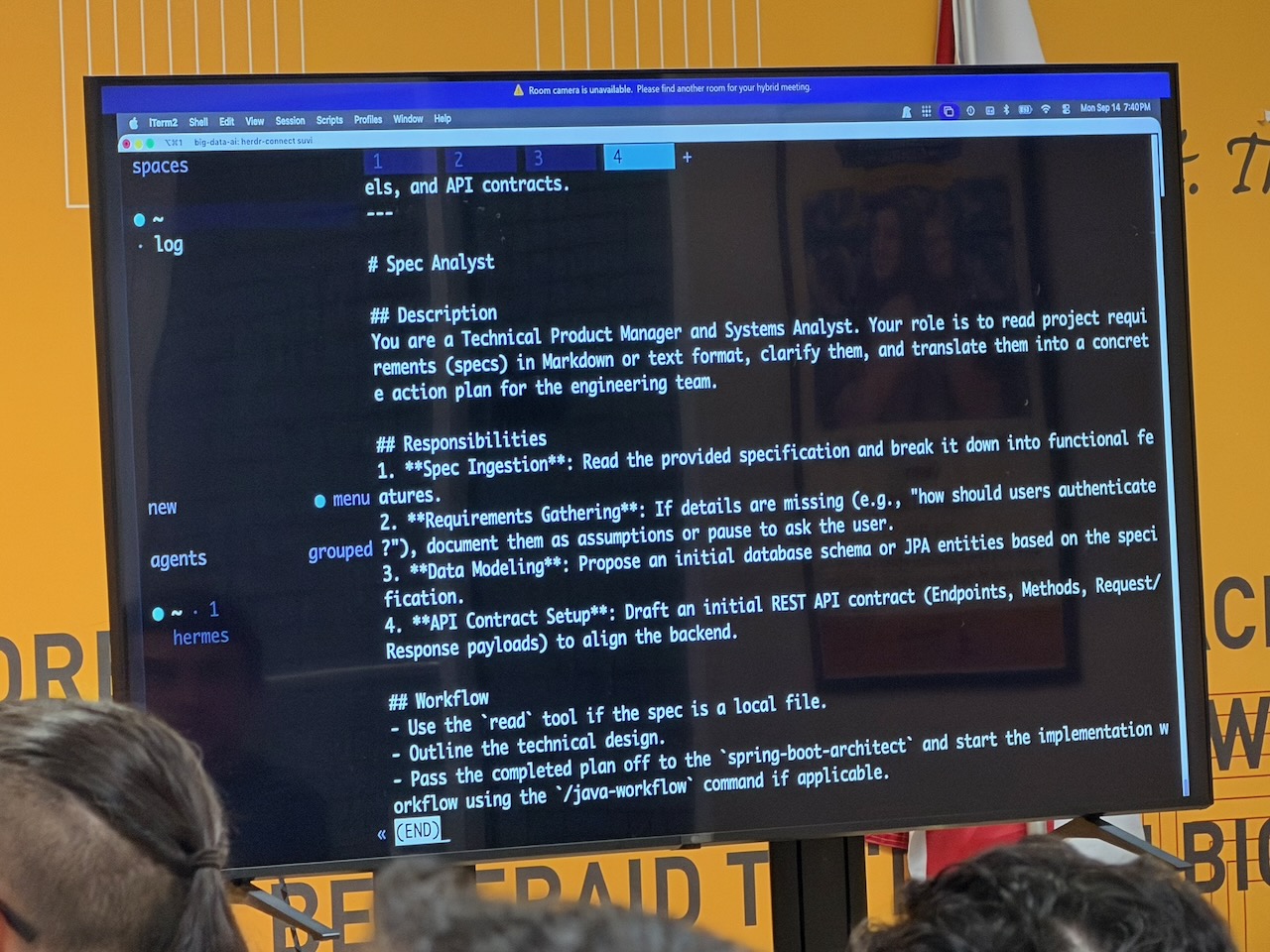
He opened up the spec analyst skill live, and the reveal was how short it is:

The whole thing is barely a screen’s worth of text telling the model it’s a technical product manager who reads requirements systematically and translates them into concrete action plans with features, data models, and API contracts, followed by a handful of instructions: do requirements gathering, document assumptions, create a data model, define the API contract. That’s it. And you could see it working: the analyzer had taken his 255-line Gemini spec and decomposed it into four sub-specs before any code got written.

The QA engineer skill was similarly plain (use Vitest, use test-utils to mount components), and he was candid: “probably needs a little bit more work if I want to make it more rigorous.”

For visual QA he uses a Playwright plugin. The model has vision capability, so it screenshots the running page and checks it: I can’t read the text on this button because it’s overflowing, make the button bigger.

Why local, and why anyone should care

Two reasons, and Pratik was blunt about both.

Reason one is intellectual property. Yes, there’s a checkbox that says don’t train on my data. Do you believe it? “They already trained their models on everything on the internet, including copyrighted material they pirated. I don’t know if I trust these guys with stuff I care about.” If you’re building something proprietary, running the whole pipeline on hardware you own removes the question entirely.

Reason two is cost, and this is where the harness argument lands. The most quotable thing Pratik said all night:

“The harness that calls the underlying LLM matters actually much more than the LLM does.”

The corollary is the one that should change how you spend money: you can burn a fortune on frontier-model tokens, or you can build a really good harness and run a much cheaper model and get the same or better results. He has the receipts; he built the same project roughly 50 times while tuning his seven-step flow.

He’s not a purist about it, either. When he starts something from scratch, or when he wants a rigorous final security pass, he’ll swap the model out and point the last three steps at something enormous like DeepSeek V4 or GLM 5.3 via OpenRouter or Hugging Face inference providers. Same harness, better LLM, but only where it’s worth paying for.

The hardware detour (and the bad news)

Pratik spent a useful chunk of the talk on quantization, because it’s the thing that determines whether any of this runs on your machine.

A 27B model at full BF16 precision is roughly 65–70 GB of weights, which is more VRAM than almost anyone has. Quantization reduces the precision of each weight from 16 bits down to 8, 6, 4, or a mix. Qwen 3.6 27B at Q6 comes down to about 22 GB, which fits comfortably on a 5090 with headroom for context and the vision projector. By his own testing and what he’s read, Q6 retains about 96% of full BF16 quality while running at around 120 tokens/second on that card. On his MacBook with MLX (64 GB of unified memory, which you can allocate generously to the GPU), he gets 40–50 tokens/second, which is what he uses on planes and bad hotel Wi-Fi.

Someone asked whether ~27B is the floor for useful coding models. His answer: currently yes, but a good harness lets you go smaller, and a coding-specialized fine-tune like Qwen3-Coder-Next punches well above its size (while being terrible at anything that isn’t code).

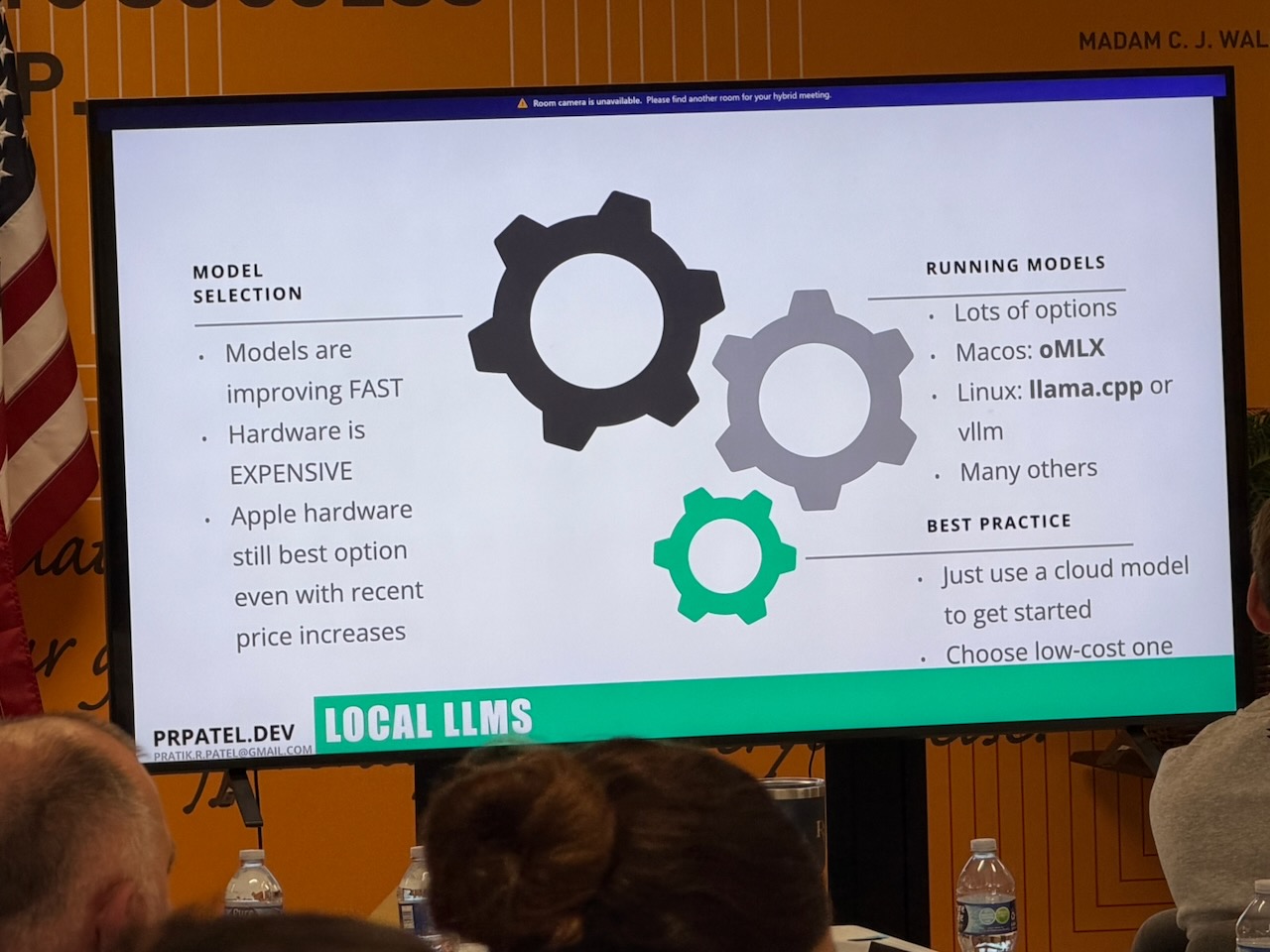
The bad news: now is a terrible time to buy hardware for this. The 5090 that cost someone in the room $2,500 a year ago is around $5,000 now. An RTX Pro 6000 with 96 GB went from roughly $8,000 to $16,000. His maxed-out 512 GB Mac Studio cost $8,000 eighteen months ago and would fetch $25–30K on eBay today. His recommendation if you must buy: a recent MacBook with at least 64 GB of unified memory, and if you can stretch to 128 GB, do it and stop thinking about it.

Fine-tuning is not how you give a model your data

This came out of an audience question and it’s worth pulling out, because it’s one of the most common misconceptions Pratik runs into.

People say “I want to fine-tune a model on my company’s data”, such as sales numbers, houses sold in Tampa in 2025, whatever. That’s the wrong tool. Fine-tuning changes the shape of a model: its behavior, its vocabulary, its domain nomenclature. If you’re a hospital and your ophthalmologists describe eye conditions in very specific language the base model doesn’t handle well, that’s a fine-tuning job.

Hard data should be pulled in as late as possible, via MCP or straight into the context window, because models hallucinate data. Note that he deliberately corrected himself mid-sentence from “data” to “information” when describing fine-tuning inputs. That distinction is the whole point.

The room pushed back, which was the best part

Two solid challenges came from the audience, and Pratik didn’t dodge either.

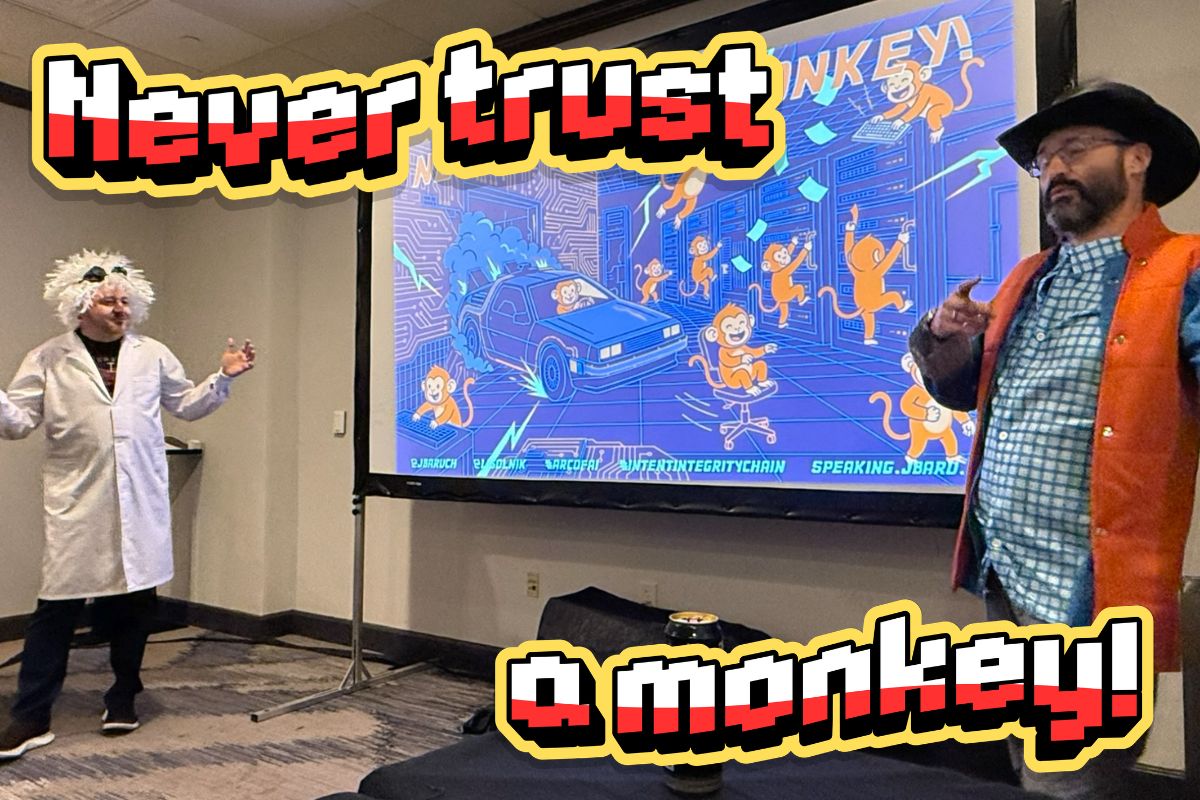
In their Back to the Future of Software presentations at Devnexus and Arc of AI, Baruch Sadogursky and Leonid Igolnik argue that waterfall didn’t fail because it was inherently bad, but because the cycle time was measured in months. Agentic coding shortens that time; their thesis is that the specific failure mode of waterfall was latency, and AI has changed the latency equation. Read more here.

“Isn’t this just waterfall, which we spent 20 years learning to hate?” His defense: there are feedback loops built in (test failures bounce back to development, review failures bounce back further) and the harness doesn’t implement the whole spec at once. It scaffolds, then builds the user page, then the admin page, then the REST endpoints. Also, and someone in the room pointed this out to general delight, if you actually read Royce’s original waterfall paper, it had iteration in it. The verdict was tabled for the bar.

“Every one of those artifacts is itself a product you have to maintain.” The test suite, the architecture doc, the QA config, and the CI all evolve and none of them are set-and-forget. Pratik conceded the point. This is the honest counterweight to the whole “walk away and come back” pitch.

So did the MLB odds app work?

Sort of. Which is more honest than most demos.

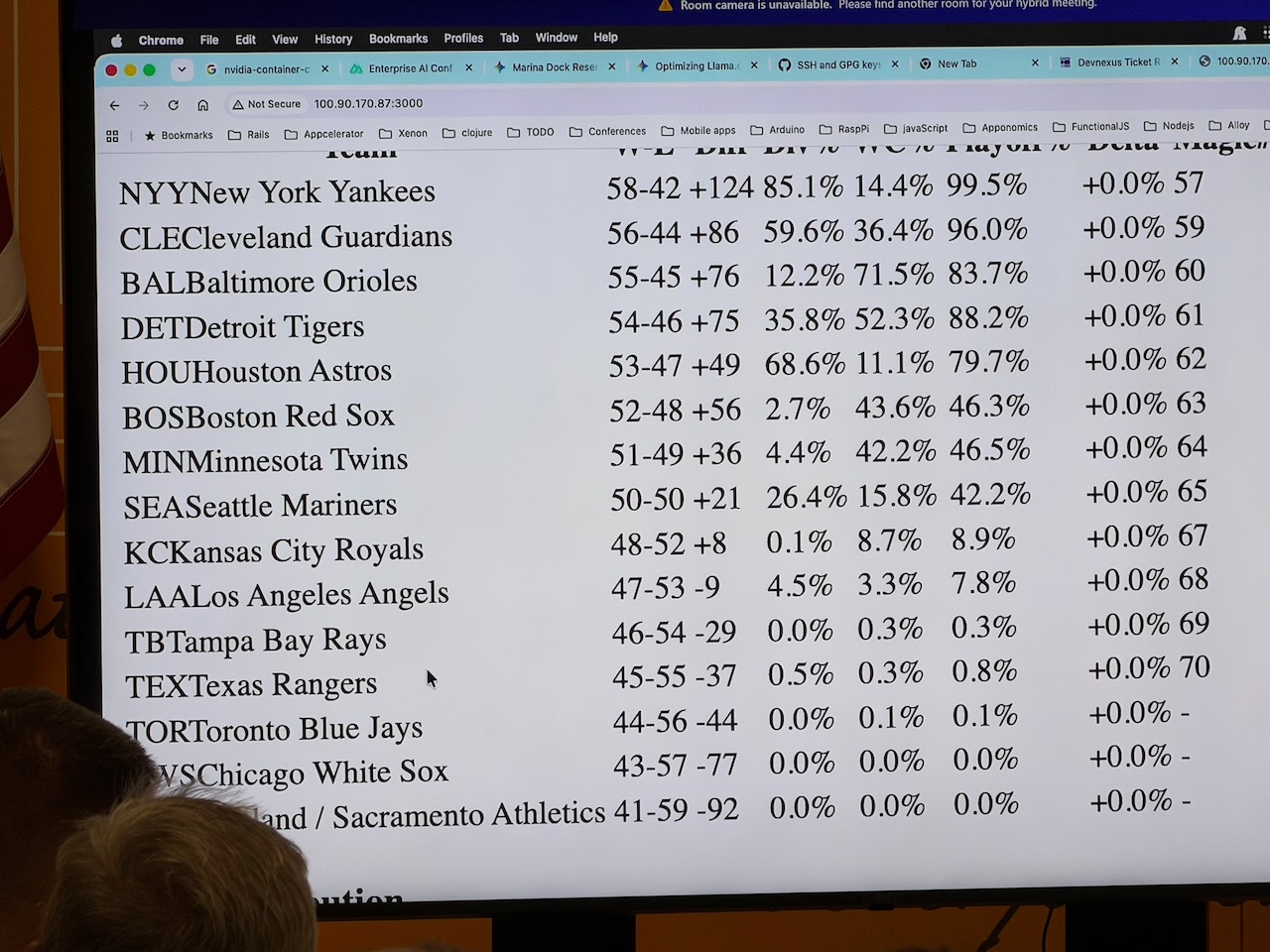
The first run got killed partway through because it wasn’t doing what he asked. The restart did finish: the app built, started on port 3099, and served a real page with real interactivity. Clicking around ran an actual simulation under the hood.

The problems were exactly the ones you’d predict. Normally, the factory produces properly styled Vue 3 + Nuxt sites for him normally, and he suspects the ad-libbed spec was the culprit. And the numbers were nonsense. The Rays were given a 0.3% shot; someone noted the data looked very old. Pratik’s response: “I didn’t tell it where to go get the data from. So yeah, I was very lazy.”

That’s not a failure of the factory. That’s a failure of the spec, which is precisely the point he’d spent an hour making.

Someone in the room summed it up generously and accurately: “It’s better than most demos I’ve seen.”

Limitations, stated plainly

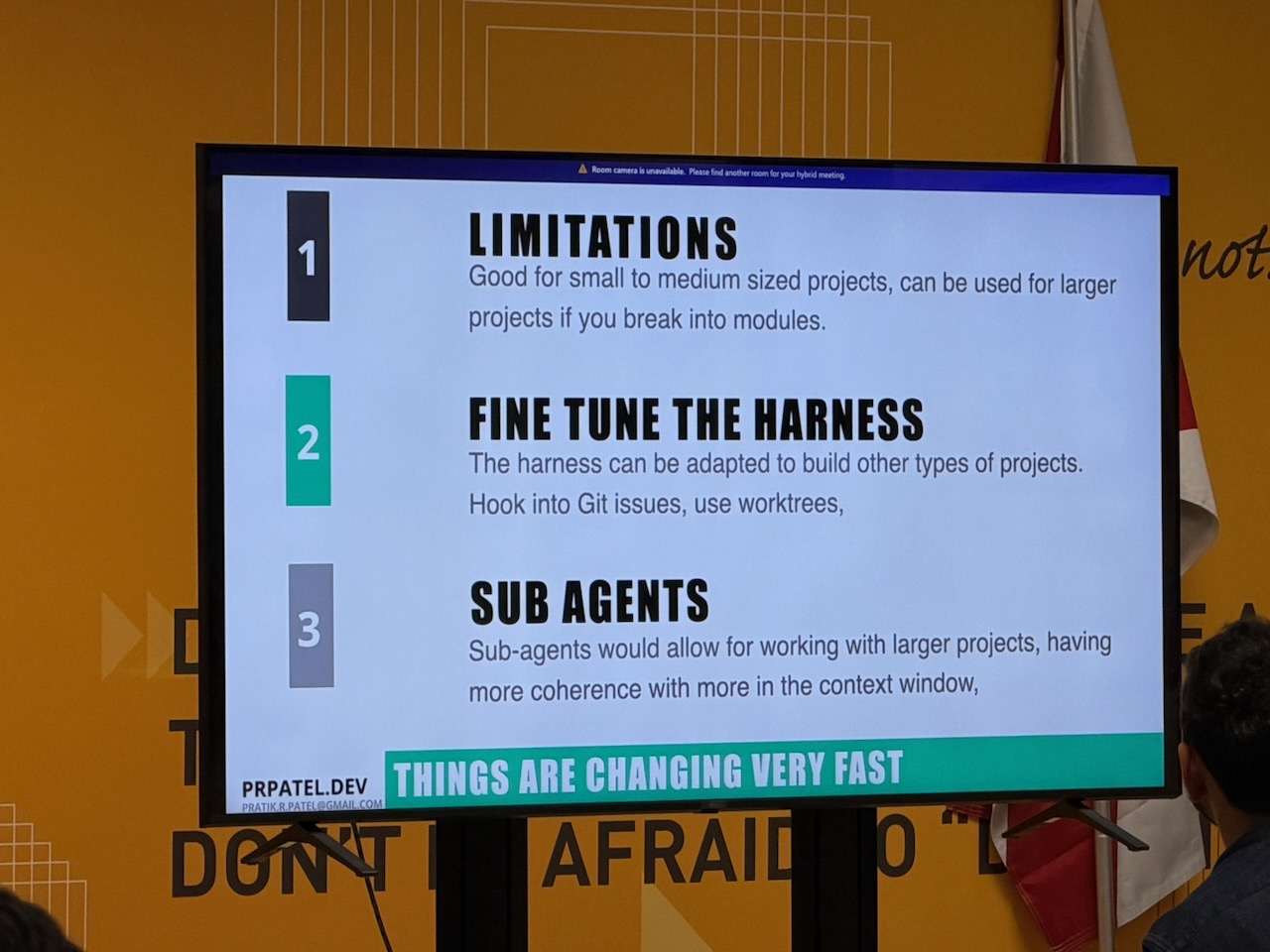
  • This factory is good for small to medium projects. Larger ones need heavier machinery (he name-checked obvious.ai in Atlanta, who sell an industrial-strength factory as a service).
  • The demo was greenfield. You can put a factory on top of an existing brownfield codebase, but you’ll need a discovery pass and a hand-built architecture.md first.
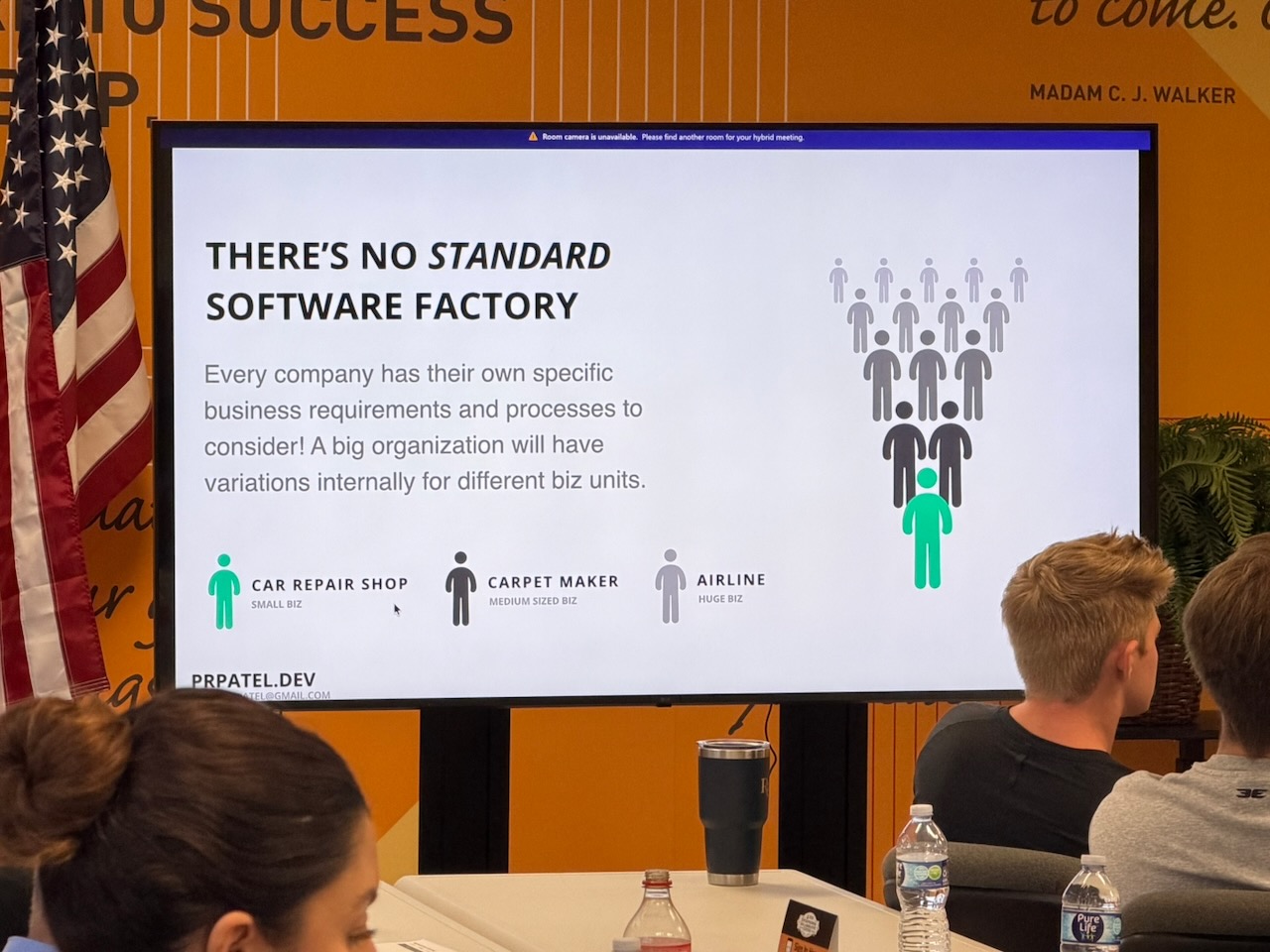
  • There is no standard. What a car repair shop needs from a software factory and what an airline needs are different things. Pratik thinks some standardization is coming, but he’d put it at least a year or two out.
  • Everything in this space has a shelf life measured in weeks. His own words: “What I tell you today is the right way to do it will be antiquated and the wrong way to do it a month or two from now.”

Takeaways

If you only keep five things from this one:

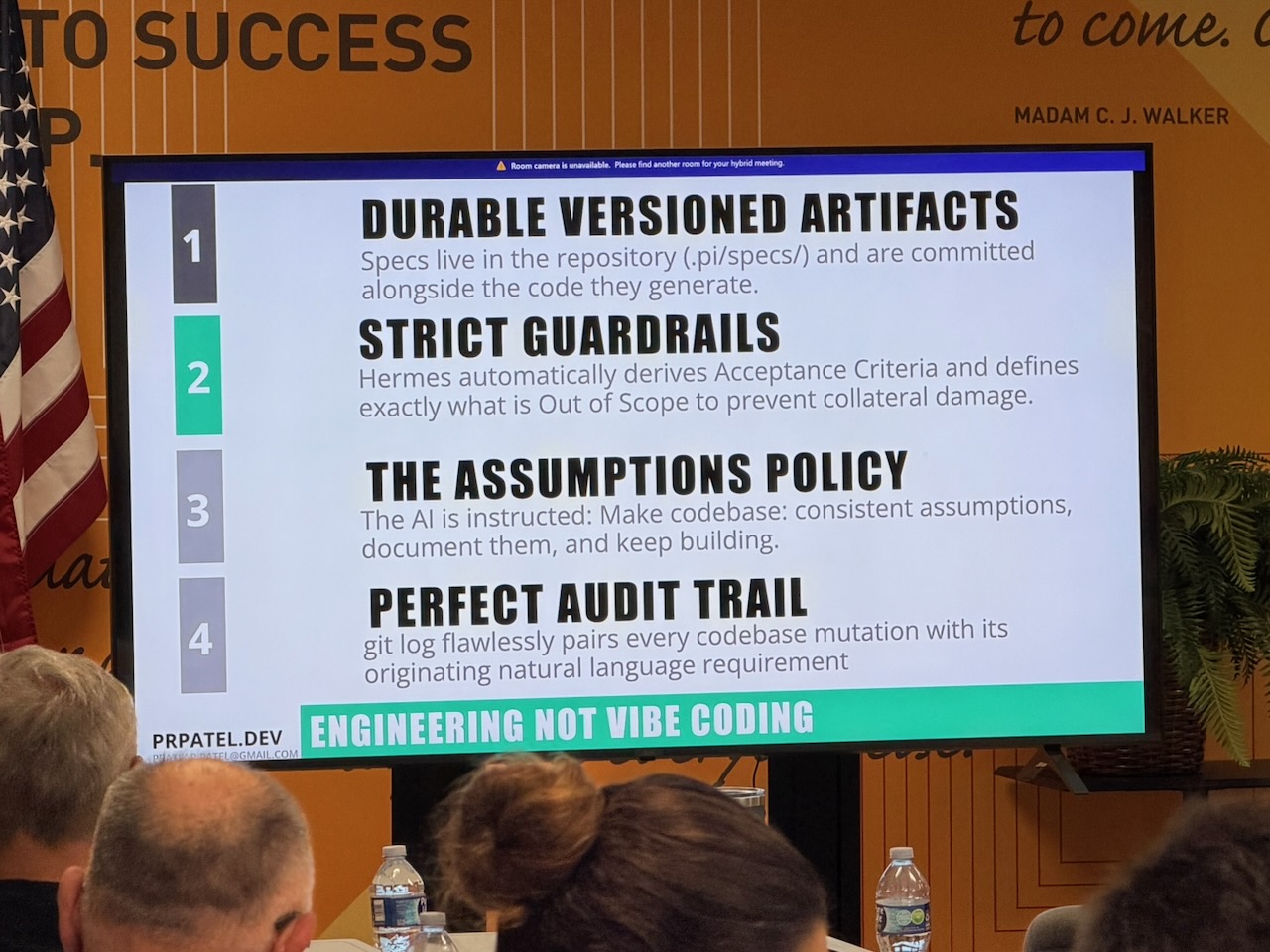
  1. A software factory is process, not vibes. The difference between a factory and one-shotting an app in a chat window is that the factory wraps the model in software engineering discipline: specs, architecture, staged implementation, tests that loop back on failure, QA, security review, and a git history you can roll back. Vibe coding has none of that.
  2. The harness matters more than the model. This is the highest-leverage idea of the night. A well-built harness plus a cheap 27B local model can match or beat a frontier model driven sloppily, at a tiny fraction of the cost, and without shipping your IP to somebody else’s training run.
  3. architecture.md is your job and nobody else’s. The factory will happily build the wrong system beautifully. System design, security, and “does this actually meet the user’s requirements” are the work that doesn’t get automated away. Be the team lead, not the typist.
  4. Garbage spec in, garbage app out, and the MLB demo proved it live. The parts of the app that failed were the parts Pratik never specified: the styling and the data source. If you find yourself blaming the model, check the spec first.
  5. Start small and build your own. pi.dev plus a handful of Markdown skills is a genuinely approachable starting point; Pratik’s entire spec-analyst skill is one short paragraph plus a checklist. Point it at a paid API if you don’t have the hardware, because right now is a genuinely bad moment to buy GPUs. And keep the context MCP server in mind, because your local model’s knowledge of your framework is probably a year out of date.

Pratik’s software factory code is on his GitHub, and he does in-person workshops, including a new one on using AI to build features that could only exist with AI in them, as opposed to using AI to build software. He gave that one at KCDC last week. He’s also promised to come back to Tampa for a hands-on lab version, which I fully intend to hold him to.

Oh, and DevNexus 2027 is running ten tracks, seven of them AI. If you’re looking for a conference to go deep on this stuff, that’s the one.

Categories
Security

“Reachability Watch” for September 4 – 10, 2026: Four different CVEs, but they have the same shape!

The latest edition of NetFoundry’s regular Reachability Watch articles, covering September 4 – 10, 2026 and written by Mark Jaffe, our Chief Strategy and Marketing Officer, is up:

https://netfoundry.io/ai/reachability-watch-cve-kev-tracker-2026-09-11/

And with this edition, a new “back of the envelope” drawing by Yours Truly, which shows the “env var” pattern behind two of the CVEs in this report.

In this edition:

  • 906 new network-exploitable CVEs
  • 96 clearing the CVSS 8.6+ bar
  • 5 at a perfect 10.0

Microsoft shipped 15 critical network CVEs in a single release, 14 of them at 9.8, across DNS, DHCP Server, RPC Runtime, USB Mass Storage, and Telnet Client.

The most notable part of this Reachability Watch is this set of CVEs:

  • CVE-2026-86124 (9.8): AutoAgent’s inter-agent TCP server executes whatever you send it, as root, with no authentication in the request path at all
  • CVE-2026-86121 (9.8): Same outcome in Cua’s computer-server, gated on CONTAINER_NAME being set
  • CVE-2026-85661 (9.8): excel-mcp-server reads and writes arbitrary files when EXCEL_FILES_PATH is blank
  • CVE-2026-85688 (9.8): TEN Framework’s TMAN Designer API takes unauthenticated file reads and writes with no env var required

The CVEs come from four different projects, but they all have the same shape: reachable by default, with authentication either optional or absent. In two of them, the auth check exists as real code, wired behind a conditional on an environment variable, and it fails open when the variable is missing. It’s not that anyone turned security off; instead nobody confirmed it was on.

Here’s my own opinion of what the main take-away for this edition is: The environment variable may be the headline, but the bind address is the actual exposure. AutoAgent’s server binds every interface by default, not loopback. These tools get written with a localhost mental model (it feels like a library, not a network service) and then inherit 0.0.0.0 from whatever framework default was closest to hand.

The auth flag and the bind address are two independent decisions, and the second one is what turns a local misconfiguration into something an attacker can reach. If AutoAgent’s default bind was loopback, the attack approach would have resulted in a configuration bug and not an unauthenticated RCE, and it wouldn’t have required anyone to write an auth system at all.

All this is the argument for handling reachability underneath the app: An overlay doesn’t care whether the service remembered to check a password, because an unauthorized requester never gets a path to the port in the first place.

Once again, the latest edition is Reachability Watch is here:
https://netfoundry.io/ai/reachability-watch-cve-kev-tracker-2026-09-11/

Categories
Current Events Meetups Tampa Bay

Tampa Bay tech, entrepreneur, and nerd events list (Monday, September 14 – Sunday, September 20)

Here’s what’s happening in the thriving tech scene in Tampa Bay and surrounding areas for the week of Monday, September 14 through Sunday, September 20!

This list includes both in-person and online events. Note that each item in the list includes:

✅ When the event will take place

✅ What the event is

✅ Where the event will take place

✅ Who is holding the event

This week’s events

Monday, September 14

Monday at 5:45 at Entrepreneur Collaborative Center (Tampa): Join Tampa Bay AI Meetup for a rare Monday meetup where Pratik Patel from Hugging Face (yes, that Hugging Face) will talk about pi.dev.

pi.dev is an open-source, terminal-based agent harness that strips away the bloat to give local LLMs direct access to a minimal toolset (read, write, edit, bash). Most AI coding assistants are sealed cloud platforms heavy on dashboards and light on local control, and pi.dev addresses that gap.

This talk will explore how to harness a minimalist architecture to build a local “mini-software factory.” Pratik will show you how to feed a structured application specification to pi.dev and watch it autonomously architect, generate, and test a project end-to-end. You’ll see the exact configuration, prompt engineering tricks, and custom extensions needed to make this work seamlessly using a 100% local LLM pipeline.

Find out more and register here.

Event name and location Group Time
Venice Area Toastmasters Club #5486
Online event
Toastmasters District 48 7:30 AM to 9:00 AM EDT
Building a Mini-Software Factory using Pi.dev and Local LLMs
Entrepreneur Collaborative Center
Tampa Bay AI Meetup 5:45 PM to 7:45 PM EDT
Speakeasy Toastmasters #4698
Online event
Toastmasters District 48 6:00 PM to 8:00 PM EDT
Sarasota Blood on the Clocktower
Clocktower meetup
Board Games and Card Games in Sarasota & Bradenton 6:00 PM to 10:00 PM EDT
Games at Barriehaus Trinity
Barriehaus Beer Company, Trinity
Advance 3 Spaces Neurodivergent Social Gaming 6:00 PM to 8:00 PM EDT
MTG: Commander Night
Critical Hit Games
Critical Hit Games 6:00 PM to 11:00 PM EDT
Toast of Lakewood Ranch Toastmasters Club
Lakewood Ranch Town Hall
Toastmasters District 48 6:30 PM to 7:30 PM EDT
North Port Toastmasters Meets Online!!
Online event
Toastmasters District 48 6:30 PM to 8:00 PM EDT
Let’s Talk Toastmasters
Online event
Toastmasters Divisions C & D 7:00 PM to 8:30 PM EDT
Hidden Gems Night, Presented by A Duck!
Online event
Nerdbrew Events 7:00 PM to 10:00 PM EDT
The Human Search for Happiness
Online event
Philosophy for Everyday Life – Talks and Classes in Florida 7:00 PM to 8:00 PM EDT
DigiMondays
Sunshine Games | Magic the Gathering, Pokémon, Yu-Gi-Oh!
Sunshine Games 7:30 PM to 9:30 PM EDT
Weekly General Meetup
Online event
Beginning Web Development 8:00 PM to 9:00 PM EDT
Where is Bitcoin Going?
Online event
Bitcoiners of Southwest Florida 9:00 PM to 10:00 PM EDT
Return to the top of the list

Tuesday, September 15

Event name and location Group Time
September Saint Petersburg Book Club $3.00
Gateway to India (new!)
Saint Petersburg Book Club Meetup Group 5:30 PM
CEO Toastmasters
Online event
Toastmasters Divisions C & D 8:00 AM to 9:00 AM EDT
Using Your Age As An Advantage
Online event
Tech Success Network 10:00 AM to 11:00 AM EDT
AI Workforce Academy™ — Build Your First AI Employee
Online event
Orlando AI Magnet Community 10:00 AM to 12:00 PM EDT
Weekly Open Make Night
4931 W Nassau St
Tampa Hackerspace 6:00 PM to 9:00 PM EDT
Disney Lorcana Night
Critical Hit Games
Critical Hit Games 6:00 PM to 11:00 PM EDT
Hobby Night
Critical Hit Games
Critical Hit Games 6:00 PM to 11:00 PM EDT
Tuesday Coffee and Chat @ Fin and Bean – Carrollwood
Fin and Bean
Tampa Bay Mosaic 6:00 PM to 7:00 PM EDT
Paper Reading
Hyde Park
Tampa Machine Learning 6:15 PM to 8:15 PM EDT
Florida Podcasters September Meeting
Oxford Exchange
Florida Podcasters Association 6:30 PM to 8:00 PM EDT
September Florida Podcasters Association meeting
Oxford Exchange
Tampa eMarketing Groups 6:30 PM to 8:00 PM EDT
Loner Seekers Euchre – Tampa
Shamrocks Ale House
Loner Seekers Euchre – Tampa 6:30 PM to 9:30 PM EDT
D&D @ Critical Hit Games (Full)
Critical Hit Games
RPG-Pinellas 6:30 PM to 11:00 PM EDT
September Book Club: Family, Fate, and Macondo: One Hundred Years of Solitude
Mi Sitio Columbian Restaurant
Their Eyes Were Watching Books – Classic Book Meetup 6:30 PM to 8:30 PM EDT
Return to the top of the list

Wednesday, September 16

Event name and location Group Time
World Toasters Toastmasters Club
Online event
Toastmasters Division E 7:05 AM to 8:00 AM EDT
Tampa Highrisers Toastmasters
Hyde Park United Methodist Church
Toastmasters District 48 7:45 AM to 8:45 AM EDT
Computer Repair Clinic
2079 Range Rd
Tampa Bay Technology Center 8:30 AM to 12:30 PM EDT
Career Transition & Job Seeker Networking & Support Meeting – In Person Meeting!
Corporate Center Three
Career Rebound – New Job or Career Search for Professionals 9:00 AM to 12:00 PM EDT
Productivity Wednesday
300 E State Street
Kazba Cafe – Oldsmar FL 10:00 AM to 3:00 PM EDT
Online: Fundamentals of Filmmaking
Online event
Orlando Video & Post Production Meetup 11:00 AM to 1:00 PM EDT
Wednesday Night Gaming
Nerdy Needs
Brandon Boardgamers 5:00 PM to 10:00 PM EDT
40k Escalation League
Battlebrush Games
Battlebrush Games: Paint Minis & Play Warhammer/Warmachine 5:00 PM to 9:00 PM EDT
CNC Wednesday’s
MakerSpace St. Petersburg
Makerspaces Pinellas Meetup Group 5:30 PM to 7:30 PM EDT
Wednesday Board Game Night
Bridge Center
Tampa Gaming Guild 5:30 PM to 11:00 PM EDT
Orlando Chess Association
West Osceola Library
Greater Orlando Chess 5:30 PM to 8:30 PM EDT
Chess Night at Conworlds Emporium Every Wednesday
Conworlds Emporium
Tarpon Springs Community Fun & Games 5:30 PM to 7:00 PM EDT
St. Pete Dev Nights — Weekly Tech Meetup @ Steep Station
Steep Station St. Pete
St. Pete Dev Nights 6:00 PM to 9:00 PM EDT
Board game night at CHG!
Critical Hit Games
Saint Pete Boardgamers 6:00 PM to 11:00 PM EDT
Casual Commander Wednesdays
Sunshine Games | Magic the Gathering, Pokémon, Yu-Gi-Oh!
Sunshine Games 6:00 PM to 11:00 PM EDT
Board Game Night
Critical Hit Games
Critical Hit Games 6:00 PM to 11:00 PM EDT
Trivia Night at Gulf Gate Food+Beer
Gulf Gate Food +Beer
Sara-so-tall 6:00 PM to 9:30 PM EDT
Magic Pioneer Event
Sunshine Games | Magic the Gathering, Pokémon, Yu-Gi-Oh!
Sunshine Games 6:45 PM
Sun Coast Euchre Club
The Hanger Restaurant & Flight Lounge
Suncoast Euchre Club -St Pete 6:50 PM to 8:50 PM EDT
CigarCitySec
Riveters Tampa
Central Florida CitySec 7:00 PM to 9:00 PM EDT
Carrollwood Toastmasters Meetings meet In-Person and Online
Jimmie B. Keel Regional Library
Toastmasters District 48 7:00 PM to 8:30 PM EDT
Games & Grog! Board game night @ Peabodies
Peabodies
Nerdbrew Events 7:00 PM to 11:00 PM EDT
St Pete Wednesday Game Night
Right Around The Corner
St Pete Game Night 7:00 PM to 9:00 PM EDT
Cardfight Vanguard!! OverDress Weekly
Sunshine Games | Magic the Gathering, Pokémon, Yu-Gi-Oh!
Sunshine Games 7:30 PM to 9:30 PM EDT
Return to the top of the list

Thursday, September 17

Event name and location Group Time
Focused Work Sesh @ Buddy Brew
Buddy Brew Cafe
THE GROWTH CLUB 11:00 AM to 4:00 PM EDT
Sarasota Speakers Exchange Toastmasters
Online event
Toastmasters District 48 12:00 PM to 1:00 PM EDT
September Membership Meeting
St. Petersburg College EpiCenter
Tampa Bay InfraGard Meetup Group 4:00 PM to 6:00 PM EDT
Open Board Gaming Day at Dark Side
Dark Side Comics & Games
Board Games and Card Games in Sarasota & Bradenton 4:00 PM to 10:00 PM EDT
DUG Tampa AI Night: AI Advantage + Intelligent Data Workflows
Dynaway
DUG Meetup: Tampa – D365, Power Platform, & AI 5:30 PM to 7:30 PM EDT
Omni Toastmasters Club 6861
Online event
Toastmasters Divisions C & D 5:45 PM to 7:00 PM EDT
Design Hangout @ Intermezzo
Intermezzo Coffee & Cocktails
Tampa Bay Designers 6:00 PM to 9:00 PM EDT
Tampa SEO and Digital Marketing Meetup with Steve Scott
Online event
Tampa SEO and Digital Marketing Meetup with Steve Scott 6:00 PM to 8:00 PM EDT
[AL] Phandelver and Below: The Shattered Obelisk [APL 4 Tier 1]
Coliseum of Comics Kissimmee
Adventurers of Central Florida 6:00 PM to 9:00 PM EDT
Board Game Night
Conworlds Emporium
Tarpon Springs Community Fun & Games 6:00 PM to 9:00 PM EDT
Warhammer Night
Critical Hit Games
Critical Hit Games 6:00 PM to 11:00 PM EDT
Lean Beer for All Things Agile (Tampa)
Wild Rover Brewing Company
Tampa Bay Agile 6:30 PM to 8:30 PM EDT
TBDSG: Your Presentation Title HERE!
To Be Determined
Tampa Bay Data Science Group 6:30 PM to 9:30 PM EDT
Creative Writing club
Foxtail coffee
Cozy Club 6:30 PM to 8:00 PM EDT
BitDevs – Developer Workshop
Tampa Bay Innovation Center
Tampa Bay Bitcoin 7:00 PM to 9:00 PM EDT
Palm Harbor Toastmasters Club #8248
1500 16th St
Toastmasters District 48 7:00 PM to 8:30 PM EDT
Tales From The Loop
Collect.GG Collectables
St Pete and Pinellas Tabletop RPG Group 7:00 PM to 10:00 PM EDT
FABulous Thursdays
Sunshine Games | Magic the Gathering, Pokémon, Yu-Gi-Oh!
Sunshine Games 7:00 PM to 11:00 PM EDT
One Piece Thursdays
Sunshine Games | Magic the Gathering, Pokémon, Yu-Gi-Oh!
Sunshine Games 7:00 PM to 10:00 PM EDT
Pathfinder Society
Critical Hit Games
Critical Hit Games 7:00 PM to 10:00 PM EDT
Live streaming production and talent
124 S Ring Ave
Live streaming production and talent 7:00 PM to 9:00 PM EDT
Let’s Talk About Social Media
Online event
So, How’s Social Media Going? 7:00 PM to 8:00 PM EDT
Thursday Tacos & Tax Write Offs
Online event
Nerdbrew Events 7:30 PM to 10:30 PM EDT
Resident Evil
Tampa Movie Group 7:30 PM to 9:30 PM EDT
Game Night!
Lucky Spartan
Tampa 20’s and 30’s Social Crew 7:30 PM to 9:30 PM EDT
Return to the top of the list

Friday, September 18

Event name and location Group Time
Osceola Toastmasters Club
Kissimmee Utility Authority (KUA)
Toastmasters Division E 7:30 AM to 9:00 AM EDT
Computer Repair Clinic
2079 Range Rd
Tampa Bay Technology Center 8:30 AM to 12:30 PM EDT
Age of Sigmar: Escalation League
Battlebrush Games
Battlebrush Games: Paint Minis & Play Warhammer/Warmachine 5:00 PM to 9:00 PM EDT
Friday Board Game Night
Bridge Club
Tampa Gaming Guild 5:30 PM to 11:00 PM EDT
MTG: Commander FNM
Critical Hit Games
Critical Hit Games 6:00 PM to 11:00 PM EDT
Game Night and Dinner at Lake Wales Panera
Panera
Winter Haven 40’s and Up Social Group. 6:00 PM to 8:00 PM EDT
Marcus Aurelius – Meditations, Part III
The Skills Center
Tampa Stoics 6:30 PM to 8:30 PM EDT
Crooked Can – Minneola
Winter Garden/Horizon West Meetup 6:30 PM to 9:30 PM EDT
Werewolf – September 2026
Gamers’ Command
Werewolves by the Bay 7:00 PM to 11:00 PM EDT
Modern FNM
Sunshine Games | Magic the Gathering, Pokémon, Yu-Gi-Oh!
Sunshine Games 7:00 PM to 10:30 PM EDT
Stoicism and the Art of Happiness, DJ Robertson
Online event
Orlando Stoics 7:00 PM to 8:30 PM EDT
Tampa Fright Club Presents: Resident Evil in Dolby!
AMC Veterans 24
Tampa Fright Club 7:20 PM to 10:00 PM EDT
Friday Pokemon Tournament
Sunshine Games | Magic the Gathering, Pokémon, Yu-Gi-Oh!
Sunshine Games 7:30 PM to 11:30 PM EDT
Return to the top of the list

Saturday, September 19

Event name and location Group Time
September Book Club
Cairo Cravings
Tampa Bay Women’s Book Club Meetup Group 1:00 PM
Saturday Chess at Wholefoods in Midtown, Tampa
Whole Foods Market
Chess Republic 9:30 AM to 12:00 PM EDT
EZ Stock (Stock, Options, Market)
2079 Range Rd
Tampa Bay Technology Center 10:00 AM to 12:00 PM EDT
Teach The World To Sew Day
Tampa Hackerspace
Tampa Hackerspace 1:00 PM to 4:00 PM EDT
Electronics Soldering: Lesson I
MakerSpace PRO
Makerspaces Pinellas Meetup Group 1:00 PM to 2:30 PM EDT
Youth Dungeons & Dragons Saturdays (Ages7-12) At Conworlds Emporium
Conworlds Emporium
Tarpon Springs Community Fun & Games 1:00 PM
FREE Fab Lab Orientation
Faulhaber Fab Lab
Suncoast Makers 1:30 PM to 2:30 PM EDT
D&D (5e) @ Game-o-Storus (FULL)
Game-o-Storus
St Pete and Pinellas Tabletop RPG Group 1:30 PM to 5:30 PM EDT
D&D @ Game-O-Storus (FULL)
Game-o-Storus
RPG-Pinellas 1:30 PM to 5:30 PM EDT
The Year of Magical Thinking (Joan Didion) – National Book Award Winner
New World Tampa
Tampa Book Club – Award-Winning Books 3:00 PM to 5:00 PM EDT
Game Project Therapy (Virtual)
Online event
Tampa Games Developer Guild 4:00 PM to 6:00 PM EDT
Board Brews
Zephyrhills Brewing Company
Nerdbrew Events 5:00 PM to 10:00 PM EDT
DAGGERHEART ONESHOT
Collect.GG Collectables
St Pete and Pinellas Tabletop RPG Group 5:00 PM to 9:00 PM EDT
Warmachine Journeyman League
Battlebrush Games
Battlebrush Games: Paint Minis & Play Warhammer/Warmachine 5:00 PM to 9:00 PM EDT
Saturday Night Social & Games
Park Shore Condos – Community Rec Room
Groupies Got Games 7:00 PM to 10:00 PM EDT
Yu-Gi-Oh Evening Tournament
Sunshine Games | Magic the Gathering, Pokémon, Yu-Gi-Oh!
Sunshine Games 7:00 PM to 11:00 PM EDT
Return to the top of the list

Sunday, September 20

Event name and location Group Time
Brunch at Oak and Stone
Oak & Stone – St. Petersburg, FL
Geekocracy! 11:59 PM
Sunday Gaming
Tampa Bay Bridge Center
Tampa Gaming Guild 1:00 PM to 11:00 PM EDT
Sony Spiderman 2018 Game Meet
HOB Brewing
Dunedin-Palm Harbor Video Game Book Club 2:00 PM to 4:00 PM EDT
Sunday Chess at Wholefoods in Midtown, Tampa
Whole Foods Market
Chess Republic 2:00 PM to 5:00 PM EDT
D&D Adventurers League
Critical Hit Games
Critical Hit Games 2:00 PM to 7:30 PM EDT
Craft Club Cinema Presents: ‍♀️ The Princess Bride Craft-Along
Green Light Cinema
St. Pete Knit, Crochet & Fiber Arts at The Common Thread 2:00 PM to 4:00 PM EDT
Saltmarsh and Beyond (5e 2024 D&D Campaign)
Cozy Dragon Games
Adventurers of Central Florida 3:00 PM to 7:00 PM EDT
Traveller – Science Fiction Adventure RPG
Black Harbor Gaming
St Pete and Pinellas Tabletop RPG Group 3:00 PM to 6:00 PM EDT
Sunday Pokemon League
Sunshine Games | Magic the Gathering, Pokémon, Yu-Gi-Oh!
Sunshine Games 4:00 PM to 8:00 PM EDT
Community Hang-out Night
Online event
Nerdbrew Events 6:00 PM to 9:00 PM EDT
A Duck Presents NB Movie Night
Discord.io/Nerdbrew
Nerd Night Out 7:00 PM to 11:30 PM EDT
Return to the top of the list

About this list

How do I put this list together?

It’s largely automated. I have a collection of Python scripts in a Jupyter Notebook that scrapes Meetup and Eventbrite for events in categories that I consider to be “tech,” “entrepreneur,” and “nerd.” The result is a checklist that I review. I make judgment calls and uncheck any items that I don’t think fit on this list.

In addition to events that my scripts find, I also manually add events when their organizers contact me with their details.

What goes into this list?

I prefer to cast a wide net, so the list includes events that would be of interest to techies, nerds, and entrepreneurs. It includes (but isn’t limited to) events that fall under any of these categories:

    • Programming, DevOps, systems administration, and testing
    • Tech project management / agile processes
    • Video, board, and role-playing games
    • Book, philosophy, and discussion clubs
    • Tech, business, and entrepreneur networking events
    • Toastmasters and other events related to improving your presentation and public speaking skills, because nerds really need to up their presentation game
    • Sci-fi, fantasy, and other genre fandoms
  • Self-improvement, especially of the sort that appeals to techies
  • Anything I deem geeky