The folks at the observability platformVictoria Metricshave put together aGo 1.27 interactive tourthat shows what’s in the new version of the Go programming language!
This is of interest to me, because it’s OpenZiti’s implementation language (and OpenZiti is made by NetFoundry, where I work). Eventually, OpenZiti will be implemented in Go 1.27, and since the “Open” in OpenZiti is short for open source, you might also want to know what’s new in 1.27, the headliner being generic methods.
For each new feature/change, the tour provides handy links marked:
D for each new feature’s documentation,
P for the proposals related to the feature,
CL for the most relevant commits related to the feature, and
A for the authors of the feature.
(I must admit that including these links is an interesting and useful twist on release notes. I may have to borrow this approach.)
Every Friday, I publish the Friday 5, a list of 5 links to useful things for coders.
In this week’s Friday 5: a site that catalogs VS Code’s surprising capabilities, a look at the darker corners of Go, background processing in Android, a full-text search in 150 lines of Python, and generating brighter and darker versions of color in JS.
Visual Studio Code is a far more capable editor than you might suspect, and the VS Code Can Do That?! can help you discover tips, tricks, and techniques to help you get the most out of this editor.
Each tip/trick/technique comes with a video showing the tip/trick/technique in action and a link to a more detailed description of the tip/trick/technique.
While simplicity is at the core of Go philosophy you’ll find in further text it nevertheless enables numerous creative ways of shooting yourself in a foot.
Since now I have used Go for production applications for several years and on the account of the many holes in my feet I thought I’d put together a text for the fellow noob students of Go.
My goal is to collect in one place various things in Go that might be surprising to new developers and perhaps shed some light on the more unusual features of Go. I hope that would save the reader lots of Googling and debugging time and possibly prevent some expensive bugs.
Here’s an article from the Auth0 Developer Blog, where I’m one of the writers/editors:
Android apps use the main thread to handle UI updates and operations (like user input). Running long-running operations on the main thread can lead to app freezes, unresponsiveness and thus, poor user experience. To mitigate this, long-running operations should be run in the background. Android has several options for running tasks in the background and in this article, we’ll look at the recommended options for running different types of tasks.
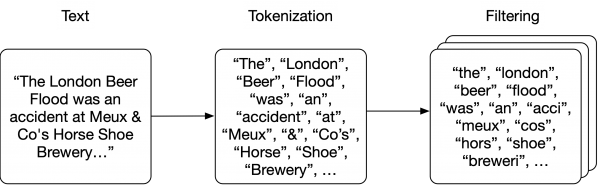
If you’ve wondered how full-text search engines work and thought about building your own, this basic implementation in Python is worth trying out. In this article, you’ll build an engine that searches Wikipedia’s article abstracts and ranks them for relevance, and it’ll do so in milliseconds!
The article covers these major topics:
Collecting and formatting the data
Indexing the collected data (which includes stemming the words in the data to their basic forms)
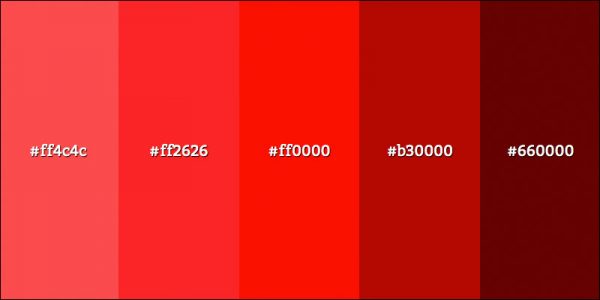
TinyColor is a fantastic JavaScript library that can help you out with a whole bunch of tasks when you’re working with colors. This article takes a quick look at this more-useful-than-you-might-think library.