
My favourite use of the “Disaster Girl” meme to date.
My favourite use of the “Disaster Girl” meme to date.

Over at Wired, there’s an article on Ahtisaari (full name Marko Ahtisaari, but like Pele, Charo or Stifler, he’s better known by a singular name), head of Nokia’s design studio. Nokia currently cranks out the best-looking of the Windows Phones, and the new 920 is continuing that trend. Ahtisaari is big on big-D design, seeing it as more than just how something looks, but how something feels and works. It’s a philosophy most associated with Apple, which explains why the article’s author fixates so much on Apple throughout the article.

The Verge’s live blog covered the big Nokia announcement earlier today, and now Nokia have released their official announcements of their new high-end Lumia 920 and mid-level Lumia 820 phones. Their specs are:
| Lumia 920 | Lumia 820 | |
|---|---|---|
| Display | 4.5 inch Nokia PureMotion HD+ WXGA IPS LCD Super Sensitive touch Nokia ClearBlack with high brightness mode and Sunlight Readability Enhancements |
|
| Battery | 2000mAh with integrated Qi wireless charging | 1650mAh with integrated Qi wireless charging |
| Processor | 1.5GHz Dual Core Snapdragon S4 | |
| Main Camera | 8.7MP with Nokia PureView advanced optical imaging stabilization and Carl Zeiss optics Full 1080p HD video capture at 30fps |
8MP Auto Focus with Carl Zeiss optics Dual LED flash Full HD 1080p video capture at 30fps |
| Front-facing Camera | 1.2MP with 720p HD video | VGA |
| Memory | 1GB RAM 32GB mass memory with 7GB free SkyDrive storage |
1GB RAM 8GB mass memory with microSD memory card support and 7GB free SkyDrive storage |
You can find a full Lumia 920 spec sheet here.
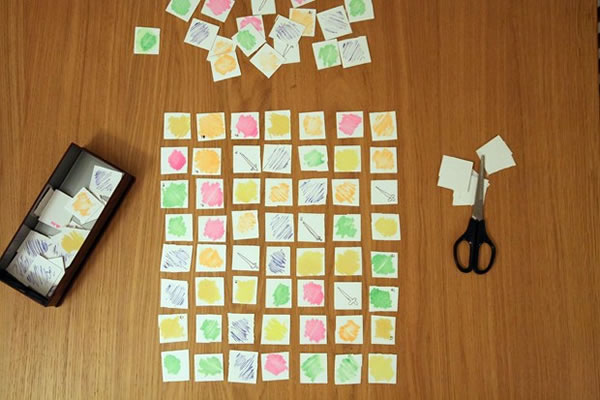
The thought process behind Luca Redwood’s game 10000000 (pronounced “Ten Million”) — an App Store hit despite its complete lack of marketing — was built on a budget so small that he had to borrow a friend’s Mac to build it. It’s also a great reminder of the importance of cutting stuff out, the lesson that Antoine de St-Exupéry taught: “Perfection is achieved, not when there is nothing more to add, but when there is nothing left to take away.”
Ray Wenderlich’s site remains my favourite place to learn about iOS development. In the latest post, there’s a great tutorial on using UIKit to build a drawing app.
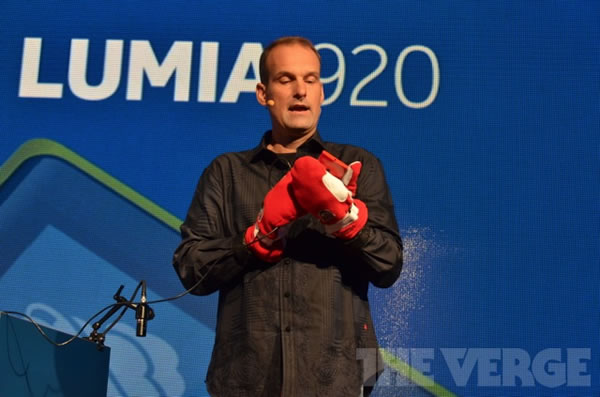
The Verge is liveblogging the Nokia 920 keynote, and so far it looks as though it’s going quite well. My only complaint is that this is the sort of thing that Microsoft and its hardware partners needed to do back during the Windows Phone 7 launch in 2010.
Apparently, the new screen is sensitive enough to let you operate it while wearing mittens. If there’s one feature that would come in handy in places like Finland and even here in Canada, it’s that.
Also notable: at one point, one of the presenters says “It just works.”

The Hand Eye Society describes itself as a “not-for-profit coalition of people and projects in support of Toronto’s videogame communities”. Their goals are:
…and hey, it just could be that videogames could make the world a better place.

With that in mind, you might be interested that the Hand Eye Society is holding an Education Working Group Meeting tonight (Wednesday, September 5th) at 7:30 p.m. at Education Through Media (1610 Bloor Street West, between Keele and Dundas). They say:
If you have any experience teaching people (informally or not) about games we’d love you to come and share your perspective.
If you have an interest in games and education but no experience, but may be able to volunteer some time to these work on these initiatives, you’re also welcome. (Ten hours of volunteer time makes you a full Hand Eye Society member and eligible to vote in the next AGM.)
I have more than my fair share of teaching videogame programming to adults and kids, and I’ve been meaning to do a few more good deeds, so I plan to be there. If you’d like to attend as well, please RSVP to Jim Munroe at jim@handeyesociety.com.
This article also appears in The Adventures of Accordion Guy in the 21st Century.
When Heather Payne wanted to learn how to make websites and web applications, she didn’t know where to turn. She didn’t know any developers to help her get started or even point the way, and the “boy’s club” image of the programming world can be quite off-putting to women. Fortunately, she found a PyLadies Python programming workshop while visiting Los Angeles in 2011, and the experience inspired her to create a similar environment back home in Toronto. With a single tweet, her idea grew into what we now know as Ladies Learning Code.
Ladies Learning Code now has a permanent atelier at the Annex branch of the Centre for Social Innovation large enough to hold workshops for dozens of eager learners who want to get a better idea of how the technology they use every day works, how to program it, and how to be creative with it. This sort of thing costs money, so they’re holding a fundraiser in the space next Wednesday, September 19th at 7:00 p.m..

It’s a good party for a good cause, and hey — I’ll be there. What more incentive do you need?
This article also appears in The Adventures of Accordion Guy in the 21st Century.

I’ll admit it: this made me chuckle.