
Today is my first day as Senior Developer Advocate at NetFoundry, the company behind OpenZiti.
I am thrilled, slightly jet-lagged from the onboarding reading, and (because some things never change)my accordion is within arm’s reach of the desk. If you are going to explain zero trust networking to developers, you might as well have an accordion-powered rock and roll backup plan.
This is the post where I tell you what the job is, what the product is, why the name makes me smile, and why I think this is going to be a good couple of years.
The short version

I am joining the team that invented and maintains OpenZiti, an open source zero trust networking platform. My job, alongside my colleague Clint, is to be the developer-facing voice of the project: write code, build demos, ship tutorials, show up in the communities where the conversations are actually happening, and make sure what we hear from developers gets back to the product and engineering teams in a form they can act on.
The timing is interesting. NetFoundry recently announced NetFoundry for AI, an AI-focused use of the platform aimed squarely at the problem every AI team is quietly panicking about right now: how do you let AI agents, MCP servers, and LLMs talk to each other and to the rest of your infrastructure without turning your network into Swiss cheese?
More on that in a minute. First, the name.
What is OpenZiti, and why is it called that?
The “ziti” in OpenZiti comes from “ZT”, as in “zero trust”. Say “Z-T” out loud a few times, let the letters slur a little, and you end up somewhere in the neighborhood of “ziti.” Then somebody noticed that ziti is also a tubular pasta, and because developers are developers, that became the visual identity. The OpenZiti logo is, essentially, a piece of pasta. I respect this deeply. My last employer’s mascot was a twerking login box. My current employer’s mascot is a delightfully cheesy, tasty dinner.
This also explains this cryptic comic I posted on my socials earlier, as a hint about the new job:
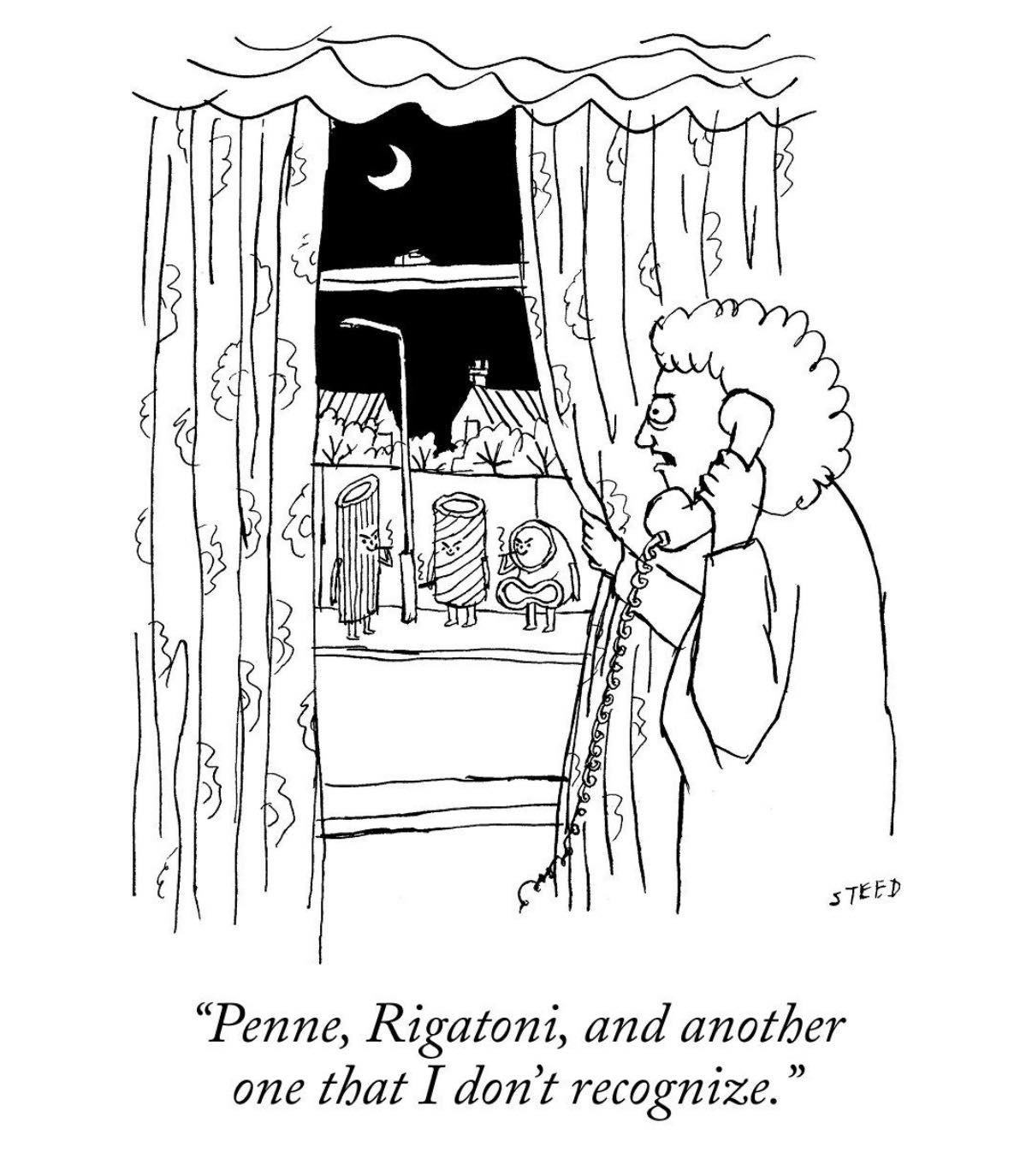
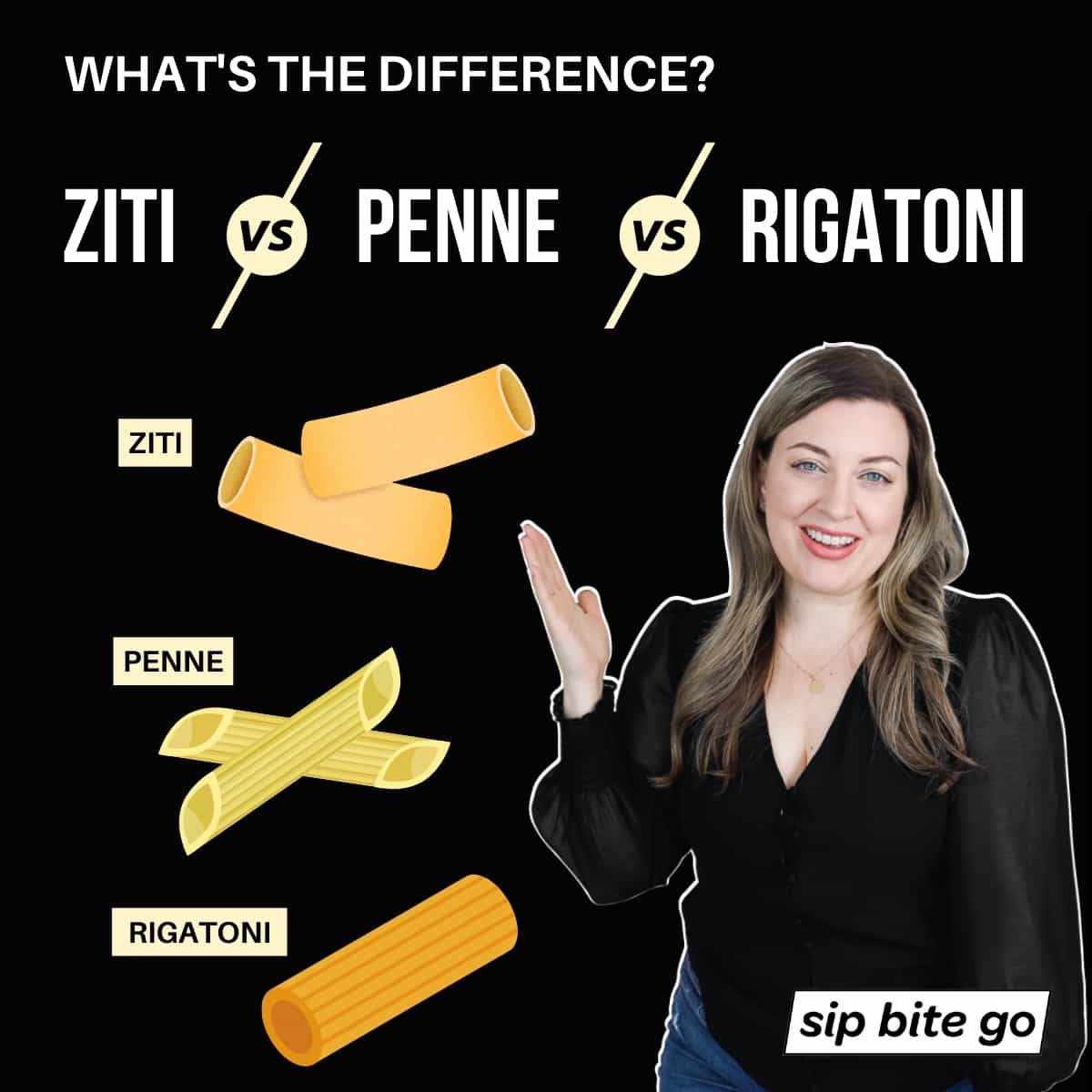
By the way, the rightmost pasta in the comic is a slouching ziti. Also, in case you need a quick explainer, here’s a helpful infographic:
The “Open” part is the substantive half of the name: OpenZiti is genuinely open source, Apache 2.0 licensed, and the whole thing lives in public on GitHub. You can pull it down right now, stand up a controller and some routers on your own hardware, and have a zero trust overlay network running on your laptop by lunchtime. (I know this because that is literally what I am doing this week as part of my onboarding. More on that later too.)
So what does it actually do?
Here is the mental model I am starting with, and I reserve the right to refine it as I get deeper in:
- Today’s network model is “castle and moat.” You put a firewall around your stuff, you open ports for the services that need to be reachable, and you hope the bad guys don’t find a way through the gate. When they do (and they always do) they are inside the castle with the crown jewels.
- Zero trust flips this. Instead of trusting the network, you trust identity. Every connection is authenticated, every connection is authorized, every connection is encrypted, and nothing is reachable just because of where it is on the network.
- OpenZiti is the overlay that makes this practical. It gives every app, service, device, or agent a cryptographic identity, routes their traffic through a mesh of routers that only accept authenticated connections, and requires no open inbound firewall ports. This is the part that makes network engineers do a double-take. Nothing listens on the public internet. Attackers can’t port-scan what isn’t there.
If you have ever been the person who had to file a firewall change ticket to let service A talk to service B, and then waited three weeks and filled out a compliance form, you already understand the appeal.
The AI angle, which is where I am spending a lot of my first year
Here is the thing about AI agents and MCP servers: they are, architecturally, the worst possible citizens of a perimeter-based network.
They need to talk to a lot of things. They hold API keys. They get spun up and torn down on timelines that do not match anybody’s firewall change window. They are, by design, non-human identities with significant privileges, and most of the infrastructure around them was designed for humans with laptops.
NetFoundry for AI is the pitch for applying OpenZiti’s identity-first model to this mess:
- A zero trust enclave for your users, agents, MCP servers, and LLMs, so none of them are reachable over the open network
- Strong identities for the non-human participants (agents and MCP servers have been running around with service accounts and bearer tokens for too long)
- API keys and service credentials held separately from the agents themselves, so a compromised agent isn’t also a compromised credential vault
- Token tracking, cost accounting, and LLM routing across multiple providers, because once you have the identity layer you might as well use it to see what is happening
There is a NetFoundry for AI early access program open right now, and if you are building anything nontrivial with agents, it’s worth a look.
Why this job, specifically?
If you have been reading Global Nerdy for a while, you know the pattern. I spent three and a half years at Auth0 explaining OAuth 2.0, OIDC, and identity to mobile developers who would rather do literally anything else. The work was: take something that sounds like a standards committee threw up on a whiteboard, anchor it to a problem the developer actually has, and give them working code that does not require them to read 400 pages of RFC.
Zero trust networking is the same shape of problem. The concepts are genuinely hard. The vocabulary is dense. Most developers have never had to think about overlay networks before. But the underlying motivation, “I don’t want my AI agent’s API key to become somebody’s weekend project,” is something every builder can feel in their bones.
And some of you might remember my monthly Tampa Bay AI Meetup, which is now sitting around 2,200 members. The through-line of that community has been the same thing I am now getting paid to do full-time: take genuinely complicated infrastructure and make it feel approachable. Zero trust for AI agents is squarely in that Venn diagram.
What happens next

For the next little while, the plan is mostly “shut up and build.” I am standing up OpenZiti from scratch on my own hardware, embedding the SDK in a demo app, running MCP Gateway with Claude Desktop and a couple of backends, running LLM Gateway with a local model and a commercial one, and lurking in every community where OpenZiti and MCP get talked about. No hot takes until I have earned them.
After that, the usual Joey stuff: blog posts, short demo videos, office hours, and actual conversations in the places where developers hang out: r/openziti, r/mcp, the OpenZiti Discourse, and wherever else the work takes me.
If you build on OpenZiti, or you have been curious about it, or you just want to commiserate about explaining infrastructure to developers, my DMs are open. I am @AccordionGuy on GitHub, Joey de Villa on LinkedIn, and the accordion is here if anyone wants a rock cover of something topical as a celebratory interlude.
Time to rock!